why is buying jeans so hard
- Share
- Issue Time
- Jul 31,2026
Summary
Uncovering the challenges of choosing the perfect pair of jeans.
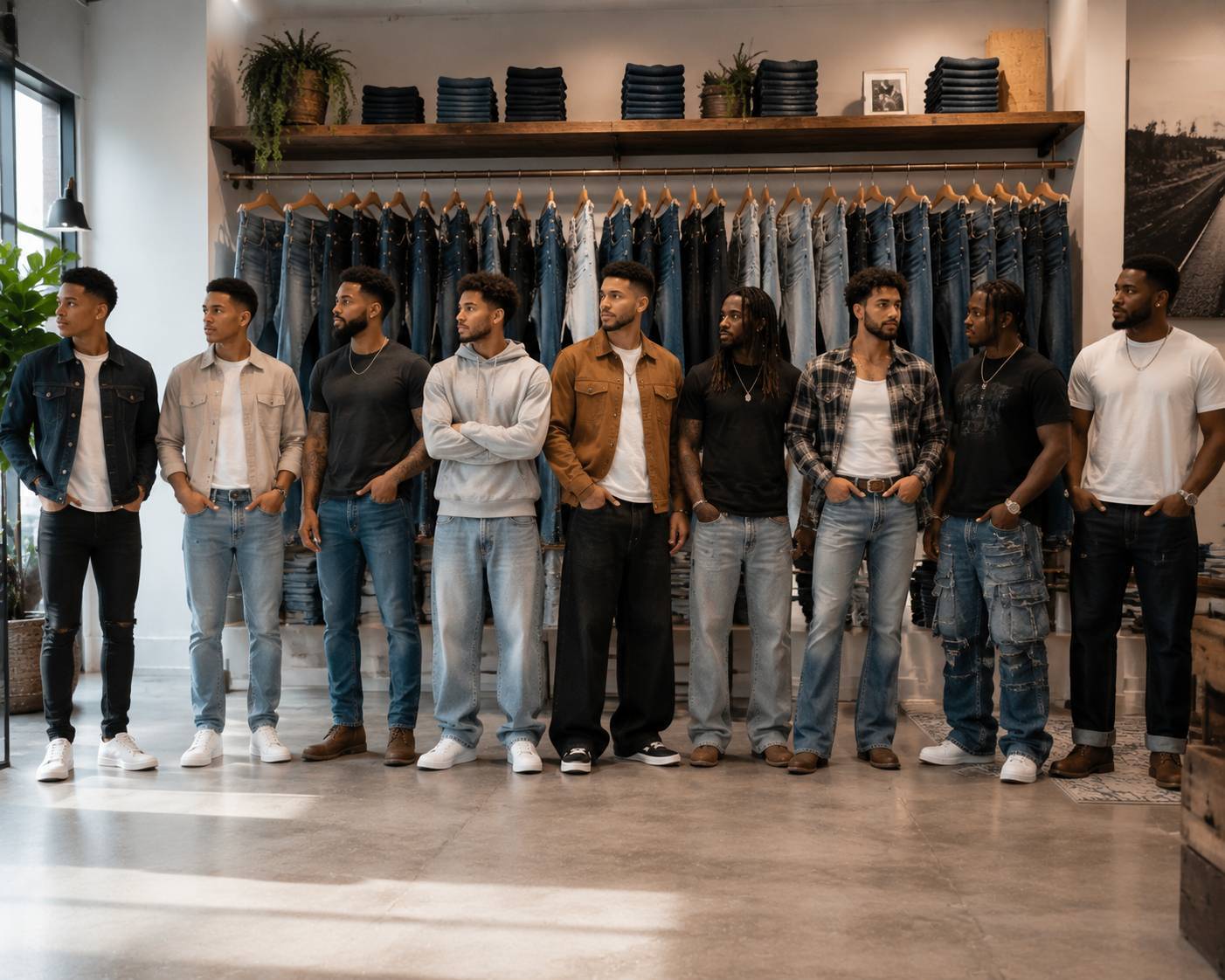
Buying jeans should be simple, but for many people it feels like a fitting-room battle. One pair fits the waist but squeezes the thighs. Another pair feels comfortable standing up but pulls at the crotch when sitting. A size that works in one brand feels completely wrong in another. Online, the model looks amazing, but when the jeans arrive, the rise, length, wash, stretch, and shape all feel different. This is why so many shoppers ask the same question: why is buying jeans so hard?
Buying jeans is hard because one pair must fit many body zones at once: waist, hips, seat, rise, thighs, knees, calves, inseam, and leg opening. Denim fabric, stretch recovery, wash shrinkage, brand sizing, body shape, and trend preference all affect fit. A good jean is not just the right size; it is the right pattern, fabric, rise, and silhouette.
This problem is frustrating for consumers, but it is also a major opportunity for denim brands. When customers struggle to buy jeans, they are telling the market what they need: better size charts, better waistband design, better stretch recovery, better plus-size grading, more accurate product photos, and more customer-focused fits. For boutique owners and denim designers, solving these problems can turn a common shopping headache into a powerful product advantage.
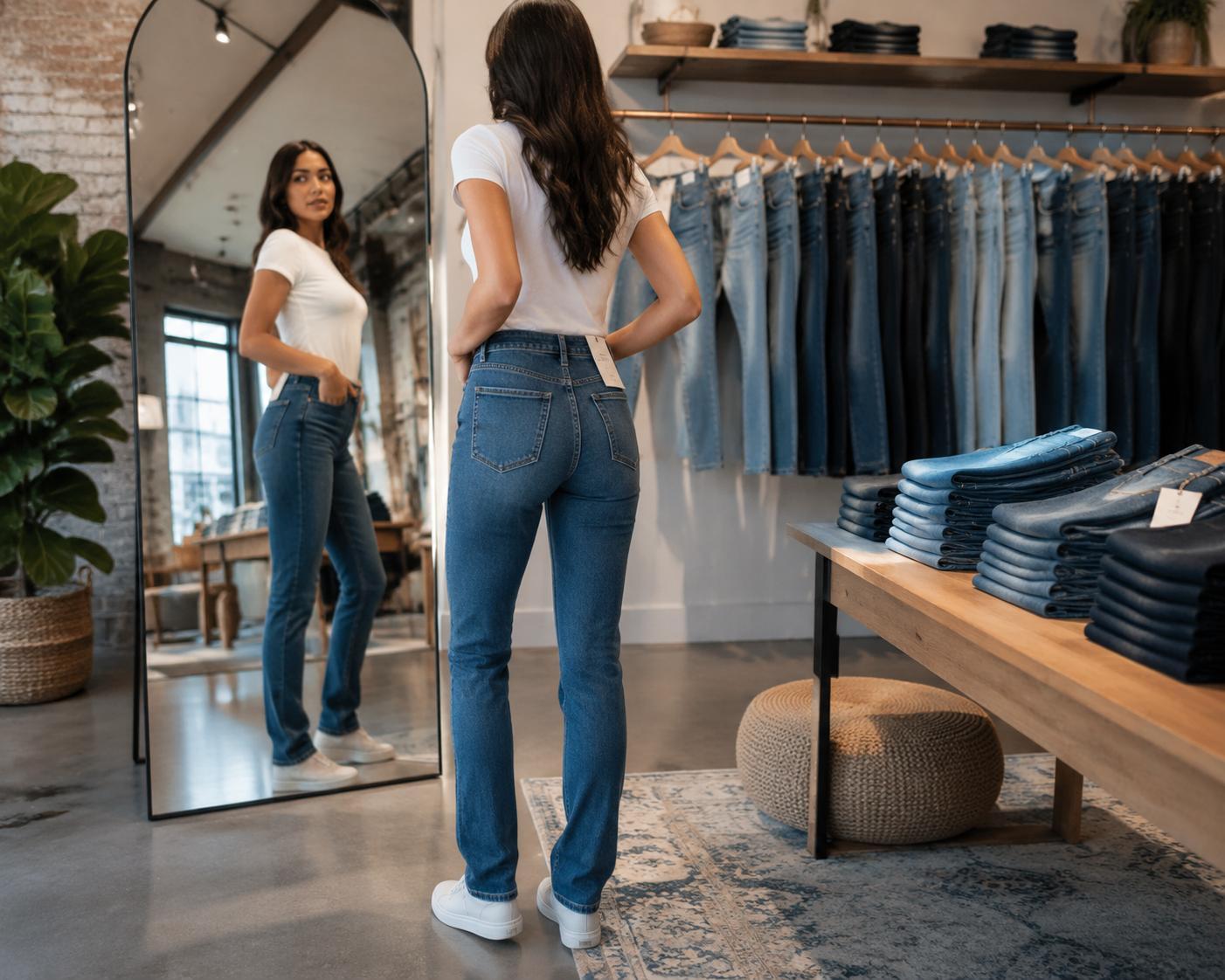
Why Is Buying Jeans So Hard for So Many People?
Buying jeans is difficult because denim must fit several body areas at the same time while also matching the shopper’s comfort, style, fabric, and trend preferences. Waist size alone is not enough. Jeans can fail at the hips, thighs, rise, seat, inseam, or stretch recovery, which is why the “right size” can still feel wrong.
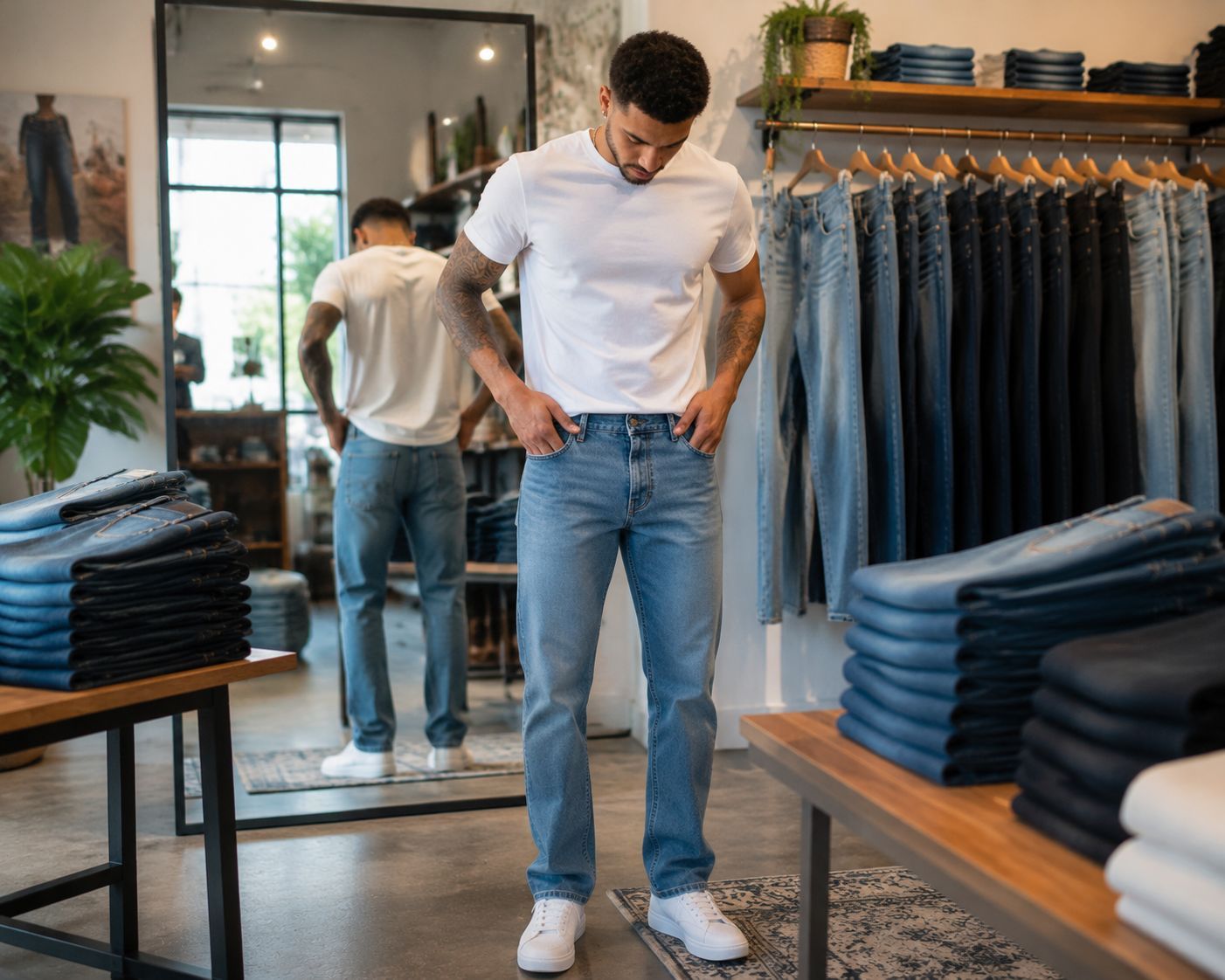
Why are jeans so hard to shop for?
Jeans are hard to shop for because they are more structured than many other clothing items. A T-shirt can fit loosely and still look fine. A hoodie has room for error. But jeans sit directly on the waist, hips, seat, crotch, thighs, knees, calves, and ankles. If one area is wrong, the whole pair feels wrong.
Common problems include waist gaps, tight thighs, crotch pulling, sagging seats, knee bunching, too-long inseams, stiff fabric, poor stretch recovery, and washes that look different in person. This is why jeans shopping often takes longer than buying basic tops or simple pants.
Why is it so hard to find jeans that fit?
It is hard to find jeans that fit because bodies are not standardized, but mass-market sizing often tries to treat them as if they are. Two people can have the same waist measurement but very different hips, thighs, rises, seats, and leg proportions.
A curvy customer may need more hip room and a smaller waist. A muscular customer may need extra thigh space. A petite customer may struggle with inseam and knee placement. A tall customer may need more rise and length. A plus-size customer may need better grading, not just a larger version of a small-size pattern.
Why do jeans sizes feel so inconsistent between brands?
Jeans sizes feel inconsistent because every brand can use its own fit block, target body type, vanity sizing, fabric stretch, and grading rules. A size 30, size 8, or size 12 is not always the same from one brand to another.
Even official size guides show why measurements matter. Levi’s product size guide, for example, refers to waist, hip, height range, and inseam when explaining fit, which shows that a jean size is not only a single waist number.
Why do jeans fit in one area but not another?
Jeans often fit in one area but not another because body proportions vary. A pair may fit the waist but feel tight in the thighs. It may fit the hips but gap at the back waist. It may look good while standing but feel uncomfortable when sitting.
This is a pattern problem, not only a size problem. The wearer may need a different rise, a curvy fit, a relaxed thigh, a different fabric, or a different silhouette.
Why do jeans look good on the model but not on me?
Jeans look different on different people because model photos are controlled. The model has a specific height, body shape, pose, shoe choice, and styling. The jeans may be pinned, styled, or photographed under flattering lighting.
That does not mean the jeans are bad. It means the photo does not fully explain how the jeans will fit different bodies. Product pages should show model measurements, size worn, rise, inseam, stretch level, and movement shots to help customers make better decisions.
Dive Deeper
The biggest mistake in jeans shopping is thinking that size equals fit. Size is only a starting point. Fit is the relationship between measurement, body shape, fabric behavior, pattern design, and personal preference. This is why two pairs with the same size label can feel completely different.
Jeans are also emotionally difficult to buy. When a pair does not fit, shoppers often blame their body. But many fit problems are created by the product, not the customer. If the waist gaps, the thighs pull, or the crotch feels wrong, that does not mean the customer’s body is wrong. It may mean the jean was designed around a different body block.
Online shopping makes this even harder. Research on fashion e-commerce has noted that finding clothes that fit online is challenging and that size- and fit-related returns affect customer experience, environmental impact, and platform profitability. For denim brands, this means fit is not only a product issue; it is also a business issue.
Customers want confidence before they buy. They want to know whether the jeans stretch, whether they run small, whether the waistband gaps, whether the inseam works for their height, whether the fabric softens, and whether the jeans look good when sitting and walking. A size chart alone is not enough if it only gives a waist number.
For brands, the solution is education plus better product development. A good denim product page should explain fit clearly. A good factory should help develop patterns that match the target customer. A good collection should not rely on one generic fit for everyone.
DiZNEW helps brands solve this by offering custom denim development from sketches, reference photos, samples, AI images, or tech packs. Instead of forcing every customer into one standard pattern, brands can develop plus size jeans, baggy jeans, stacked jeans, straight jeans, selvedge jeans, skinny jeans, and jogger jeans with different fit logic.
How Do Waist, Hip, Rise, and Inseam Make Jeans Difficult to Buy?
Waist, hip, rise, and inseam make jeans difficult because they control where jeans sit, how they move, and how they look on the body. Waist size alone cannot predict fit. A good jean must balance waist, hip, seat, rise, thigh, inseam, knee placement, and leg opening for the intended body and style.
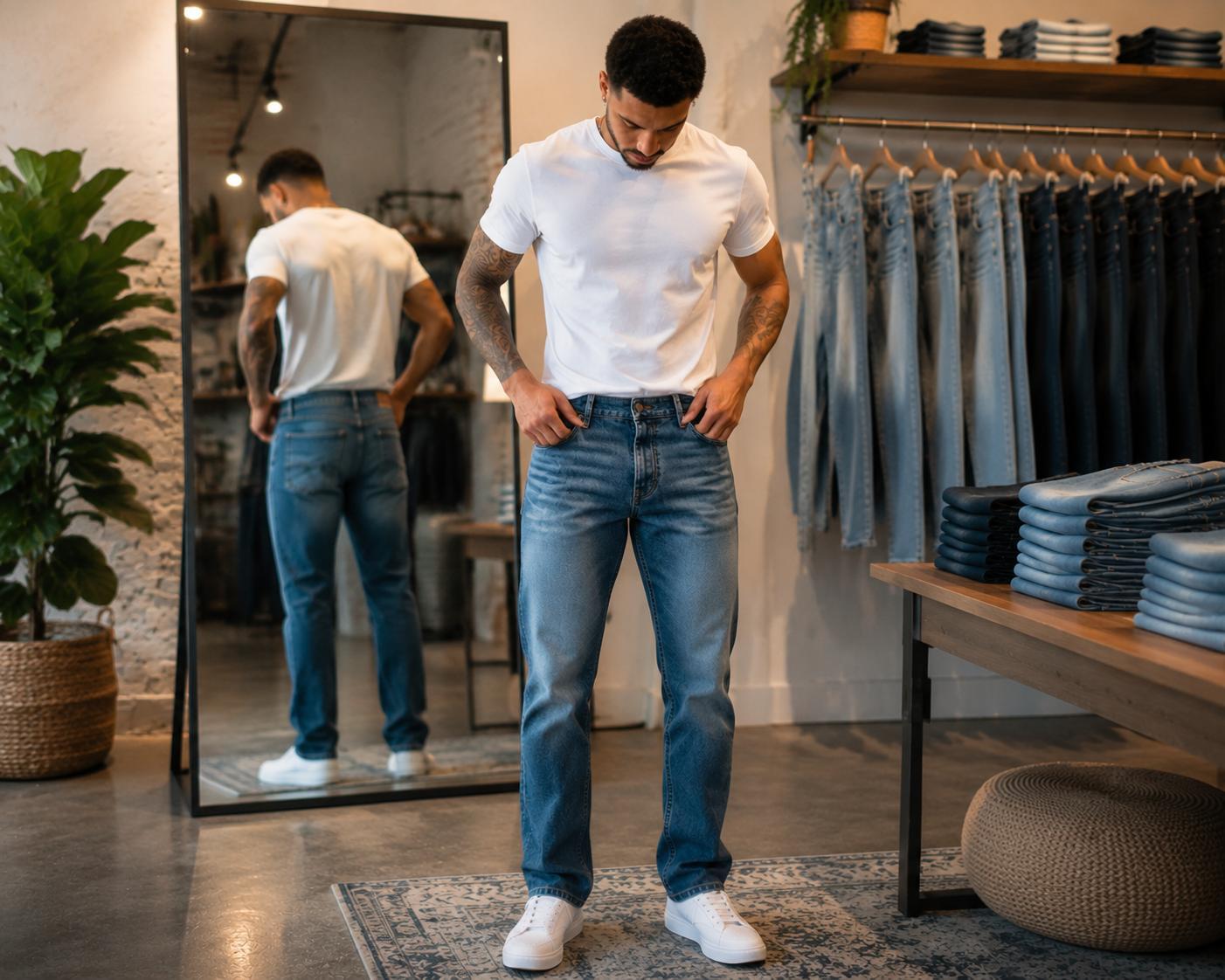
Why should I not choose jeans by waist size only?
You should not choose jeans by waist size only because the waist is only one measurement. A pair of jeans also needs to fit the hips, seat, rise, thighs, knees, calves, inseam, and leg opening.
For example, a customer may choose the correct waist size but still find the jeans too tight in the thighs. Another customer may size up for the hips but then get a waist gap. This is why detailed size charts should include more than waist.
What is the 2 finger rule for jeans?
The 2 finger rule is a simple waistband fit test. When jeans are buttoned, the wearer should be able to slide two fingers comfortably between the waistband and the body. If two fingers cannot fit, the waistband may be too tight. If much more than two fingers fit, the jeans may be too loose or may slide down.
This rule is useful, but it is not the full answer. A waistband can pass the 2 finger test and still fail if the hips, seat, thigh, or rise are wrong.
What does jeans rise mean, and why does it matter?
Rise is the distance from the crotch seam to the top of the waistband. It controls where the jeans sit on the body. Low-rise jeans sit lower on the hips. Mid-rise jeans sit closer to the middle waist area. High-rise jeans sit near or above the natural waist.
Rise affects comfort and proportion. The wrong rise can cause waist gapping, crotch pulling, sagging, muffin-top discomfort, or a shape that feels visually wrong.
Why do jeans gap at the waist?
Jeans gap at the waist when the hips or seat need more room than the waist. This is common for curvy bodies, plus-size bodies, and high-rise women’s jeans. If the jeans fit the hips but the waistband is too straight or too large, the back waist opens away from the body.
Solutions include curved waistbands, better back-rise balance, improved grading, stretch recovery, and custom fit blocks.
Why are jeans tight in the thighs but loose at the waist?
This happens when the jean pattern does not match the wearer’s waist-to-thigh or waist-to-hip ratio. Athletic builds, muscular thighs, curvy bodies, and plus-size customers often experience this.
Sizing up may fix the thigh but make the waist too loose. Sizing down may fix the waist but make the thigh uncomfortable. The better solution is a different fit or a custom-developed pattern.
Why does inseam make jeans shopping harder?
Inseam controls length. It affects ankle break, stacking, cuffing, shoe styling, and overall proportion. Petite customers may find jeans too long. Tall customers may find jeans too short. Stacked jeans intentionally need extra length. Cropped jeans need precise proportion. Wide-leg and flare jeans need careful length to avoid looking messy.
Inseam is not just a length detail. It changes the entire look of the jeans.
Dive Deeper
Jeans shopping becomes easier when shoppers stop thinking in one measurement and start thinking in fit zones. The waist is only the top line. The real fit happens through the full upper block: waist, hip, seat, rise, crotch, and thigh.
This is especially important for online boutiques. If a product page only says “high-waist straight jeans,” the customer still has many questions. How high is the rise? Is the denim rigid or stretch? Does it fit curvy bodies? Does the waist gap? What is the thigh measurement? What is the inseam? Is the leg opening slim, straight, or relaxed?
The 2 finger rule is helpful because it gives customers a quick physical test, but it should be used with movement testing. A good jean should feel comfortable while standing, sitting, walking, and bending. If the waistband feels fine while standing but digs into the stomach when sitting, the fit is not truly comfortable. If the waist feels secure but the crotch pulls, the rise may be wrong.
For denim brands, the rise is one of the most powerful fit tools. High-rise jeans can feel secure and leg-lengthening, but they need good waist shaping. Low-rise jeans can feel relaxed and trend-driven, but they need stable hip fit. Mid-rise jeans can be versatile, but they must avoid slipping or cutting across the wrong point.
Inseam also matters more than many brands realize. Stacked jeans need extra length to create intentional folds. Wide-leg jeans may need length that works with sneakers or boots. Straight jeans often need a cleaner break. If the inseam is wrong, customers may think the whole fit is wrong.
This is why DiZNEW supports custom measurement development. Brands can adjust rise, inseam, waist curve, hip shape, thigh room, and leg opening based on the target market. A streetwear brand may need stacked inseams and relaxed legs. A plus-size boutique may need better waist-to-hip grading. A premium denim brand may need precise straight-leg balance. Custom development makes jeans easier to buy because the product is designed around real customer needs.
How Do Fabric, Stretch, Wash, Quality, and Price Affect Jeans Fit?
gives structure but may feel stiff at first. Stretch denim gives comfort but needs strong recovery. Washing can change shrinkage, hand feel, and color. Good-quality jeans should have strong fabric, stable stitching, durable hardware, and fit performance that supports long-term wear.
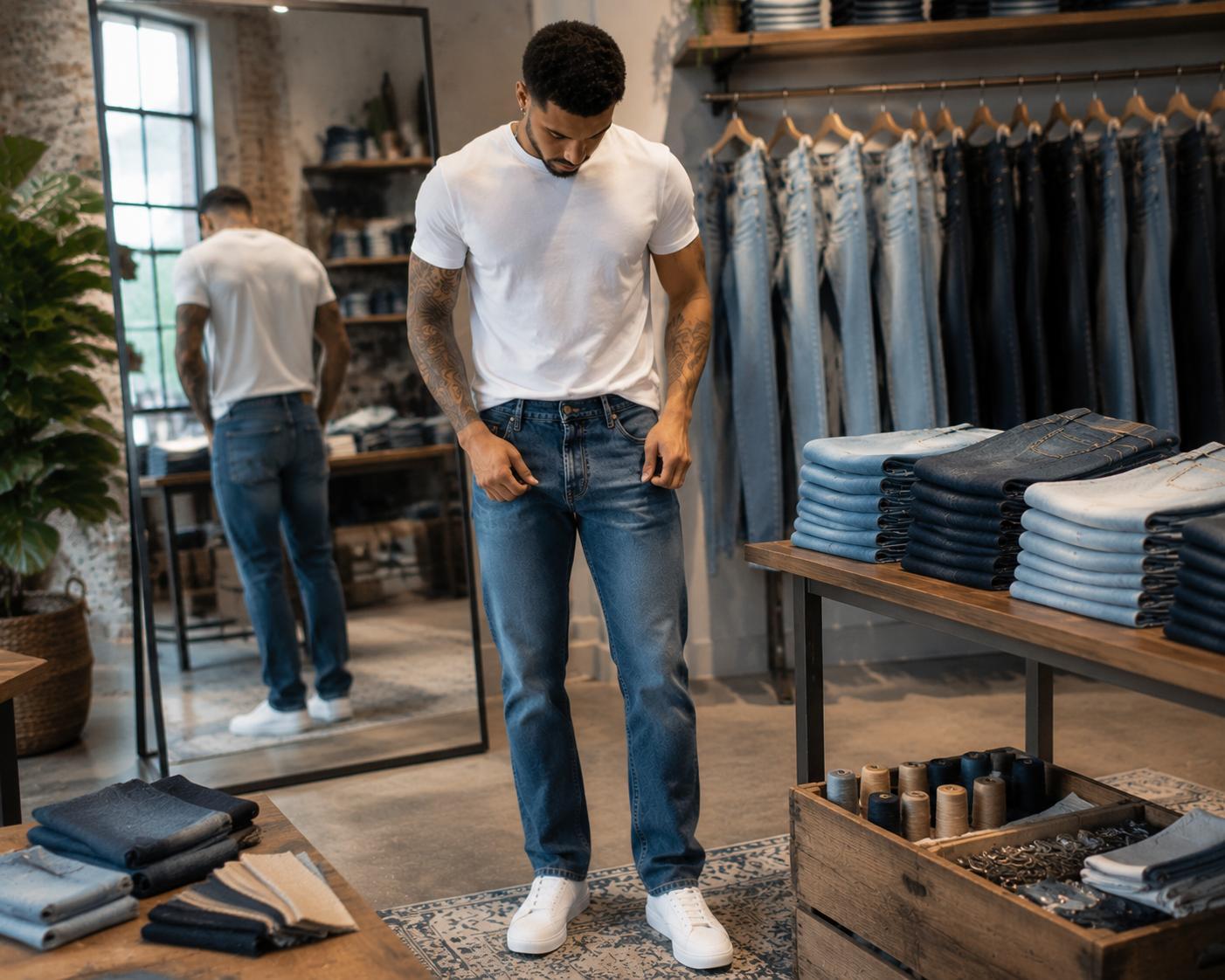
Are rigid jeans or stretch jeans easier to buy?
Stretch jeans may feel easier at first because they move with the body. They can be useful for skinny jeans, slim jeans, plus-size comfort fits, and customers who want flexibility. https://pmc.ncbi.nlm.nih.gov/articles/PMC8646987/But if the stretch recovery is poor, the jeans may bag out at the knees, seat, or waistband.
Rigid jeans can feel harder at first because they are less forgiving. However, they often hold structure well and can mold to the body over time. They are popular for straight jeans, selvedge jeans, vintage jeans, and workwear-inspired fits.
Why do jeans feel different after wearing them for a few hours?
Jeans feel different after a few hours because denim relaxes with body heat and movement. Sitting, walking, bending, and driving can stretch the waistband, seat, crotch, knees, and thighs.
This is why a jean may feel perfect in the fitting room but loose later. Stretch denim needs recovery. Cotton denim needs good structure. Waistbands need stability. If the fabric grows too much, customers may feel like they bought the wrong size.
Why do jeans shrink or change after washing?
Washing can change denim measurements, color, hand feel, and fit. Heat, water, tumble drying, fabric composition, and wash processes all affect the garment. Some jeans tighten after washing and loosen again during wear. Others may shrink too much if fabric and production are not controlled.
Denim brands must test post-wash measurements and tolerance. A sample should not be approved only before washing. The final customer experience happens after wear and care.
How can I tell if denim is good quality before buying?
Good denim quality includes fabric density, yarn strength, weave structure, colorfastness, shrinkage control, recovery, stitching, hardware, pocket bags, and finishing. A good-quality jeans guide from Byrdie highlights fabric, stitching, stretch, hardware, and construction as important factors when judging jeans.
Look for clean stitching, strong seams, reinforced pockets, secure rivets, smooth zippers, stable waistbands, and fabric that matches the style. Heavy denim is not always better; the fabric must serve the fit.
Is $100 too much for jeans?
$100 is not automatically too much for jeans if the product offers better fit, stronger fabric, durable construction, reliable hardware, better wash control, and longer wear life. A $100 jean worn often for years can be better value than a cheap jean that stretches out, tears, or loses shape quickly.
Price alone does not prove quality. Buyers should check fabric weight, stretch recovery, stitching, pocket bags, zipper quality, waistband stability, and brand transparency. Discussions around $100 jeans often frame the price around durability, fit, comfort, cost-per-wear, and long-term value.
Dive Deeper
Fabric is one of the hidden reasons jeans are hard to buy. Customers may focus on size, but fabric behavior can completely change the fit. A rigid 100% cotton jean and a high-stretch jean may have the same waist measurement, but they will feel very different on the body.
Stretch denim is popular because it solves comfort problems. It helps jeans move with the wearer. But stretch creates a new problem: recovery. If the fabric stretches but does not return, the jeans lose shape. The waistband grows. The knees bag. The seat sags. The customer may think the size was wrong, but the real issue may be fabric performance.
Rigid denim has its own challenges. It can feel stiff at first, especially in heavier weights. But for many customers, that structure is part of the appeal. Rigid denim can create clean lines, authentic fading, and longer-term character. It works especially well for straight jeans, selvedge jeans, and vintage-inspired fits.
Wash also changes everything. A raw-looking jean, stone-washed jean, acid-washed jean, dirty-wash jean, and black-wash jean may behave differently. Washing affects shrinkage, softness, color, texture, and final measurements. For brands, wash control is not decoration; it is part of fit control.
Price adds another layer. Many shoppers ask whether $100 is too much for jeans because they do not always know what they are paying for. If the jean is $100 only because of a brand name, the value may be questionable. But if $100 reflects better fabric, better fit testing, stronger trims, durable stitching, better wash control, and longer wear, it can be reasonable.
For boutique brands, this is where transparency helps. Customers are more willing to pay when they understand the value. A product page can explain fabric weight, stretch level, recovery, wash process, pocket construction, reinforced seams, and fit testing. This turns price into a quality story.
DiZNEW can help brands build that story honestly by developing denim products with real technical details: high-recovery stretch, structured cotton denim, stable waistbands, reinforced pockets, custom washes, branded hardware, and private label packaging.
Which Jeans Style Should I Choose for My Body, Lifestyle, and Trend Preference?
The best jeans style depends on body shape, lifestyle, comfort needs, shoes, styling goals, and trend preference. Skinny, straight, baggy, wide-leg, bootcut, flare, stacked, plus-size, and selvedge jeans all serve different customers. The right jean is not always the trendiest jean; it is the one that fits the body and lifestyle best.
What jeans fit my body type best?
There is no single best jean for every body. Straight jeans often work well for everyday balance. Skinny jeans create a close silhouette but need good stretch recovery. Baggy jeans offer comfort and streetwear attitude. Wide-leg jeans create strong proportion. Bootcut and flare jeans can balance hips and work well with boots. Plus-size jeans need better grading and waistband control.
The best fit depends on the customer’s body, height, comfort needs, and personal style.
Why does Gen Z hate skinny jeans?
Gen Z does not literally hate all skinny jeans. Many younger shoppers simply prefer looser silhouettes because they feel more relaxed, expressive, and current. Baggy jeans, wide-leg jeans, cargo denim, flare jeans, and stacked jeans connect with streetwear, Y2K nostalgia, body inclusivity, and a rejection of the tight millennial-era skinny-jean uniform.
Vogue’s 2026 denim coverage notes that denim trends range from skin-tight skinny jeans to classic straight cuts and very wide-leg silhouettes, which shows that the market is not limited to one fit.
Are skinny jeans, straight jeans, or baggy jeans easier to wear?
Straight jeans are often the easiest for everyday wear because they balance comfort and shape. Skinny jeans can be easy for people who like close fits, boots, and stretch comfort. Baggy jeans are comfortable and trend-driven, but they need good waistband control and the right inseam.
The easiest jean is the one that matches the wearer’s body and lifestyle.
Why are wide-leg and relaxed jeans popular now?
Wide-leg and relaxed jeans are popular because customers want comfort, movement, and stronger silhouettes. These fits also photograph well for streetwear, boutique fashion, and influencer-led brands.
Relaxed denim gives designers more room for custom pockets, washes, embroidery, distressing, hardware, patchwork, and branding. That makes wide-leg and baggy jeans attractive for private label collections.
Why do jeans look attractive on some people?
Jeans look attractive when the fit works with the body. The rise, wash, back pocket placement, leg shape, fabric structure, and length all affect appearance. A high rise can lengthen the legs. A dark wash can look polished. A wide leg can balance proportions. A well-placed back pocket can improve the seat shape.
Attractive jeans are not created by trend alone. They are created by proportion.
How many pairs of jeans does a customer really need?
Most customers need jeans for different situations: daily wear, polished outfits, relaxed comfort, trend styling, and statement looks. Glamour’s 2026 discussion around denim wardrobes emphasizes quality, functionality, and lifestyle fit over chasing every trend, with experts suggesting a thoughtful denim wardrobe can include a versatile straight-leg pair, a comfortable wide or baggy pair, a dressier dark-wash pair, and a personality pair.
For brands, this means denim collections should be built around use cases, not random styles.
Dive Deeper
The question “Which jeans should I choose?” is not just a fashion question. It is a lifestyle question. A customer who walks all day needs different jeans from someone who wants polished office-casual denim. A streetwear customer wants different jeans from a minimalist customer. A Gen Z buyer may want oversized denim, while another customer may still love skinny jeans.
The “Gen Z hates skinny jeans” conversation is useful because it shows how denim reflects identity. Skinny jeans became associated with a previous style era. Looser jeans feel more relaxed, gender-fluid, streetwear-friendly, and expressive. But this does not mean skinny jeans are gone. It means denim is more diverse.
This is important for boutique owners. A strong denim collection should not rely on one fit. It should serve a clear audience with a thoughtful fit range. For example, a U.S. online boutique might offer straight jeans for everyday wear, baggy jeans for trend styling, stacked jeans for streetwear, and dark-wash jeans for polished outfits. A plus-size boutique might focus on waist-gap solutions, thigh comfort, and high-recovery stretch. A premium brand might focus on selvedge denim, structured straight fits, and custom hardware.
The question “Why do jeans look attractive on some people?” also gives brands a product-development lesson. Attractive fit comes from details. Back pocket placement can change how the seat looks. Wash placement can shape the leg visually. Rise can change leg proportion. Inseam can make the same jean look clean, stacked, cropped, or sloppy. Fabric weight can make the silhouette structured or soft.
That is why jeans cannot be developed casually. A good factory must understand both measurement and visual effect. The product has to fit, move, photograph, and hold its shape. DiZNEW supports this by helping brands customize fit, fabric, wash, pocket placement, leg shape, labels, trims, and packaging based on the target customer.
How Can Denim Brands Make Jeans Easier to Buy and Better to Fit?
Denim brands can make jeans easier to buy by offering detailed size charts, accurate fit descriptions, model measurements, fabric-stretch information, movement videos, and customer education. Better fit starts at product development: custom pattern blocks, improved grading, waistband shape, rise balance, fabric testing, and specialized denim manufacturing reduce confusion, returns, and customer frustration.
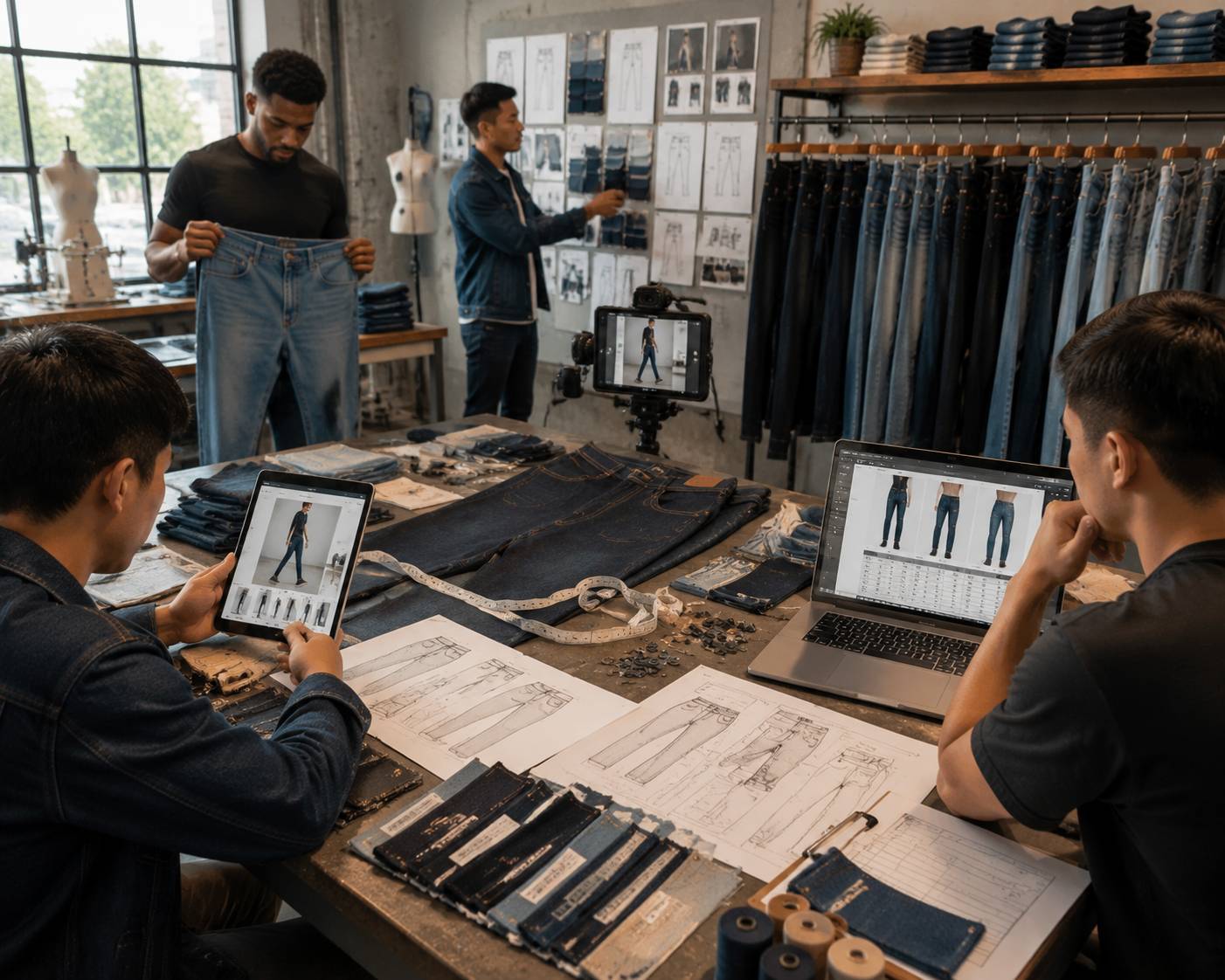
What should denim brands do to reduce customer returns?
Brands should give customers more fit information before purchase. This includes:
Waist measurement
Hip measurement
Rise
Inseam
Thigh
Knee
Leg opening
Stretch level
Fabric composition
Model height and size worn
Fit notes
Movement videos
Care instructions
The goal is to help customers choose correctly the first time.
How can custom denim manufacturing solve fit problems?
Custom denim manufacturing allows brands to adjust the pattern instead of accepting a generic wholesale fit. Brands can change the rise, waistband curve, seat shape, hip measurement, thigh room, knee placement, inseam, leg opening, pocket placement, and grading.
This is especially important for plus-size jeans, baggy jeans, stacked jeans, skinny jeans, selvedge jeans, and jogger jeans because each style needs different fit logic.
Why should boutique owners work with a specialized denim factory?
Boutique owners should work with a specialized denim factory because jeans are technical. Denim fabric behavior, shrinkage, washing, stitching, hardware, rivets, pocket bags, waistband structure, and fit balance all affect the final product.
A general apparel supplier may not understand how much a wash changes measurements, how stretch recovery affects shape, or how back pocket placement changes appearance. A specialized denim factory can help reduce these risks.
How can DiZNEW help brands create jeans customers actually want to buy?
DiZNEW can develop custom denim from sketches, reference photos, AI images, physical samples, or tech packs. The factory supports custom fabric, wash, fit, waistband, pocket placement, labels, buttons, rivets, patches, hang tags, and packaging.
DiZNEW can customize plus-size jeans, baggy jeans, stacked jeans, straight jeans, selvedge jeans, skinny jeans, jogger jeans, denim jackets, denim shorts, denim shirts, and more. With MOQ starting from 30 pieces per design and capacity for larger 10,000-piece orders, DiZNEW supports both small-batch testing and scalable production.
How can brands turn “buying jeans is hard” into a selling point?
Customer frustration is market insight. If shoppers say jeans are hard to buy, brands can create products that feel easier, clearer, and more reliable.
Brands can position products around:
Easy-fit denim
Curve-friendly jeans
High-recovery stretch jeans
Better waistband jeans
Petite-friendly inseams
Plus-size denim
Custom streetwear fits
Stronger pocket construction
Shape-retention denim
Real movement-tested jeans
SEO content can also answer real customer questions and guide shoppers toward the right product.
Dive Deeper
The brands that win in denim are not always the ones with the cheapest price or the most trend-driven photos. They are the ones that reduce uncertainty. Jeans shopping is hard because customers are unsure: Will these fit my waist? Will they gap? Will they stretch out? Will they be too long? Will they look like the model photo? Will they be worth the price?
A strong denim brand answers these questions before the customer asks. It explains the fit clearly. It shows real measurements. It shows different body types. It explains fabric stretch. It gives styling guidance. It educates customers about rise, inseam, and shape. It makes jeans feel less risky to buy.
Custom manufacturing makes this stronger because the product itself can be improved. A brand can say “curve-friendly waistband” only if the waistband is actually developed that way. It can say “high-recovery stretch” only if the fabric is selected and tested. It can say “stacked fit” only if the inseam and leg shape are designed correctly. It can say “premium denim” only if the construction supports the claim.
This is where DiZNEW becomes a practical partner for U.S. boutique owners, denim designers, online stores, influencer shops, and private label brands. DiZNEW can help turn customer pain points into product details. If customers complain about waist gaps, develop a better waistband. If they complain about tight thighs, adjust the pattern. If they want Gen Z streetwear, build baggy or stacked jeans with stronger identity. If they ask whether $100 jeans are worth it, create jeans with visible quality: better fabric, wash, stitching, trims, labels, and packaging.
The path is simple: understand the customer problem, develop the product around that problem, sample it, test it, improve it, and then scale production.
DiZNEW’s low MOQ of 30 pieces per design helps brands test denim ideas with lower risk. If the product works, larger orders up to 10,000 pieces can support growth. This gives brands a flexible way to move from concept to market.
Final Thoughts: Buying Jeans Is Hard Because Great Jeans Are Technical
Buying jeans is hard because jeans are not simple garments. They must fit the waist, hips, seat, rise, thighs, knees, calves, inseam, and leg opening. They must also match the customer’s style, body shape, comfort needs, trend preference, fabric expectation, and budget. That is a lot to ask from one product.
For consumers, the solution is to stop shopping by waist size alone. Check waist, hip, rise, inseam, thigh, stretch level, fabric, and intended fit. Use the 2 finger rule as a quick waistband check, but also sit, walk, bend, and think about your lifestyle. A good jean should look good and feel good in motion.
For brands, the solution is better denim development. Customers are tired of jeans that gap, sag, squeeze, stretch out, shrink badly, or look different from the product photo. Brands that solve these problems can earn better reviews, fewer returns, stronger loyalty, and higher perceived value.
DiZNEW is a China-based denim R&D, manufacturing, and sales factory with more than 20 years of experience. We help U.S. small and medium buyers, high-end brand clients, denim designers, online boutique owners, and influencer-led stores create custom denim products under their own logo.
DiZNEW can customize plus-size jeans, baggy jeans, stacked jeans, straight jeans, selvedge jeans, skinny jeans, jogger jeans, denim jackets, denim shorts, denim shirts, and more. Our OEM/ODM services support custom fabric, wash, fit, waistband structure, pocket placement, labels, buttons, rivets, leather patches, hang tags, packaging, and private label production.
With a low MOQ starting from 30 pieces per design and production capacity for larger orders up to 10,000 pieces, DiZNEW gives brands a flexible path to test, improve, and scale custom denim products.
If you want to create jeans that are easier to buy, better to fit, more attractive to customers, and more valuable than generic wholesale denim, contact DiZNEW today to request a quote and start your custom denim project.