why dont womens jeans have pockets
- Share
- Issue Time
- Jul 15,2026
Summary
A closer look at the design differences between men’s and women’s jeans.
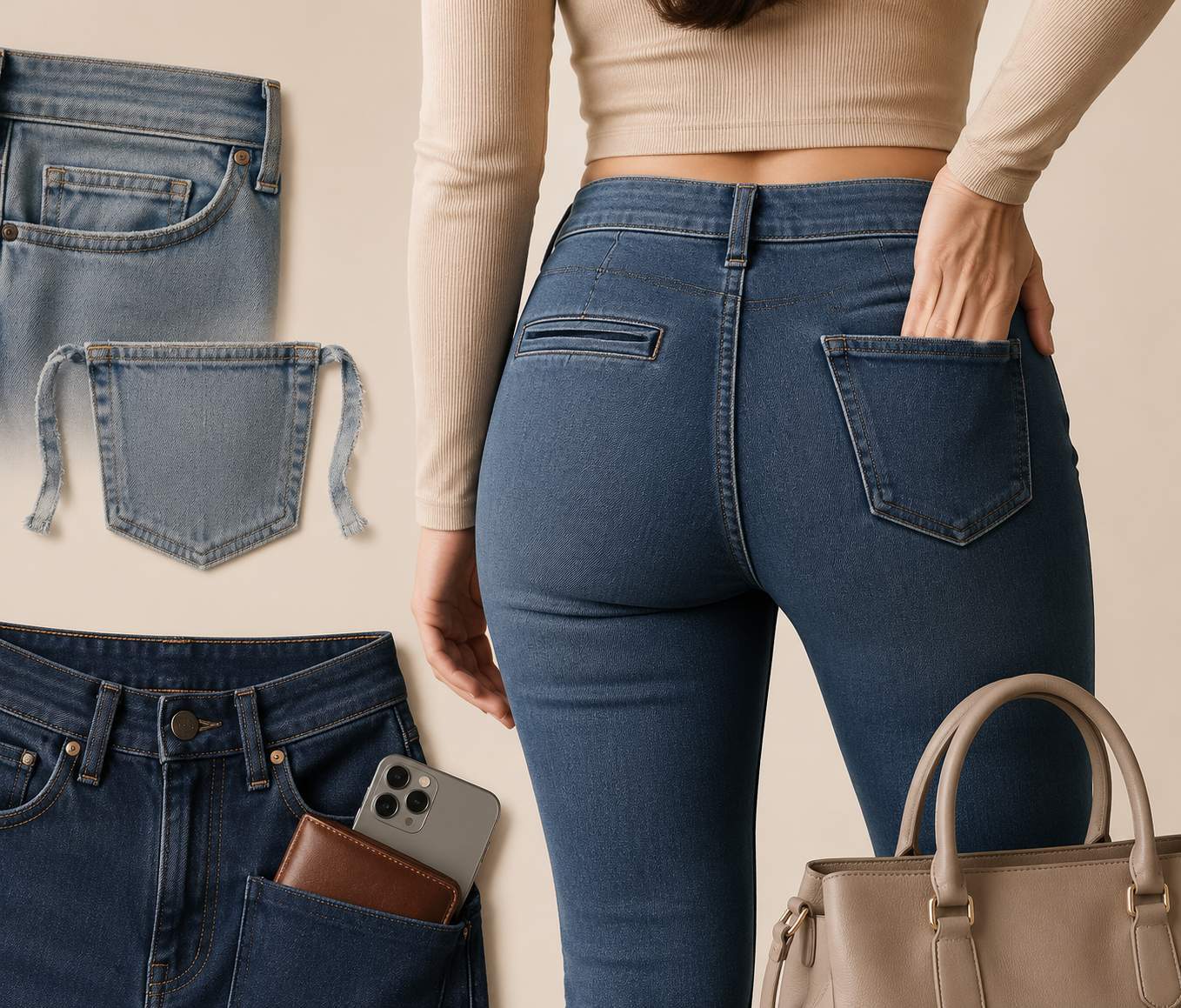
Few clothing complaints feel as universal as this one: why can a man fit a phone, wallet, keys, and maybe half his life into his jeans pockets, while a woman can barely fit two fingers into hers? Women’s jeans often look stylish on the rack, flattering in product photos, and clean on the body, but the moment a customer tries to put a phone in the front pocket, the truth shows up. The pocket is too short, too narrow, fake, sewn shut, or simply useless. This is not just a small inconvenience. It affects how women move through daily life, how they shop, how they judge product quality, and how much trust they place in a denim brand.
Women’s jeans often have small or fake pockets because many brands prioritize a smooth, slimming silhouette over storage function. Historically, women’s clothing used separate tie-on pockets and later handbags, while men’s clothing kept built-in utility pockets. Today, smaller pockets are also linked to slim fits, cost control, fashion tradition, and outdated assumptions about what women need.
For denim designers, boutique owners, and private label brands, this problem is actually an opportunity. Customers are already frustrated. They are already asking why women’s pockets are smaller than men’s. They are already looking for jeans that can fit a phone without ruining the shape. A brand that solves this issue can stand out quickly, especially in a market where many generic wholesale jeans still repeat the same old pocket mistakes.
Why Don’t Women’s Jeans Have Real Pockets?
Women’s jeans often do not have real, deep pockets because brands try to keep the front hip area smooth, slim, and visually clean. Small or fake pockets reduce bulk, pocket lines, and fabric distortion, especially in skinny, stretch, and high-rise jeans. However, this design choice often frustrates customers who want jeans that are both stylish and practical.
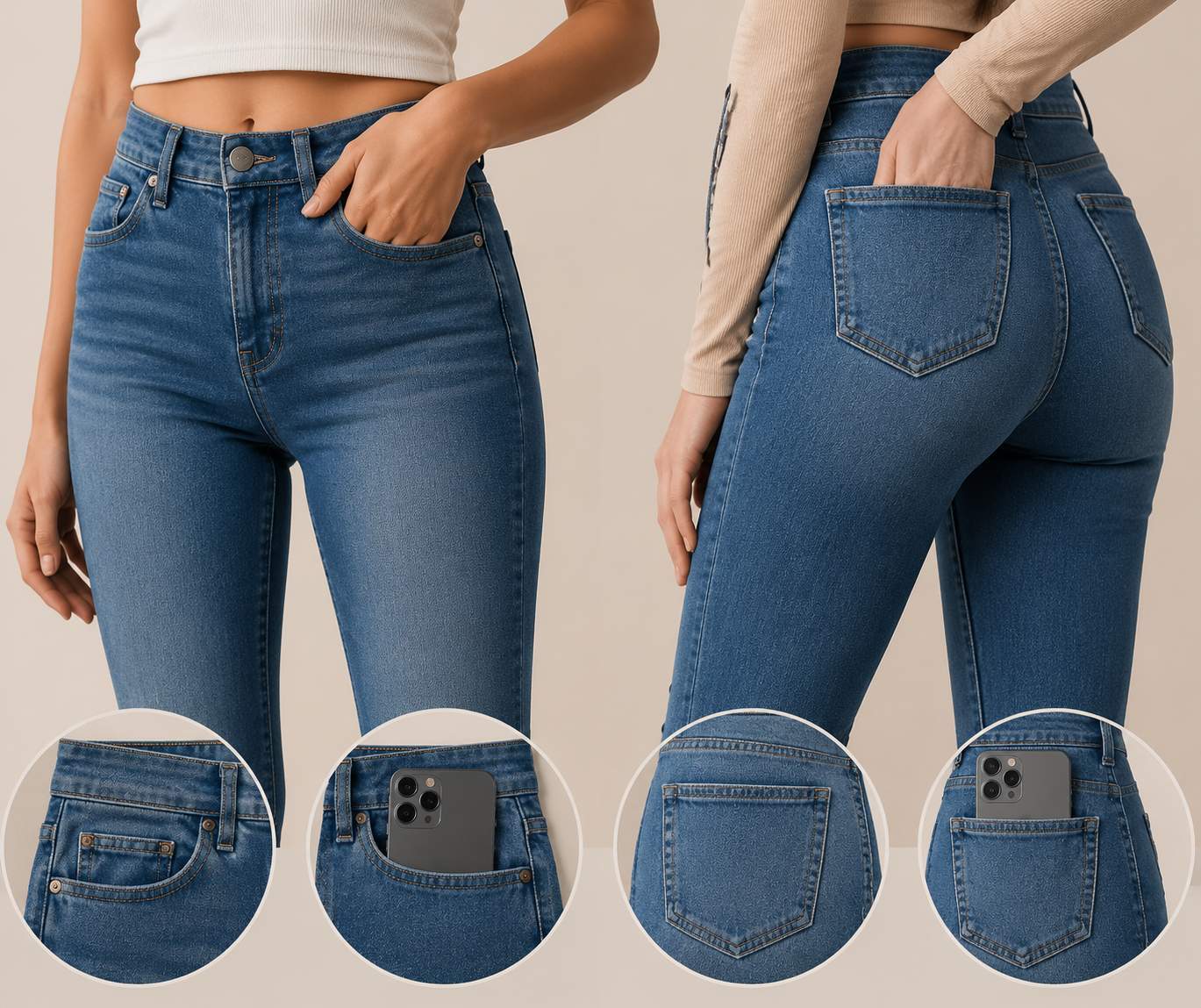
Why are women’s jeans pockets often so small?
Women’s jeans pockets are often small because many brands design around appearance first. A deep pocket bag can create visible lines under tight denim. It can add bulk around the pelvis, hip, and upper-thigh area. In skinny jeans or body-contour stretch jeans, that extra fabric may disturb the clean front shape that brands want to show in product photos.
This is especially common in slim-fit fashion denim. The front pocket may be present, but it is not deep enough to hold a phone or wallet. Sometimes it can only hold a coin, lip balm, or a few fingers. The result is a pocket that technically exists but does not really serve the customer’s daily needs.
Why are the pockets in women’s pants so small?
The pockets in women’s pants are small because of a mix of fashion history, body-shaping expectations, handbag culture, cost control, and production habits. Many women’s pants are designed to look smooth, fitted, and visually slimming. Deep pocket bags can interfere with that goal if they are not engineered well.
But that does not mean small pockets are unavoidable. It means many brands have not invested enough in better pocket engineering. A deeper pocket can still look clean if the pattern, fabric, opening angle, and pocket-bag material are planned properly.
Why do women’s jeans sometimes have fake pockets?
Fake pockets are used to create the visual look of classic jeans without adding actual storage space. They give the garment the appearance of denim construction—pocket openings, stitching, or decorative welts—while avoiding pocket bulk.
There are three common versions:
Fully fake pockets with no pocket bag.
Very shallow pockets that look real but barely function.
Real pockets sewn shut for display, which the customer can sometimes open.
Fake pockets may help jeans look flatter on the hanger or smoother in a fitting room, but they can disappoint customers. A shopper who sees a pocket expects it to work. When it does not, the product feels less honest.
Is the lack of women’s pockets a fashion problem or a design choice?
It is both. It is a fashion problem because women’s clothing has a long history of prioritizing silhouette over utility. It is also a design choice because modern brands still decide whether to make functional pockets or not.
The customer’s frustration is simple: women do not want to choose between looking good and carrying essentials. A good pair of jeans should not force someone to carry a handbag just to hold a phone, keys, or cardholder. Modern women’s denim should be built for real life.
Dive Deeper
The pocket issue reveals a deeper tension in fashion: who is the garment really designed for? Is it designed for the product photo, the hanger, the trend board, or the person wearing it all day?
For decades, many women’s jeans were designed to make the body look smooth, slim, and shaped. That can be a valid design goal. Customers do want jeans that flatter the body. But when the pursuit of a “clean silhouette” removes basic function, the garment becomes less customer-centered.
This is where denim brands need to think more critically. A pocket is not just a storage detail. It is part of the wearing experience. When a woman buys jeans and discovers the pockets are fake, she may feel tricked. When her phone sticks halfway out of the pocket, she may feel annoyed. When she has to carry a bag for every small item, she may feel the product was not designed with her life in mind.
From a manufacturing perspective, functional pockets are not impossible. They simply require smarter development. The pocket bag can be shaped to follow the body. The pocketing fabric can be thin but strong. The opening angle can be adjusted. The depth can change depending on whether the jean is skinny, straight, baggy, plus size, high-rise, or relaxed. Pocket corners can be reinforced with bartacks or rivets. The pocket can be designed to hold a phone without creating a bulky front panel.
For boutique owners and denim designers, this is a strong selling point. Many brands compete on wash, fit, or price. Fewer brands compete on solving everyday frustrations. A women’s jean with genuinely functional pockets can feel refreshing because it tells the customer, “We actually thought about how you live.”
That is why DiZNEW’s custom denim development can be valuable for brands targeting U.S. boutique customers. Instead of accepting generic pocket patterns from wholesale jeans, buyers can customize pocket depth, pocket shape, fabric, placement, and reinforcement based on the style and target customer.
What Is the History Behind Women’s Jeans Pockets?
Women’s pockets have a complicated history. Men’s clothing developed with built-in pockets for work, money, tools, and travel, while women often used separate tie-on pockets or handbags. As women’s fashion became more body-focused, built-in pockets became smaller or disappeared. Today, the pocket debate reflects both fashion history and modern expectations for practical clothing.
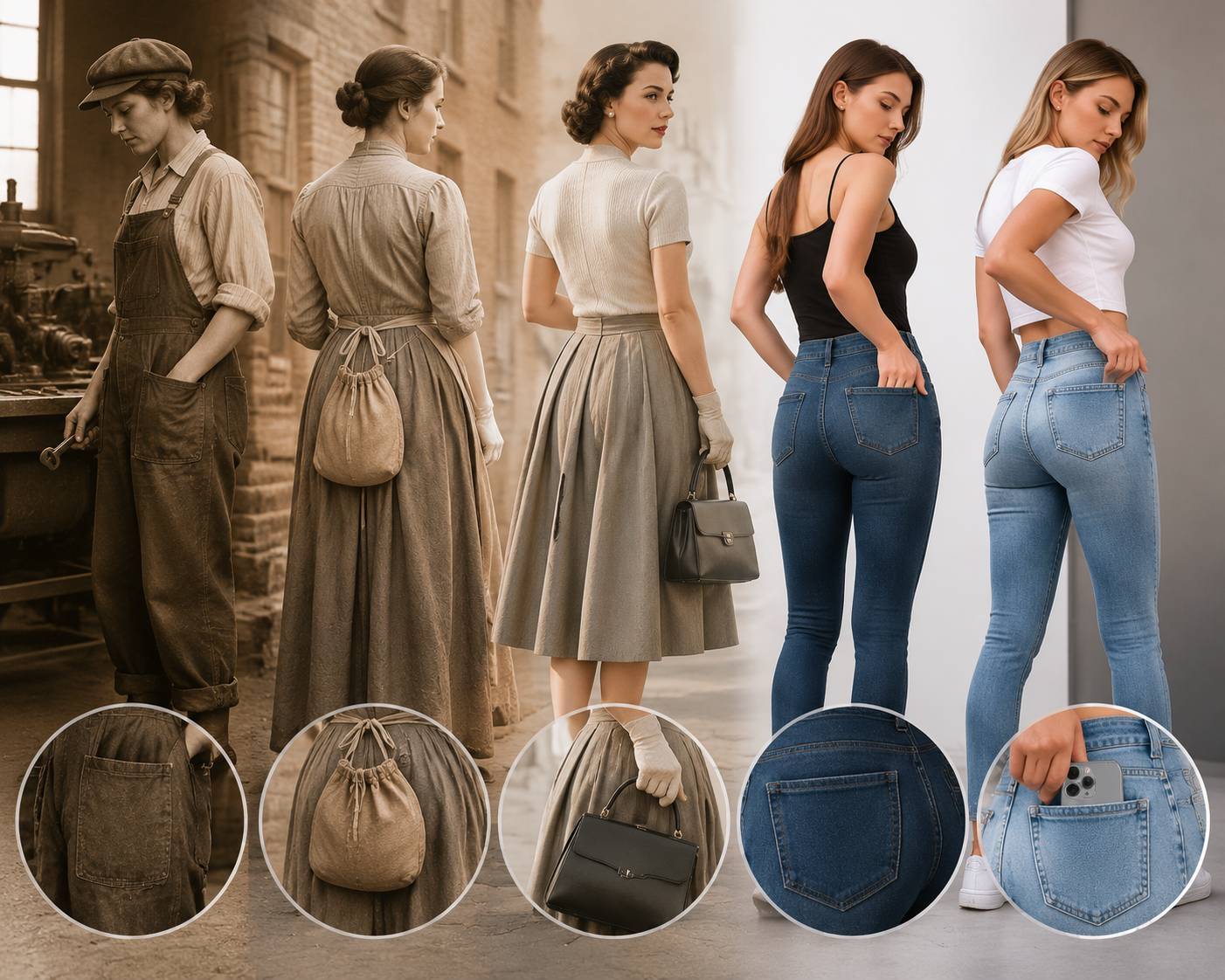
Did women’s clothing always have smaller pockets?
Women’s clothing did not always lack storage, but the storage was often separate from the garment. Historically, many women used tie-on pockets worn under skirts. These pockets could be surprisingly practical because they allowed women to carry personal items securely.
Over time, as fashion silhouettes changed, pockets became more complicated. Slimmer dresses, closer-fitting garments, and changing social expectations reduced space for hidden storage. Eventually, handbags became the expected accessory for many women, while men’s clothing continued to include built-in pockets.
Why did they get rid of women’s pockets?
Women’s pockets were reduced or removed over time for several reasons. Fashion silhouettes became slimmer. Designers wanted cleaner body lines. Handbags became more common. Brands assumed women would carry bags instead of needing large pockets. Smaller pockets also use less fabric and can simplify construction.
But it is not accurate to say there was only one reason. It was a combination of fashion, gender expectations, commercial habits, and garment engineering. The problem is that many of these old assumptions still influence women’s jeans today, even though modern customers have different needs.
Why did pockets become standard in men’s clothing but not women’s clothing?
Men’s clothing was historically tied to work, travel, money, tools, and public life. Built-in pockets were useful and expected. Men’s jeans came from workwear traditions, so practical pockets made sense.
Women’s fashion was often shaped by different priorities: elegance, body line, social presentation, and accessories. This is why men’s jeans typically kept deeper, more practical pockets while women’s jeans often became more fitted and less functional.
The modern question is not whether this history exists. It does. The real question is why brands keep repeating it when customers are clearly asking for something better.
When did functional pockets become a women’s fashion issue?
Functional pockets became a major modern fashion issue when daily essentials changed. Today, most people carry smartphones, cardholders, keys, earbuds, lip balm, and small personal items. A pocket that cannot fit a phone feels outdated.
Online reviews, social media, and fashion criticism have made the issue more visible. Women now openly complain about fake pockets and shallow pockets. This creates pressure on brands to improve. Function is no longer a hidden detail; it is part of product value.
Dive Deeper
The history of women’s pockets is not just a cute fashion trivia topic. It connects to mobility, independence, and how clothing supports daily life. A pocket allows the wearer to move freely without needing another object. It gives convenience. It gives security. It gives independence.
When women’s clothing lacks pockets, it quietly assumes that women will carry a bag, that aesthetics matter more than function, or that convenience is less important. Many customers reject those assumptions now. They want clothing that matches their real lives.
This historical background also helps denim brands understand why the pocket issue feels emotional. The frustration is not only, “My phone does not fit.” It is also, “Why does men’s clothing get function by default, while women’s clothing treats function as optional?”
For modern boutique brands, this creates a chance to design with empathy. A good women’s jean should ask: What does the customer carry? How does she move? Does she drive, work, travel, shop, walk, or attend events in these jeans? Does she need pockets for her phone? Does she want a smooth front panel? Does she prefer a polished fit after 40? Is she buying for streetwear, casual office wear, plus size comfort, or premium denim styling?
The answer will not be the same for every jean. A super-tight skinny jean may need a low-bulk pocket solution. A straight jean can handle medium-depth front pockets. A baggy jean can support deeper utility pockets. A denim short may even use visible pocket bags as a styling feature. A plus size jean may need pocket placement that supports proportion and comfort.
This is where a custom manufacturer becomes more useful than a generic wholesaler. Instead of accepting one standard pocket pattern, a brand can develop pocket solutions around its audience. DiZNEW can help buyers adjust pocket depth, placement, bag shape, stitching, rivets, bartacks, and pocketing fabric so the product feels practical without losing visual appeal.
How Can You Stop Skinny Jeans From Bunching or Bagging at the Knees?
Women’s jeans pockets are usually smaller than men’s because women’s denim often prioritizes a smooth hip shape, fitted silhouette, and lower front bulk. Men’s jeans are more rooted in workwear utility and often have deeper pocket bags. Data-backed pocket studies have shown that women’s front jean pockets are significantly shorter and narrower than men’s pockets.
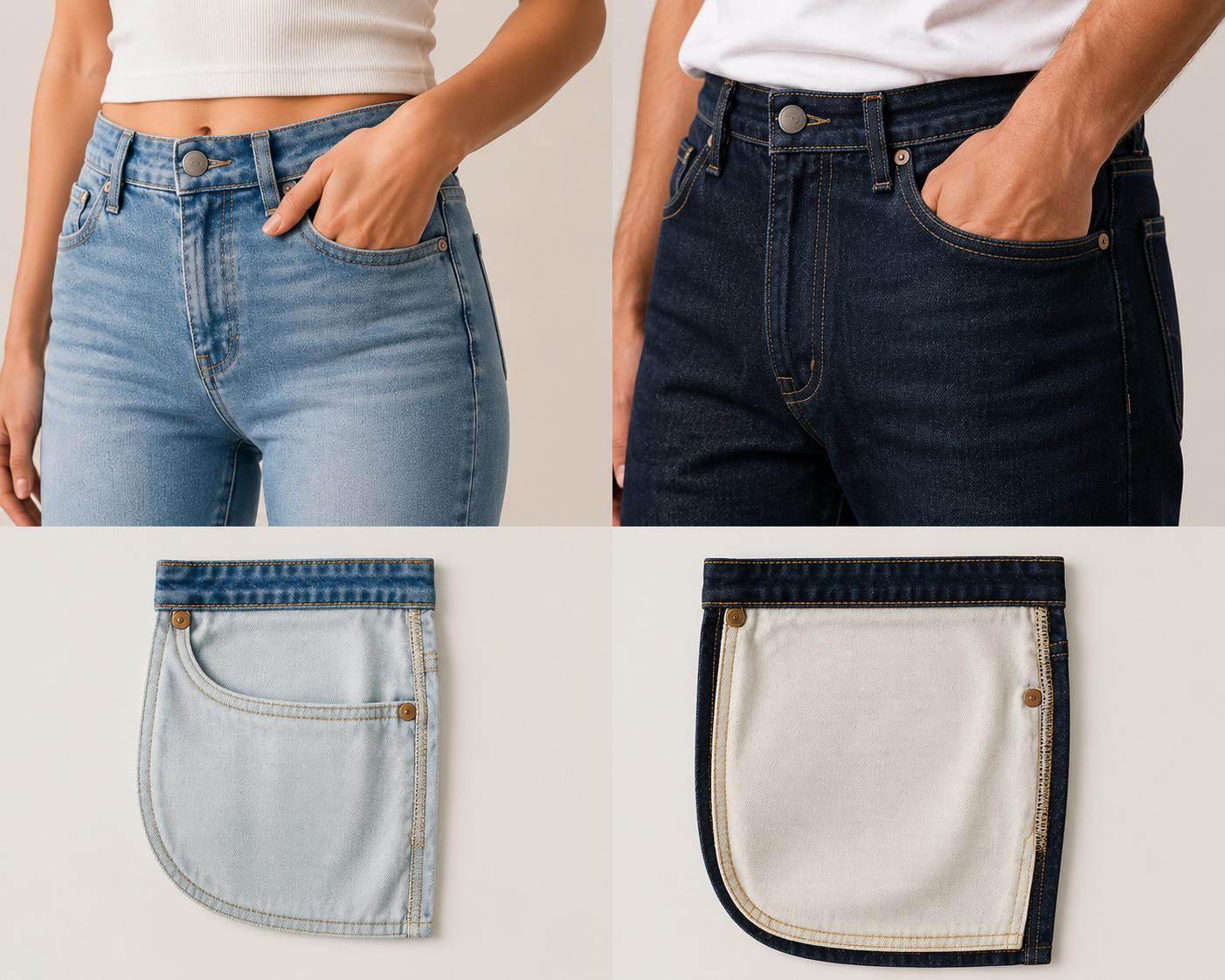
Are women’s jeans pockets really smaller than men’s?
Yes. Studies comparing men’s and women’s jeans have found that women’s front pockets are significantly smaller. This confirms what many shoppers already experience: men’s jeans can often hold a phone, wallet, and keys, while women’s jeans may not even hold a full hand comfortably.
This matters because pocket size directly affects daily convenience. A pocket is not decorative if the customer expects it to hold something. When the pocket fails, the garment fails part of its job.
Why are men’s pockets so much bigger than women’s?
Men’s pockets are bigger because men’s clothing historically prioritized function. Men’s jeans also often have looser front panels and less pressure to maintain a smooth hip line. Deep pockets are expected in men’s denim.
Women’s jeans are often cut closer to the body, especially around the hip, pelvis, and thigh. Designers may reduce pocket depth to avoid visible pocket lines, bulk, or distortion. The issue is partly practical, but also cultural. Men’s clothing assumes storage as normal. Women’s clothing often treats storage as negotiable.
Do skinny jeans and tight jeans make pocket design harder?
Yes, tight jeans make pocket design harder. In skinny jeans, every extra layer of fabric can show. A deep pocket bag may create a visible outline or make the front panel feel crowded. Stretch denim can also cling to pocketing fabric, making the pocket line more visible.
But “harder” does not mean impossible. It means the pocket needs better engineering. The pocket bag may need a slimmer shape, thinner fabric, better angle, and careful placement. A skilled denim factory can create more functional pockets without ruining the silhouette.
Does pocket size affect the fit of women’s jeans?
Yes. Pocket size affects front rise, hip smoothness, thigh comfort, and visual shape. If the pocket bag is too thick, poorly shaped, or badly placed, it can create bumps, pulling, or awkward lines.
Good pocket design is not simply making the pocket bigger. It is making the pocket bigger in the right way. The pocket must work with the pattern, fabric, rise, and fit.
Why do some brands still choose small pockets even when customers dislike them?
Some brands keep small pockets because changing them requires extra development. A deeper pocket may need pattern revision, fit testing, different pocketing fabric, and new samples. Fast-fashion brands may avoid that cost and keep using familiar patterns.
Other brands prioritize product photos over function. Small pockets can make jeans look smoother in images, even if they disappoint customers later. This is short-term thinking. A jean that looks good online but frustrates the customer may hurt reviews and repeat purchases.
Dive Deeper
The size gap between men’s and women’s pockets is one of the clearest examples of gendered product design. It shows that clothing is not neutral. Every garment carries assumptions about the wearer.
Men’s jeans often assume the wearer needs to carry things. Women’s jeans often assume the wearer wants to look sleek first and carry things somewhere else. But modern customers are not accepting that tradeoff as easily. They want beauty and utility in the same product.
This does not mean women’s jeans should simply copy men’s jeans. Women’s bodies, fits, rises, and styling preferences can be different. A pocket solution for men’s relaxed work jeans may not work perfectly in women’s high-rise skinny jeans. But women’s jeans deserve the same level of functional engineering.
The best question is not, “Why can’t women’s pockets be as big as men’s?” The better question is, “How can each women’s denim style have the most functional pocket possible for its fit?”
For skinny jeans, that may mean a low-bulk pocket deep enough for small essentials. For straight jeans, it may mean full front pockets that fit a phone. For baggy jeans, it may mean deep streetwear pockets or cargo pocket options. For plus size jeans, it may mean pocket placement that supports proportion and avoids pulling. For denim shorts, it may mean pocket bags designed as part of the look.
For brands, this creates product differentiation. A boutique can say, “Our women’s jeans have functional front pockets designed to fit real life.” That is more meaningful than generic claims like “premium quality” or “perfect fit.” Customers understand pocket frustration immediately.
DiZNEW can help brands turn this insight into a real product. Pocket depth, pocket opening, pocketing fabric, coin pocket size, back pocket placement, cargo pocket design, hidden phone pockets, rivets, bartacks, and decorative stitching can all be customized. This makes the jeans feel more intentional and more valuable.
Can Women’s Jeans Have Deep, Functional Pockets and Still Look Good?
Yes, women’s jeans can have deep, functional pockets and still look good, but the pockets must be engineered correctly. Designers need to balance pocket depth, fabric thickness, opening angle, pocket placement, fit type, and body proportion. Functional pockets work especially well in straight, baggy, plus size, relaxed, cargo, and utility-inspired denim styles.
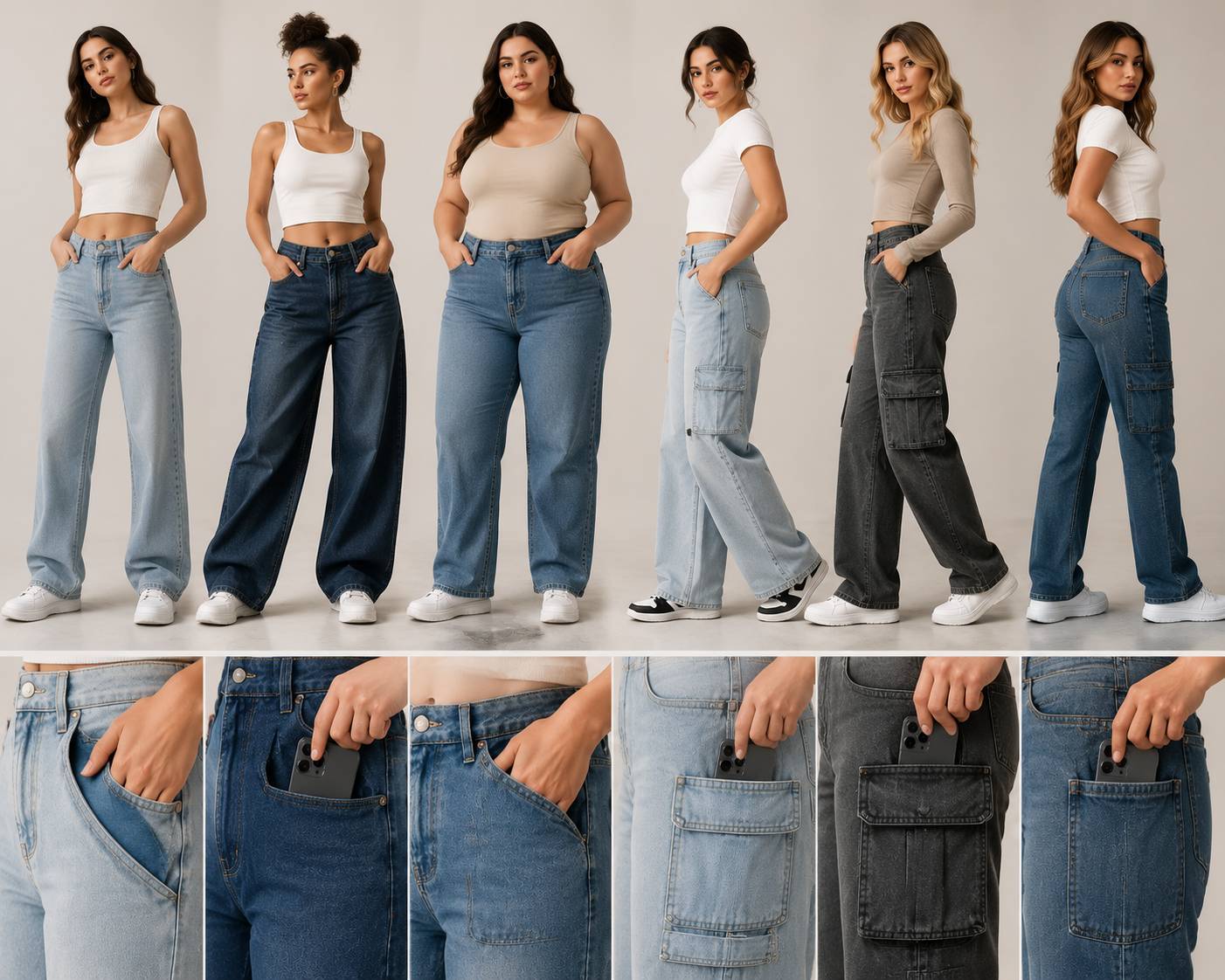
How can designers make women’s jeans pockets more functional?
Designers can improve women’s pockets by increasing pocket depth, widening the pocket opening, using thinner but durable pocketing fabric, adjusting the pocket angle, and reinforcing stress points. They can also match pocket design to the jean style instead of using one pocket for every fit.
A functional pocket should be tested with real objects: a phone, cardholder, keys, or hand. If the pocket looks good but cannot hold anything, it is not solving the customer’s problem.
Can women’s jeans fit a phone without ruining the silhouette?
Yes. Women’s jeans can fit a phone if the pocket is designed properly. The pocket must have enough depth, but the bag shape and fabric thickness matter too. A badly shaped deep pocket can look bulky. A well-shaped deep pocket can sit flat and still hold a phone.
Brands should test this directly. Put a phone in the pocket. Sit down. Walk. Check the front shape. Check whether the phone slips out. Check whether the pocket pulls the fabric. If the pocket passes real-life testing, it becomes a real selling point.
What jeans not to wear after 40?
Women over 40 do not need strict denim rules. The better question is: what jeans feel polished, comfortable, and useful for your lifestyle? Some customers may prefer to avoid extremely low-rise jeans, overly tight skinny jeans, excessive distressing, thin ultra-stretch jeggings, or jeans with fake pockets because these styles may feel less practical or less refined.
Better options often include straight jeans, relaxed slim jeans, dark-wash jeans, bootcut jeans, wide-leg jeans, high-rise jeans, and functional-pocket denim. The goal is not to dress “younger” or “older.” The goal is to wear jeans that make life easier and confidence stronger.
Are functional pockets becoming a women’s denim trend?
Yes. Fashion is moving toward more practical, utility-focused denim. Cargo jeans, baggy jeans, workwear-inspired denim, patch pockets, utility pockets, carpenter details, and relaxed fits all show that function is becoming fashionable again.
This trend is connected to comfort, streetwear, Gen Z styling, travel dressing, and everyday practicality. Customers want clothes that work, not just clothes that photograph well.
Dive Deeper
Functional pockets and good design are not enemies. The idea that women must choose one or the other is outdated. The real challenge is development skill.
A deep pocket on the wrong jean can look bulky. But a shallow pocket on every jean is lazy design. The better approach is to customize pocket solutions by silhouette. Skinny jeans need low-bulk engineering. Straight jeans can support more depth. Baggy jeans can embrace utility. Plus size jeans need proportion-aware placement. Cargo denim can turn pockets into a fashion statement.
The “what jeans not to wear after 40” question is useful because it shows how customers are not only thinking about trends. They are thinking about lifestyle, confidence, comfort, and usefulness. A woman over 40 may not want jeans that require constant adjusting. She may not want fake pockets. She may want a polished dark wash, a flattering rise, a comfortable waistband, and pockets that actually hold essentials. That is not boring. That is intelligent design.
Younger customers also care about function, but they may express it differently. Gen Z may prefer baggy jeans, cargo denim, and utility styling because those silhouettes feel relaxed, expressive, and practical. In that world, pockets are not hidden; they are part of the look.
This means functional pockets can serve multiple markets. For mature customers, they offer convenience and polish. For streetwear customers, they offer utility and attitude. For plus size customers, they can support comfort and proportion. For boutique owners, they create product stories that feel relevant.
Brands should also show pocket function in marketing. A product page can include a close-up photo of a phone fitting into the pocket. A short video can show a model putting keys or a cardholder into the pocket. A comparison image can show the difference between a shallow pocket and a functional pocket. This kind of content builds trust because it answers a real customer concern.
DiZNEW can support this by developing pocket samples and testing different pocket solutions before bulk production. That allows boutique brands to find the right balance between shape and function.
How Can Denim Brands Customize Better Pockets for Women’s Jeans?
Denim brands can customize better women’s pockets by adjusting pocket depth, pocket opening, pocket-bag shape, pocketing fabric, back pocket placement, coin pocket size, utility pockets, hidden phone pockets, stitching, rivets, and bartacks. Better pocket design improves daily wear, customer satisfaction, product differentiation, and private label brand value.
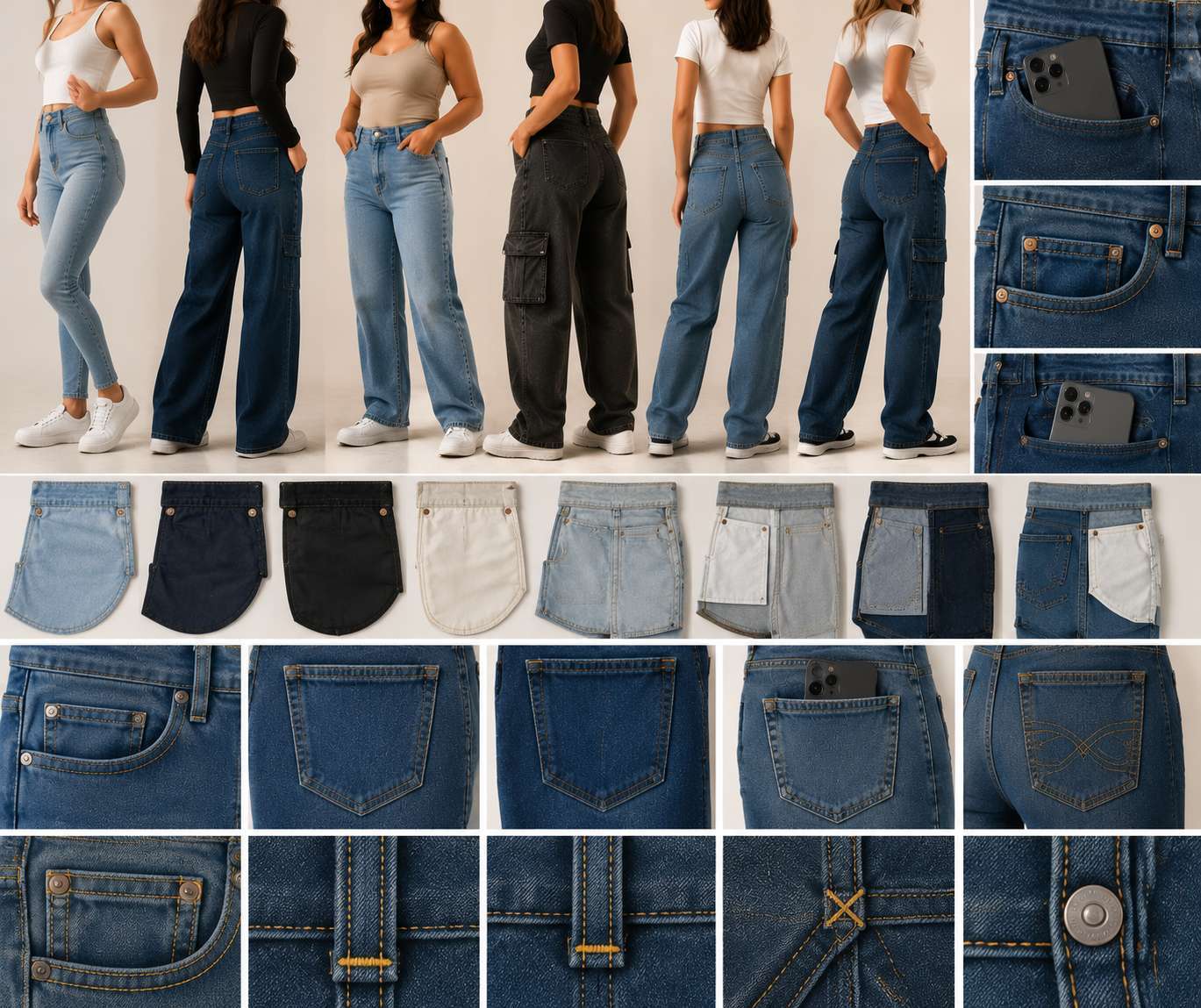
How can pocket design improve customer satisfaction?
Practical pockets reduce frustration. A customer who can fit her phone, cardholder, or keys into her jeans is more likely to feel the product was designed for real life. That improves satisfaction and may reduce returns.
Functional pockets can also become a product selling point. Instead of saying only “high-rise straight jeans,” a brand can say “high-rise straight jeans with deep functional front pockets.” That is more specific and more useful.
Why should boutique owners care about women’s pocket construction?
Boutique owners should care because pocket complaints are common and emotional. Customers remember the irritation of useless pockets. They also remember the surprise of finding jeans that actually solve the problem.
Better pockets can separate custom denim from generic wholesale jeans. If every competitor sells similar washes and fits, functional pocket design can become a reason customers choose your brand.
How can DiZNEW help brands develop women’s jeans with better pockets?
DiZNEW can customize pocket size, pocket depth, placement, shape, stitching, rivets, bartacks, and pocket fabric. The factory can help brands develop pockets for plus size jeans, baggy jeans, stacked jeans, straight jeans, selvedge jeans, skinny jeans, jogger jeans, denim shorts, denim jackets, and denim shirts.
DiZNEW supports OEM/ODM denim development for U.S. boutique owners, denim designers, online stores, influencer brands, and high-end custom clients. Buyers can start from a sketch, reference photo, sample, AI image, or tech pack.
How can brands turn functional pockets into a selling point?
Brands can turn functional pockets into a selling point by making the function visible. Use close-up photos. Show a phone fitting into the pocket. Mention pocket depth in the product description. Explain pocket construction. Compare shallow pockets with improved pockets. Use social content to answer questions like “Why are women’s jeans pockets so small?”
Strong product language might include:
“Deep functional front pockets.”
“Phone-friendly pocket design.”
“Designed for real daily wear.”
“Utility-inspired pockets without bulky fit.”
“Custom pocket placement for better proportion.”
“Reinforced pocket corners for durability.”
Specific claims feel more trustworthy than vague marketing.
Dive Deeper
Pocket customization is a practical way for denim brands to move beyond generic products. Many boutique owners start by buying wholesale jeans, but wholesale often limits what can be changed. The pocket size, fit, wash, labels, and trims are already decided. Custom manufacturing allows brands to solve specific customer problems.
This is especially important in women’s denim because the market is crowded. Customers can find endless skinny jeans, straight jeans, baggy jeans, and shorts online. What makes one pair different? Sometimes it is the wash. Sometimes it is the fit. Sometimes it is the brand story. But function can be just as powerful.
A woman who has spent years complaining about tiny pockets may become loyal to a brand that finally gives her usable pockets. A plus size customer may appreciate pockets placed to flatter her proportions. A streetwear customer may love deep cargo pockets. A traveler may want jeans that hold essentials securely. A boutique customer over 40 may want polished jeans that look good and work in real life.
The key is not to add giant pockets to every style. The key is to design the right pocket for the right customer. That requires sampling, testing, and communication with the factory.
For example, a brand could develop:
A high-rise straight jean with deep front pockets for everyday wear.
A baggy streetwear jean with cargo pockets and reinforced stitching.
A plus size jean with proportion-adjusted back pockets and functional front pockets.
A denim short with visible pocket bags as a styling detail.
A premium selvedge jean with clean pocketing and durable construction.
A skinny jean with slimmer but still usable low-bulk pockets.
This creates a stronger collection than simply copying what mass-market brands already sell.
DiZNEW’s 30-piece MOQ helps brands test these ideas without taking a huge inventory risk. A boutique can test one functional-pocket style, collect feedback, and then improve or reorder. If the design performs well, DiZNEW can also support larger orders up to 10,000 pieces.
Final Thoughts: Women’s Jeans Pockets Are a Problem, But They Are Also a Product Opportunity
Women’s jeans often have small or fake pockets because of fashion history, slim-fit design habits, handbag culture, cost decisions, and outdated assumptions about what women need from clothing. Men’s pockets are usually bigger because men’s clothing developed around utility and workwear function, while women’s fashion often prioritized body shape and smooth silhouettes.
But modern customers want more. They want jeans that look good, fit well, and work in daily life. They want pockets that can hold a phone, cardholder, keys, or small essentials. They want denim that respects their lifestyle, whether they are shopping, traveling, working, styling streetwear outfits, building a capsule wardrobe, or simply trying to leave the house without carrying a bag.
For brands, this is not just a complaint to ignore. It is a chance to build better products. Functional pockets can become a selling point, a trust signal, and a reason customers choose your jeans over generic wholesale denim.
DiZNEW is a China-based denim R&D, manufacturing, and sales factory with more than 20 years of experience. We specialize in custom denim products for U.S. small and medium buyers, high-end brand clients, denim designers, online boutique owners, and influencer-led fashion stores.
We can customize plus size jeans, baggy jeans, stacked jeans, straight jeans, selvedge jeans, skinny jeans, jogger jeans, denim jackets, denim shorts, denim shirts, and more. Our OEM/ODM services support custom fabric, wash, fit, pocket depth, pocket placement, pocket shape, labels, buttons, rivets, leather patches, hang tags, packaging, and private label production.
If you want to create women’s jeans with deep functional pockets, phone-friendly pockets, utility pocket design, plus size pocket solutions, or a complete private label denim collection, DiZNEW can help turn your sketch, reference photo, sample, or tech pack into a real product.
With low MOQ custom production starting from 30 pieces and capacity for larger orders up to 10,000 pieces, DiZNEW gives boutique brands a flexible path to test, improve, and scale.
Ready to develop women’s denim that looks good and actually works for real life? Contact DiZNEW today to request a quote and start your custom denim project.
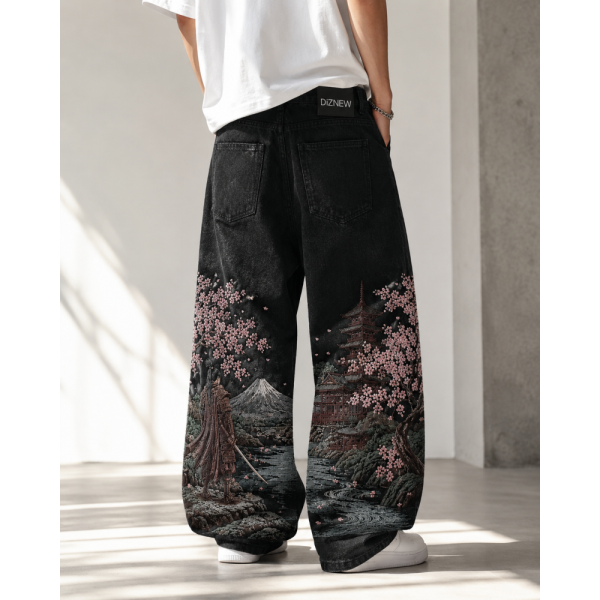
Premium wide-leg denim jeans featuring a vintage washed black finish, detailed Japanese landscape artwork, embroidery-style decoration, and custom brand label options. Designed for streetwear brands, designer labels, and private label collections looking for statement denim with strong visual storytelling.
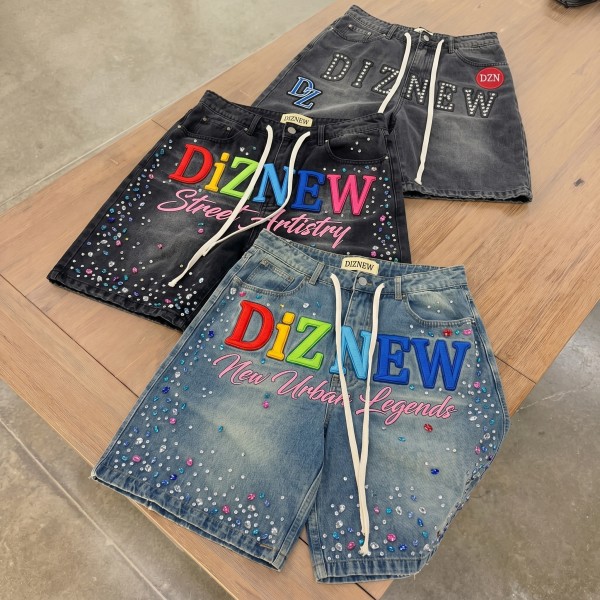
Custom Rhinestone Logo Denim Shorts: Wholesale supply direct. We manufacture premium embroidered baggy jean shorts for brands.
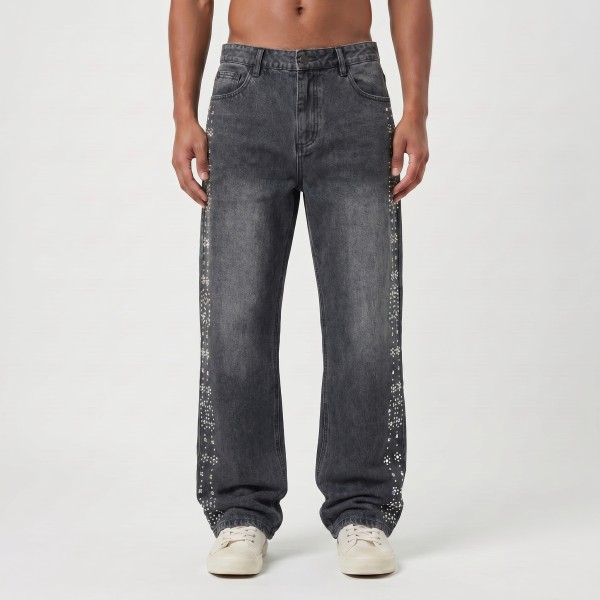
Discover premium DiZNEW denim jeans with decorative studs for a sparkling, stylish look. Order today!
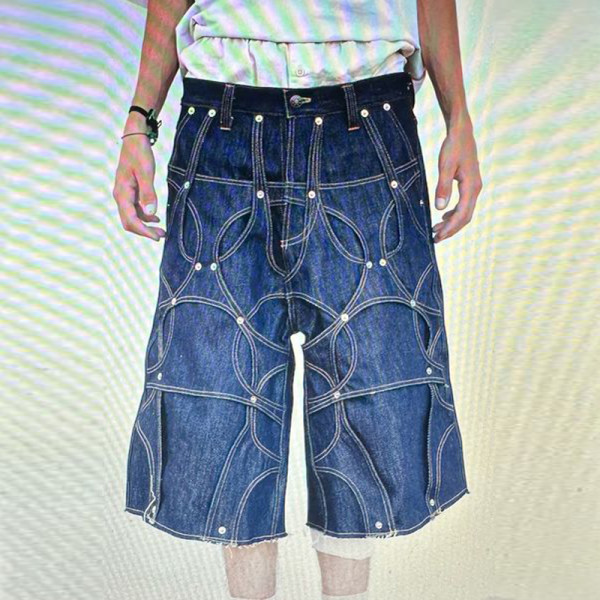
These designer denim shorts for men feature intricate decorative stitching and rivet details, perfect for streetwear fashion. The wide-leg silhouette adds a bold look, ideal for trendsetters.