why do my skinny jeans bunch up at the knees
- Share
- Issue Time
- Jul 13,2026
Summary
Discover common causes of knee bunching in skinny jeans and how to avoid it.
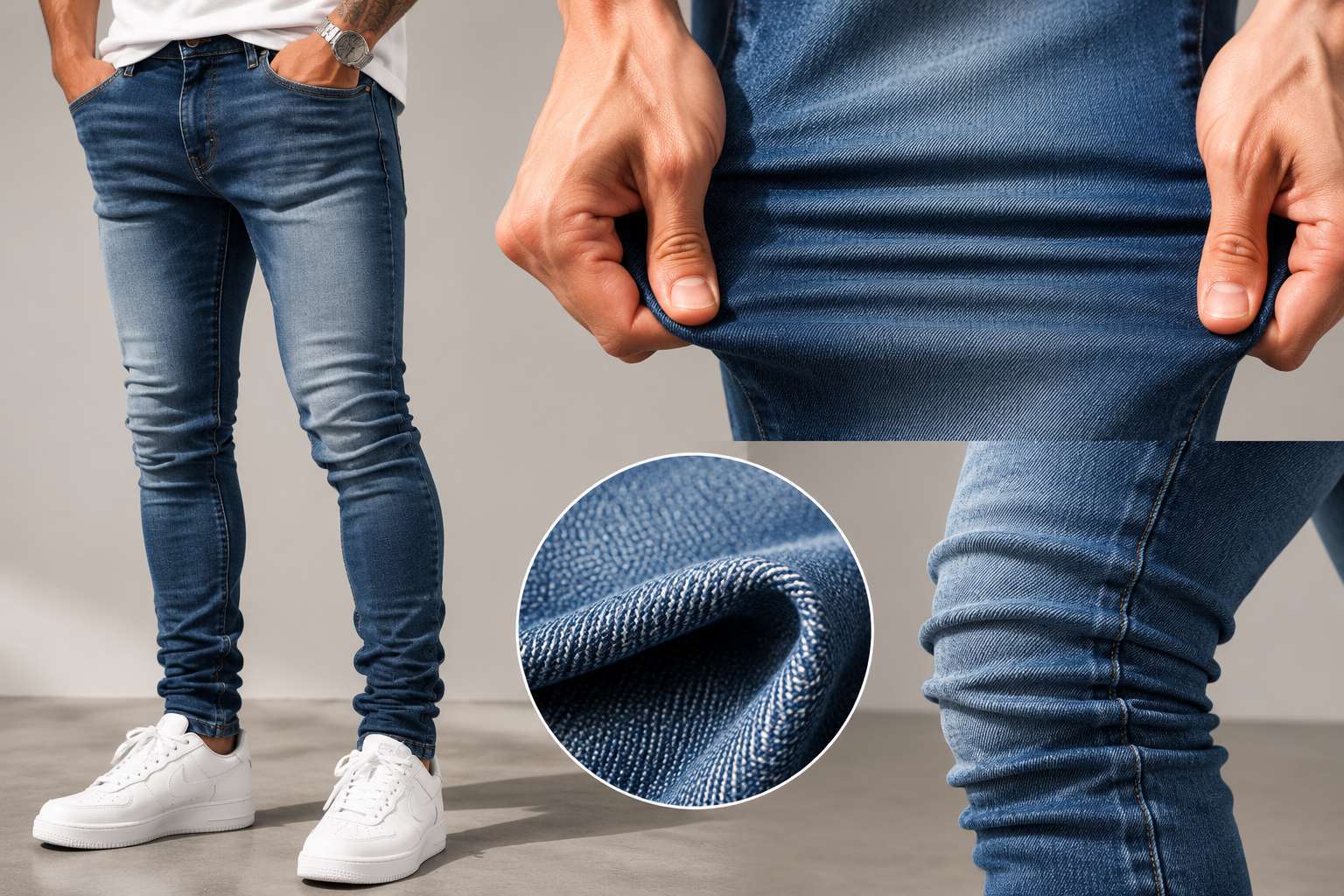
kinny jeans are supposed to look clean, sharp, and close to the leg. That is why it feels so frustrating when they start bunching at the knees after only a few hours of wear. You stand in front of the mirror, the waist looks fine, the hip looks fine, the ankle looks fine—but right around the knees, the fabric suddenly folds, wrinkles, twists, or creates those annoying “knee bags.” For everyday shoppers, it feels like a styling problem. For denim designers and boutique brands, it is actually much deeper. Knee bunching can come from fabric stretch recovery, inseam length, knee placement, thigh and calf balance, wash shrinkage, pattern engineering, and even the customer’s body movement.
Skinny jeans bunch up at the knees because the knee area bends constantly while the fabric has limited room to move. Common causes include jeans that are too tight, too long, poorly patterned, made with weak stretch recovery, or cut with the wrong knee placement. Light creasing is normal, but large folds, saggy knee bags, twisting, or discomfort usually signal a fit or fabric problem.
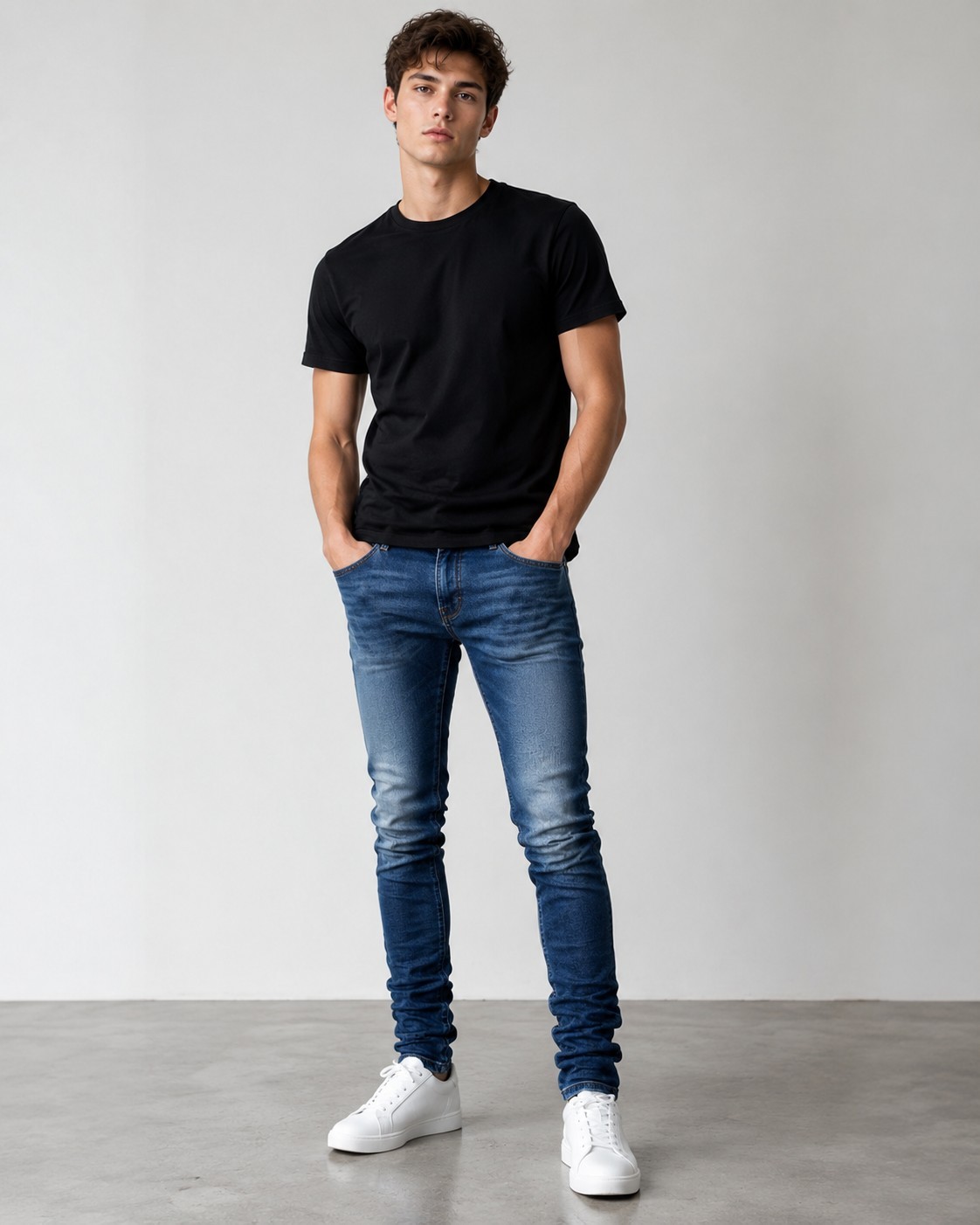
This issue matters because customers remember how jeans feel after real wear, not just how they look in a product photo. A pair of skinny jeans may look perfect on a hanger, but if it bags out at the knees, pinches when sitting, or twists after walking, the customer may return it—or worse, never buy from that brand again. That is why better skinny jeans are not created by simply making the leg tighter. They are created through smarter fabric selection, better pattern balance, fit testing, and professional denim development.
Why Do Skinny Jeans Bunch Up at the Knees?
Skinny jeans bunch up at the knees because the knee is a high-movement area, and tight denim has limited space to flex. Light wrinkles are normal, but excessive bunching can mean the jeans are too tight, too long, poorly patterned, or made with fabric that does not recover well after bending, sitting, walking, or squatting.
Is it normal for jeans to bunch up?
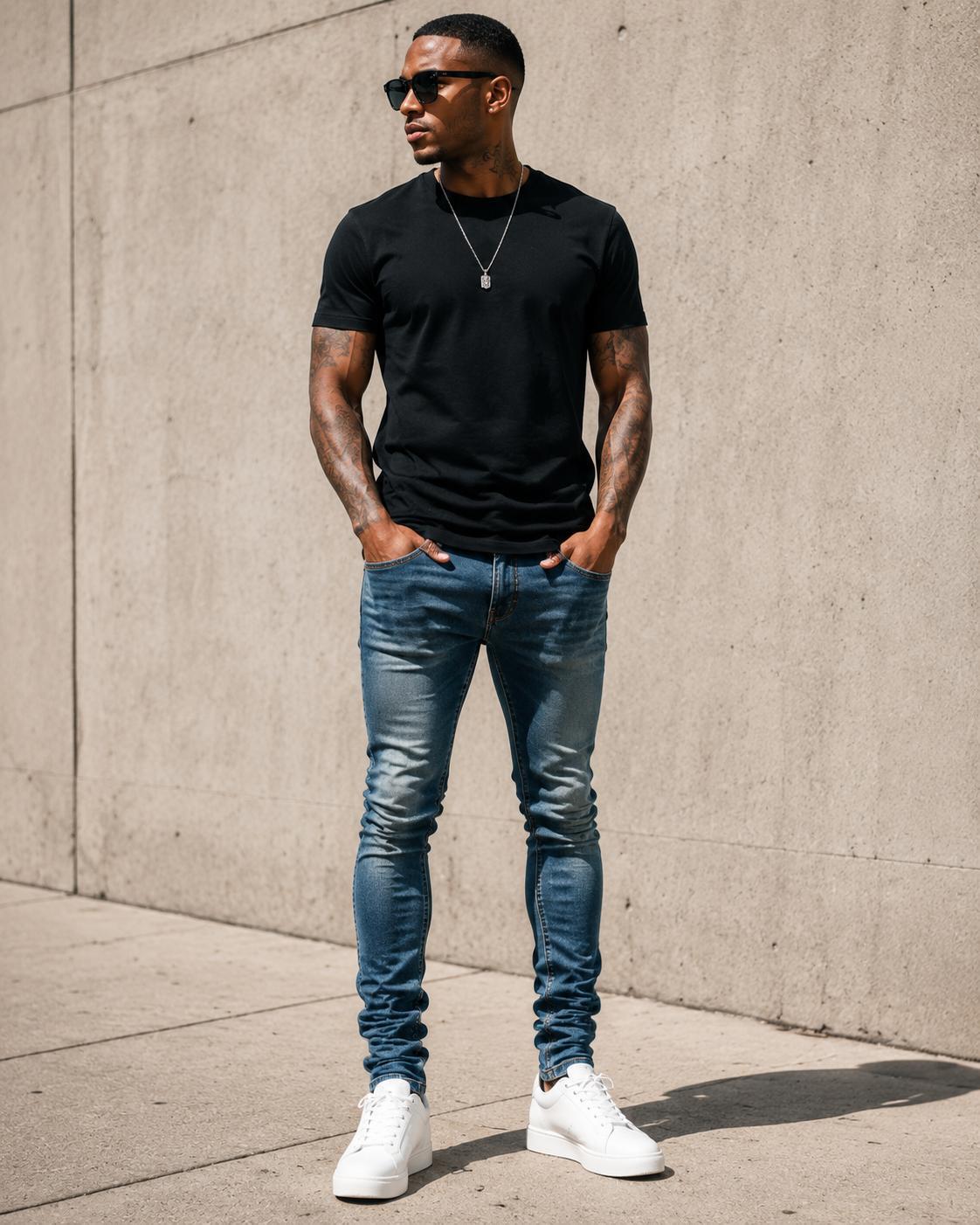
Yes, some bunching is normal. Knees bend all day when people walk, sit, drive, climb stairs, squat, or cross their legs. Any fabric covering the knee has to move with the body. Even high-quality jeans will show some creases around the knee because denim is not a flat metal sheet; it is a woven fabric that reacts to pressure and movement.
The question is not whether jeans should ever wrinkle. The real question is how much bunching is acceptable.
Normal knee bunching usually looks like light creases or soft folds that appear when sitting and relax when standing. Problematic bunching looks like large horizontal folds, permanent knee bags, twisting seams, tight pulling lines, or fabric that stays stretched out after wear.
Why do skinny jeans wrinkle around the knees when I sit or walk?
Skinny jeans wrinkle at the knees because they fit close to the body. When the knee bends, the front of the knee needs more fabric length, while the back of the knee compresses. If the jeans are tight, the fabric has nowhere to move smoothly, so it folds around the joint.
This is why knee wrinkles are especially common in skinny jeans. Straight jeans and relaxed jeans give the knee more room. Baggy jeans allow even more movement. Skinny jeans, by design, reduce space between the fabric and the body. That creates a cleaner silhouette when standing still, but it also increases stress when moving.
Are my skinny jeans too tight if they bunch at the knees?
They might be. If the jeans feel tight through the thigh, knee, or calf, the fabric can pull toward the knee joint. This often creates horizontal wrinkles, pressure lines, or discomfort when sitting.
Signs your skinny jeans may be too tight include:
| Sign | What It Usually Means |
| Horizontal lines across the knee | Fabric is under tension |
| Tight feeling when sitting | Knee or thigh area is too restrictive |
Pattern, cutting, or fabric torque issue | |
Knee pressure or pinching | Not enough movement room |
| Deep folds that do not relax | Fabric recovery or fit problem |
Skinny jeans should follow the leg shape, but they should not feel like compression gear. If the wearer cannot bend comfortably, the fit is too aggressive.
Can skinny jeans bunch because they are too long?
Yes. Extra inseam length can push fabric upward and create folds around the knee or ankle. This is especially common when skinny jeans are too long but the leg opening is narrow. Because the fabric cannot fall cleanly over the shoe, it stacks upward. Sometimes that stacking is intentional. Sometimes it looks messy.
Intentional stacking is common in streetwear and stacked jeans. It usually uses a planned inseam, leg opening, fabric weight, and styling direction. Unwanted bunching happens when the inseam is long without design control. The result can look accidental rather than stylish.
Is knee bunching a fit problem or a fabric problem?
It can be either—or both. Fit-related causes include wrong size, wrong inseam, tight calf, tight thigh, poor rise balance, incorrect knee placement, or weak grading. Fabric-related causes include poor stretch recovery, low-quality elastane, repeated stress, loose weave structure, or finishing that weakens recovery.
A good denim developer does not blame only the customer. If many customers complain about knee bunching, the product needs review. It may need a better fabric, a revised pattern, a different inseam, or more fit testing before bulk production.
Dive Deeper
Knee bunching looks simple, but it is one of the clearest signs that denim is a performance product. Jeans are not only fashion. They are worn on a moving body. That means they must balance appearance, comfort, durability, and recovery.
A skinny jean has a difficult job. It needs to look sleek while still allowing the knee to bend. If it is too loose, it no longer looks skinny. If it is too tight, it creates pressure and wrinkles. If the fabric is too soft, it may collapse. If the fabric is too rigid, it may restrict movement. If the inseam is wrong, the fabric may stack in the wrong place. If the knee point is wrong, wrinkles appear even when the size seems correct.
This is why many cheap skinny jeans fail after a few wears. They may look good in product photos, but the fabric cannot handle repeated bending. The knees stretch out. The seams twist. The silhouette loses its clean shape. Customers may think, “Skinny jeans just don’t work for me,” when the real issue is poor fabric recovery or bad pattern balance.
For boutique owners and denim brands, this is important because fit problems create business problems. Knee bunching can lead to returns, bad reviews, lower customer trust, and weaker repeat purchases. It also affects product photos. If a model shot shows messy knee folds, the jeans look lower quality even if the wash is attractive.
The better approach is to design skinny jeans around real movement. A sample should not only be checked while standing. The wearer should sit, walk, squat lightly, climb stairs, and wear the sample for several hours. If the knees bag out quickly, the product is not ready for bulk production.
DiZNEW helps brands think about these problems before production. For custom skinny jeans, the factory can adjust knee placement, fabric recovery, inseam length, thigh and calf balance, wash shrinkage, and sizing so the final jeans look cleaner and feel more wearable.
How Do Fabric, Stretch, and Recovery Affect Knee Bunching?
Fabric is one of the biggest reasons skinny jeans bunch or bag at the knees. Stretch denim gives comfort, but if the fabric has poor recovery, it may stretch out and stay loose after repeated bending. High-recovery stretch denim, proper yarn construction, suitable fabric weight, and controlled washing help jeans keep a cleaner shape.
Does stretch denim cause jeans to bag out at the knees?
Stretch denim can cause knee bagging if the fabric stretches but does not recover well. Skinny jeans often use elastane, spandex, Lycra, T400, polyester, or dual-core stretch yarns to improve comfort. These fibers allow the fabric to expand as the wearer moves.
But stretch is only half the story. Recovery is the other half. If the denim expands when the knee bends but does not return to its original shape, the knee area becomes loose or baggy.
This is why “more stretch” does not always mean better jeans. A fabric with high stretch but poor recovery can look worse after wear than a fabric with moderate stretch and strong recovery.
Why do some jeans snap back while others stay baggy?
Some jeans snap back because they use better yarn construction, better elastane quality, denser weave, stronger finishing, or recovery-focused fiber blends. Others stay baggy because the fabric structure cannot handle repeated stress.
| Fabric Factor | Effect on Knee Bunching |
| Elastane quality | Better recovery after stretch |
| Fiber blend | Affects comfort, structure, and shape retention |
| Yarn construction | Controls stretch behavior |
Fabric weight | Heavier denim may hold structure better |
Weave density | Tighter weave can improve stability |
Finishing process | Washing can affect hand feel and recovery |
Wear time | Longer wear creates more stress at the knees |
For skinny jeans, the best fabric is not always the stretchiest. It is the fabric that offers comfort, movement, and recovery together.
Is 100% cotton denim better for preventing knee bags?
100% cotton denim can reduce elastic-style bagging because it does not rely on spandex recovery. However, it can still crease, soften, and mold to the body over time. Rigid cotton denim creates natural wear lines instead of stretchy knee bags.
The tradeoff is comfort. Rigid 100% cotton skinny jeans can feel restrictive if the fit is too tight. That is why many skinny jeans use stretch denim. For straight jeans, selvedge jeans, relaxed jeans, and vintage-inspired fits, 100% cotton can work very well. For very tight skinny jeans, a high-recovery stretch blend is often more wearable.
What fabric composition is best for skinny jeans?
Common skinny jean fabric blends include cotton with elastane, cotton-polyester-spandex blends, cotton with T400, or dual-core stretch denim. The best choice depends on the target customer and price point.
For comfort-focused skinny jeans, a moderate amount of high-quality stretch is usually better than extreme stretch. For premium skinny jeans, brands should test recovery after repeated bending. For plus size skinny jeans, fabric recovery is especially important because the garment must support movement without losing shape.
How does washing affect skinny jeans that bunch at the knees?
Washing can temporarily tighten cotton fibers and refresh the shape of jeans. Many people notice that jeans feel tighter after washing and then loosen again with wear. However, washing cannot permanently fix bad pattern balance, weak recovery, or poor sizing.
Heat is also important. Excessive dryer heat can damage elastic fibers over time, especially in stretch denim. For consumers, washing inside out, using a gentle cycle, and air drying can help maintain shape longer. For brands, care labels should give practical instructions so customers do not accidentally shorten the life of the jeans.
Dive Deeper
Fabric recovery is one of the most underrated parts of skinny jean development. Many buyers focus on color, price, and hand feel first. Those are important, but they do not tell the whole story. A fabric can feel soft and stretchy in the sample room, then lose shape after real wear.
This is why fabric testing should be connected to customer experience. A customer does not describe fabric with technical language. They say, “These jeans stretched out,” “The knees got baggy,” “They looked good in the morning but bad by afternoon,” or “They don’t hold me in anymore.” Behind those comments are measurable fabric issues.
Stretch denim has to balance two forces. It must stretch enough to let the body move, but recover enough to keep the silhouette. The knee area is one of the hardest zones because it bends repeatedly. Sitting at a desk, driving, squatting for photos, walking stairs, and daily movement all stress the same area.
For low-cost jeans, fabric recovery is often sacrificed to reduce cost. The jeans may sell quickly because they feel comfortable in the fitting room, but they may not perform well over time. For boutique brands, that is risky. Customers may forgive one bad purchase from a fast-fashion chain, but they expect more from a curated boutique or private label brand.
The best solution is not always expensive fabric. It is the right fabric for the right design. A streetwear stacked jean may need a different fabric than a clean high-rise skinny jean. A plus size skinny jean may need stronger recovery than a lightweight fashion jegging. A selvedge straight jean may use rigid cotton because the goal is structure and fading, not stretch comfort.
DiZNEW can help buyers choose denim fabrics based on real product goals: stretch level, recovery, fabric weight, wash effect, target price, body type, and market positioning. This turns fabric sourcing from guesswork into product development.
How Can Fit, Pattern, and Measurements Cause Knee Bunching?
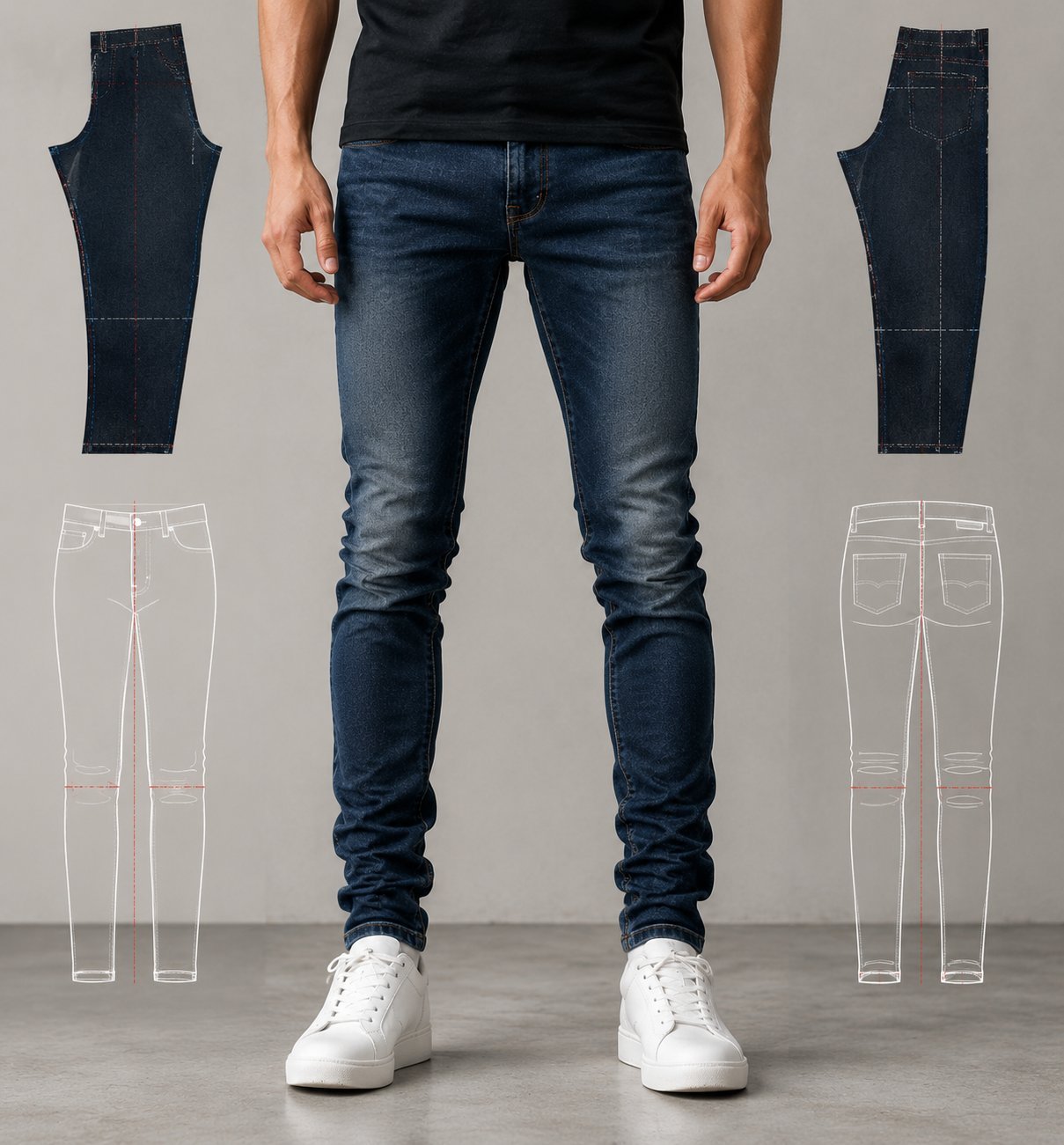
Fit and pattern problems can cause skinny jeans to bunch at the knees even when the fabric is good. Wrong knee placement, tight calves, tight thighs, long inseams, poor rise balance, bad grading, fabric torque, or twisted cutting can create folds, pulling, or knee bags. A clean skinny jean needs accurate pattern engineering.
Can wrong knee placement cause skinny jeans to bunch?
Yes. Jeans patterns have an intended knee position. If that point does not match the wearer’s real knee, the fabric may bend in the wrong place. This can create wrinkles above or below the knee.
Knee placement is especially important for petite, tall, curvy, and plus size customers. A generic pattern may not match every body type. If a petite customer wears regular-length skinny jeans, the knee point may sit too low. If a tall customer wears a standard inseam, the knee point may sit too high.
This is why size grading matters. A brand cannot simply scale one sample up and down without checking how the knee, calf, thigh, and inseam change across sizes.
How do rise, thigh, calf, and inseam measurements affect knee wrinkles?
Knee bunching is affected by the whole leg pattern, not only the knee measurement. A tight calf can pull fabric downward. A tight thigh can pull fabric upward. A long inseam can push fabric into folds. A low or unbalanced rise can create pulling from the crotch down the leg.
For skinny jeans, all these areas work together. If the thigh is too tight but the calf is too loose, the fabric may collect around the knee. If the inseam is too long but the ankle opening is narrow, the fabric may stack upward. If the rise is wrong, the leg may twist or pull when the wearer sits.
Why do skinny jeans twist or pull around the knees?
Twisting can come from fabric torque, incorrect grainline, poor cutting, uneven sewing tension, or unbalanced patterns. When a leg seam rotates toward the front or back, the jeans may feel uncomfortable and look cheap.
This is often a manufacturing and pattern issue, not just a sizing issue. If many pieces in a production run twist the same way, the factory needs to check fabric relaxation, cutting alignment, sewing tension, and pattern balance.
Are plus size skinny jeans more likely to bunch at the knees?
Plus size skinny jeans are more likely to bunch if they are not properly graded. Plus size bodies need thoughtful development around waist, hip, thigh, knee, calf, rise, and back curve. A simple enlarged version of a smaller skinny jean often fails.
Poor plus size grading can create tight spots and loose spots at the same time. The waist may gap, the thigh may pull, the knee may fold, and the calf may feel too tight. Good plus size denim requires real fit testing, not assumptions.
What is skinny jeans syndrome?
“Skinny jeans syndrome” is a popular phrase used to describe discomfort or compression problems caused by extremely tight jeans. In everyday use, people may use it to describe numbness, tingling, pressure, restricted movement, or pain after wearing very tight jeans.
Severe cases are rare, but the warning is useful: skinny jeans should look fitted, not dangerously restrictive. If jeans cause numbness, swelling, tingling, pain, or difficulty moving, they are too tight and should not be worn that way.
For brands, this is also a design responsibility. A good skinny jean should support movement. It should not rely on extreme tightness to create shape.
Dive Deeper
Pattern engineering is where many skinny jeans succeed or fail. A consumer may think, “This size is wrong,” but sometimes the size is not the main issue. The pattern may not match the body.
This is especially true for skinny jeans because the margin for error is small. In relaxed jeans, a small pattern issue may be hidden by extra ease. In skinny jeans, every measurement shows. If the knee is misplaced by even a small amount, wrinkles can appear. If the calf is too tight, movement becomes restricted. If the thigh curve is wrong, the leg may pull. If the rise is too short, sitting becomes uncomfortable.
This is why fit testing should happen on real bodies, not only dress forms. A mannequin does not walk, sit, drive, squat, or climb stairs. A real customer does. Denim brands should test skinny jeans in realistic movements before bulk approval.
Plus size development deserves special attention. Many plus size customers are tired of jeans that look like they were simply enlarged from smaller patterns. Good plus size skinny jeans need a different understanding of body shape, movement, and comfort. Knee bunching in plus size denim is often not the customer’s fault. It is a development issue.
The same applies to petite and tall sizing. If a brand sells only one inseam, it may create knee placement problems for different heights. Offering multiple inseams, or designing with the target height in mind, can reduce knee bunching.
Manufacturing quality also matters. Even a good pattern can fail if cutting is off-grain, fabric is not relaxed before cutting, or sewing tension is uneven. Twisted legs are one of the fastest ways to make jeans feel low quality. Customers may not know the term “fabric torque,” but they notice when the side seam rotates.
DiZNEW’s custom denim development process can help brands correct these issues through pattern review, sample fitting, fabric selection, wash testing, and production quality control. For boutique owners, this means better products and fewer customer complaints.
How Can You Stop Skinny Jeans From Bunching or Bagging at the Knees?
To stop jeans from bagging at the knees, choose denim with better recovery, avoid jeans that are too tight through the knee and calf, select the correct inseam, wash and air-dry properly, avoid high heat, rotate between pairs, and choose a different fit if skinny jeans do not match your body or movement needs.
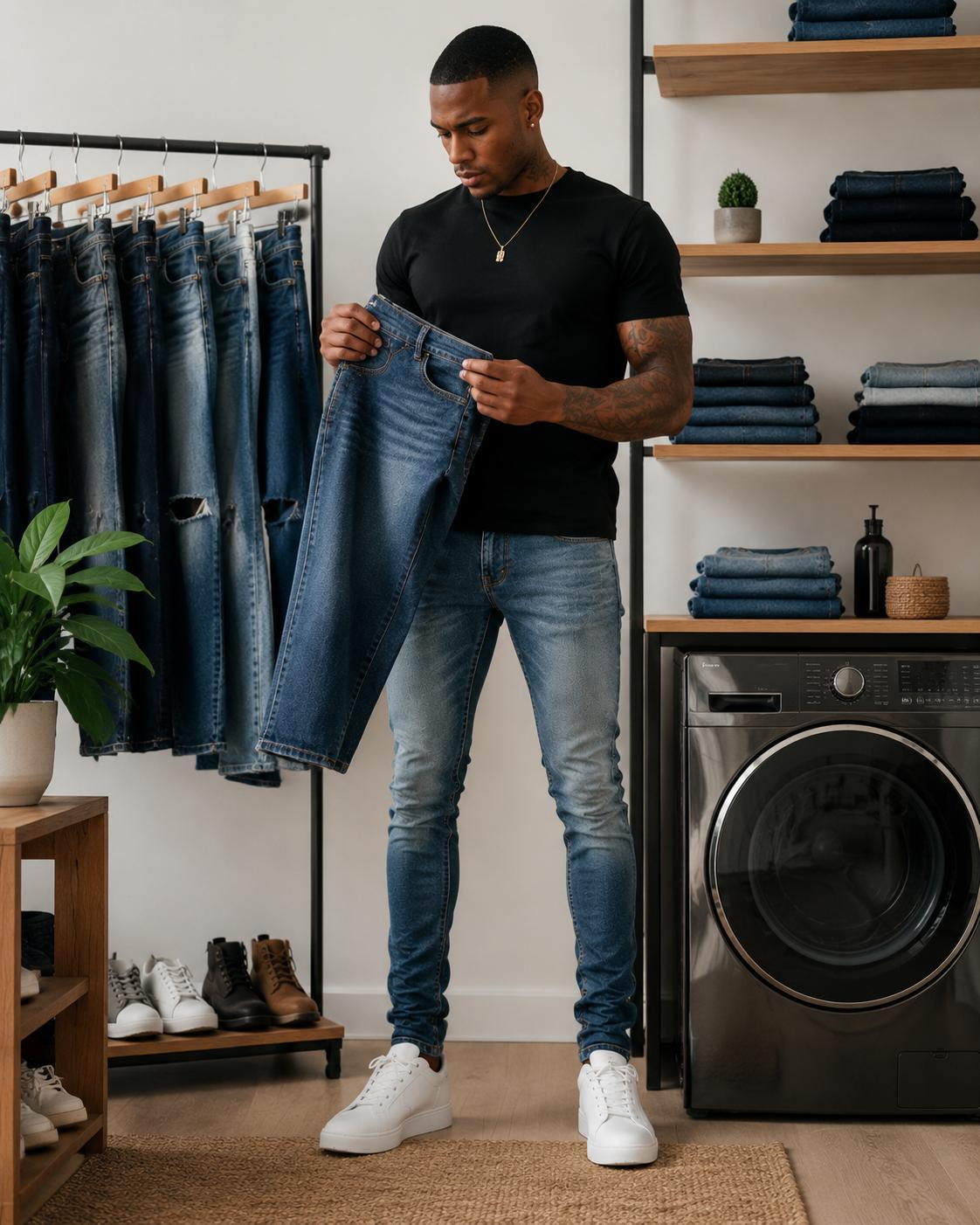
How to stop jeans bagging at the knees?
To reduce knee bagging, start with the fabric. Choose jeans made from high-recovery stretch denim, not just very stretchy denim. Check how the jeans feel after sitting and walking, not only when first trying them on.
Other practical tips include:
Choose the correct inseam.
Avoid jeans that are painfully tight at the knee or calf.
Wash inside out when needed.
Air dry instead of using high heat.
Rotate between jeans instead of wearing the same pair every day.
Choose slim-straight or straight jeans if skinny jeans always bunch on your body.
Avoid pulling the jeans upward aggressively at the knee.
For brands, test knee recovery before bulk production. A sample should be worn and moved in, not only measured flat.
Should I size up or size down if my jeans bunch at the knees?
Sizing up is not always the answer. If the jeans are too tight and pulling sharply across the knee, sizing up may help. But if the jeans are already loose at the waist and hip, sizing up may create more excess fabric and worse bunching.
Size up if:
The knee feels tight.
Movement is restricted.
The fabric pulls sharply.
Sitting is uncomfortable.
Size down or choose a different fit if:
The waist is loose.
The hip collapses.
The knees sag after short wear.
The fabric bunches because there is too much length.
Sometimes the correct solution is not a different size. It is a different fit.
Can washing or drying fix knee bunching?
Washing can temporarily reduce light knee bags by tightening cotton fibers. However, it cannot fix poor pattern, bad knee placement, weak stretch recovery, or incorrect sizing.
Avoid excessive dryer heat on stretch jeans because heat can weaken elastic fibers over time. A better care routine is cold or gentle wash, inside out, followed by air drying. For consumers, this helps jeans last longer. For brands, clear care instructions reduce complaints.
Should I choose slim, straight, or baggy jeans instead of skinny jeans?
If skinny jeans always bunch, a different fit may work better. Slim-straight jeans give a clean look with more knee room. Straight jeans are easier to wear and often more timeless. Baggy jeans and stacked jeans provide more movement and align with modern streetwear trends. Relaxed jeans reduce knee pressure and can feel more comfortable for everyday wear.
This does not mean skinny jeans are bad. It means not every body or lifestyle needs the same fit.
How can tailoring help fix knee bunching?
Tailoring can help in some cases. Hemming can reduce excess length. Tapering may help if the lower leg is too loose. But tailoring cannot fully correct poor knee placement, weak fabric recovery, or a badly balanced pattern.
If the jeans bunch because they are too long, hemming may help. If they bunch because the fabric bags out after movement, tailoring will not solve the core problem. If they bunch because the knee point is wrong, a better pattern is needed.
Dive Deeper
Consumers often ask, “How do I stop my jeans from bagging at the knees?” The honest answer is that care habits help, but product quality matters more. You can wash carefully, air dry, and rotate pairs, but if the fabric has weak recovery or the pattern is wrong, the problem will keep coming back.
This is why brands should not place the entire burden on the customer. Care instructions are useful, but they are not a substitute for good development. If a brand sells skinny jeans, it should test how the knee area performs after movement. It should choose fabric that supports recovery. It should consider multiple inseams if the target market includes different heights. It should fit test across sizes, especially for plus size ranges.
For boutique owners, this is a chance to stand out. Many product pages only say “stretchy skinny jeans.” That is not enough. A better product page can say “high-recovery stretch denim,” “tested for knee bagging,” “comfortable movement,” or “designed to hold shape after wear.” These details answer real customer fears.
The Gen Z shift away from skinny jeans also connects to this topic. Younger shoppers often prefer looser jeans because they feel comfortable, expressive, and easier to move in. If skinny jeans feel restrictive or bunchy, customers may naturally move toward straight, baggy, or stacked fits. This does not mean brands should abandon skinny jeans, but it does mean skinny jeans must become better.
A modern denim collection should offer options. Skinny jeans for customers who want a fitted look. Slim-straight jeans for customers who want clean lines with comfort. Baggy jeans for streetwear buyers. Stacked jeans for trend-focused shoppers. Plus size jeans with better grading. Selvedge jeans for premium customers. Jogger jeans for comfort-driven buyers.
DiZNEW can help brands develop this kind of balanced denim collection. Instead of guessing which fit will work, brands can test small-batch custom styles from 30 pieces, collect feedback, then scale the best sellers.
How Can Denim Brands Design Skinny Jeans That Do Not Bunch at the Knees?
Denim brands can design better skinny jeans by testing fabric recovery, knee stretching, post-wash shrinkage, fit on real bodies, measurement tolerance, and movement comfort before bulk production. Better pattern development, correct knee placement, high-recovery stretch denim, and careful grading help reduce knee bunching and improve customer satisfaction.
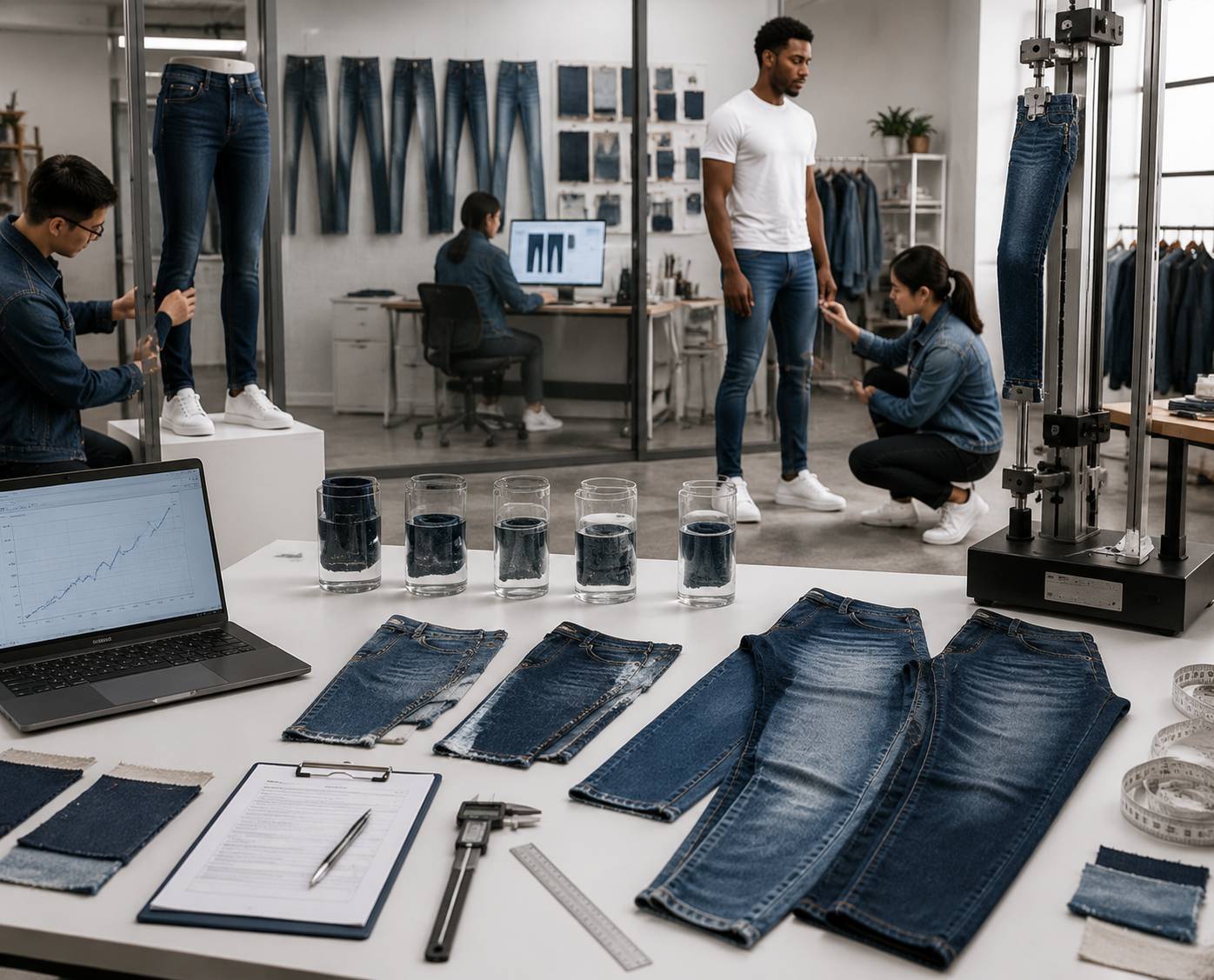
What should brands test before producing skinny jeans in bulk?
Brands should test more than the appearance of the sample. A skinny jean should be tested for:
| Test Area | Why It Matters |
| Fabric recovery | Prevents knee bagging |
| Knee bending | Checks movement performance |
| Post-wash shrinkage | Confirms final measurements |
Fit on body | Reveals real comfort issues |
Waist, hip, thigh, knee, calf | Controls full leg balance |
Inseam length | Prevents unwanted stacking |
Wear test | Shows how jeans look after hours |
Compression comfort | Avoids overly tight fit |
A sample that looks good for five minutes may not be ready for production. The real test is how it performs after wear.
How can custom pattern development improve skinny jean fit?
Custom pattern development improves skinny jeans by controlling rise, thigh curve, knee point, calf balance, leg opening, inseam, and waistband shape. One generic skinny pattern cannot fit every customer.
Petite customers may need adjusted knee placement. Tall customers may need longer proportions. Plus size customers may need more thoughtful grading. Streetwear customers may want a slightly different skinny fit than premium fashion buyers.
Custom development allows the brand to match the fit to the target market.
Why does Gen Z hate skinny jeans?
Gen Z does not literally hate all skinny jeans. The better explanation is that many younger shoppers prefer looser, more relaxed silhouettes because they feel more comfortable, more expressive, and more connected to Y2K, streetwear, and current casual styling.
Skinny jeans became associated with a millennial uniform: tight jeans, ankle boots, long cardigans, or fitted tops. Gen Z often prefers baggy jeans, straight jeans, wide-leg jeans, cargo denim, flare jeans, and stacked jeans because those silhouettes feel fresher and easier to style in oversized outfits.
However, skinny jeans are not gone. They still have loyal customers, and fashion cycles continue to bring fitted silhouettes back in new ways. For brands, the lesson is simple: do not rely on only one fit.
How can DiZNEW help brands develop better skinny jeans?
DiZNEW can help brands develop better skinny jeans by selecting high-recovery stretch denim, adjusting pattern balance, improving knee placement, testing wash shrinkage, refining size grading, and customizing the final product for the target market.
Customization can include:
Fabric composition
Denim weight
Wash effect
Rise
Inseam
Knee measurement
Calf measurement
Leg opening
Labels
Buttons
Rivets
Leather patches
Hang tags
Packaging
Logo branding
DiZNEW supports both OEM and ODM development, meaning buyers can provide a full tech pack or start from a sketch, reference photo, physical sample, or design idea.
What other denim styles can DiZNEW customize for brands?
DiZNEW can customize a wide range of denim products, including:
Plus size jeans
Baggy jeans
Stacked jeans
Straight jeans
Selvedge jeans
Skinny jeans
Jogger jeans
Denim jackets
Denim shorts
Denim shirts
Custom washed jeans
OEM/ODM private label denim products
This matters because the best denim brands rarely depend on only one silhouette. A strong product line usually includes several fits for different customers.
How can brands turn fit problems into better product selling points?
Consumer questions are market research. When people ask, “Why do my skinny jeans bunch up at the knees?” they are revealing a real pain point. Brands can turn that pain point into product value.
Instead of selling only “stretch skinny jeans,” a brand can highlight:
High-recovery stretch fabric
Tested knee movement
Better shape retention
Comfort-focused pattern
Petite, tall, or plus size fit development
Clear inseam options
Custom sizing
Better wash stability
These details help customers trust the product before buying.
Dive Deeper
The future of denim is not about one winning fit. It is about better fit segmentation. Some customers want skinny jeans. Some want straight jeans. Some want baggy jeans. Some want stacked jeans. Some want plus size jeans that actually fit. Some want premium selvedge denim. The smartest brands understand that each fit needs its own development logic.
Skinny jeans are especially demanding because they leave little room for error. To reduce knee bunching, brands must think like product developers, not just trend followers. They should test fabric recovery, movement, and sizing. They should check fit across body types. They should review customer complaints and use them to improve the next order.
For example, if customers say the knees bag out, the brand may need better recovery fabric. If customers say the jeans twist, the factory should check cutting and fabric torque. If petite customers complain about knee folds, the brand may need a petite inseam or adjusted knee point. If plus size customers complain about tight knees and loose waists, the pattern and grading need improvement.
This kind of product improvement creates stronger brand loyalty. Customers love when a brand solves a problem they have experienced many times before. A boutique that offers skinny jeans with better knee recovery has a real story to tell. A denim brand that tests movement and fit can use that in marketing. A private label store that offers multiple fits can serve more customers and reduce returns.
DiZNEW is positioned to help brands build this kind of smarter denim line. With more than 20 years of experience in denim R&D, manufacturing, and sales, DiZNEW understands that custom denim is not just about adding a logo. It is about fabric, fit, wash, pattern, sizing, and quality control.
For U.S. boutique owners, online stores, denim designers, influencer brands, and high-end custom clients, this is a practical advantage. You can start with a custom skinny jean, test a 30-piece MOQ, collect feedback, improve the fit, then scale the product if it performs well. You can also expand into baggy jeans, stacked jeans, straight jeans, plus size jeans, denim jackets, denim shorts, and denim shirts.
That is how a fit problem becomes a product opportunity.
Final Thoughts: Knee Bunching Is Not Just a Styling Problem—It Is a Denim Development Problem
Skinny jeans bunch up at the knees because the knee area is constantly moving and the fabric has limited room to flex. Some creasing is normal, but large folds, saggy knee bags, twisting, tight pressure, or permanent stretching usually point to deeper issues. The cause may be poor fabric recovery, wrong size, long inseam, tight calf, wrong knee placement, bad grading, weak stretch denim, or poor manufacturing control.
For everyday shoppers, the solution may be choosing better recovery fabric, finding the correct inseam, washing carefully, air drying, or switching to slim-straight, straight, baggy, or stacked jeans. For denim brands, the solution is more technical: better fabric testing, better pattern development, real movement testing, clearer size guides, and smarter production control.
DiZNEW is a China-based denim R&D, manufacturing, and sales factory with more than 20 years of experience. We help U.S. small and medium buyers, high-end brand clients, denim designers, online boutique owners, and influencer-led stores create custom denim products under their own logo.
We can customize plus size jeans, baggy jeans, stacked jeans, straight jeans, selvedge jeans, skinny jeans, jogger jeans, denim jackets, denim shorts, denim shirts, and more. Our OEM/ODM service can support custom fabric, wash, fit, pattern, labels, buttons, rivets, leather patches, hang tags, packaging, and production development from sketch, reference photo, physical sample, or tech pack.
If you want to create skinny jeans with better knee recovery, plus size jeans with better fit, baggy jeans for streetwear buyers, stacked jeans for online boutiques, or a full private label denim collection, DiZNEW can help you move from idea to sample and from sample to scalable production.
With a low MOQ starting from 30 pieces and capacity for larger orders up to 10,000 pieces, DiZNEW gives brands a flexible way to test, improve, and grow.
Ready to develop custom denim that fits better, wears better, and gives your customers fewer reasons to complain? Contact DiZNEW today to request a quote and start your next custom jeans project.
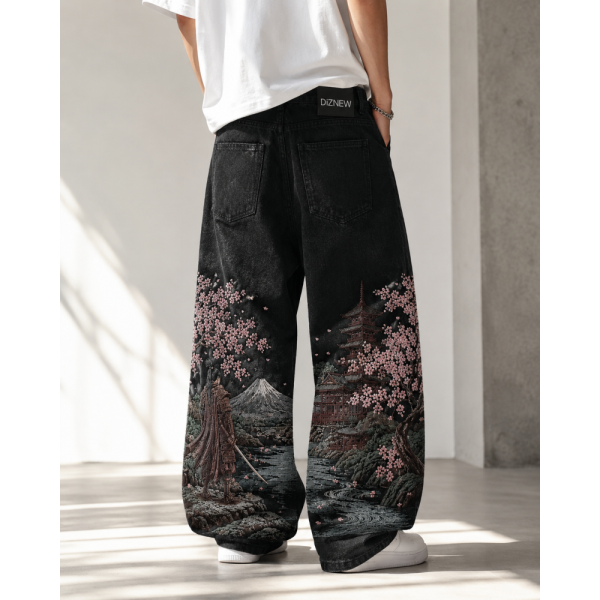
Premium wide-leg denim jeans featuring a vintage washed black finish, detailed Japanese landscape artwork, embroidery-style decoration, and custom brand label options. Designed for streetwear brands, designer labels, and private label collections looking for statement denim with strong visual storytelling.
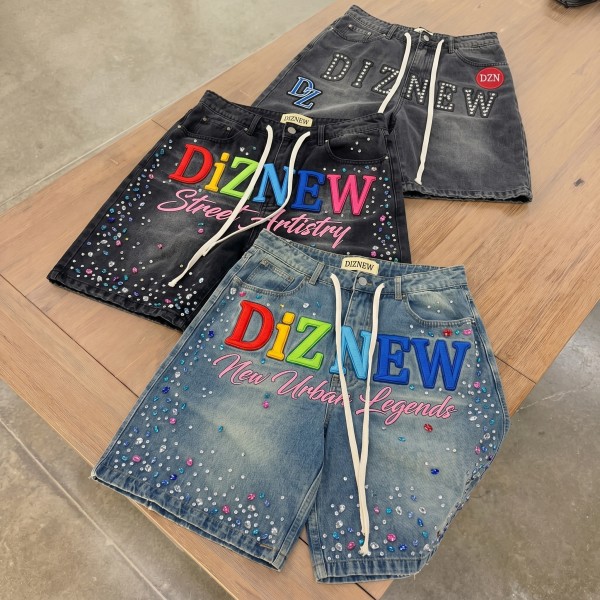
Custom Rhinestone Logo Denim Shorts: Wholesale supply direct. We manufacture premium embroidered baggy jean shorts for brands.
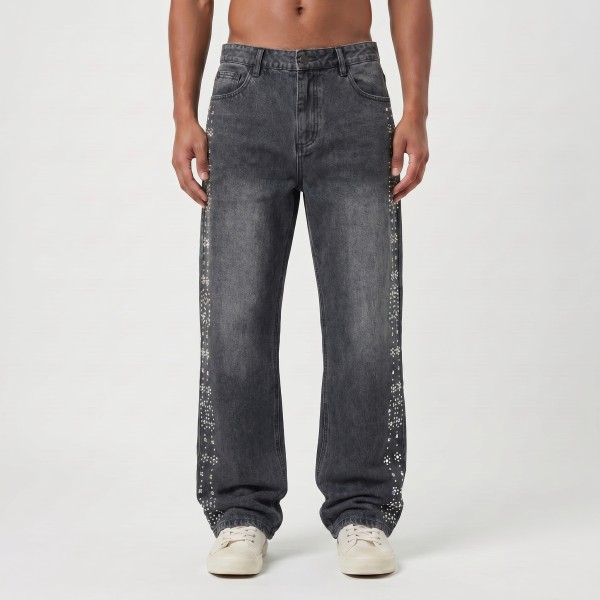
Discover premium DiZNEW denim jeans with decorative studs for a sparkling, stylish look. Order today!
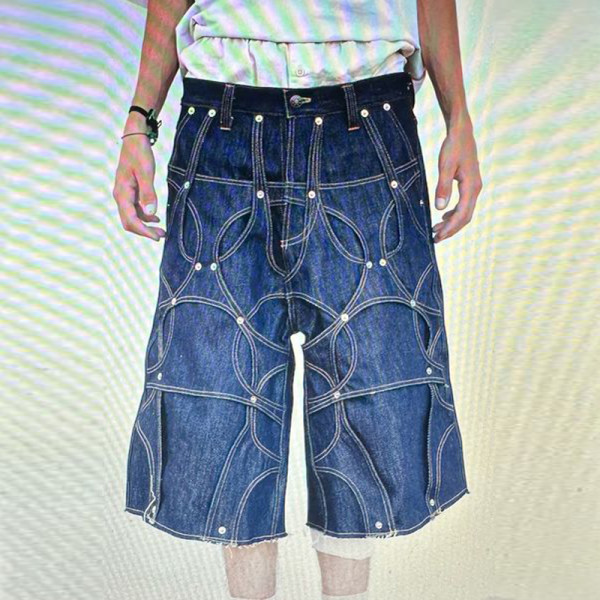
These designer denim shorts for men feature intricate decorative stitching and rivet details, perfect for streetwear fashion. The wide-leg silhouette adds a bold look, ideal for trendsetters.