why do my jeans keep make a popping sound
- Share
- Issue Time
- Oct 24,2026
Summary
That popping sound in new jeans? It's our precise starch & resin finishing at work. Learn how we engineer the perfect hand-feel for your brand's vision

You are walking, sitting down, or squatting to pick something up when you suddenly hear a sharp pop coming from your jeans. Your first thought is probably, “Did I just rip them?” You check the crotch, inspect the inner thighs, and look for a broken seam—but everything appears normal. Then it happens again the next time you move.
A popping sound from jeans can have several explanations. It might come from stiff denim rubbing and folding, a stressed seam, a button or rivet moving, or fabric being pulled too tightly across your body. Sometimes the sound is harmless. Other times, it is an early warning that a seam or fabric area is under too much stress.
Jeans can make popping sounds when you walk, sit, squat, or bend because of fabric friction, sudden tension release, stressed stitching, or moving hardware. Tight fits, insufficient thigh or crotch room, and weakened seams can increase the likelihood of these sounds. Inspect the area for broken threads, opening seams, or thinning fabric to determine whether the noise is harmless or a sign of possible damage.
The important thing is not to assume that every popping sound means your jeans are about to split. Instead, identify where the sound originates, how often it happens, and whether the garment shows visible damage. Understanding those clues can help you avoid an embarrassing wardrobe malfunction—and help denim brands design jeans that fit better and last longer.
Why Do My Jeans Keep Making a Popping Sound When I Move?
Jeans can make popping sounds during movement when fabric folds suddenly, seams experience tension, or buttons, rivets, and zippers move against other parts of the garment. The location of the sound and any visible damage are the best clues to its cause. A sound alone does not prove that a seam is about to rip.
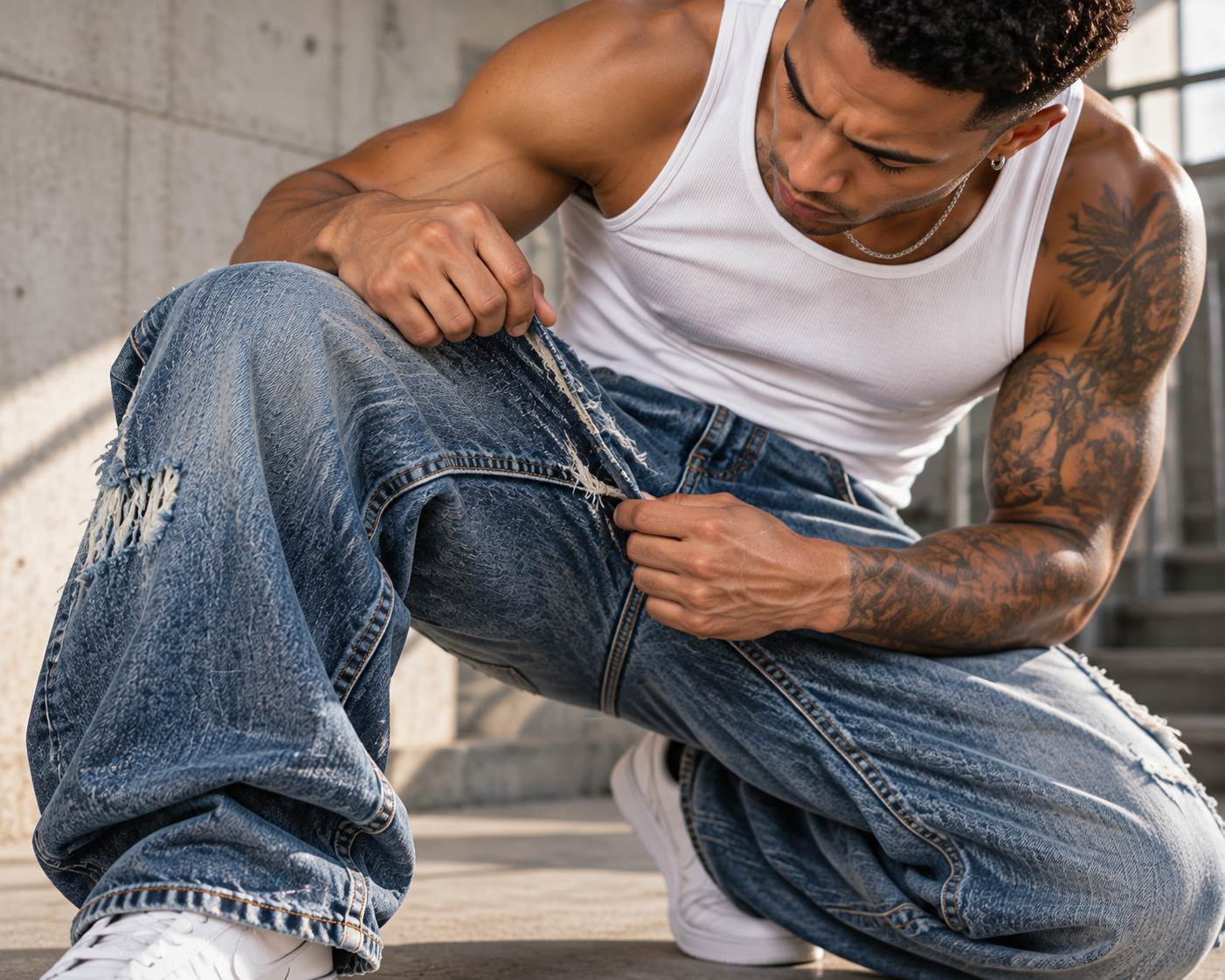
Dive Deeper:
Identify Where the Sound Comes From
Start by identifying the exact location. Does the sound come from the crotch, inner thighs, waistband, knees, or front fly? Each area has different construction features and experiences different types of stress.
If the noise happens around the crotch or inner thighs when you squat, the fabric may be rubbing or stretching across a high-movement area. If it occurs around the waistband, inspect the button, buttonhole, belt loops, and waistband seams. A sharp click near the front closure may come from hardware rather than the fabric itself.
The timing also matters. A single pop when you first bend your knees may be caused by stiff denim suddenly folding. Repeated popping sounds every time you sit or walk deserve closer inspection, especially if the jeans are tight.
New jeans can make more noticeable sounds because rigid cotton denim may initially feel stiff. As the fabric softens through wear, some of these noises may become less noticeable. However, a persistent popping sound should not automatically be dismissed as a normal break-in process.
These are possible explanations, not definitive diagnoses. Fabric sounds can be difficult to distinguish from hardware noise without examining the garment.
The key principle is simple: listen to the sound, but inspect the jeans. If there is no damage and the sound occurs only occasionally, it may be harmless. If the noise is repeated and accompanied by visible stretching, broken stitching, or a seam opening, the garment needs attention.
Can Tight Jeans, Incorrect Sizing, or Stretch Denim Cause Popping Sounds?
Yes. Jeans that are too tight can place excessive tension on the crotch, thighs, hips, and seams, particularly during sitting or squatting. Stretch denim can also behave differently depending on its recovery properties. However, a popping sound does not automatically mean your jeans are too small or that the fabric is defective.
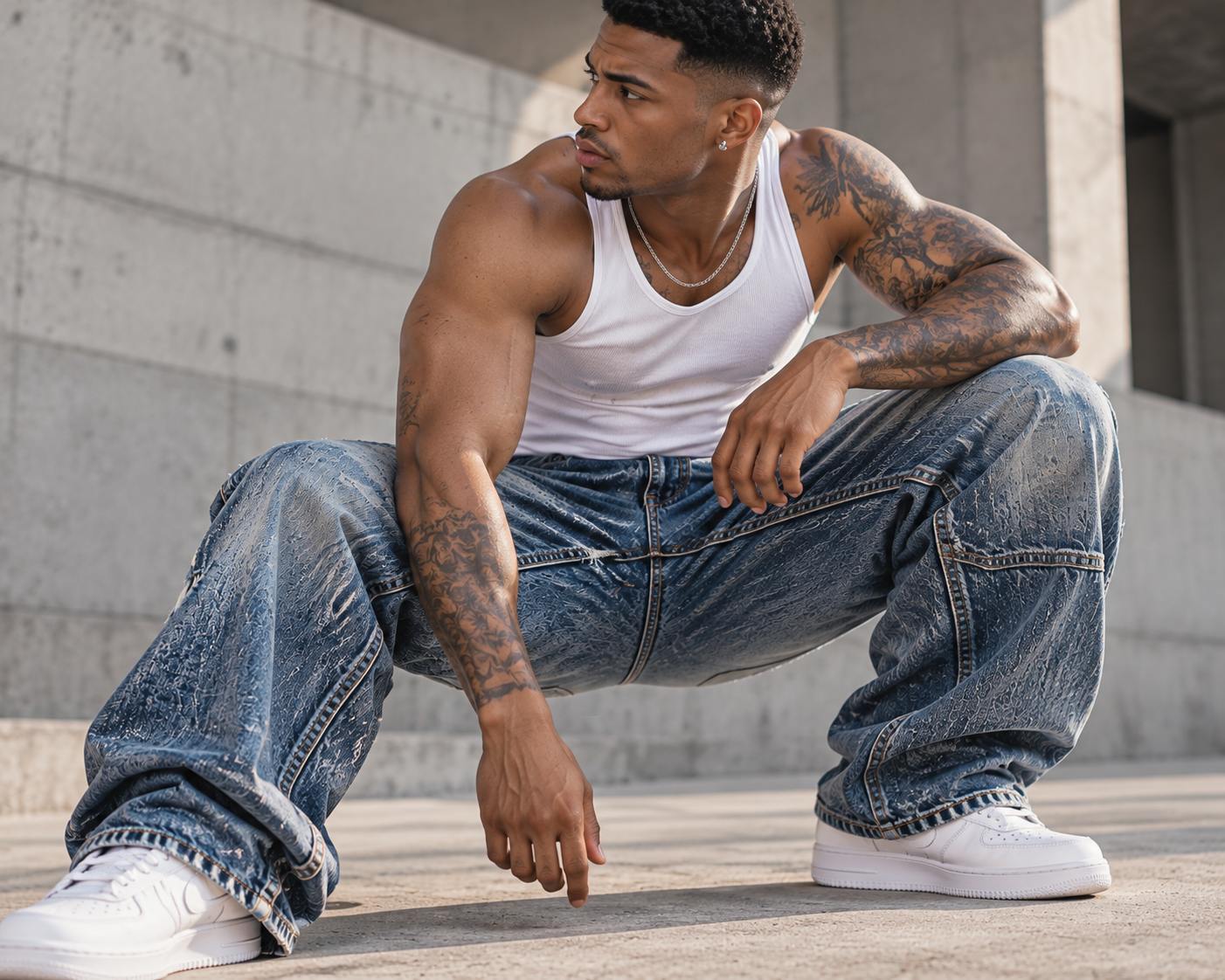
Dive Deeper: How Fit and Fabric Affect Seam Stress
Jeans are designed to move with the body, but each silhouette distributes tension differently. Skinny jeans sit close to the thighs and knees, while baggy jeans provide more room through the leg. Straight jeans sit between these extremes, depending on the pattern.
If the crotch is too short or the thighs are too narrow, bending and squatting can pull the front rise and inner-leg seams. The waistband may close perfectly while the rest of the garment remains too restrictive.
This is why choosing a size based only on waist circumference can be misleading.
Are 32 Waist Pants Actually 32 Inches?
Not necessarily. A W32 label does not guarantee that every finished waistband measures exactly 32 inches. The number may refer to an intended body measurement, and actual garment measurements depend on the brand's sizing standards, waistband construction, rise, and ease allowance.
Two brands can label their jeans W32 while using different hip, thigh, and rise measurements. Even within one brand, skinny and relaxed jeans may feel completely different.
What's the Average Jean Size for a Woman?
There is no single universal average women's jean size that applies across countries, age groups, and brands. Women's retail sizing systems vary, and a population's average waist measurement is not the same as its average labeled jean size.
For denim brands, this is a reason to develop size charts around actual target-customer measurements rather than assuming one standard body shape.
Can Stretch Denim Cause Popping Sounds?
Stretch denim contains elastic fibers, commonly elastane, that allow the fabric to expand and recover. The quality of that recovery matters. A fabric that stretches easily but does not return toward its original shape may develop baggy knees, loose seats, or distorted seams.
Rigid denim behaves differently. It offers less immediate give and may feel stiff during the first few wears. Neither type is automatically more durable; performance depends on the fabric construction, pattern, stitching, and intended use.
Why Does Gen Z Hate Skinny Jeans?
The phrase is an exaggeration. Many younger consumers have moved toward baggy, relaxed, and wide-leg jeans because of comfort, streetwear influences, and changing fashion preferences. But skinny jeans still have an audience.
For garment construction, the important distinction is that each fit requires a different pattern. A skinny jean needs sufficient stretch or carefully calculated ease. A baggy jean needs intentional proportions through the rise, seat, thigh, knee, and leg opening.
The takeaway: if your jeans repeatedly pop during ordinary movement, check the fit through the crotch, seat, and thighs rather than immediately buying a larger size. The right size should support the intended silhouette without creating excessive tension.
Does a Popping Sound Mean My Jeans Are About to Rip?
Not necessarily. A popping sound can come from fabric movement or hardware without any damage. However, repeated popping accompanied by broken threads, opening seams, thinning fabric, or visible stress lines may indicate that the jeans are close to failing. Inspect the affected area before continuing to wear them normally.

Dive Deeper: Recognize the Warning Signs
A seam does not always fail dramatically in one moment. Sometimes the first signs are small: a few loose threads, a tiny opening between stitches, or fabric that looks thinner than the surrounding area.
The crotch and inner thighs deserve particular attention because they experience repeated friction and tension. Walking creates rubbing between the legs, while sitting and squatting change the load on the seat and rise. If the fit is too restrictive, these forces can become concentrated in a small area.
Look for the following signs:
Broken or loose threads along a seam.
A visible gap between two joined fabric panels.
White stress marks or distortion around the crotch.
Fabric thinning on the inner thighs.
A button or rivet that moves excessively.
A zipper that pulls the surrounding fabric out of alignment.
These clues help distinguish ordinary fabric noise from possible garment damage.
Are Popping Stitches a Sign of Poor-Quality Jeans?
Sometimes, but not always. Seam failure can result from weak thread, unsuitable stitch construction, insufficient seam allowance, or poor workmanship. It can also happen when an otherwise well-made pair of jeans is worn too tightly or subjected to repeated friction.
Fabric choice matters, too. Heavy denim can feel strong, but extra thickness does not automatically make every seam stronger. The sewing construction must be appropriate for the fabric thickness and intended movement.
A jean designed for a relaxed silhouette may require different seam engineering from a fitted stretch jean. If the pattern creates excessive pulling, even strong stitching can eventually fail.
Can You Repair Jeans When the Seams Start Popping?
Small problems are often repairable. A tailor can restitch an opened seam, reinforce a worn crotch, patch a thinning inner thigh, or replace loose hardware. Repairing the garment early is usually easier than waiting until a large hole develops.
However, restitching alone will not fix a pattern that continually puts too much tension on the same area. If the same seam repeatedly fails, the fit may need to change.
If the fabric is extensively worn or has become too thin to hold stitches securely, replacement may be more practical.
Is It Better to Get Jeans Too Big or Too Small, and How Can You Prevent Popping Sounds?
Neither oversized nor undersized jeans are automatically better. Choose a fit that allows comfortable movement without excessive pulling or sagging. If your jeans pop when you sit or squat, check the waist, rise, seat, and thigh measurements. Fabric stretch, recovery, and expected shrinkage should also guide your size choice.
Dive Deeper: Choose Fit Based on Movement, Not Just the Size Label
A common mistake is buying jeans that feel extremely tight because the wearer expects them to stretch out. Some denim relaxes with wear, but this is not a reliable solution for excessive pressure at the crotch or thighs.
Similarly, buying jeans too large can create other problems. Excess fabric may bunch, rub, or move unpredictably, especially if the rise and seat do not match the wearer's body.
If the waistband fits but the thighs are too tight, a different cut may solve the problem better than sizing up across the entire garment. A fuller-thigh or athletic fit can provide more room where needed without making the waist excessively loose.
How Can You Prevent Jeans Seams From Popping?
Start with the correct fit. Avoid forcing a close-fitting jean through movements that create excessive tension, and inspect high-stress areas periodically.
Choose denim suited to the intended activity. Stretch denim may improve mobility, but it should have suitable recovery. Rigid denim can provide structure, but the pattern must allow enough movement.
Care also matters. Follow the care label, avoid unnecessarily harsh washing and high heat, and repair small areas of damage early. Washing cannot fix poor fit, but appropriate care can help preserve fabric and stitching.
If the same seam repeatedly fails despite reasonable fit and care, consider a different pattern or construction rather than repeatedly repairing the same spot.
How Can Denim Brands Prevent Popping Seams Through Better Fit and Manufacturing?
Denim brands can reduce seam problems by developing accurate patterns, selecting suitable fabrics, reinforcing high-stress areas, and testing garments through movement and washing. The goal is not simply stronger stitching; it is a balanced garment in which the fabric, pattern, and construction work together.
Dive Deeper: What Should Brands Test Before Bulk Production?
A good sample should be evaluated beyond its appearance on a model. It should be checked while walking, sitting, bending, and squatting. These movements reveal tension that may not be visible in flat garment measurements.
Brands should pay particular attention to:
Pattern balance: Waist, hip, rise, seat, and thigh proportions.
Fabric performance: Strength, stretch, and recovery.
Seam construction: Stitching, seam allowance, and reinforcement.
High-stress areas: Crotch, inner thighs, pocket corners, and belt loops.
Post-wash fit: Shrinkage, twisting, and dimensional changes.
Hardware: Button attachment, rivets, and zipper performance.
Different styles need different solutions. Skinny jeans may require carefully matched stretch and pattern ease. Baggy jeans need intentional proportions rather than simply adding width. Plus-size jeans need grading that reflects body proportions across the size range. Stacked jeans require deliberate inseam and leg-opening design.
How Can DiZNEW Help Brands Develop Stronger Custom Jeans?
DiZNEW is a China-based denim R&D and manufacturing factory with more than 20 years of experience. We support U.S. small and medium buyers, high-end brands, denim designers, online boutique owners, and influencer-led stores with custom and OEM/ODM denim products under their own logos.
Our development process can start with a sketch, tech pack, reference photo, AI-generated concept, or physical sample. Depending on the project, customization can include fabric selection, pattern development, fit adjustment, wash development, stitching, hardware, labels, patches, and packaging.
Our product range includes:
Plus size jeans
Baggy jeans
Stacked jeans
Straight jeans
Selvedge jeans
Skinny jeans
Jogger jeans
Denim jackets
Denim shorts
Denim shirts
With an MOQ starting from 30 pieces per style and the capacity to support larger orders up to 10,000 pieces, DiZNEW can help brands test new designs at a manageable quantity and scale successful products.
The goal is to develop jeans that fit the intended customer, withstand normal movement, and maintain their quality through everyday wear.
Developing a custom denim collection? Contact DiZNEW to discuss your design, request a quotation, and explore sample development for jeans built around your target fit, fabric, and brand identity.