why do i have white lines on my black jeans
- Share
- Issue Time
- Aug 28,2026
Summary
Fading & white lines signal poor quality. Our integrated factory uses colorfast dyes & controlled washing for durable black jeans that protect your brand's reputation.
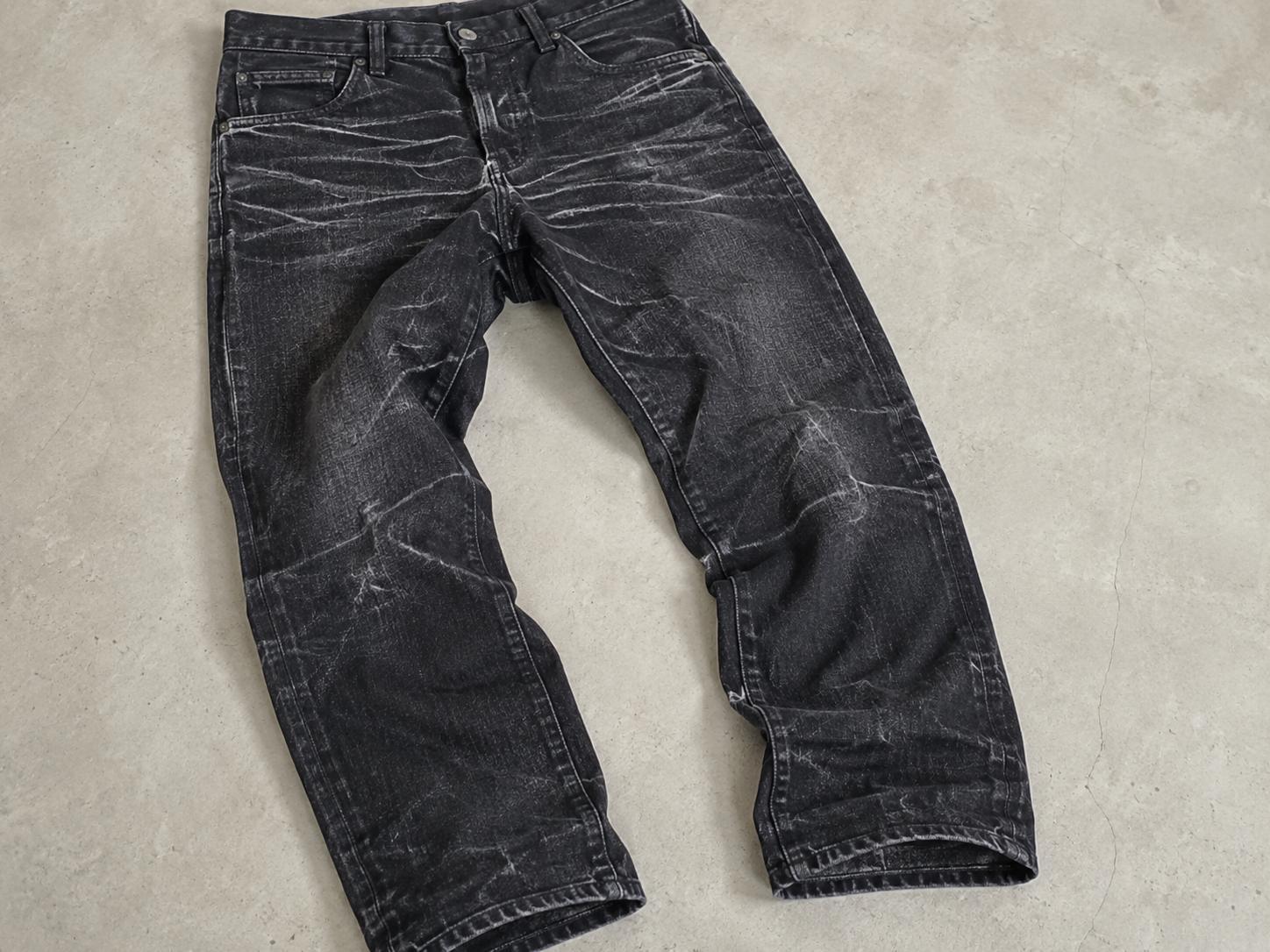
Black jeans are supposed to look clean, sharp, and easy to style. That is why white lines on black denim feel so frustrating. You wash the jeans once, pull them from the machine, and suddenly there are pale streaks across the thighs, seams, knees, or folded areas. Some lines look chalky, like detergent. Some look faded, like the black color has been rubbed away. Some appear only after drying. The difficult part is that all these problems can look similar at first glance, but the causes are very different.
White lines on black jeans are usually caused by detergent residue, hard water minerals, lint transfer, washing-machine abrasion, fold fading, high heat drying, bleaching agents, or poor dye fixation. If the mark sits on the surface, it may rinse out. If the line follows creases, seams, thighs, or knees, it may be real fading caused by friction or dye loss.
For consumers, this is a laundry problem. For denim brands, it is also a quality and customer-trust problem. Black jeans can be beautiful, but they require better fabric, better dye control, better wash testing, and clearer care instructions. Let’s break down what those white streaks really mean—and how better black denim can avoid them.
Why Do I Have White Lines on My Black Jeans?
White lines on black jeans usually come from residue, abrasion, or fading. Detergent residue looks powdery or surface-level, while true fading follows seams, creases, thighs, knees, or other high-rub areas. Black denim shows these marks more clearly than blue denim because the contrast between black fabric and pale residue or worn fibers is stronger.
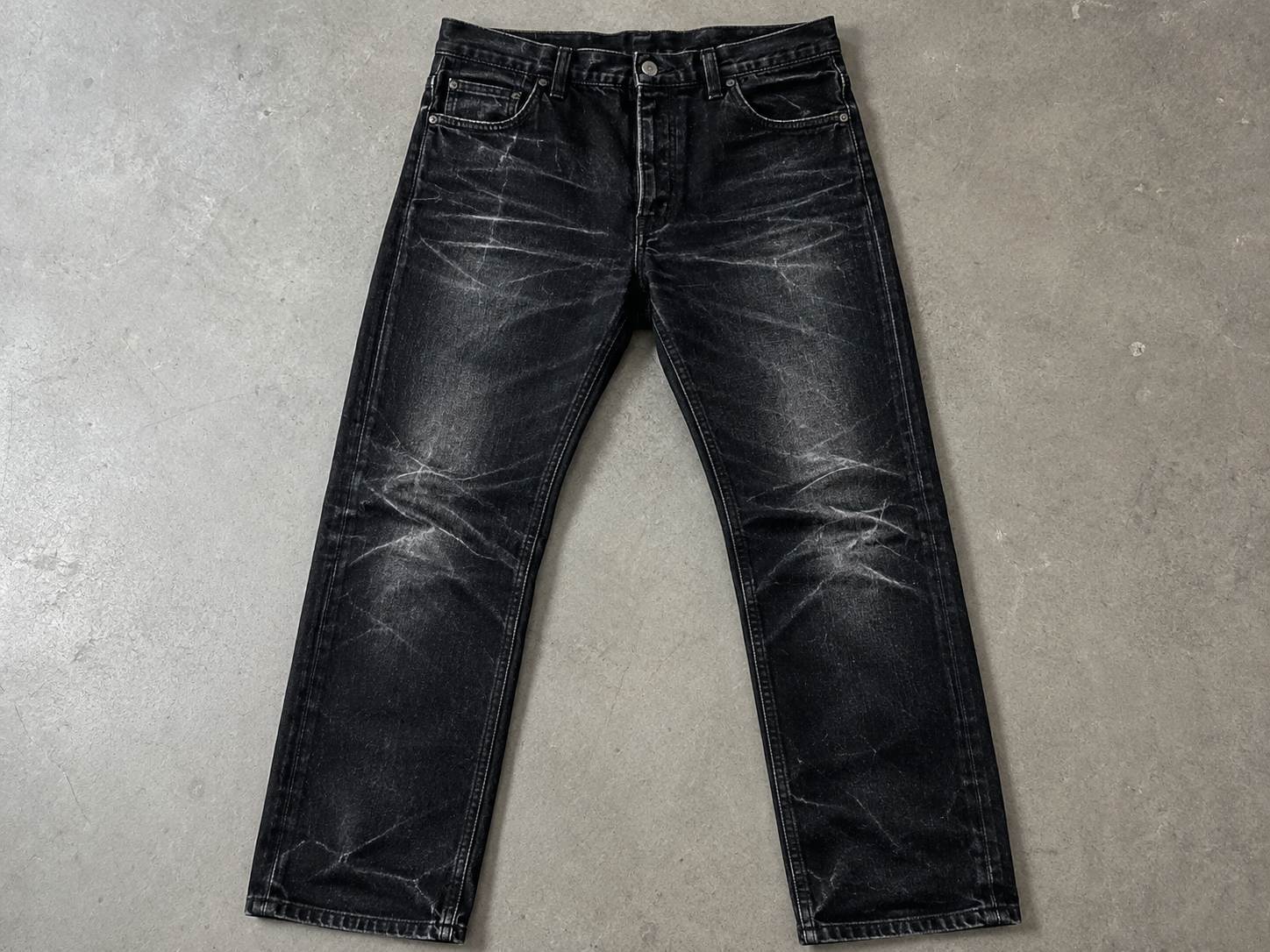
Common Causes of White Lines on Black Jeans
| White Line Type | Common Cause | Can It Be Fixed? |
| Chalky white marks | Detergent residue | Usually yes |
Pale streaks after washing | Machine abrasion or poor rinsing | Sometimes |
Lines on creases | Fold fading or friction | Harder to reverse |
White marks on seams | Rubbing and dye loss | Usually permanent |
| Patchy white areas | Bleach or chemical damage | Often permanent |
| Dusty marks on black pants | Lint, minerals, or residue | Usually yes |
Whirlpool notes that powdered detergent, hard water, poor dissolving, or overloaded washing can leave residue on dark clothes, and an extra rinse or liquid detergent may help reduce the issue.
Dive Deeper
The first question is simple: is the white line sitting on top of the fabric, or has the fabric itself changed color? If the mark feels powdery, chalky, dusty, or appears in random patches, it may be residue. Detergent, minerals from hard water, fabric softener, lint, or body-soil redeposition can all show up more clearly on dark clothing. NerdClean explains that white marks on dark garments commonly come from detergent residue, mineral film, lint transfer, or soil redeposition in an overloaded washer.
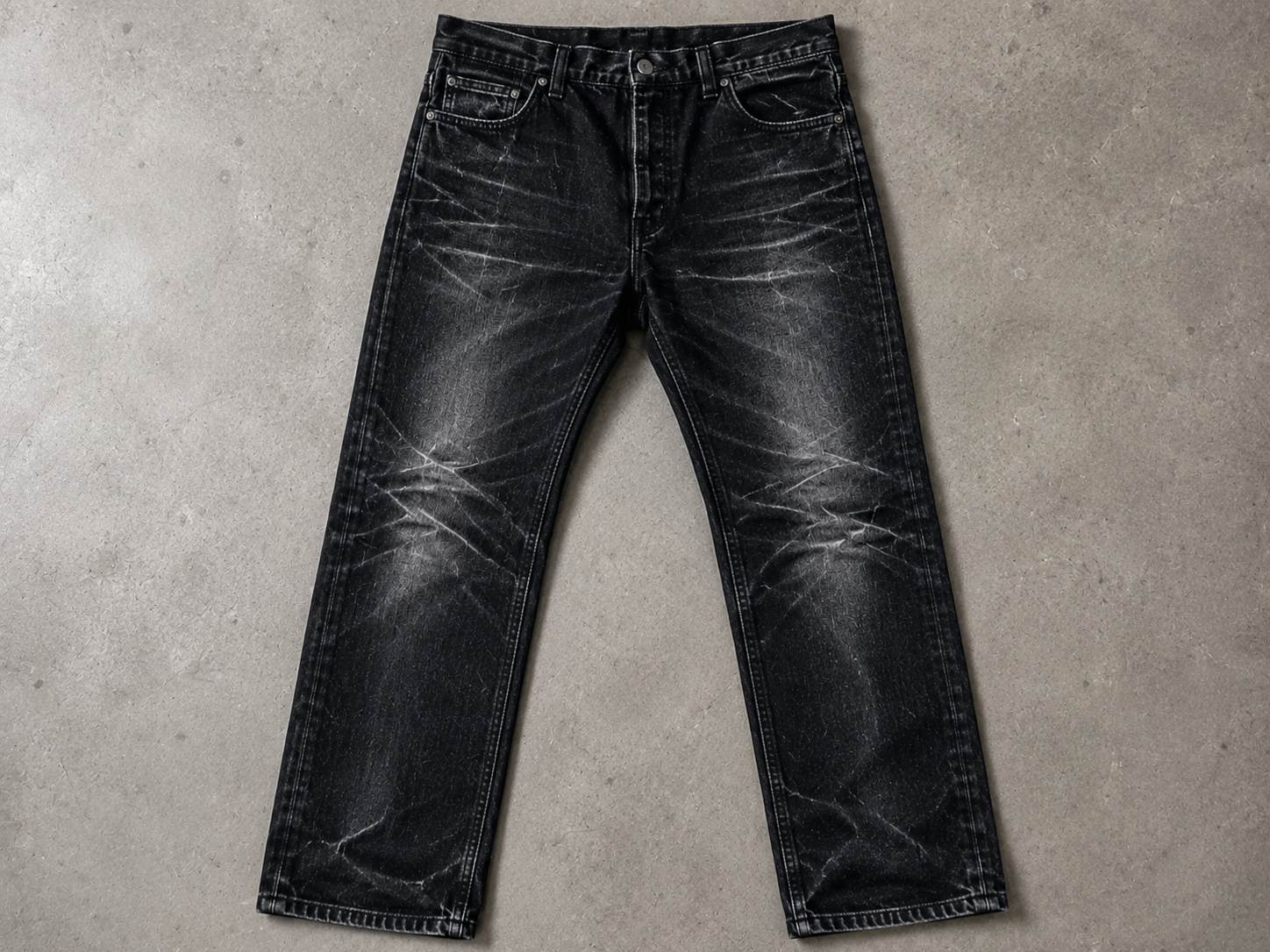
If the white lines follow the jeans’ natural folds, seams, knees, thighs, or crotch area, the issue is more likely abrasion or fading. Black denim is unforgiving because even a small amount of color loss becomes visible. A medium-blue jean can fade softly and still look natural. A black jean may fade into gray or white streaks, which can look like a defect if the fading is uncontrolled.
White lines are not always a sign of poor-quality jeans. A good pair of black jeans can still develop marks if washed with too much detergent, dried with high heat, or rubbed aggressively in an overloaded machine. But if white lines appear quickly across many pairs in the same production batch, that can point to dyeing, finishing, colorfastness, or wash-control problems.
For brands, this distinction matters. Customers do not care whether the cause is laundry care or dye fixation—they only see “my black jeans look ruined.” A strong black denim product should be developed with both the fabric and the customer’s real washing behavior in mind.
How Do Washing, Detergent, and Drying Cause White Streaks on Black Jeans?
Washing can cause white streaks on black jeans when detergent does not rinse out, jeans rub too aggressively, the washer is overloaded, the spin speed is too high, or the fabric is folded during washing. Dryers can worsen the problem through heat and tumbling friction. Black jeans should be washed inside out, gently, with dark-color detergent.
Dive Deeper
The first question is simple: is the white line sitting on top of the fabric, or has the fabric itself changed color? If the mark feels powdery, chalky, dusty, or appears in random patches, it may be residue. Detergent, minerals from hard water, fabric softener, lint, or body-soil redeposition can all show up more clearly on dark clothing. NerdClean explains that white marks on dark garments commonly come from detergent residue, mineral film, lint transfer, or soil redeposition in an overloaded washer.
If the white lines follow the jeans’ natural folds, seams, knees, thighs, or crotch area, the issue is more likely abrasion or fading. Black denim is unforgiving because even a small amount of color loss becomes visible. A medium-blue jean can fade softly and still look natural. A black jean may fade into gray or white streaks, which can look like a defect if the fading is uncontrolled.
White lines are not always a sign of poor-quality jeans. A good pair of black jeans can still develop marks if washed with too much detergent, dried with high heat, or rubbed aggressively in an overloaded machine. But if white lines appear quickly across many pairs in the same production batch, that can point to dyeing, finishing, colorfastness, or wash-control problems.
For brands, this distinction matters. Customers do not care whether the cause is laundry care or dye fixation—they only see “my black jeans look ruined.” A strong black denim product should be developed with both the fabric and the customer’s real washing behavior in mind.
How Do Washing, Detergent, and Drying Cause White Streaks on Black Jeans?
Washing can cause white streaks on black jeans when detergent does not rinse out, jeans rub too aggressively, the washer is overloaded, the spin speed is too high, or the fabric is folded during washing. Dryers can worsen the problem through heat and tumbling friction. Black jeans should be washed inside out, gently, with dark-color detergent.
Dive Deeper
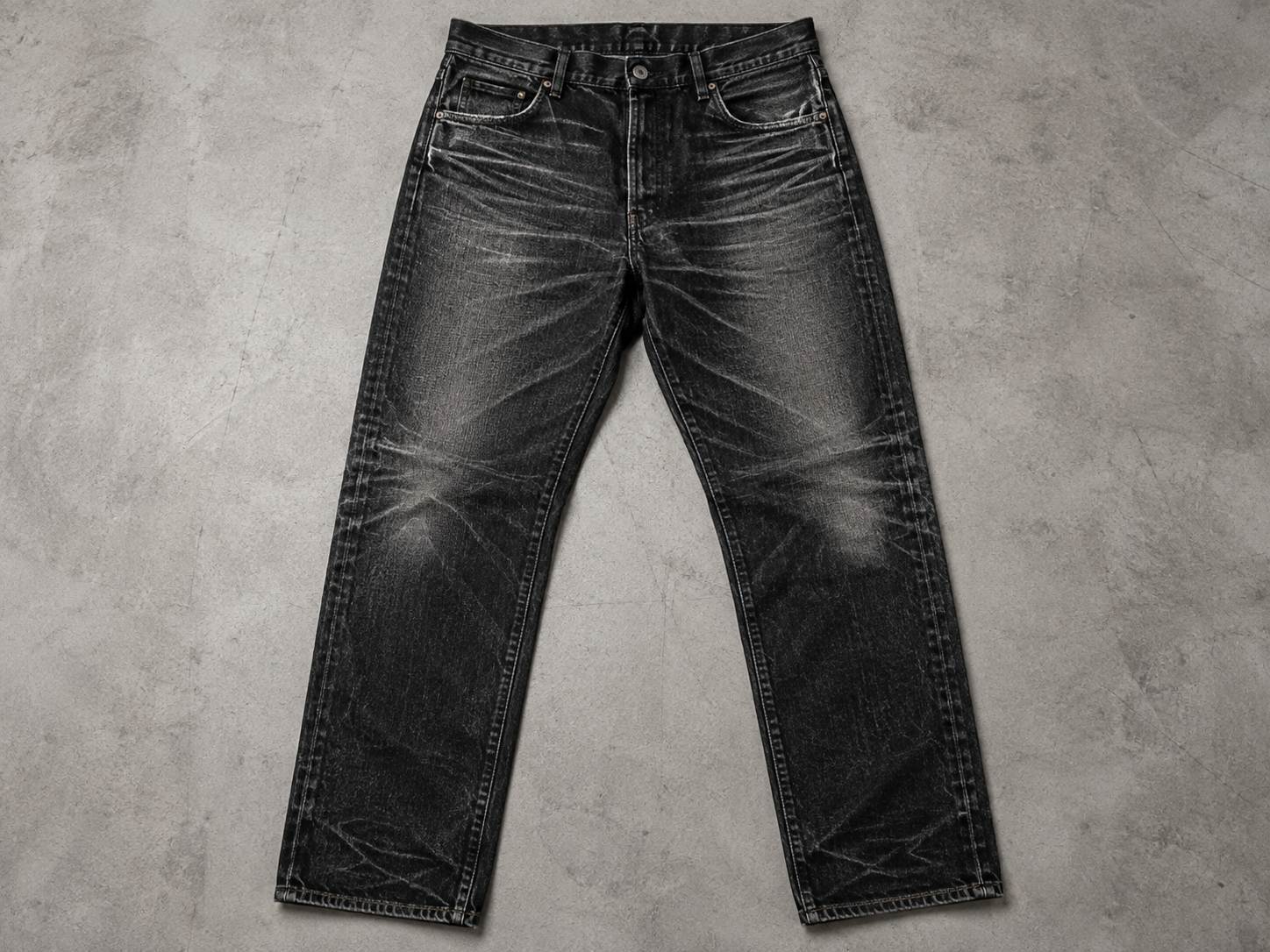
The washing machine is one of the biggest reasons black jeans develop white streaks. During the cycle, jeans twist, fold, press against the drum, and rub against other garments. If the machine is overloaded, the jeans cannot move freely or rinse properly. This can create both residue marks and abrasion lines.
Too much detergent is another common problem. Many people assume more detergent means cleaner clothes, but excess detergent can leave residue and make rinsing harder. Tide notes that excessive suds can lead to residue buildup because they are not easily rinsed away. On black jeans, this residue may appear as gray-white streaks, especially after drying.
Powder detergent can be especially visible on dark clothing if it does not fully dissolve. Hard water can make the problem worse because minerals may cling to fabric. A simple fix is to use liquid detergent for dark garments, measure the amount carefully, and add an extra rinse cycle when needed.
Drying can also create white lines. Tumbling increases friction, and heat can set wrinkles, residue, or fade marks. Direct sunlight can also fade black fabric. For black jeans, air drying in the shade is usually safer than high-heat tumble drying.
For brands, care labels should be practical, not decorative. Customers need simple instructions: wash inside out, wash cold, use dark-color detergent, avoid bleach, avoid overloading, and air dry. Clear care guidance can reduce complaints and protect the brand’s reputation.
How Do Fabric, Dyeing, Abrasion, and Fit Create White Lines on Black Jeans?
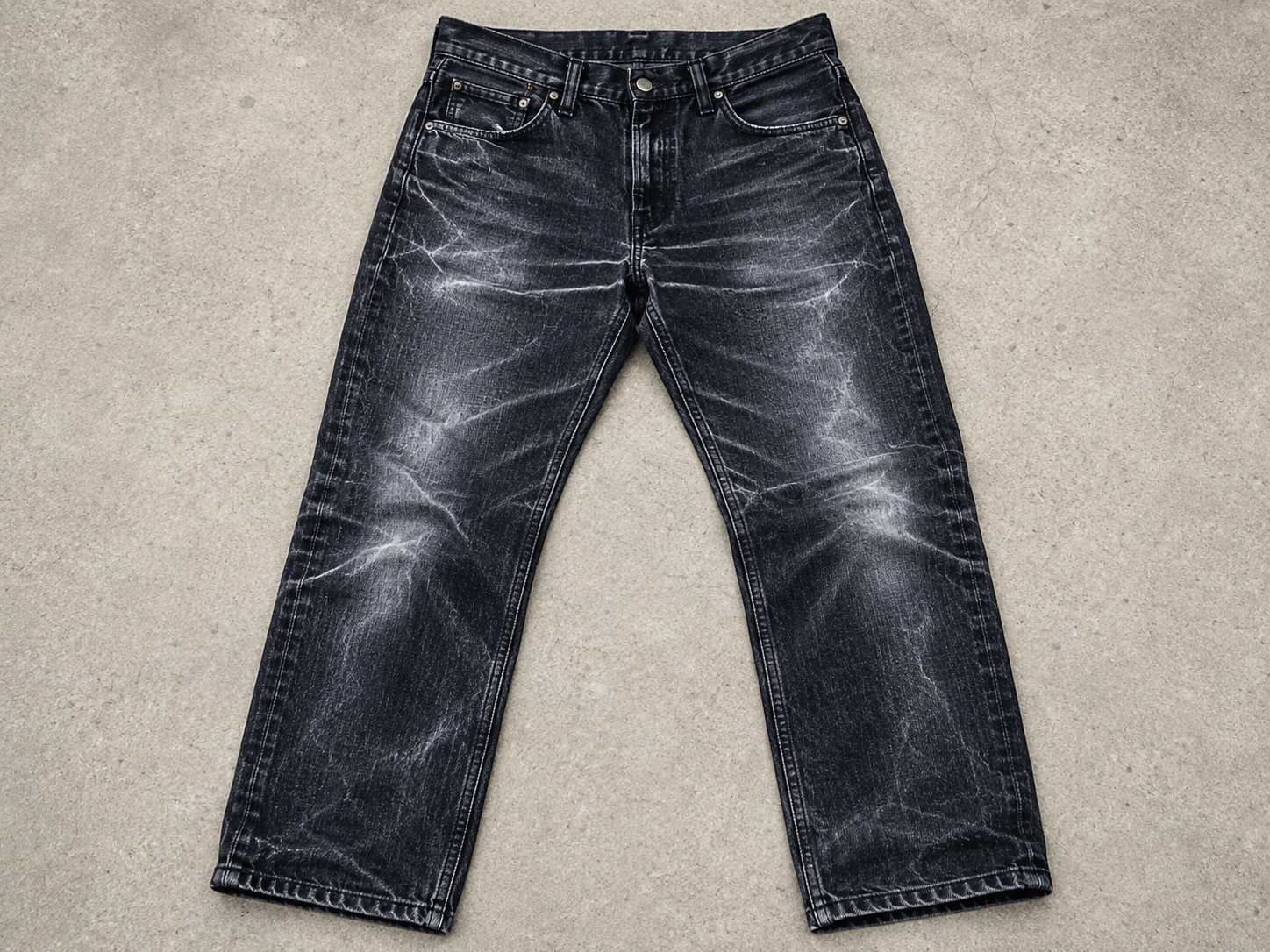
Black denim can develop white lines when friction removes surface dye, exposes lighter fibers, or damages the finish. Seams, knees, crotch, thighs, and fold areas fade faster because they receive more rubbing. Tight jeans can increase pressure lines, while poor dye fixation or uncontrolled garment washing can create white streaks before the customer even wears the jeans.
Dive Deeper
Black denim is technically demanding because black color needs to look deep, clean, and consistent. Unlike blue denim, where fading is often expected and even loved, black denim customers usually expect the garment to stay dark longer. A little fade can look stylish, but random white streaks feel like damage.
Abrasion is one of the biggest causes. When fabric folds during washing or rubbing, the high points of the fold receive more pressure. Over time, the surface color rubs away. This is why white lines often appear along creases, seams, thighs, knees, and pocket edges. These areas are not random; they are the highest-friction zones.
Fit also matters. Tight black skinny jeans or slim jeans can create pressure lines at the thighs, knees, crotch, and hips. When the body moves, the fabric rubs repeatedly in those areas. If the dye and fabric recovery are not strong enough, the black surface can fade into pale lines faster.
Poor dyeing or finishing can make the problem worse. If the dye penetration, fixation, garment wash, or finishing is not controlled, black jeans may look inconsistent after production or after the first customer wash. Brands producing black denim should test colorfastness to washing, rubbing, shade consistency, shrinkage, seam abrasion, and post-wash appearance before bulk production.
For custom denim brands, the key is intentional fading. Washed black denim can be beautiful when the fade is designed. Accidental white streaks, however, make the jean look unstable. DiZNEW helps brands develop black denim effects with better control over wash depth, fabric choice, fit, and finishing.
How Can You Remove White Lines or White Streaks From Black Jeans?
To remove white streaks from black jeans, first identify the cause. If the streaks are detergent residue, rinse or rewash inside out with little or no detergent and add an extra rinse cycle. If the streaks are true fading, abrasion, or bleach damage, they may not fully disappear. Black fabric dye or professional re-dyeing may help.
How to get white streaks off black pants?
For black pants, start with the same logic: wipe the surface with a damp cloth, use a lint roller, rinse well, and rewash with less detergent if needed. Black pants may get white streaks from detergent, lint, deodorant, body-care products, minerals, or fabric rubbing. Black jeans add another issue: denim abrasion can remove dye.
Dive Deeper
Residue is the easiest type of white mark to fix. If the mark is sitting on the surface, try brushing it gently when dry, wiping with a damp cloth, or rinsing with cold water. If that does not work, rewash the jeans inside out with little or no detergent and use an extra rinse cycle. Do not add more detergent to solve detergent residue—that usually makes the problem worse.
If the streaks are caused by lint, avoid washing black jeans with towels, fleece, light cotton items, or fuzzy garments. Use a lint roller after drying. If the problem is hard water, the customer may need better rinsing, a suitable detergent, or washer maintenance.
Fading is more difficult. When the black color has been rubbed away, rinsing will not restore the dye. A black fabric dye may darken the garment, but results depend on fiber content, stitching, elastane, and finishing. Polyester thread may not dye the same way as cotton denim. Stretch fibers may also respond differently. Professional garment re-dyeing can be better for valuable jeans, but it is still not guaranteed.
Bleach damage is usually permanent. Detergents with brighteners or bleaching agents can also make black denim look faded faster. That is why prevention matters more than repair.
For brands, this should shape after-sale education. A product page can explain “how to get white streaks off black jeans” and “how to stop white lines on black jeans.” This is not just helpful content; it builds trust because customers feel the brand understands real laundry problems.
How Can Denim Brands Make Better Black Jeans That Do Not Get White Lines Easily?
Brands can reduce white-line complaints by testing black denim for colorfastness, rubbing, washing, shade consistency, shrinkage, seam abrasion, and post-wash appearance. Better fabric, controlled dyeing, proper fixation, careful garment washing, balanced fit, clear care labels, and stronger QC help black jeans fade more beautifully and avoid accidental white streaking.
Dive Deeper
Black jeans are a huge opportunity, but they need careful development. A clean black jean can work for streetwear, boutique fashion, business casual, premium denim, and everyday wardrobes. But customers expect black denim to look sharp. If white lines appear after one wash, trust disappears quickly.
Brands should separate intentional washed-black design from accidental streaking. Intentional fading is planned through wash development. Accidental white streaking comes from uncontrolled abrasion, poor fixation, bad care habits, or unstable finishing. The first can be a selling point. The second becomes a return reason.
Construction also affects appearance. Balanced seams, correct fit, stable waistbands, reinforced high-rub areas, strong pocket construction, controlled washing, proper pressing, dark trims, and clear care labels all help black jeans stay cleaner-looking. For skinny jeans and slim jeans, fit and recovery are especially important because pressure lines can create visible fading. For baggy jeans and stacked jeans, fabric weight and wash control matter because excess fabric can rub and fold.
DiZNEW is a China-based denim R&D, manufacturing, and sales factory with more than 20 years of experience. We help U.S. small and medium buyers, high-end brand clients, denim designers, online boutique owners, and influencer-led shops develop custom or OEM/ODM denim under their own logo.
DiZNEW can customize fabric type, black dye effect, wash depth, colorfastness direction, fit block, rise, thigh room, crotch curve, inseam, leg opening, trims, buttons, rivets, leather patches, woven labels, hang tags, and packaging. Our product range includes plus size jeans, baggy jeans, stacked jeans, straight jeans, selvedge jeans, skinny jeans, jogger jeans, denim jackets, denim shorts, denim shirts, and more.
With MOQ starting from 30 pieces per design and capacity for larger orders up to 10,000 pieces, DiZNEW helps brands test small, improve black denim quality, and scale successful products. To create black jeans with cleaner post-wash appearance, controlled fading, better construction, and stronger customer trust, contact DiZNEW today to request a quote and start your custom denim project.
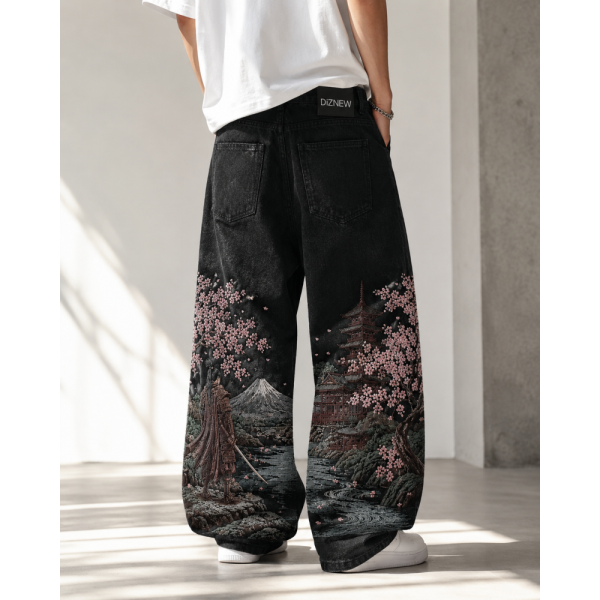
Premium wide-leg denim jeans featuring a vintage washed black finish, detailed Japanese landscape artwork, embroidery-style decoration, and custom brand label options. Designed for streetwear brands, designer labels, and private label collections looking for statement denim with strong visual storytelling.
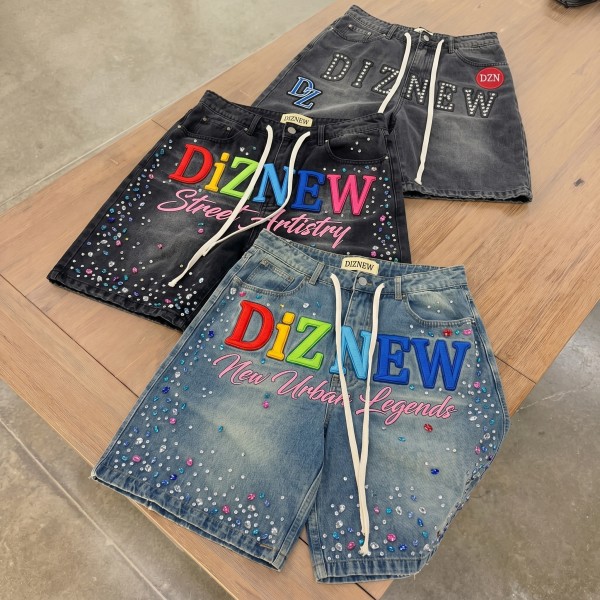
Custom Rhinestone Logo Denim Shorts: Wholesale supply direct. We manufacture premium embroidered baggy jean shorts for brands.
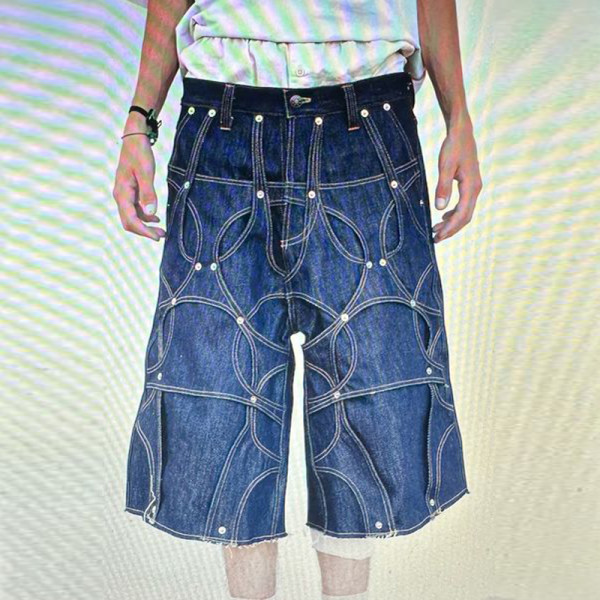
These designer denim shorts for men feature intricate decorative stitching and rivet details, perfect for streetwear fashion. The wide-leg silhouette adds a bold look, ideal for trendsetters.
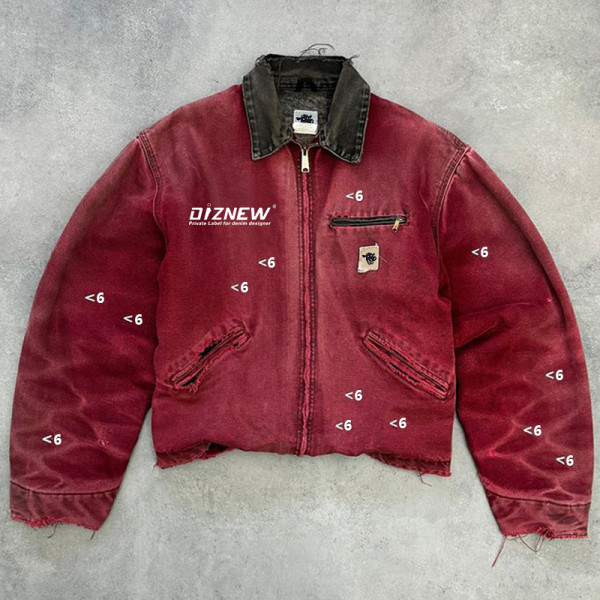
Discover this unique washed red canvas jacket featuring distressed details and vintage workwear aesthetics, perfect for bold fashion statements.