why bootcut jeans
- Share
- publisher
- Jimy
- Issue Time
- Nov 4,2026
Summary
Why the bootcut? It was built to fit over boots. We craft this authentic, functional, and timeless silhouette for today's leading denim brands worldwide.
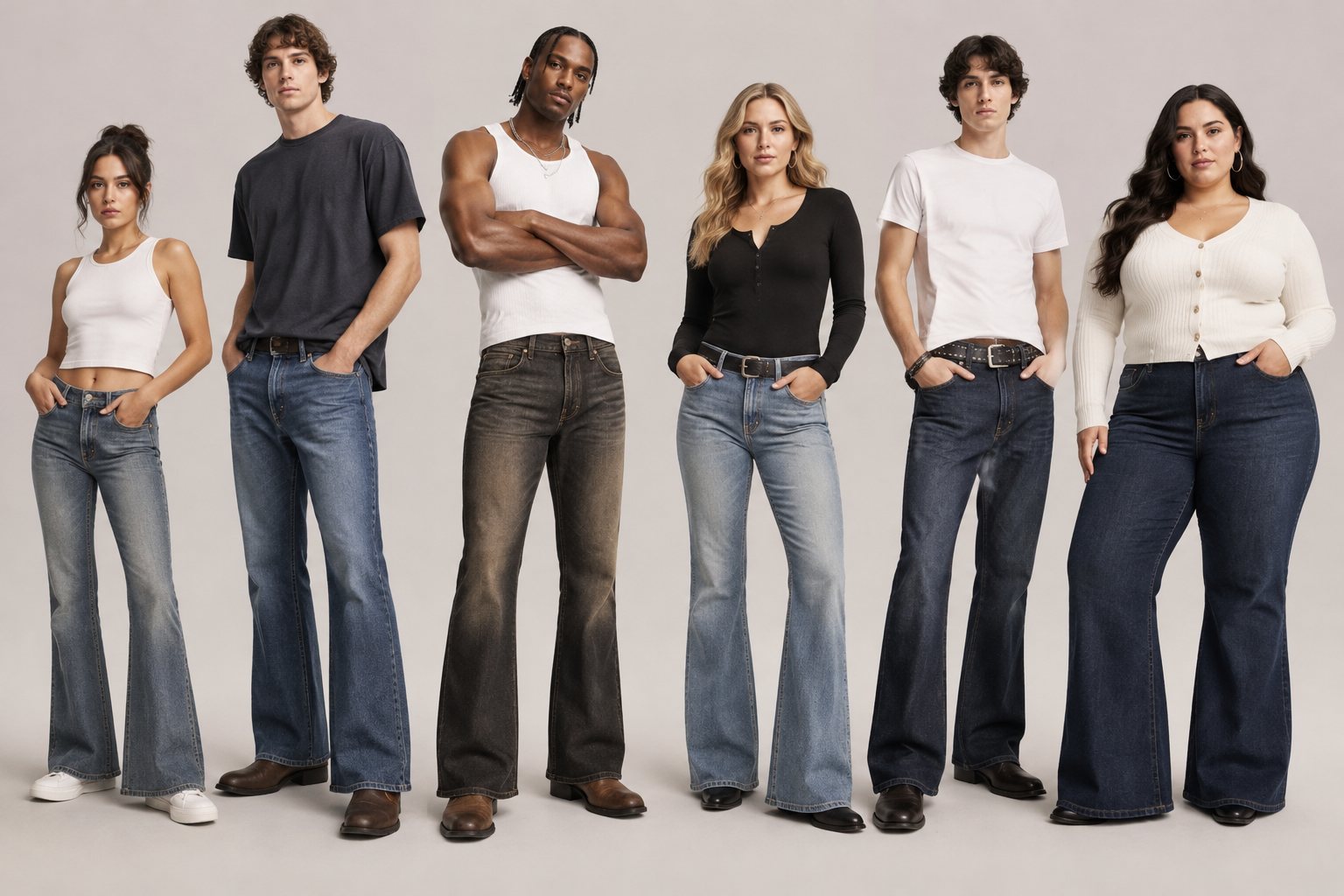
Fashion trends come and go, but some denim styles never completely disappear. Bootcut jeans are a perfect example. Once closely associated with cowboys, Western workwear, and the 1990s and early 2000s, they have returned to modern wardrobes with updated rises, cleaner washes, and more refined silhouettes. Unlike skinny jeans, which follow the leg closely, or baggy jeans, which create an oversized shape, bootcut jeans offer something in between: a fitted upper leg with a subtle outward opening below the knee.
But why do people actually wear bootcut jeans? Is it because they make legs look longer? Are they more flattering for certain body types? Or is it simply because they work so well with boots and everyday outfits?
People wear bootcut jeans because they combine a fitted waist and thigh with a slightly wider leg opening below the knee. This shape accommodates boots, balances leg proportions, and creates a versatile silhouette. Bootcut jeans can suit many body types when the rise, thigh fit, inseam, and hem width are properly designed. They also work with sneakers, heels, and everyday footwear.
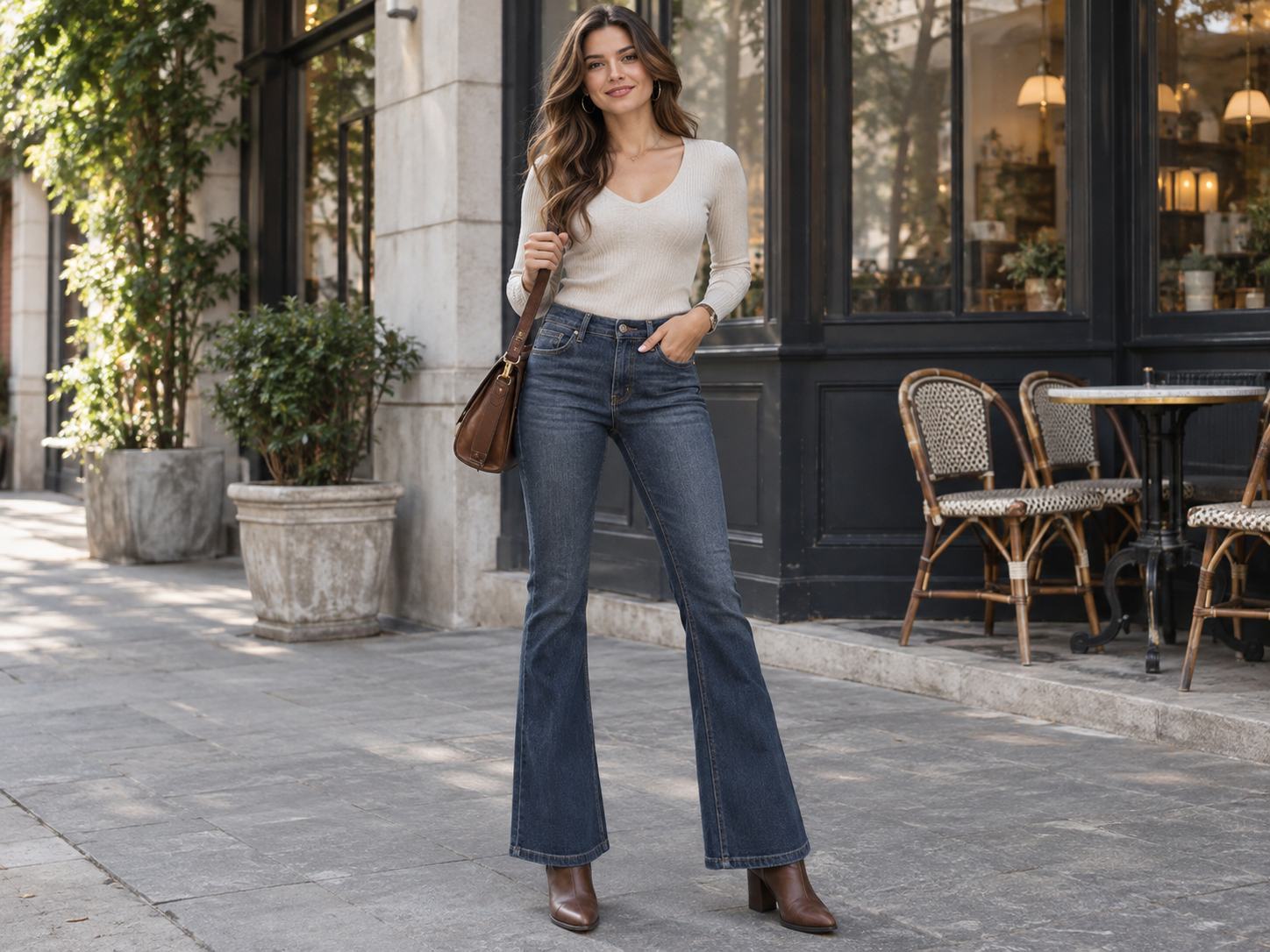
In 2026, bootcut denim is attracting renewed attention. Fashion publications are highlighting everything from traditional bootcut jeans to subtle mini-bootcut styles. Vogue reported that bootcut, skinny, and baggy jeans are all part of the Spring 2026 denim landscape.
For shoppers, this means more styling choices. For denim designers and boutique owners, it means a fresh opportunity to develop products that combine classic appeal with modern fit. But before deciding whether bootcut jeans belong in your next collection, it helps to understand what makes this silhouette special.
What Are Bootcut Jeans and Why Were They Invented?
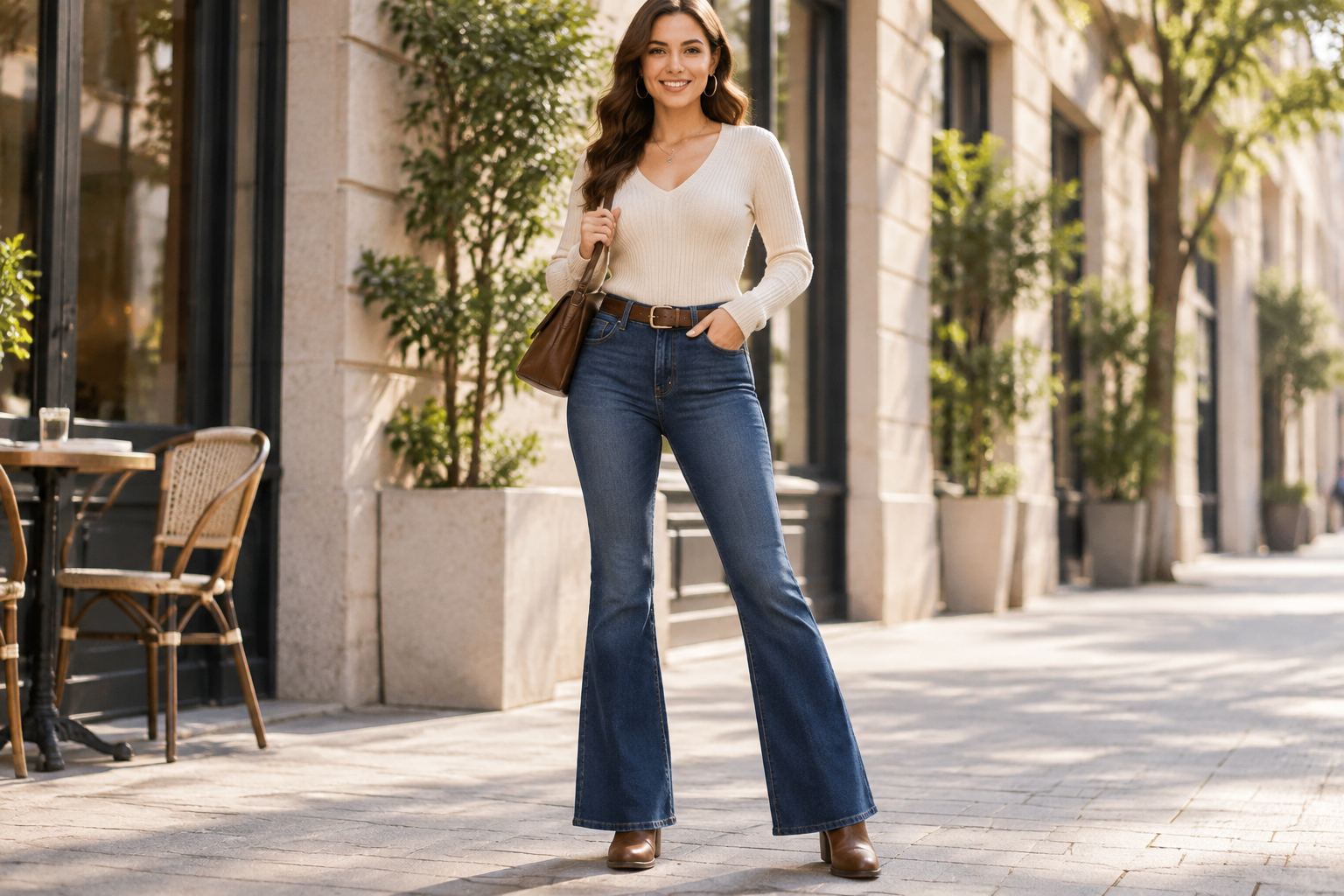
Bootcut jeans are denim pants that fit relatively close through the waist, hips, and thighs before widening slightly from the knee to the hem. Their design accommodates boots underneath the leg opening while creating a balanced silhouette. The style draws on practical workwear and Western influences before becoming a mainstream fashion staple.
What Are Bootcut Jeans?
The defining feature of bootcut jeans is their leg shape. Unlike straight jeans, which maintain a relatively consistent width, bootcut jeans gradually widen below the knee.
The classic construction includes:
A fitted or regular waistband.
A comfortable fit through the hips.
A relatively slim thigh.
A controlled knee width.
A slightly wider leg opening.
The flare is generally subtle compared with traditional flare jeans.
Why Were Bootcut Jeans Originally Designed?
The practical idea behind bootcut trousers is closely connected to workwear and Western clothing. Workers and ranchers needed trousers that could sit comfortably over boots without the fabric becoming trapped around the footwear.
The wider hem provided room for boots while maintaining a relatively fitted upper leg.
The modern bootcut silhouette developed over time rather than being attributable to one inventor. The term became particularly useful in distinguishing this moderate flare from the much wider bell-bottom styles associated with earlier fashion movements.
What Is the Point of Bootcut Jeans?
The point of bootcut jeans is to combine practical footwear coverage with a balanced leg silhouette. The wider hem accommodates boots, while the fitted upper section creates a more defined shape than many oversized styles.
Their versatility is another advantage. A single pair can work with Western boots, sneakers, heels, and everyday casual outfits.
Dive Deeper
One reason bootcut jeans have remained relevant is that they solve a practical styling problem without looking overly specialized. They provide enough room for boots while maintaining a shape that works in ordinary everyday outfits.
The proportions are particularly important. If the thigh is too tight, the jeans can feel restrictive. If the hem is too wide, the style starts moving toward flare jeans. If the knee position is wrong, the entire silhouette can look unbalanced.
For denim designers, bootcut is therefore more complicated than simply widening the bottom of a straight-leg pattern. The knee position, thigh measurement, rise, inseam, and hem circumference must work together.
The same design can also look completely different depending on the fabric. Rigid cotton creates a structured vintage appearance, while comfort-stretch denim provides a closer fit with more flexibility.
This gives brands several product directions: classic Western bootcut, modern slim bootcut, vintage washed bootcut, low-rise Y2K bootcut, and premium dark-indigo bootcut.
Which Body Type Should Wear Bootcut Jeans and Why Are They So Flattering?
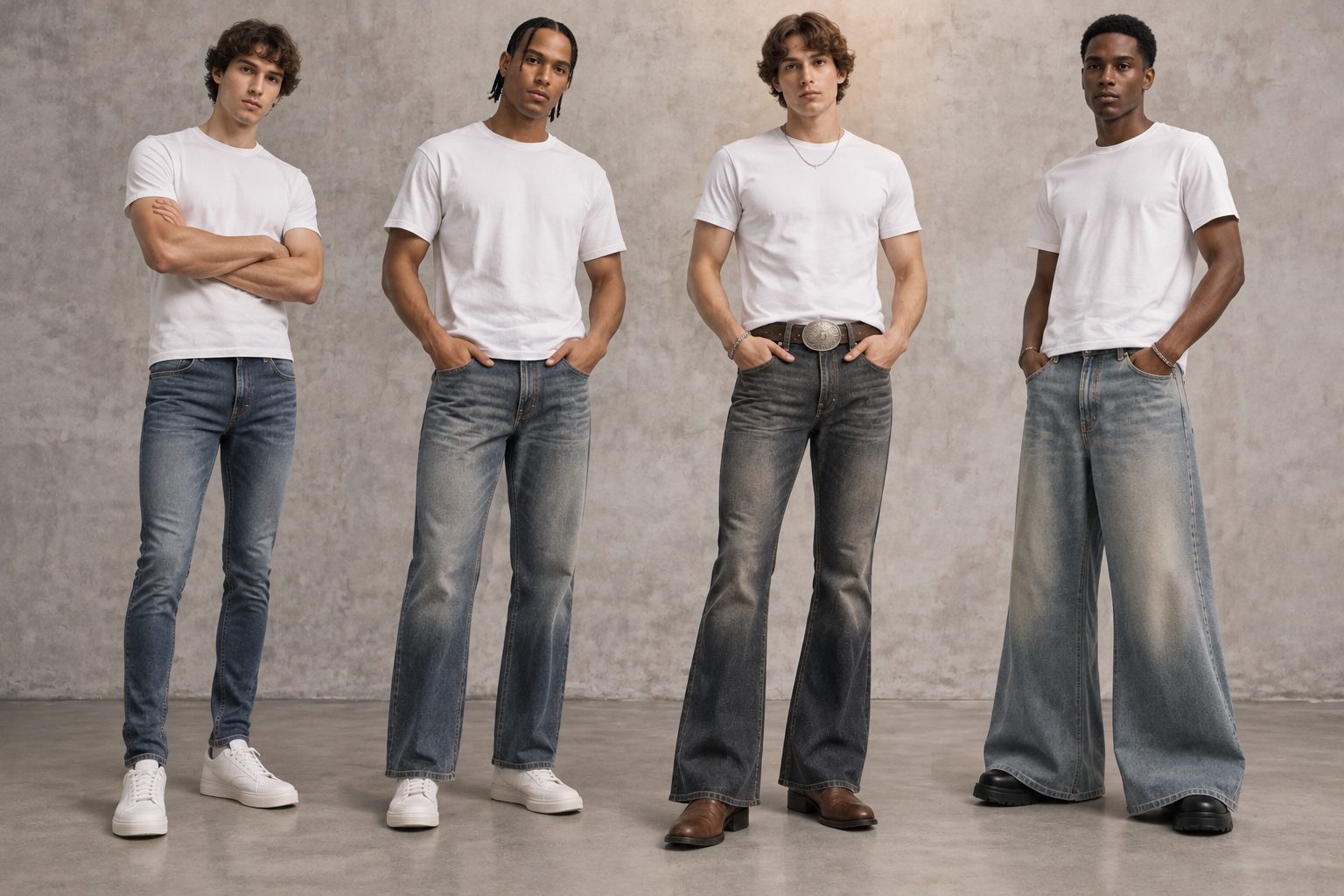
Bootcut jeans can work for petite, tall, athletic, curvy, slim, and plus-size customers because their slightly wider hem can balance the proportions of the upper leg. However, the most flattering result depends on waistband position, hip fit, thigh room, knee placement, inseam, and leg-opening width.
Why Are Bootcut Jeans Considered Flattering?
The main reason is visual balance. A fitted upper leg combined with a slightly wider hem can create a smoother transition from the thigh to the footwear.
The silhouette may also balance fuller hips or thighs, although the effect depends on the individual body shape and the exact pattern.
Do Bootcut Jeans Make Your Legs Look Longer?
They can create a longer-looking leg line when the waistband, inseam, and hem are correctly proportioned.
High-rise bootcut jeans can visually lengthen the lower body by raising the apparent waistline. A longer inseam that falls neatly over footwear can continue that vertical line.
Dark indigo and black washes can also create a cleaner visual appearance.
Are Bootcut Jeans Suitable for Plus-Size Women?
Yes. Bootcut jeans can be an excellent product category for plus-size denim collections, provided the pattern is developed around the intended customer's body proportions.
Important measurements include:
Waist circumference.
Hip circumference.
Front and back rise.
Seat shape.
Thigh circumference.
Knee position.
Leg opening.
A common manufacturing mistake is simply enlarging a standard-size pattern. This does not necessarily create a comfortable plus-size fit.
A better approach is to develop the waistband, rise, hip, seat, and thigh proportions together. A contoured waistband may also help address waist gaping for customers with a more pronounced waist-to-hip difference.
Dive Deeper
The flattering appearance of bootcut jeans comes from proportion rather than a magical body-shaping effect.
Consider two pairs of jeans with the same waist measurement. One has a narrow leg opening, while the other widens slightly below the knee. They create different visual proportions even though the customer wears the same size.
This is why fit development matters so much.
For petite customers, excessive fabric at the hem can overwhelm the silhouette. A more subtle flare and appropriate inseam may work better. Taller customers may prefer a longer inseam and a more noticeable bootcut opening.
Curvy customers often need more attention around the waistband, hip, and seat. If the waist fits but the hips pull, increasing the entire garment size may create an unwanted loose waistband. Adjusting the pattern proportions can be a better solution.
For plus-size customers, the same principle applies across a broader size range. A successful design needs to provide movement and comfort without losing the intended bootcut shape.
For brands, these differences create an opportunity to develop several bootcut fits instead of selling one pattern to everyone.
Are Bootcut Jeans Better Than Straight, Skinny, or Flare Jeans?
Bootcut jeans are not universally better than straight, skinny, or flare jeans. They offer a middle ground: more leg opening than straight jeans, less restriction than some skinny styles, and a subtler flare than traditional bell-bottoms. The best choice depends on the customer's preferred silhouette, comfort, footwear, and styling needs.
Bootcut vs. Straight Jeans
Straight jeans maintain a relatively consistent width from the knee to the hem. Bootcut jeans widen below the knee.
Straight jeans generally create a cleaner, more uniform leg shape, while bootcut jeans offer additional room around boots and a more pronounced lower-leg silhouette.
Bootcut vs. Skinny Jeans
Skinny jeans follow the body closely through the thighs, knees, and calves. Bootcut jeans provide a little more room below the knee.
Customers who dislike restrictive lower-leg fits may prefer bootcut styles, especially when paired with boots or heels.
Dive Deeper
The biggest advantage of bootcut jeans is their flexibility across different outfits.
Straight jeans are excellent everyday basics. Skinny jeans work well with fitted styling and boots. Flare jeans create a stronger retro statement. Bootcut jeans sit between these categories, offering a defined upper leg and a moderate opening at the bottom.
That balance makes them particularly useful for brands that want a versatile product rather than an extreme fashion silhouette.
Footwear also changes the way bootcut jeans should be developed. A jean designed for cowboy boots may need a wider opening and longer inseam than one designed for sneakers. A high-heeled boot may require additional length, while a flat sneaker may work better with a slightly shorter hem.
Brands should therefore consider the intended footwear during product development.
Fabric choice matters just as much. A rigid denim bootcut can create a traditional Western appearance. Stretch denim can make a slim bootcut more comfortable. Lightweight denim creates a softer drape, while heavyweight denim gives the leg more structure.
The important thing is to design the entire silhouette together. A good bootcut should not look like a straight jean with an accidentally oversized hem.
Are Bootcut Jeans in Style in 2026? Does Gen Z Wear Them?
Yes. Bootcut jeans are an important part of the 2026 denim conversation. Their renewed popularity is connected to Y2K nostalgia, Western styling, and demand for silhouettes between skinny and oversized. Gen Z fashion coverage has also highlighted slim-flare and low-rise bootcut outfits, although preferences vary among younger consumers.
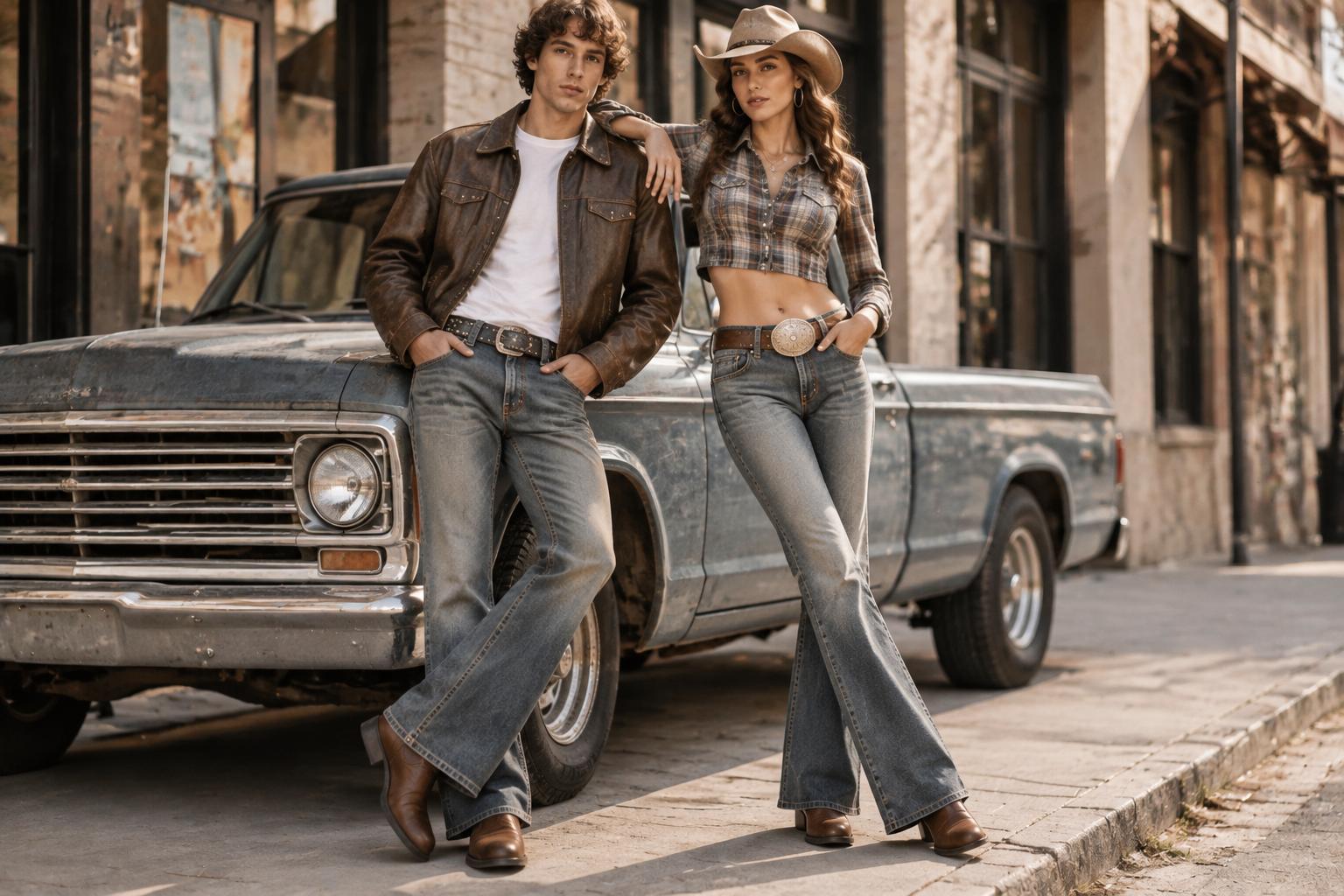
Why Are Bootcut Jeans Trending Again in 2026?
Vogue's Spring 2026 denim report identifies bootcut alongside skinny and baggy jeans as important silhouettes, emphasizing variety rather than one dominant fit.
British Vogue also reported in September 2026 that early-2000s bootcut styling is returning, with modern interpretations featuring subtle flares, fitted tops, belts, and boots.
The renewed interest is not limited to traditional Western bootcut jeans. Mini bootcut styles with a very subtle flare are also gaining attention.
Does Gen Z Wear Bootcut Jeans?
Yes. Who What Wear's 2026 coverage specifically identifies bootcut outfits as a popular direction among Gen Z-influenced fashion styling. Graphic T-shirts, leather jackets, moto boots, and relaxed accessories are among the combinations highlighted.
Are Mini Bootcut Jeans Different From Traditional Bootcut Jeans?
Mini bootcut jeans have a more subtle flare. They generally retain a slim appearance through most of the leg, with only a small outward opening below the knee.
Traditional bootcut jeans usually have a more noticeable hem expansion to accommodate boots.
Dive Deeper
The 2026 bootcut revival is interesting because it does not mean baggy jeans or skinny jeans have disappeared.
Instead, the denim market is becoming more varied. Some consumers want oversized streetwear silhouettes. Others prefer classic straight jeans. Some want a slimmer shape without returning to extremely tight denim.
Bootcut offers a useful middle ground.
The trend also has a strong nostalgic element. Early-2000s low-rise bootcut jeans are returning in updated forms, while high-rise and mid-rise versions provide alternatives for customers who prefer more waist coverage.
British Vogue's February 2026 coverage of mini bootcut jeans highlighted the subtle slim-flare silhouette as an alternative for customers who are not interested in returning to traditional skinny jeans.
For brands, this is a good opportunity to develop multiple products around one basic silhouette:
Classic Bootcut: Traditional thigh fit and moderate flare.
Slim Bootcut: Closer fit through the thighs and knees.
Mini Bootcut: Very subtle flare.
Low-Rise Bootcut: Early-2000s styling.
High-Rise Bootcut: More contemporary everyday styling.
Plus-Size Bootcut: Developed around fuller body proportions.
This product variety allows brands to reach different customers without relying on a single trend.
Styling also creates commercial opportunities. A washed-blue bootcut with a graphic T-shirt and boots communicates a different identity from a dark-indigo bootcut paired with a blazer and loafers.
For online boutiques and influencer-led brands, these differences can support separate product drops, styling campaigns, and customer segments.
How Can Denim Brands Develop Custom Bootcut Jeans With DiZNEW?
Denim brands can develop custom bootcut jeans by selecting suitable fabric, defining the rise and thigh fit, setting the knee position and leg-opening width, and testing the finished garment after washing. A specialized denim manufacturer helps translate these design decisions into consistent patterns, samples, and bulk production.
What Washes and Details Make Bootcut Jeans More Attractive?
Brands can differentiate their products through:
Dark indigo wash.
Vintage blue wash.
Dirty wash.
Washed black.
Whiskers and fading.
Distressed details.
Embroidery and patchwork.
Custom buttons and rivets.
Leather patches.
Custom labels and packaging.
How Can Brands Develop Bootcut Jeans From Sketches or Reference Photos?
A typical development process includes:
Mood board and design direction.
Design sketch or reference image.
Tech pack and measurement specifications.
Fabric and trim selection.
Pattern development.
Proto sample.
Fit review and pattern adjustment.
Wash development and approval.
Pre-production sample (PPS).
Bulk production and quality inspection.
Brands do not always need a complete tech pack before starting. Reference photos, design sketches, physical samples, or AI-generated concepts can provide a starting point for development.
Dive Deeper
Bootcut jeans may look simple, but creating a commercially successful pair requires careful technical development.
The first challenge is the leg proportion. The manufacturer must establish exactly where the flare begins, how much the leg opening expands, and how the silhouette works with the intended footwear.
The second challenge is fit. The waistband, hip, seat, thigh, and rise need to support the intended customer. A slim bootcut for younger streetwear customers may require a different pattern from a classic plus-size bootcut designed for everyday comfort.
The third challenge is fabric and washing. Different denim weights, stretch compositions, and washes can change the final drape and measurements. A sample that looks perfect before washing may not retain the same proportions afterward.
This is why experienced denim manufacturing matters.
DiZNEW is a China-based denim R&D and manufacturing factory with more than 20 years of experience. We primarily serve U.S. small and medium buyers, premium brands, independent denim designers, online boutique owners, and influencer-led fashion stores.
We support custom and OEM/ODM production under your own brand, including development from sketches, tech packs, reference photos, AI concepts, or physical samples.
Our custom denim capabilities include:
Plus Size Jeans
Baggy Jeans
Stacked Jeans
Straight Jeans
Selvedge Jeans
Skinny Jeans
Bootcut Jeans
Flare Jeans
Jogger Jeans
Denim Jackets
Denim Shorts
Denim Shirts
With an MOQ starting from 30 pieces per style and the ability to support larger orders up to 10,000 pieces, DiZNEW offers a flexible development and production path for both emerging designers and established brands.
Whether you want a classic Western bootcut, a modern slim bootcut, a Y2K-inspired low-rise style, or a premium plus-size collection, we can help turn your design concept into a physical product.
Ready to develop your own Bootcut Jeans collection? Contact DiZNEW to share your sketches, reference photos, or tech pack and request a custom quotation. Let's turn your denim idea into a product your customers will want to wear.
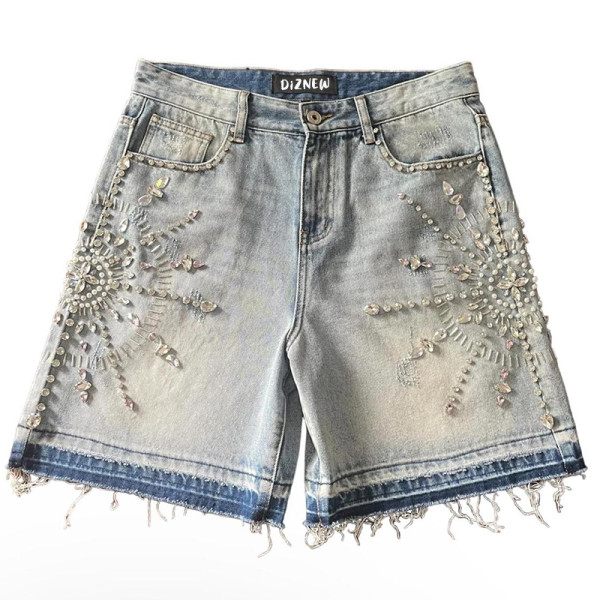
Custom Blue denim shorts with crystal detailing, blending luxury and street style. Stand out with this personalized denim design.
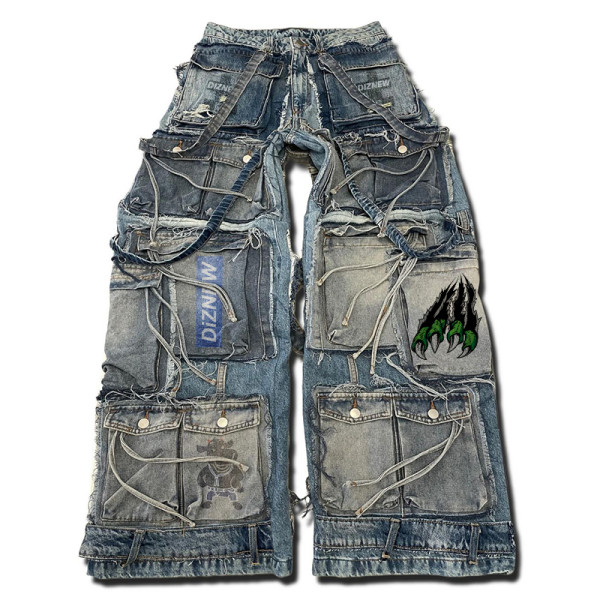
Washed denim cargo jeans with raw edge detail and oversized pockets for a bold streetwear look.
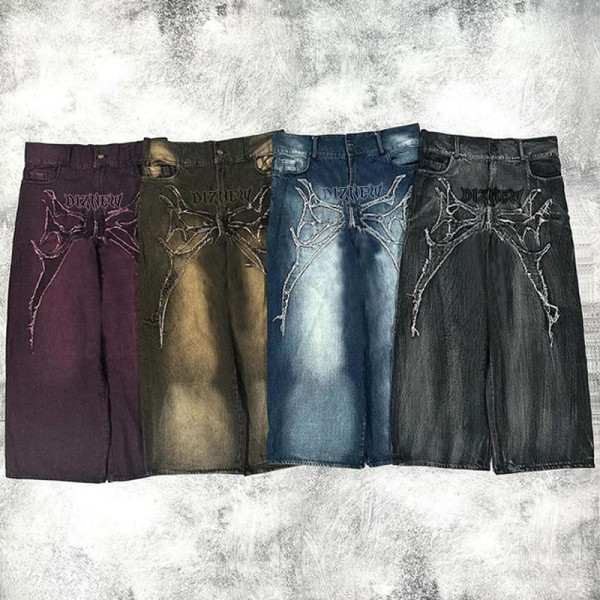
Custom men's gothic embroidered baggy denim jeans with spider web design. Bold streetwear for standout, stylish looks.
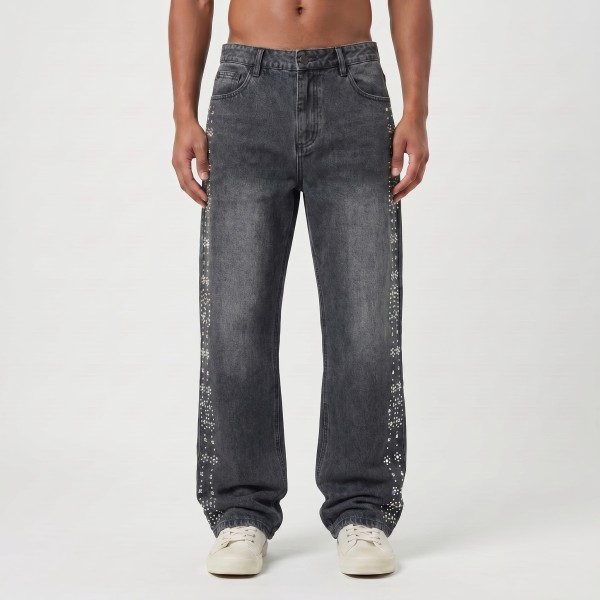
Discover premium DiZNEW denim jeans with decorative studs for a sparkling, stylish look. Order today!