Why do jeans “have genders” when they look the same?
- Share
- publisher
- Jimy
- Issue Time
- Sep 14,2026
Summary
Why do jeans have genders? Our integrated B2B factory helps wholesale brands craft precise men's, women's, and unisex fits with expert CAD patterns.
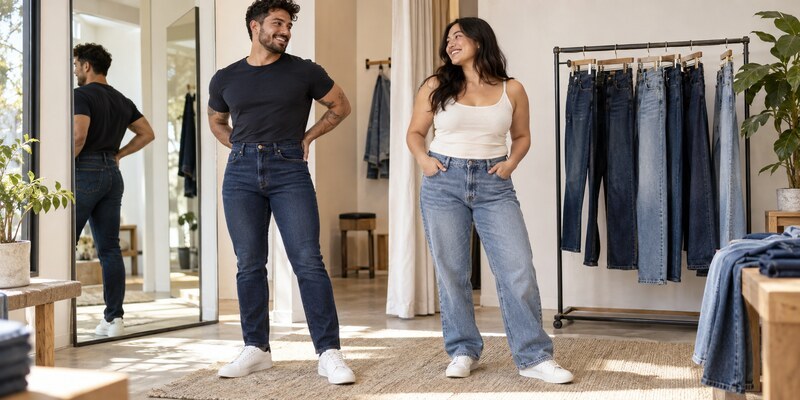
At first glance, jeans seem like one of the least gendered garments imaginable. Most pairs use the same familiar ingredients: denim fabric, five pockets, belt loops, metal hardware, a zipper fly, and two legs. Put a men’s straight-leg jean beside a women’s straight-leg jean in the same wash, and many shoppers may struggle to identify which is which. Yet the moment those jeans are tried on, the differences often become obvious. One pair may fit the waist but pull across the hips. Another may feel comfortable through the thighs but leave too much fabric around the rise.
The explanation is found inside the pattern, not simply in the visible style.
Jeans “have genders” because most fashion brands develop men’s and women’s products from different pattern blocks, sizing systems, body proportions, and customer expectations. Although the finished garments may look similar, their waist-to-hip shaping, rise, crotch curve, thigh room, pocket dimensions, and size grading can differ. These labels describe how the jeans were designed and marketed; they do not determine who is allowed to wear them.
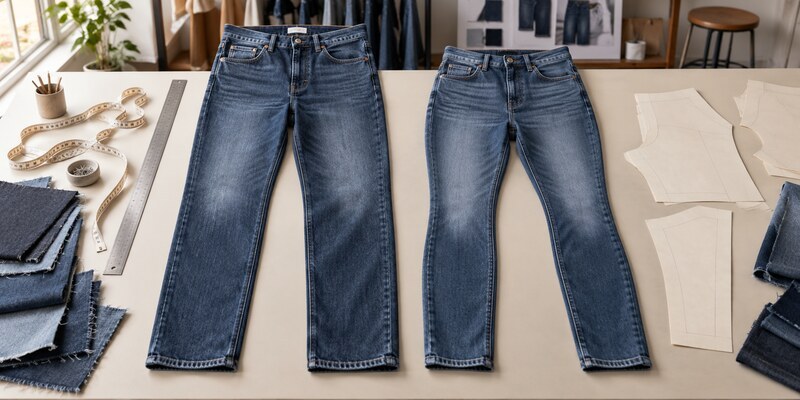
This distinction is becoming less rigid. Baggy jeans, carpenter cuts, relaxed straight legs, and oversized denim increasingly cross traditional departments. However, removing the gender label does not automatically solve the technical fit problem. A genuinely inclusive jean still requires careful measurements, fitting tests, fabric selection, and pattern engineering.
Imagine two customers who both wear a 28-inch waist. One tries a size 28 and cannot pull it comfortably over the hips. The other fastens the same waistband but finds several inches of loose fabric around the seat. The number is identical, but the pattern tells a completely different story. Let’s open that pattern and see what is really happening.
What Is the Difference Between Men’s and Women’s Jeans?
The main difference between men’s and women’s jeans is usually the pattern block used to create them. Brands may adjust the waist-to-hip relationship, rise, crotch curve, thigh shape, pocket size, leg proportions, fabric stretch, and size grading for different target customers. These are common design conventions rather than universal biological rules, so the actual garment measurements are more useful than the gender label alone.
How can I tell if jeans are for boys or girls?
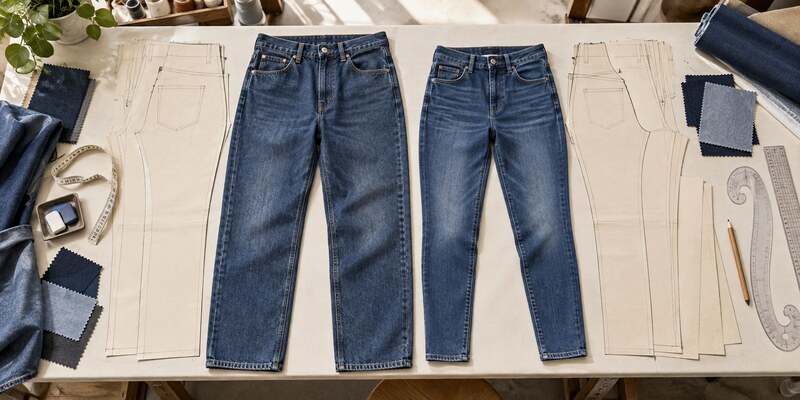
Start with the label and sizing format. Men’s jeans are frequently marked with waist and inseam measurements, such as 32 × 34. Women’s jeans may use numerical sizes such as 4, 8, or 12, alpha sizing such as S–XL, or waist-based sizing such as 26–32. None of these systems is completely standardized.
If the label is missing, lay the jeans flat and examine their proportions. A strongly curved side seam, a larger difference between the waist and hip measurements, or a more contoured waistband may suggest that the jeans were developed from a traditionally women’s pattern block. A straighter waist-to-hip line and more generous front-pocket bags may suggest a traditionally men’s block.
These are clues, not definitive tests. Modern baggy, boyfriend, skinny, and gender-neutral styles frequently borrow construction ideas from different categories. Button or fly orientation is also unreliable because manufacturing conventions differ by brand, market, and factory.
How do waist-to-hip ratios affect a jeans pattern?
The waistband and hip cannot be treated as two isolated measurements. Their relationship determines the shape of the upper jean.
If the difference between the waist and hip is relatively large, the pattern needs more contouring. That shaping may come from a curved waistband, a shaped yoke, darts, adjusted side seams, or a more pronounced back rise. Without it, the waistband can stand away from the lower back even when the hips fit properly.
A straighter pattern block uses less dramatic shaping between the waist and seat. It may work well for customers with straighter proportions but feel restrictive on someone whose hip measurement is much larger than their waist.
Why are the rise and crotch curves different?
The rise controls where the waistband sits, while the crotch curve creates space through the front and back of the garment. A small change here can transform comfort and appearance.
A longer front rise does not automatically mean a better fit, nor does a deeper back curve work for everyone. The designer must consider posture, seat shape, intended wearing position, fabric stretch, and the desired silhouette. A high-rise skinny jean and a dropped-rise baggy jean may target the same waist size while requiring completely different pattern geometry.
Do men’s and women’s jeans use different fabrics and construction details?
They can, but they do not have to. Traditionally, many men’s jeans used heavier rigid denim, while fitted women’s styles often relied on lighter fabrics with stretch. Today, those boundaries are blurred. Women buy heavyweight raw selvedge, and men wear stretch skinny jeans, soft jogger denim, and lightweight summer denim.
The correct specification should follow the product concept:
| Product goal | Suitable denim consideration |
| Structured straight or baggy fit | Rigid or low-stretch denim with body |
| Close-fitting skinny jean | Stretch with controlled recovery |
| Vintage workwear appearance | Heavier fabric and durable construction |
Soft, relaxed drape | Lighter weight or softened denim |
Inclusive everyday fit | Comfort, recovery, shrinkage, and stability |
Good development begins with the intended customer and wearing experience, not a stereotype about gender.
Why Do Men’s and Women’s Jeans Fit Differently Even in the Same Size?
Men’s and women’s jeans can fit differently in the same stated size because size labels do not describe the complete garment. Two pairs may have the same nominal waist but different hip room, rises, crotch shapes, thighs, inseams, and stretch levels. Brand-specific sizing and vanity sizing add further variation. Comparing finished garment measurements is therefore more reliable than comparing the number printed on the label.
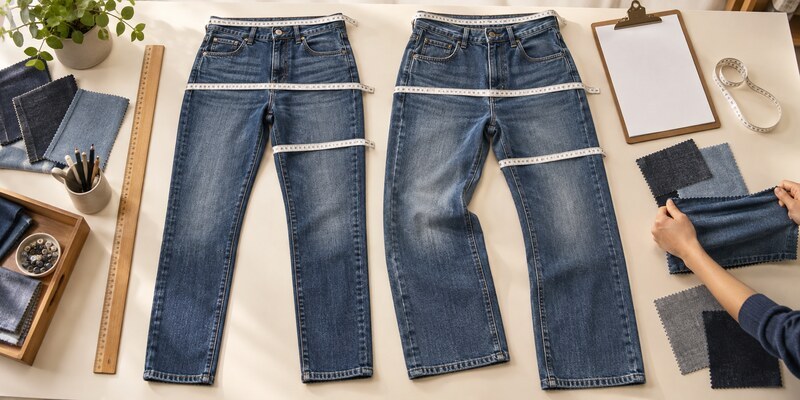
Is a men’s 28 the same as a women’s 28?
Not necessarily. A men’s 28 usually suggests a nominal 28-inch waist, but the finished waistband may measure differently depending on the fit and brand. A women’s 28 may also refer to a waist-based denim size, yet it can be developed with a different hip measurement, rise, and amount of ease.
The wearing position matters too. A low-rise waistband sits at a wider part of the body than a high-rise waistband. Two jeans marked “28” may therefore have different physical waistband measurements and still be considered correct for their intended fits.
Why can two pairs of size-28 jeans have different measurements?
Brands create their own size standards. Some label jeans according to body measurements, while others use finished garment measurements or historical size charts. Stretch denim further complicates the comparison because a relaxed garment and a high-recovery skinny jean do not need the same amount of ease.
Washing also changes the result. Raw denim, rinse-washed jeans, enzyme-washed jeans, and heavily distressed products may react differently during production. A professional manufacturer must account for shrinkage before cutting and confirm measurements after washing.
Which measurements matter more than the size label?
For accurate purchasing or custom development, compare the following points:
| Measurement | Why it matters |
| Waistband | Determines where and how securely the jeans sit |
| High hip and full hip | Controls room through the upper body |
| Front and back rise | Affects wearing position, coverage, and comfort |
Thigh | Influences mobility and upper-leg silhouette |
Knee | Shapes straight, tapered, bootcut, and flared fits |
Inseam | Determines functional leg length |
Leg opening | Controls the final silhouette and shoe compatibility |
Measurements should be taken using one agreed method. Even a one-centimeter difference in measuring position can create confusion across multiple sizes.
How can shoppers convert between men’s and women’s jeans sizes?
Avoid relying on a fixed conversion formula. Begin with the customer’s body measurements and compare them with the brand’s finished garment chart. Prioritize the hip and rise when crossing between traditional men’s and women’s blocks because the waist is often easier to adjust than the entire seat and crotch structure.
For brands, the lesson is commercially important. A confusing size chart creates preventable returns, negative reviews, and hesitant buyers. Clear garment measurements, fit-model information, fabric stretch details, and washing tolerances help customers select confidently.
Why Do Women’s Jeans Usually Have Smaller Pockets?
Women’s jeans have often been designed with smaller or decorative pockets because brands prioritized a smooth, close-fitting silhouette over storage. Large pocket bags can create bulk beneath lightweight or stretch denim. Historical fashion conventions also influenced the difference. However, deeper functional pockets can be incorporated successfully when their shape, fabric, placement, and attachment are engineered together with the jeans pattern.
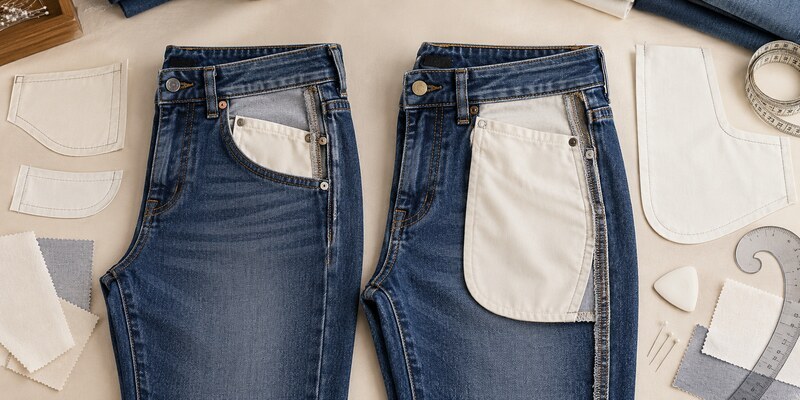
Are smaller pockets related to fit and silhouette?
Partly. On a fitted jean, a large pocket bag may fold, twist, or show through the outer fabric. It can also interrupt the clean surface that designers want across the front hip. This is especially noticeable in lightweight denim or fabric with a high level of stretch.
Reducing the pocket is the fastest solution, but it is not always the best one. A manufacturer can use thinner yet durable pocketing, reshape the opening, anchor the pocket bag securely, or extend it toward the fly for improved stability. Functional design requires more development, not simply more fabric.
Why do some women’s jeans have fake pockets?
Fake pockets usually preserve a visual detail without adding interior bulk. They may also reduce sewing steps and material consumption. The problem is that many customers now carry smartphones, cards, and other daily essentials. A decorative pocket may support the intended appearance but deliver a disappointing user experience.
Brands should ask whether the pocket is part of the visual design or part of the product’s practical promise. If the target customer expects utility, a fake opening can make an otherwise premium jean feel poorly considered.
How does pocket placement change the appearance of the body?
Back pockets are among the most influential details on jeans. Their width, height, angle, spacing, embroidery, and position relative to the yoke can visually change the proportions of the seat.
Pockets placed too low may make the seat appear longer. Very small pockets can look out of scale on plus-size jeans, while oversized pockets may overwhelm a smaller size. This is why responsible size grading involves more than enlarging every component by the same percentage. Pocket size and placement should be reviewed across the complete size range.
Are deeper, functional pockets becoming more common in women’s jeans?
Customer demand is encouraging more brands to reconsider pocket functionality. Carpenter jeans, cargo denim, baggy fits, and workwear-inspired products naturally provide more room for practical storage. Even fitted jeans can offer useful pockets when the internal construction is developed carefully.
For a custom denim collection, pocket depth should be specified in the tech pack and evaluated during sampling. Place an actual phone inside the sample, sit down, walk, and check whether the pocket bags remain flat. That simple wear test reveals more than a flat product photograph ever could.
Can Men Wear Women’s Jeans and Can Women Wear Men’s Jeans?
Yes. A man can wear women’s jeans, and a woman can wear men’s jeans. Clothing labels do not restrict the wearer. The practical question is whether the waistband, hips, rise, crotch, thighs, length, and leg shape fit comfortably. Selecting jeans by measurements and silhouette provides a more dependable result than selecting them by gender category alone.
Can a male wear female jeans?
Absolutely. A customer may choose women’s jeans because of a higher rise, narrower leg opening, flared shape, particular wash, or broader selection of fitted silhouettes. If the garment fits properly and delivers the intended look, the department in which it was sold has little practical importance.
Possible challenges include insufficient front-rise space, tightness through the thigh, different hip shaping, shallow pockets, or a shorter inseam. These issues are related to the pattern, not to whether someone is “allowed” to wear the product.
Can women wear men’s jeans comfortably?
Yes, and many familiar styles are built around that idea. Boyfriend jeans, oversized carpenter pants, loose straight legs, and relaxed workwear cuts frequently borrow from traditionally masculine silhouettes.
A wearer with a smaller waist and fuller hips may need to size for the hip and adjust the waistband. Belts can manage minor looseness, but excessive waist gaping may indicate that the pattern block is unsuitable. Conversely, customers with straighter proportions may find that some men’s patterns fit more naturally than highly contoured women’s styles.
What fit problems may occur when wearing jeans designed for another pattern block?
Common problems include:
A waistband that fits while the hips feel restricted
A comfortable hip with a large gap at the back waist
Excess fabric or pulling around the front rise
A back rise that slips down when sitting
Thigh restriction despite adequate waist room
Incorrect knee placement or excessive inseam length
Pockets that sit too high, low, close, or far apart
These problems can also occur within the same gender category. Bodies are diverse, while mass-produced jeans are based on a limited number of fit models.
Can tailoring make men’s or women’s jeans fit another body type?
Minor alterations can help. A tailor can adjust the waistband, shorten the inseam, refine the leg, or slightly reshape a side seam. Major changes to the rise, crotch curve, or hip balance are more difficult because they affect multiple connected seams, the fly, pockets, and yoke.
For a brand developing a collection, it is usually more efficient to correct the base pattern than to depend on alterations. Fit sessions should include movement: sitting, walking, bending, using the pockets, and wearing the intended shoes. Jeans must perform on a moving person, not merely look balanced on a fitting-room platform.
Are Unisex and Gender-Neutral Jeans Changing Denim Design?
Unisex and gender-neutral jeans are changing how denim is designed and sold by shifting attention from traditional labels toward fit, measurements, and personal style. However, one universal pattern cannot fit every body. Successful inclusive collections normally use adaptable silhouettes, clear specifications, broad size ranges, and sometimes multiple pattern blocks so customers can choose according to proportion rather than gender.
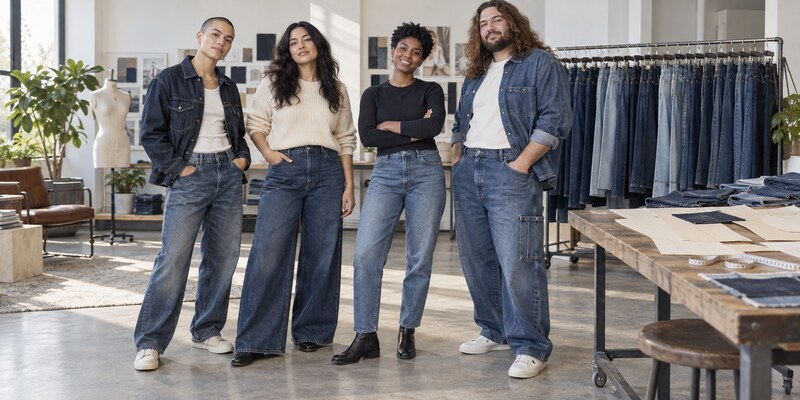
What is it called when both genders can wear the same clothes?
“Unisex” is the most familiar term for clothing intended to be worn by people of different genders. “Gender-neutral” generally describes designs that avoid obvious traditional gender signals. “Gender-inclusive” can carry a broader meaning, suggesting that the product, sizing, presentation, and shopping experience actively include a wider range of identities and bodies.
These terms are sometimes used interchangeably, but the product must support the marketing claim. Printing “unisex” on a standard men’s jean does not automatically make its fit inclusive.
What makes a pair of jeans genuinely unisex?
A useful unisex product often begins with a relatively adaptable silhouette, such as a relaxed straight, baggy, wide-leg, or adjustable-waist jean. Clear waist, hip, rise, thigh, inseam, and opening measurements allow shoppers to make informed decisions without depending on department labels.
Designers may also consider multiple inseam options, adjustable tabs, flexible waist construction, suitable pocket depth, neutral trims, and size grading that has been tested at both the small and large ends of the range.
Can one unisex jeans pattern fit every body shape?
No single pattern can provide an ideal fit for everyone. A straight pattern block may fit some customers beautifully and create waist gaping or hip restriction for others. Simply adding stretch can disguise minor discrepancies, but it cannot correct poor pattern balance.
A stronger solution is to offer more than one proportion within the same visual style. For example, a brand could sell one relaxed straight jean in “straight” and “curve” blocks while using the same fabric, wash, hardware, branding, and product name. Customers select a proportion rather than a gender.
Should jeans be categorized by measurements and fit instead of gender?
In many cases, fit-led categories provide better information. Terms such as straight, curve, athletic, relaxed, tall, petite, and plus-size tell customers something practical about the garment. Gender labels alone do not explain the rise, hip allowance, or thigh room.
For denim brands, this approach can expand the audience without sacrificing technical accuracy. However, it requires disciplined product development. Each fit block must be sampled, washed, measured, graded, and tested. Inclusion becomes credible when it appears in the pattern and size chart, not only in the advertising campaign.
Do Jeans Really Need to Have Genders?
Jeans do not inherently belong to one gender. The familiar men’s and women’s labels are mainly shortcuts for different pattern blocks, size systems, styling traditions, and merchandising strategies. Those shortcuts can help some customers, but they can also hide the measurements that truly control fit.
The most customer-friendly approach is to explain exactly how a jean is shaped. Brands should provide reliable finished measurements, fabric composition, stretch and recovery information, fit notes, and clear size guidance. Designers should begin with the needs of their actual audience instead of assuming that one conventional pattern represents everyone.
DiZNEW helps independent designers, online boutiques, influencer-led stores, and established fashion brands develop custom jeans from sketches, reference samples, tech packs, or initial product ideas. With more than 20 years of denim development and manufacturing experience, we can customize fabric, pattern, sizing, pockets, washes, distressing, embroidery, trims, labels, and brand logos across products including baggy, stacked, straight, selvedge, skinny, jogger, and plus-size jeans.
Our MOQ starts at 30 pieces for developing and testing focused collections, while our production capabilities also support orders of 10,000 pieces or more. Whether you are creating traditional men’s and women’s fits or building a gender-neutral denim range with multiple pattern blocks, DiZNEW can help turn your concept into a production-ready product.
Contact DiZNEW for a custom OEM or ODM quotation and share your design, target customer, size range, estimated quantity, and preferred denim style. Let’s develop jeans that fit the people you want to serve—not just the label you plan to put on them.
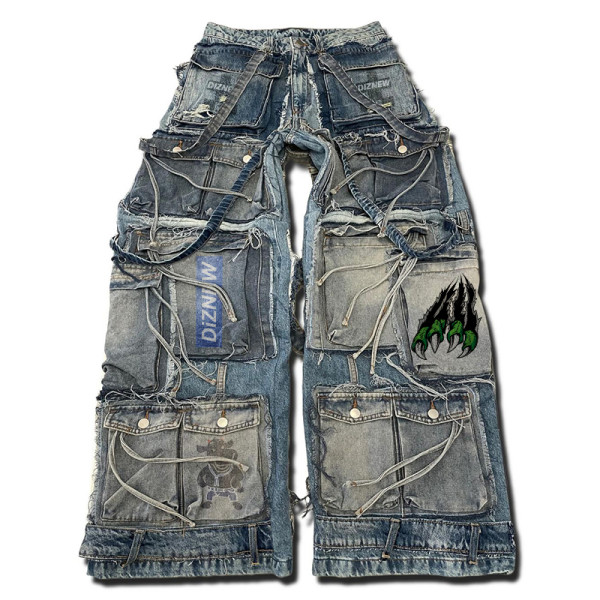
Washed denim cargo jeans with raw edge detail and oversized pockets for a bold streetwear look.
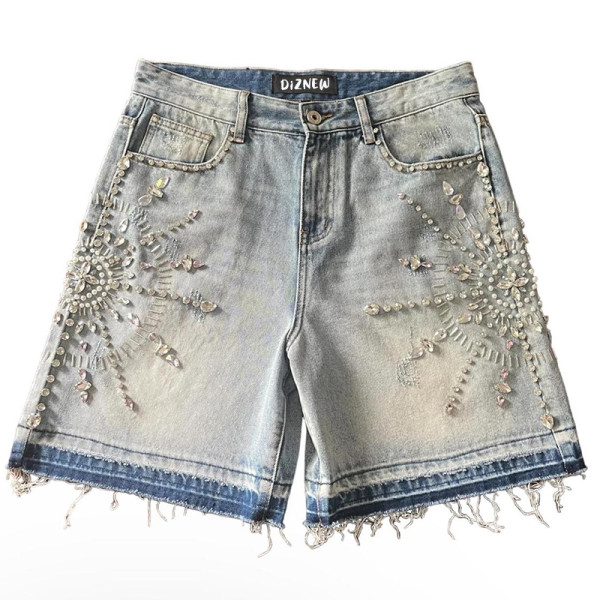
Custom Blue denim shorts with crystal detailing, blending luxury and street style. Stand out with this personalized denim design.
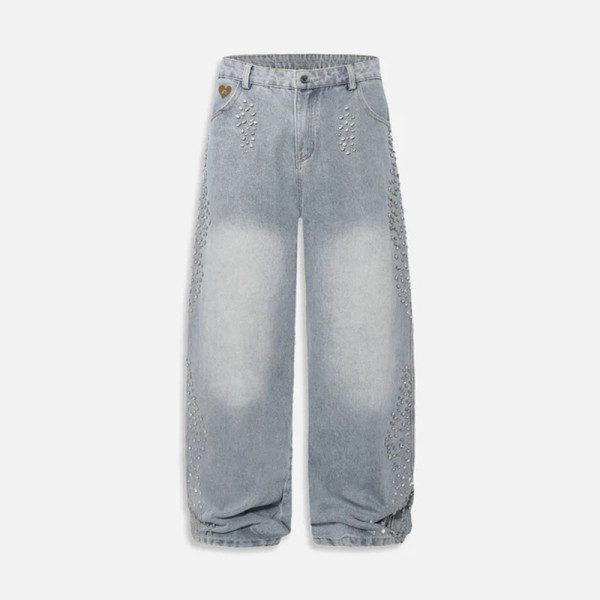
Feminine yet edgy—baggy jeans with scattered rhinestones, heart detail, and gathered cuffs.
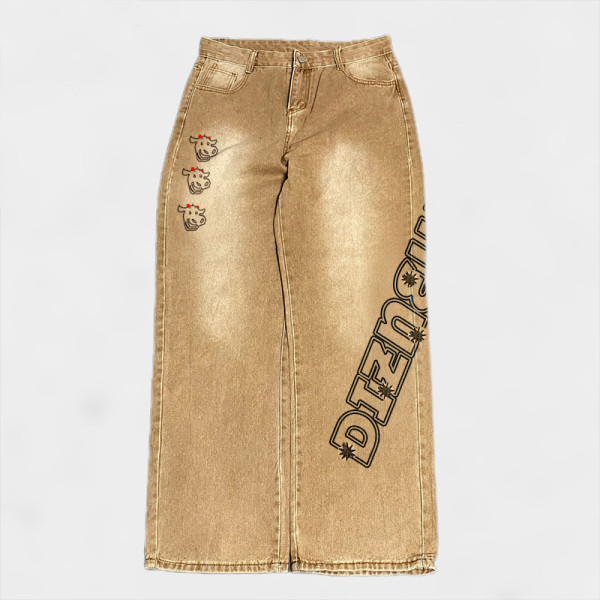
Custom-tailored Baggy Jeans: Personalized Washed Denim, Ready for Your Style.