Why do American men like to wear blue jeans so much?
- Share
- publisher
- Jimy
- Issue Time
- Aug 5,2026
Summary
Find out why American men like to wear blue jeans so much and how our B2B custom factory helps US brands with premium wholesale denim manufacturing.
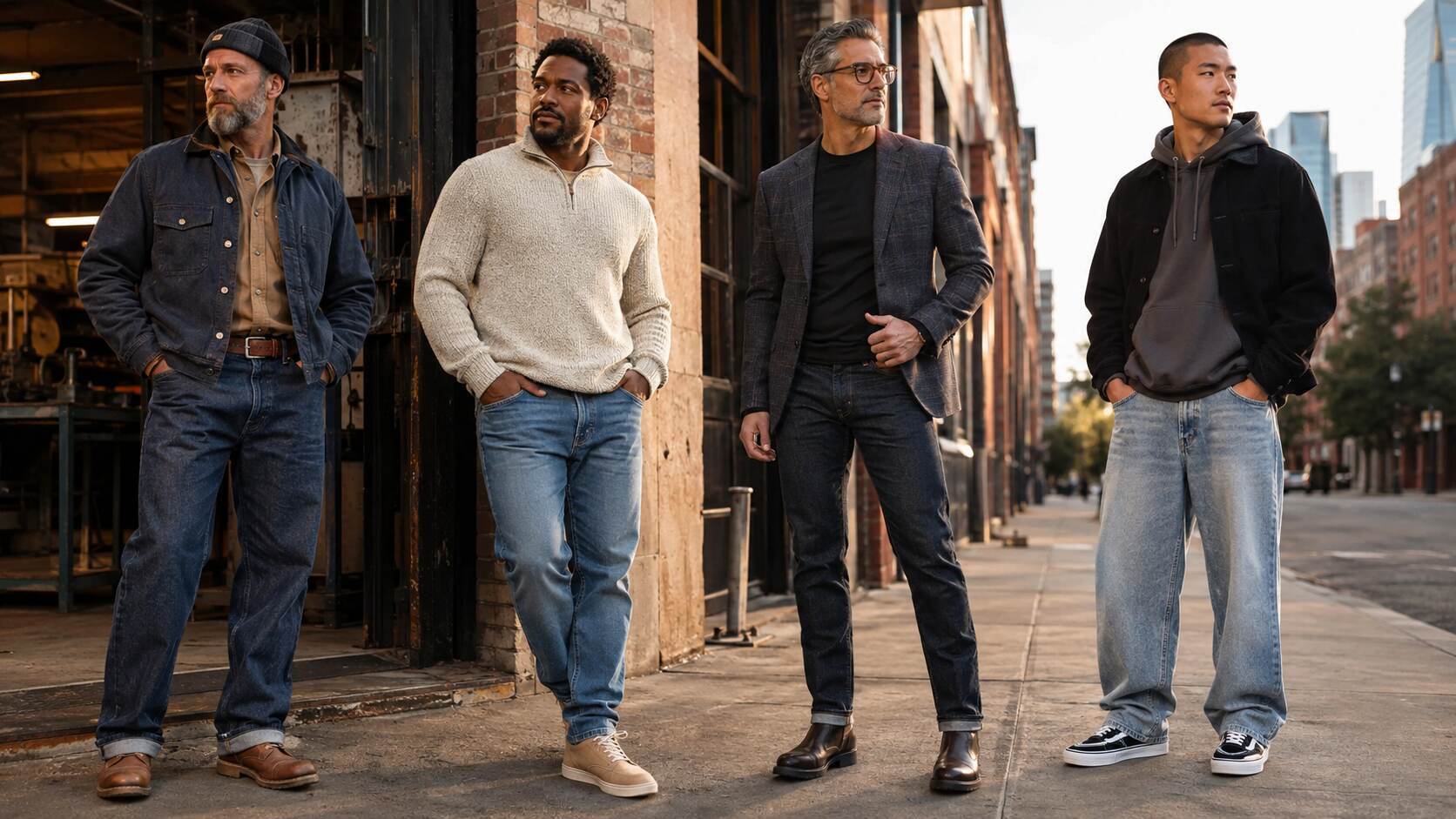
Walk through almost any American city, airport, college campus, shopping mall, or neighborhood, and you will see men wearing blue jeans. A construction worker may choose a heavyweight straight-leg pair, while a designer wears Japanese-style selvedge denim and a younger shopper prefers baggy, stacked, or distressed jeans. Their lifestyles are different, yet they all rely on the same basic garment.
That popularity is not simply the result of fashion marketing. Blue jeans solve several everyday problems at once: they are durable, familiar, easy to coordinate, available at almost every price point, and adaptable to different body shapes. More importantly, denim carries cultural meanings that ordinary trousers rarely possess. It can represent honest work, masculinity, youth, rebellion, independence, luxury, or street style depending on the fabric, fit, wash, and wearer.
American men wear blue jeans because denim combines durability, comfort, styling versatility, and cultural familiarity. Jeans developed from practical American workwear into a symbol of freedom and individuality. Today, numerous fits, washes, fabric weights, and stretch levels allow men of different ages, body types, occupations, and personal styles to find jeans that fit their daily lives.
Here is the interesting part: the basic five-pocket jean has changed surprisingly little, but what customers expect from it has changed enormously. The story of American denim is therefore not only about why men keep wearing jeans. It is also about how brands can reinvent a familiar product without losing the qualities that made people love it.
How Did Blue Jeans Become an Icon of American Menswear?
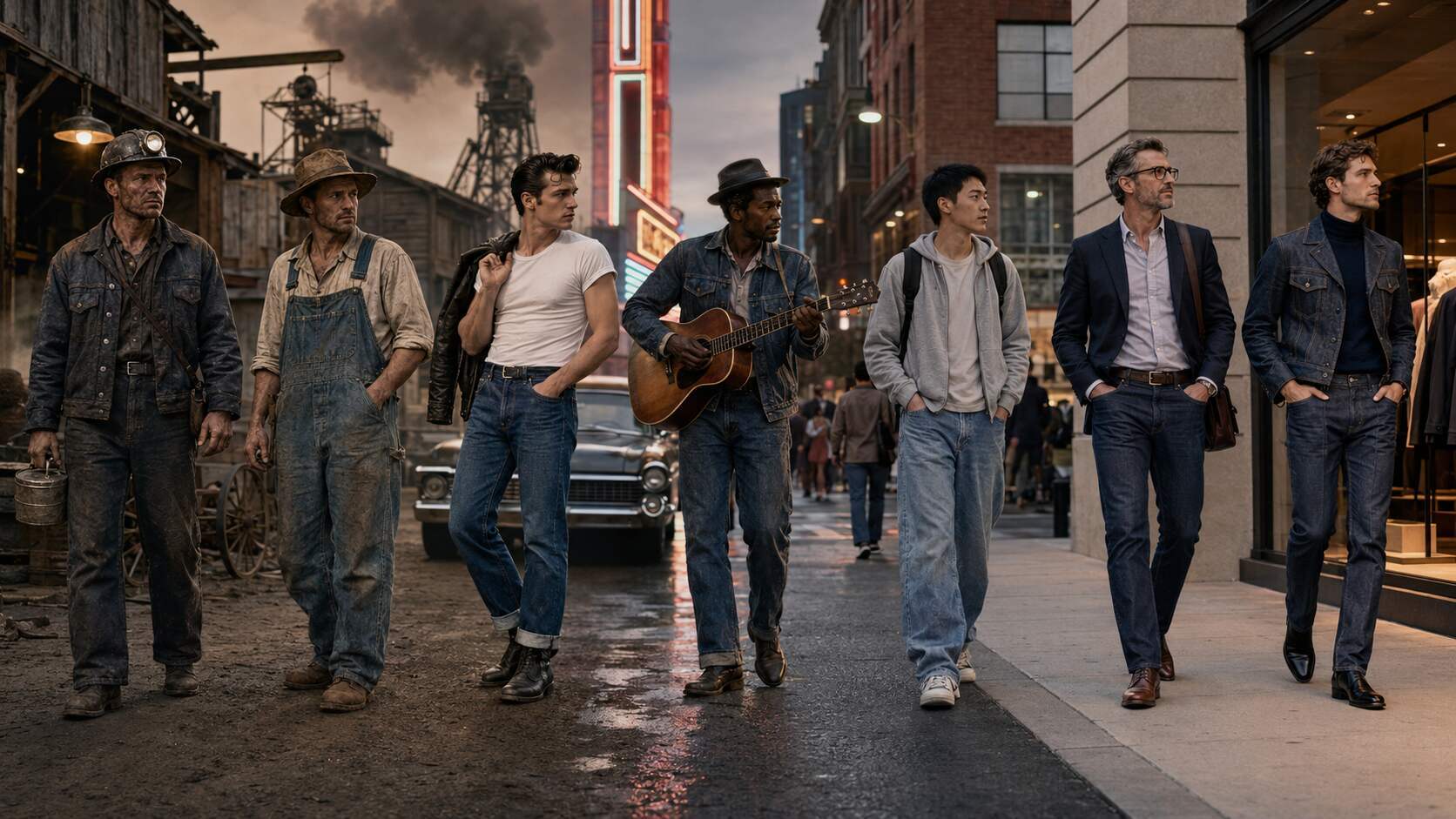
Blue jeans became an American menswear icon because they moved successfully from mines, farms, and factories into movies, music, schools, offices, and luxury stores. Their durable construction gave them practical value, while their association with workers, cowboys, and rebellious young people gave them cultural power. Few garments have crossed so many social and economic boundaries.
Where Were Blue Jeans Invented?
The story of modern riveted jeans is closely connected to the United States. In 1873, Levi Strauss and Jacob Davis received a US patent for reinforcing work pants with metal rivets at stress points. The purpose was straightforward: laborers needed trousers that would not tear easily around the pockets and seams.
Denim itself has older international roots, but the riveted five-pocket garment that consumers now recognize as blue jeans was shaped by American industry. It was designed around a real customer problem rather than a passing runway trend.
That distinction matters for modern brands. Successful denim products still begin with function: Where does the customer need more room? Which seams experience the most pressure? Is the pocket deep enough? Does the fabric recover after sitting, walking, or bending?
How Did Blue Jeans Evolve From Workwear Into Everyday Fashion?
Jeans did not become universally popular overnight. They first earned trust as reliable work clothing among miners, mechanics, farmers, ranchers, and factory workers. Western films later presented denim as part of an adventurous American lifestyle, while actors and musicians gave it a younger and more rebellious identity.
After World War II, teenagers became a major consumer group. Jeans entered schools and social spaces where workwear had not traditionally belonged. Attempts to ban denim in some institutions arguably made it even more attractive: wearing jeans could communicate that a young person did not intend to follow every convention.
By the 1970s and 1980s, designer labels had demonstrated that jeans could also be fashionable, fitted, aspirational, and expensive. Denim was no longer limited to the jobsite. It could appear at a concert, a restaurant, a creative office, or a fashion show.
What Country Wears Jeans the Most?
There is no single dependable global measurement that proves which country wears the most jeans. Researchers may compare total sales, pairs owned per person, import volume, retail revenue, or frequency of wear—and each measurement can produce a different answer.
The United States is nevertheless one of the strongest denim markets and the country most closely associated with the cultural identity of blue jeans. Large populations in China, India, Brazil, Mexico, and European markets also create significant demand, but market size should not be confused with cultural influence.
For denim companies, a more useful question is not “Which country is number one?” but “How does each market wear jeans?” American buyers may prioritize size inclusivity, comfort, reliable fit, and casual versatility. Other markets may place greater emphasis on lightweight fabrics, premium selvedge construction, fashion washes, or locally preferred silhouettes.
The evolution of blue jeans reveals an important product-development lesson: a garment becomes timeless when it can absorb new meanings without losing its core usefulness. The earliest jeans promised strength. Later generations added freedom, youth, sexuality, status, nostalgia, and self-expression to that promise.
This is why copying a popular jean visually is rarely enough. Two pairs may look similar in an online photograph but perform very differently after several hours of wear. Fabric composition, shrinkage, pattern balance, seam construction, wash treatment, pocket placement, and hardware quality determine whether the customer keeps wearing the product.
Brands should therefore treat denim history as a design resource, not merely a marketing story. Rivets can express authenticity, but they should also reinforce genuine stress points. A vintage wash can suggest heritage, but it must not weaken the fabric excessively. A selvedge edge can support premium positioning, but only when the fabric, sewing, finishing, and fit justify the price.
The strongest modern jeans preserve the honesty of workwear while responding to contemporary expectations. They look familiar at first glance, yet feel carefully considered once the customer puts them on.
Why Do Blue Jeans Represent Freedom, Masculinity, and Rebellion in American Culture?
Blue jeans represent freedom and rebellion because American workers, cowboys, actors, musicians, bikers, and youth movements all used denim to communicate independence. Unlike formal trousers, jeans historically required little social explanation. They looked practical, direct, and unpretentious—qualities that became closely connected with popular ideas of American masculinity and individual choice.
Why Do Americans Wear Jeans So Much?
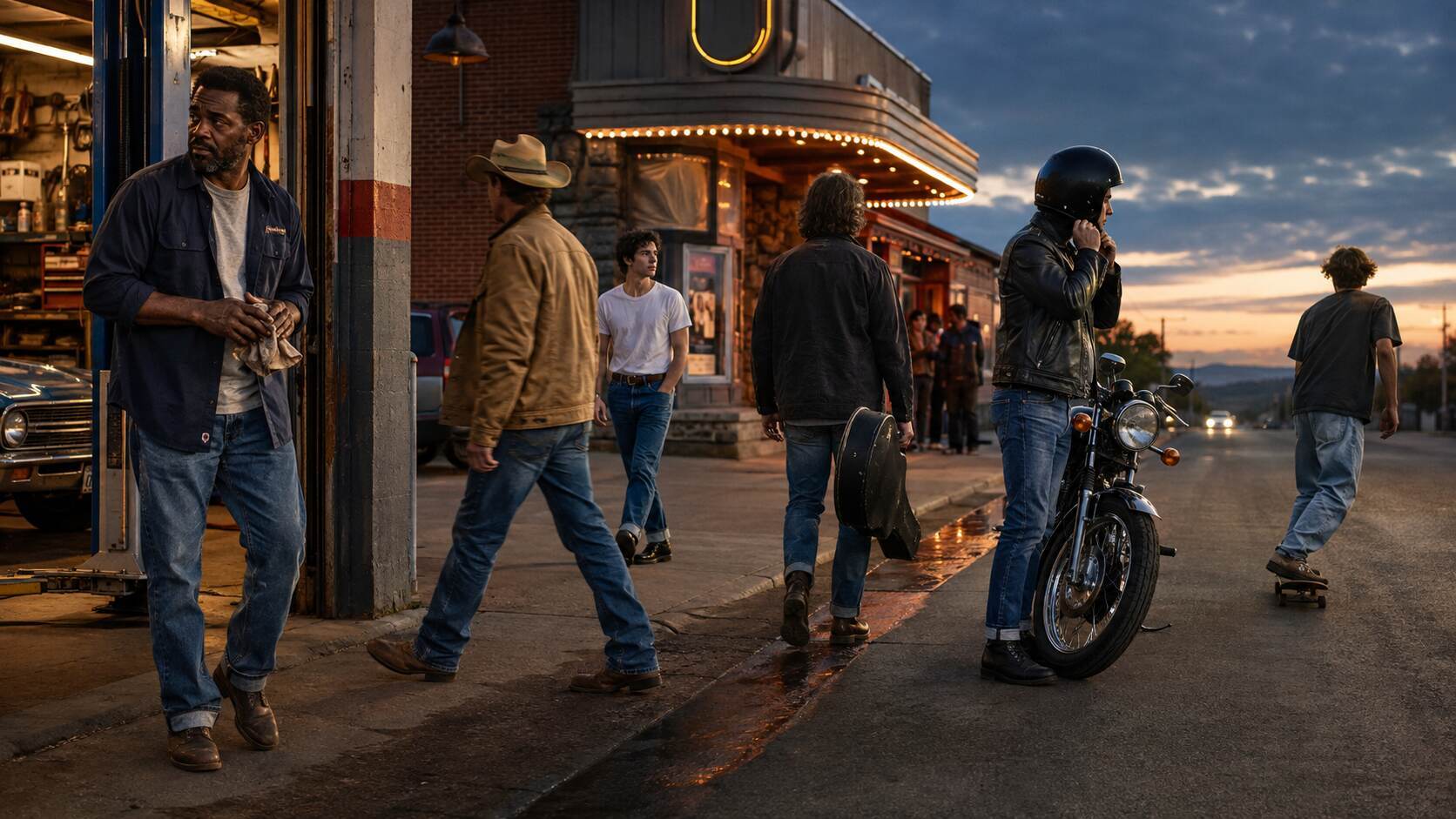
Americans wear jeans frequently because they suit the country’s casual lifestyle. One pair can work for commuting, shopping, traveling, meeting friends, attending a concert, or working in a relaxed office. Jeans also remove some of the anxiety from getting dressed: most men already know how to combine blue denim with a T-shirt, hoodie, Oxford shirt, denim jacket, boots, or sneakers.
Price accessibility has also supported widespread adoption. Consumers can find basic jeans at mass-market prices, handmade selvedge jeans at premium prices, and almost everything between those two extremes.
How Did Cowboys Shape the Masculine Image of Blue Jeans?
Cowboys strengthened denim’s connection to durability, physical work, and rugged independence. In reality, Western work clothing has always been more varied than the simplified cowboy costume shown on screen. Nevertheless, films, advertising, country music, and rodeo culture made blue jeans visually inseparable from the American West.
The cowboy image gave brands a powerful story: denim was not delicate clothing that needed to be protected. It was clothing that became more personal through use. Fading, whiskers, creases, repairs, and abrasion could record how a man lived.
That idea continues to influence raw denim, vintage washes, workwear collections, and premium heritage brands.
How Did Hollywood and Music Turn Jeans Into a Symbol of Rebellion?
Hollywood transformed jeans from practical trousers into emotional shorthand. When youthful screen characters wore denim while challenging authority, audiences began to associate jeans with independence and nonconformity.
Rock musicians, bikers, artists, rappers, and streetwear communities repeatedly reinterpreted the same garment. Skinny black denim could communicate one identity, heavily stacked jeans another, and oversized stonewashed jeans something completely different.
The cultural meaning of denim is therefore flexible rather than fixed. A brand should not assume that “American style” means only cowboys or vintage workwear. For some customers, American denim means hip-hop, skate culture, customization, luxury streetwear, or minimalist everyday clothing.
The traditional denim industry often markets masculinity through toughness: heavy fabrics, industrial hardware, motorcycles, workshops, ranches, and dark colors. These codes remain commercially useful, but modern masculinity is broader. Many men now expect comfort, body inclusivity, creative styling, and emotional self-expression alongside durability.
This shift creates room for more thoughtful product ranges. A relaxed plus-size jean can provide confidence without hiding the wearer’s personality. Embroidery and patchwork can make a traditionally masculine garment more expressive. Soft stretch denim can improve mobility without making the jean look like activewear. A carefully designed stacked jean can turn excess length into an intentional silhouette rather than a fit mistake.
Brands should also be careful with the word “authentic.” Authenticity does not require every jean to imitate a garment from 1873. It means that the product honestly delivers the experience it promises. If a jean is marketed as rugged, its seams and fabric should withstand wear. If it is sold as premium, the fit, finishing, hardware, and wash consistency should support that position.
American men do not all wear denim for the same emotional reason. Some want to fit in; others want to stand out. The commercial strength of blue jeans comes from their ability to do both.
Why Are Blue Jeans So Practical for the Everyday Lives of American Men?
Blue jeans are practical because denim balances strength, comfort, appearance, and low-maintenance styling. A well-developed pair protects high-stress areas, coordinates with most casual clothing, and becomes visually richer as it ages. Modern fabric blends and pattern adjustments also allow brands to serve customers who need more stretch, room, mobility, or size options.
What Makes Blue Jeans Durable Enough for Everyday Wear?
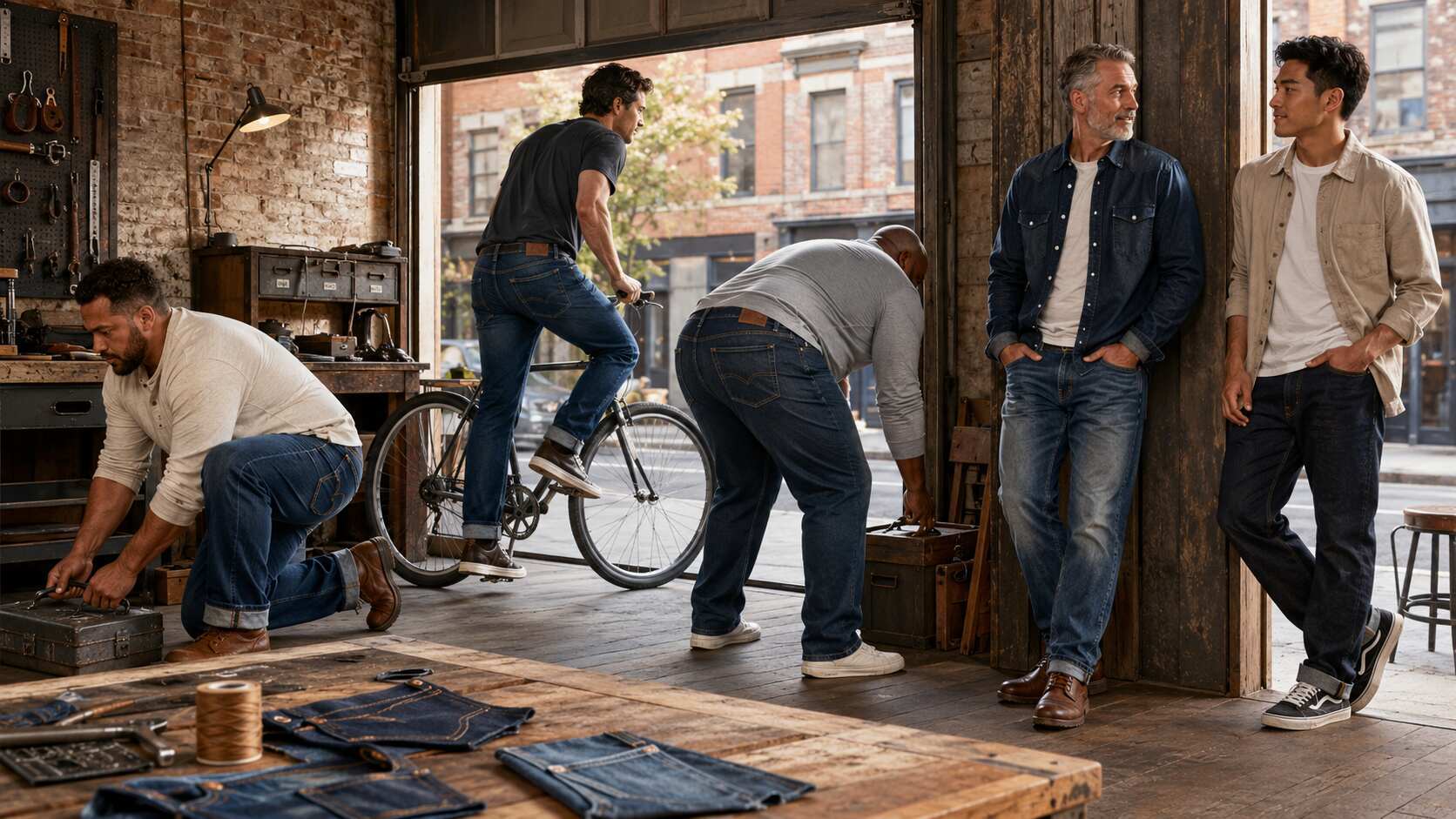
Denim is normally woven with a twill structure, producing the familiar diagonal line visible on the fabric surface. This construction contributes to strength and helps hide minor stains and wear better than many smooth, lightweight fabrics.
Durability, however, depends on more than fabric weight. Brands must consider yarn quality, weave density, seam allowance, stitch type, thread strength, bartacks, rivets, zipper quality, and reinforcement around pockets and belt loops.
Washing can create attractive fades, but aggressive chemical or mechanical treatment may reduce garment strength. A good wash developer must achieve the desired appearance without unnecessarily damaging the fabric.
Why Are Blue Jeans Easy to Style for Different Occasions?
Blue functions almost like a neutral color. Medium-wash jeans pair naturally with white, gray, black, navy, olive, brown, and many brighter colors. Light washes generally feel casual and youthful, while clean dark indigo can appear more polished.
| Denim choice | Typical impression | Common use |
| Light blue wash | Relaxed and vintage | Weekends and streetwear |
| Medium blue wash | Familiar and versatile | Everyday casualwear |
| Dark indigo | Clean and refined | Smart-casual outfits |
Distressed denim | Expressive and youthful | Fashion and influencer stores |
Raw or selvedge denim | Premium and heritage-focused | Denim enthusiasts |
Stretch denim | Comfortable and mobile | Travel and daily wear |
Fit and finishing still matter. Dark denim with poor pocket placement or excessive fabric around the seat will not look polished simply because the color is dark.
What Is the 2 Finger Rule for Jeans?
The two-finger rule is a quick waistband test. When jeans are fastened, the wearer should generally be able to slide about two fingers between the waistband and the body without excessive pressure or a large gap.
It is a helpful starting point, not a professional fitting system. Body shape, rise, fabric stretch, waistband construction, and personal preference can all change the result. A comfortable waistband does not guarantee that the seat, thighs, knees, inseam, or leg opening fit correctly.
Comfort is not the same as looseness. A baggy jean can still feel restrictive if the rise is too short, while a slim jean can feel comfortable when the pattern follows the body correctly and the fabric has controlled stretch.
For brands, fit development should start with a clearly defined target customer. A plus-size customer may need more than a proportionally enlarged version of a smaller pattern. The rise, seat angle, thigh distribution, pocket scale, knee position, and leg opening may all require separate adjustment. Grading every measurement upward at the same rate often produces unbalanced garments.
Stretch percentage also requires careful evaluation. More elastane does not automatically create a better jean. Excessive stretch can weaken denim character, cause knee bagging, and reduce recovery. The appropriate solution depends on the silhouette: rigid denim may support a structured baggy jean, while a slim commuter jean may benefit from controlled stretch.
The two-finger rule is useful because it makes fitting easy to understand. But brands should teach customers to check the complete garment: Can they sit comfortably? Do the pockets remain flat? Does the waistband stay in position? Is there pulling at the fly? Does the fabric recover after movement?
Practical denim succeeds when customers stop thinking about the garment during the day. It should support their activities without constant pulling, adjusting, or discomfort.
Which Blue Jean Fits Do American Men Prefer Today—and Why?
American men wear a wide range of fits, but straight, relaxed, and baggy silhouettes have gained attention because they offer comfort and styling flexibility. Slim and skinny jeans still serve specific consumers, while stacked, jogger, and selvedge styles address distinct fashion niches. The best fit depends on body shape, lifestyle, brand identity, and intended outfit.
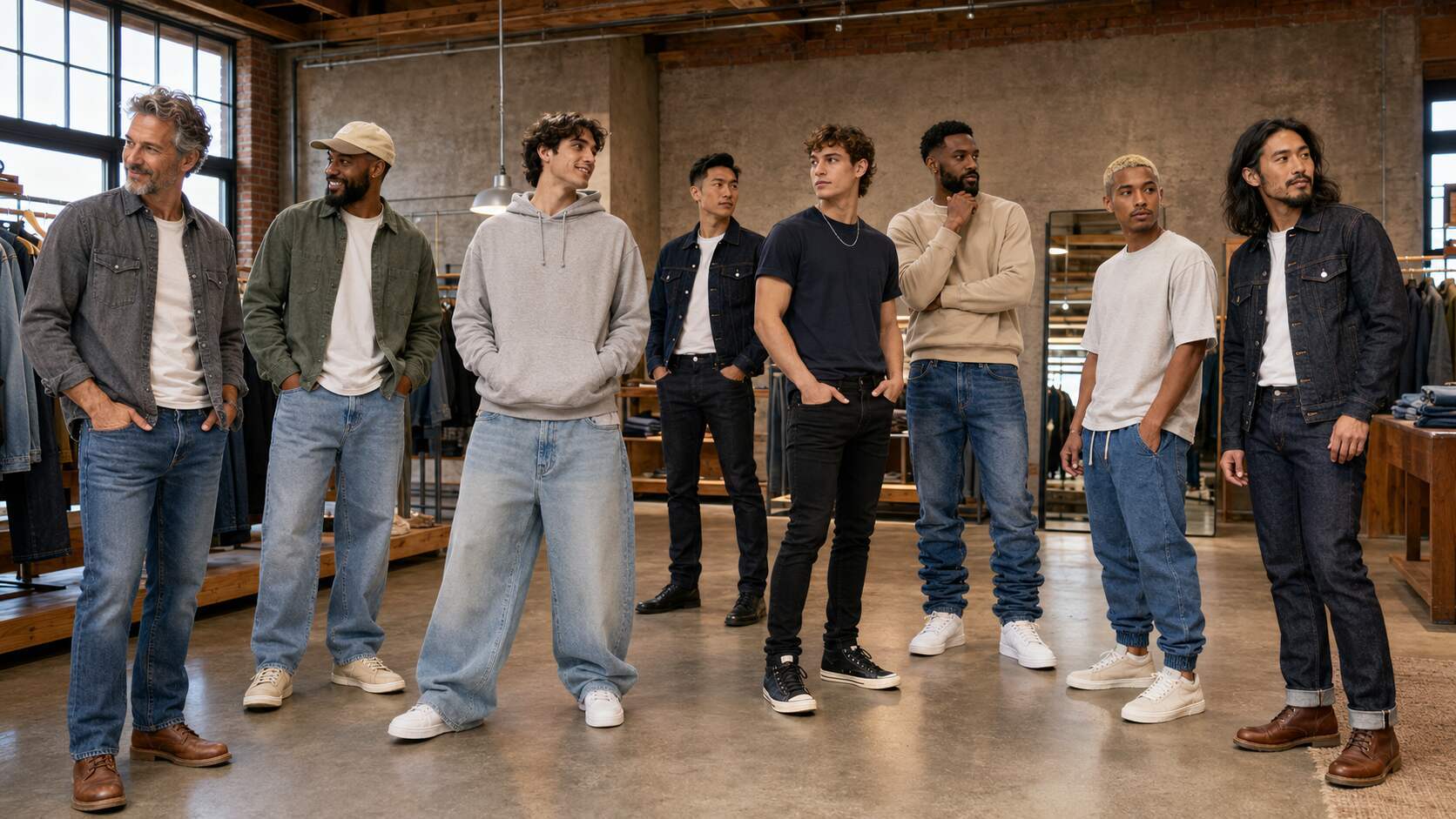
Which Men’s Jeans Fits Are Most Popular in America?
Straight-leg jeans remain dependable because they neither exaggerate nor conceal the body dramatically. Relaxed and baggy jeans appeal to customers who want greater mobility and a contemporary streetwear silhouette.
Slim jeans provide a cleaner outline without fitting as tightly as skinny jeans. Stacked jeans use additional inseam length to create folds above the footwear, while denim joggers emphasize comfort and casual styling. Selvedge refers primarily to fabric construction rather than fit and may be used in straight, tapered, or relaxed patterns.
How Should Men Choose Jeans for Their Body Shape and Lifestyle?
Men should evaluate four key areas: rise, seat, thigh, and leg opening. A customer who sits or drives for long periods may prioritize a comfortable rise and flexible thigh. Someone wearing boots may need a wider leg opening, while a sneaker-focused streetwear customer may prefer stacking or a tapered hem.
Fabric must support the silhouette. A wide, architectural shape may require firmer denim, whereas a close-fitting jean usually benefits from some stretch.
Should Older Men Wear Blue Jeans?
Yes. Older men can wear blue jeans confidently because denim has no meaningful age limit. The key is choosing a fit and finish that match the wearer rather than copying a trend without considering comfort.
Straight, regular, and relaxed-tapered fits are dependable options. Medium and dark washes often create a clean appearance, but older men do not need to avoid light washes, distressed details, or fashionable silhouettes if those choices reflect their personal style.
Good fit is more important than age: the waistband should remain comfortable, the seat should not sag excessively, and the hem should work with the intended shoes.
Are Baggy, Straight, or Skinny Jeans Better for Modern American Men?
No single silhouette is objectively better. Straight jeans offer versatility, baggy jeans create comfort and fashion impact, and skinny jeans provide a narrow profile favored by certain music, streetwear, and lifestyle audiences.
Brands should avoid treating runway direction as the entire market. Trend-focused boutique customers may adopt oversized jeans quickly, while mainstream shoppers continue buying familiar straight or slim fits. A balanced collection can include a commercial core fit and smaller quantities of more directional designs.
Fit is the place where customer-centered denim development becomes measurable. Shoppers may be attracted by a wash or product photograph, but fit determines returns, reviews, repeat purchases, and brand loyalty.
Online boutiques face an additional challenge because customers cannot try the garment before purchasing. Accurate size charts, garment measurements, model information, fit descriptions, and consistent production tolerances reduce uncertainty. Saying “true to size” is rarely enough. Buyers need to know whether the fabric stretches, where the waistband sits, how much room exists in the thigh, and how the leg opening behaves over footwear.
For emerging brands, it is usually better to perfect a few patterns than to launch too many poorly tested fits. A strong straight fit can become the foundation for multiple products through different fabrics, washes, colors, distressing techniques, and trims. Once customer feedback is available, the brand can expand into baggy, stacked, plus-size, skinny, or specialty constructions.
Fit preference also changes by customer segment rather than changing everywhere simultaneously. A denim designer serving a premium heritage audience may need rigid selvedge fabric and carefully considered shrinkage. An Instagram boutique may need dramatic washes, stacked silhouettes, embroidery, and fast visual impact. A comfort-focused label may prioritize inclusive grading and stretch recovery.
The right fit is not the one receiving the most attention online. It is the one that solves the target customer’s problem while expressing the brand clearly.
Why Will Blue Jeans Continue to Matter to American Men and Denim Brands?
Blue jeans will remain relevant because they combine emotional familiarity with almost unlimited design possibilities. Brands can adjust fit, wash, fabric, distressing, decoration, and construction without making the product unrecognizable. This balance allows denim to serve different generations while giving designers and boutiques space to build distinctive, commercially viable collections.
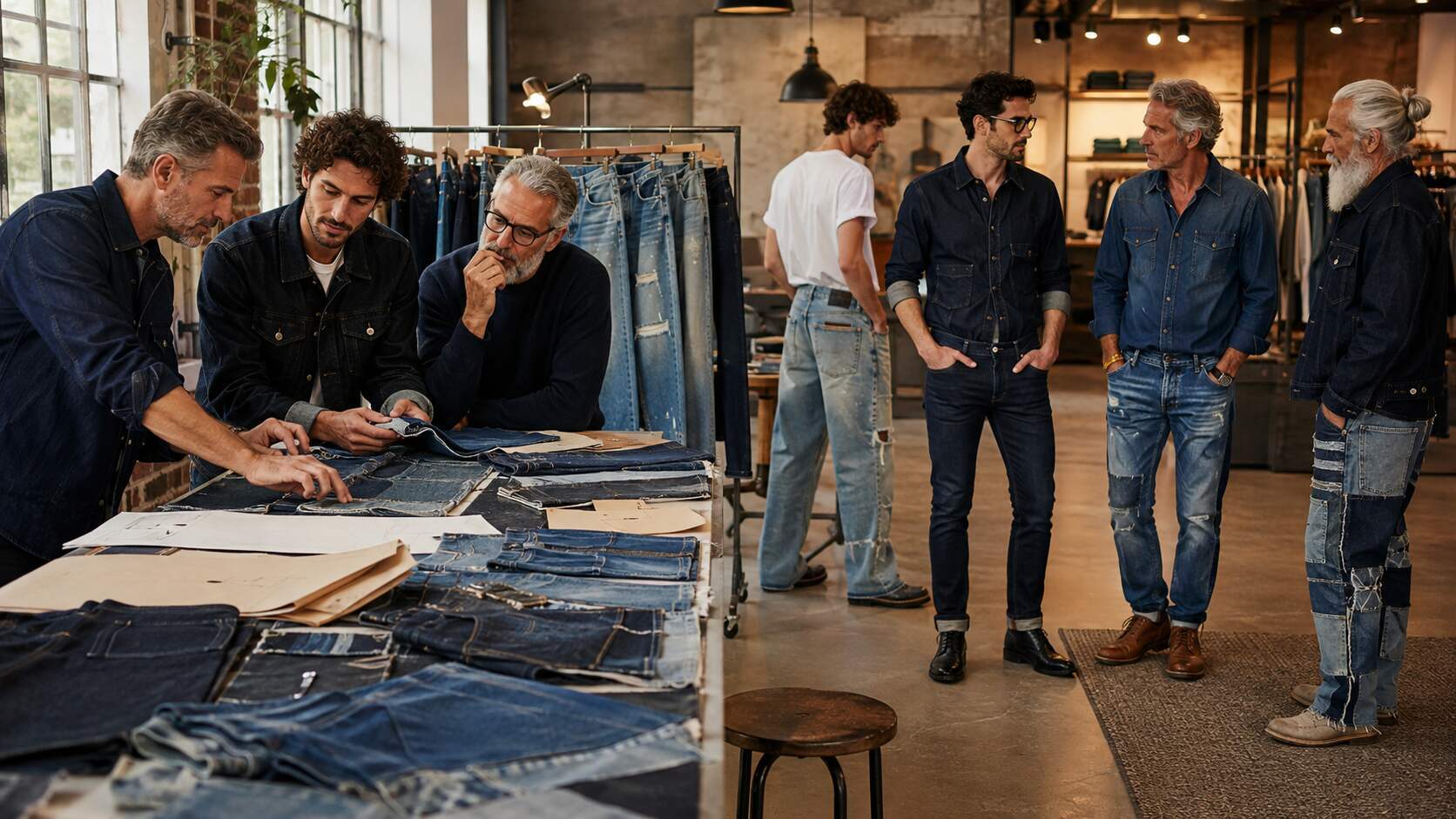
Why Do Blue Jeans Remain Relevant Across Generations?
Each generation discovers denim in a different way. One customer may remember classic straight jeans, another may identify with skinny silhouettes, and a younger shopper may prefer oversized or stacked styles.
The product remains familiar even as proportions change. This lowers the psychological barrier to purchasing: customers understand what jeans are, yet they can still become excited by a new wash, fit, fabric, or detail.
Denim also becomes personal through wear. Fading and creasing can make two initially identical pairs look different over time, giving the garment an emotional value that many disposable fashion products lack.
How Can Denim Brands Adapt Classic Blue Jeans to Modern Demand?
Modern brands can update jeans through inclusive sizing, improved stretch recovery, softer hand feel, lower-impact finishing, functional pockets, customized hardware, or more expressive decoration.
The right development choices depend on the target audience. Potential customization options include:
Plus-size pattern development and dedicated size grading
Baggy, stacked, straight, skinny, jogger, and selvedge designs
Embroidery, printing, appliqué, patchwork, rhinestones, and distressing
Custom buttons, rivets, labels, leather patches, and packaging
Light, vintage, dirty, acid, snow, whiskered, and dark indigo washes
Rigid, comfort-stretch, high-stretch, heavyweight, or lightweight denim
A long list of features is not a strategy by itself. Every detail should reinforce the intended wearer, price level, and brand story.
Why Does Custom Denim Manufacturing Benefit American Boutiques and Emerging Brands?
Custom manufacturing allows a brand to create products that are not available in generic wholesale catalogs. Designers can adjust measurements, fabric, wash, stitching, trims, labels, packaging, and decorative techniques to create a recognizable identity.
Lower minimum order quantities can help boutiques test demand before committing to large inventory. Once a product proves successful, production can be scaled more confidently. This is especially important for online brands, where customer feedback and sales data can guide the next order.
The biggest risk for a growing denim brand is often not a lack of creative ideas. It is developing a product that looks impressive in a sample but cannot be reproduced consistently in bulk.
Complex jeans require coordination between pattern makers, fabric suppliers, sewing teams, wash technicians, trim suppliers, and quality inspectors. Distressing must appear intentional without creating unacceptable strength variation. Embroidery placement must remain consistent across sizes. Fabric shrinkage must be considered before final garment measurements are approved. Even the position of a back pocket may need adjustment during grading.
This is why experienced manufacturing support matters. A capable OEM or ODM partner should do more than follow a sketch blindly. The factory should identify construction risks, recommend workable materials, create samples, measure shrinkage, confirm wash effects, and establish production tolerances before bulk manufacturing.
For small boutiques, a low starting quantity reduces inventory exposure. For established brands, the ability to manufacture thousands of consistent pieces is equally important. The ideal supplier should support both experimentation and growth.
Turn Your Men’s Jeans Idea Into a Market-Ready Product
American men continue to wear blue jeans because denim fits their lives, identities, and changing tastes. For brands, that enduring demand creates an opportunity—but only when design creativity is supported by reliable fit development and production.
DiZNEW is a China-based denim manufacturer with more than 20 years of jeans development and manufacturing experience. We help American designers, online boutiques, influencer-led stores, and premium brands develop custom and private-label denim products from an initial sketch to a finished garment.
Our customization capabilities include plus-size, baggy, stacked, straight, selvedge, skinny, and jogger jeans, as well as denim jackets, shorts, and shirts. We support detailed OEM and ODM development, including custom fabrics, washes, distressing, embroidery, hardware, labels, and logo applications.
Whether you want to test a design with a minimum order starting from 30 pieces or require production of up to 10,000 pieces, DiZNEW can help evaluate its construction, fit, wash, and commercial feasibility.
Send DiZNEW your design sketch, reference image, target quantity, size range, and preferred fabric or wash. Contact us through DiZNEW to request a custom quotation and begin developing your next denim collection.
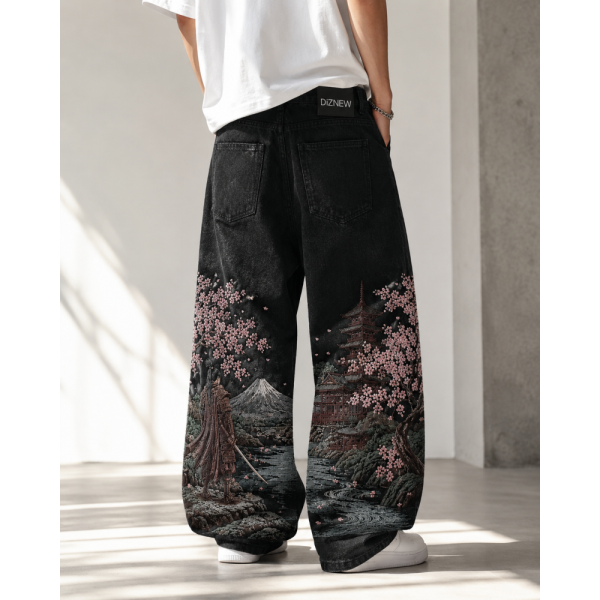
Premium wide-leg denim jeans featuring a vintage washed black finish, detailed Japanese landscape artwork, embroidery-style decoration, and custom brand label options. Designed for streetwear brands, designer labels, and private label collections looking for statement denim with strong visual storytelling.
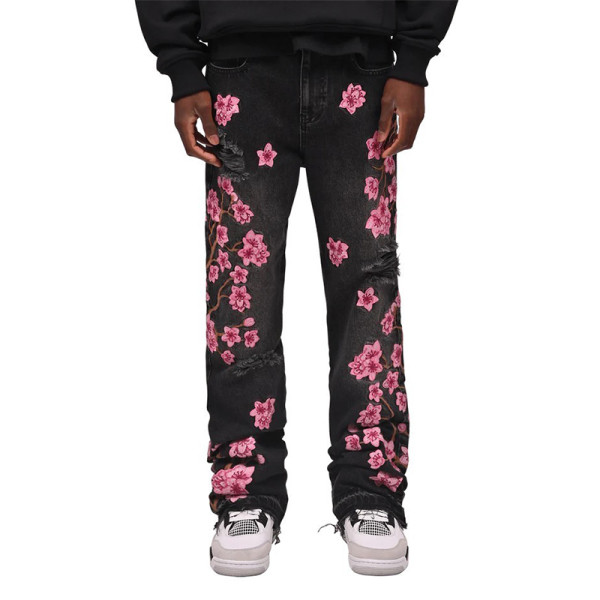
Classic art meets contemporary denim—Romantic oil painting print jeans for the bold and cultured wardrobe.
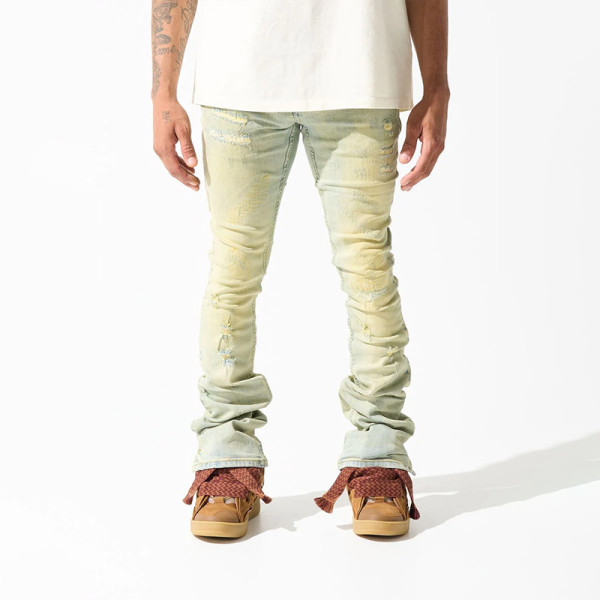
Skinny stacked jeans with distressed detailing and yellow-tinted bleach wash — bold choice for trendsetters.
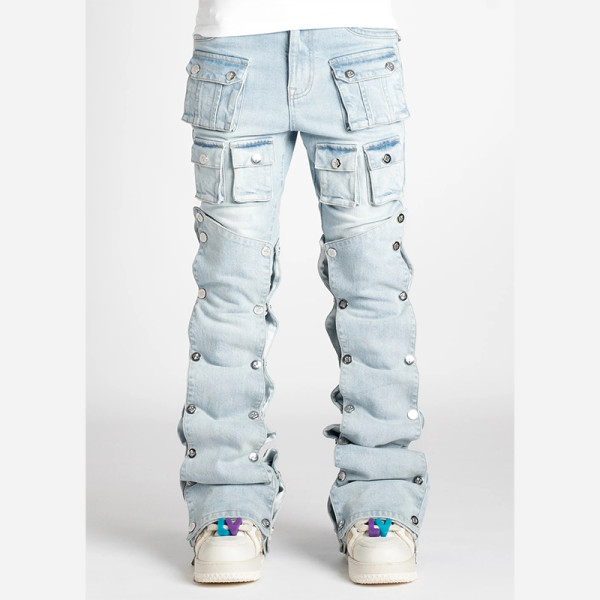
Custom high-street bubble cargo jeans with pleats, metal buttons, and multi-pocket design. Supports small-batch production.