Why are jeans so expensive?
- Share
- publisher
- Jimy
- Issue Time
- Aug 19,2026
Summary
Why are jeans so expensive? Discover the cost of premium fabrics and complex washes. Our B2B denim factory helps wholesale brands maximize margins.
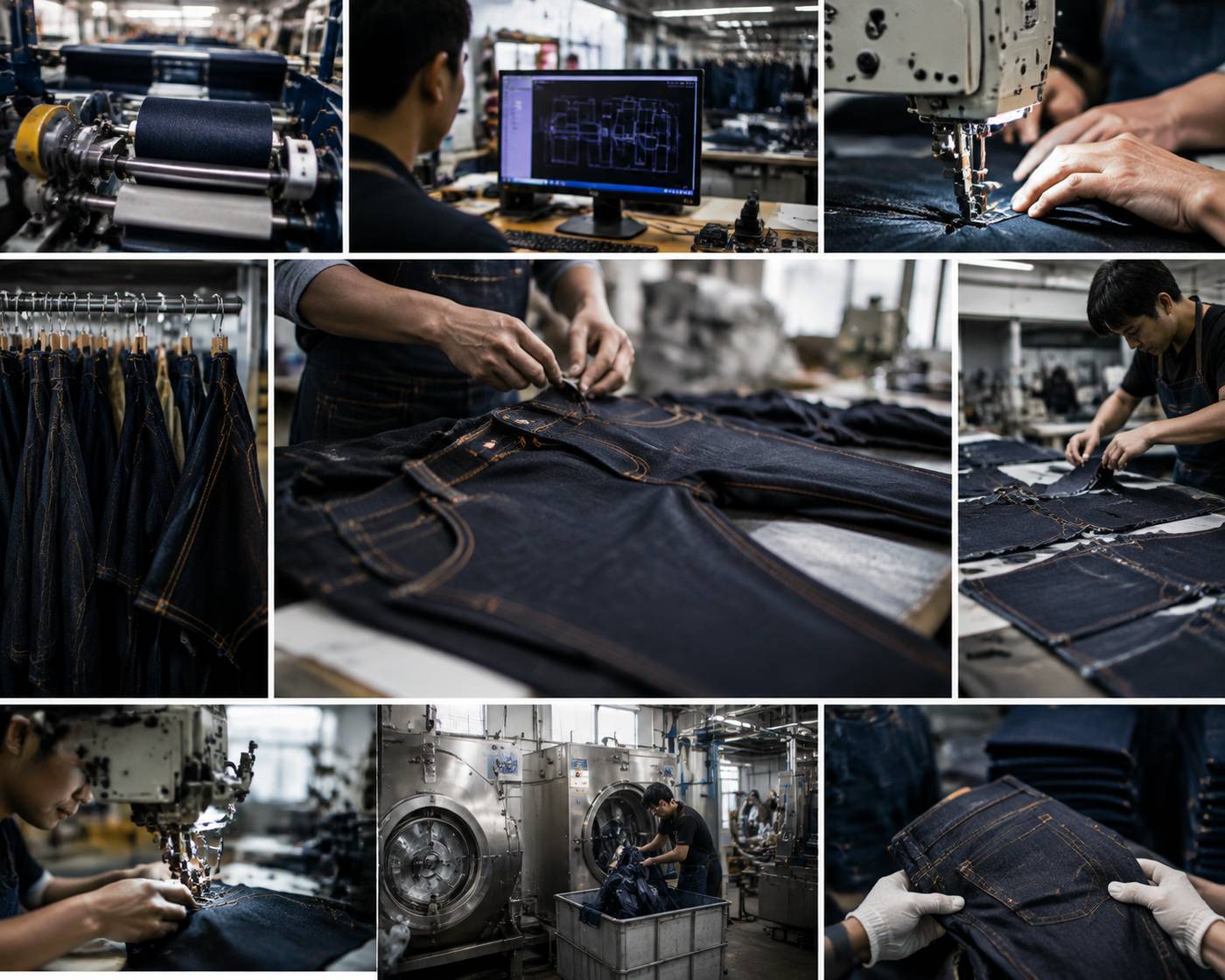
Have you ever walked into a clothing store, picked up a pair of jeans, checked the price tag, and thought: “Why does this simple pair of pants cost $150?” You are not alone. Jeans have always been considered an everyday wardrobe essential, but today the price gap between different jeans is becoming surprisingly large. You can find jeans for $30, while premium denim brands may charge $200, $300, or even more for a single pair. So what exactly are you paying for?
Jeans are expensive because the final price reflects much more than cotton and sewing. Premium denim costs more due to higher-quality fabrics, advanced manufacturing processes, complex washing techniques, skilled craftsmanship, sustainable production requirements, and brand value. The difference between a $50 pair and a $200 pair often comes from how the jeans are designed, developed, manufactured, and finished.
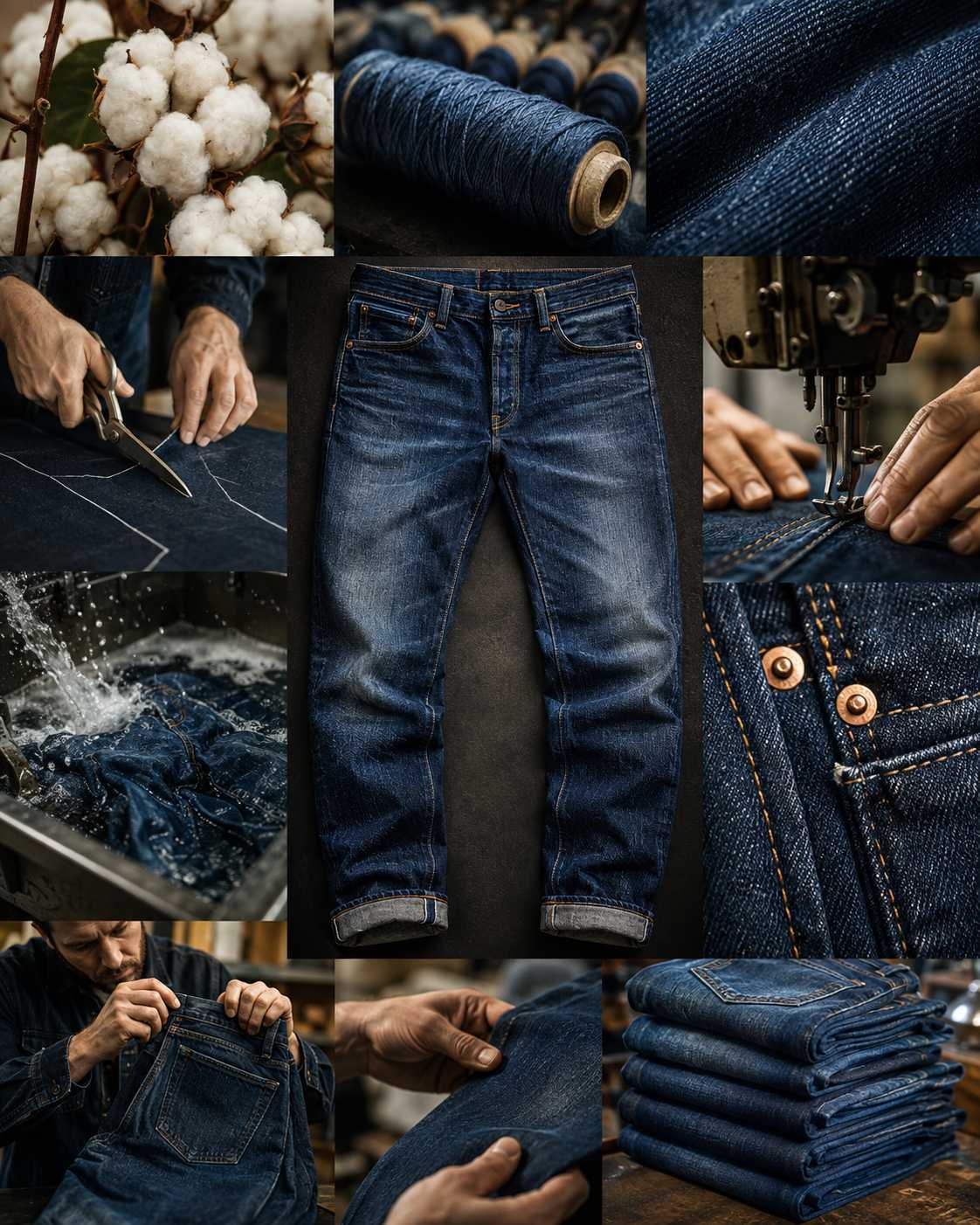
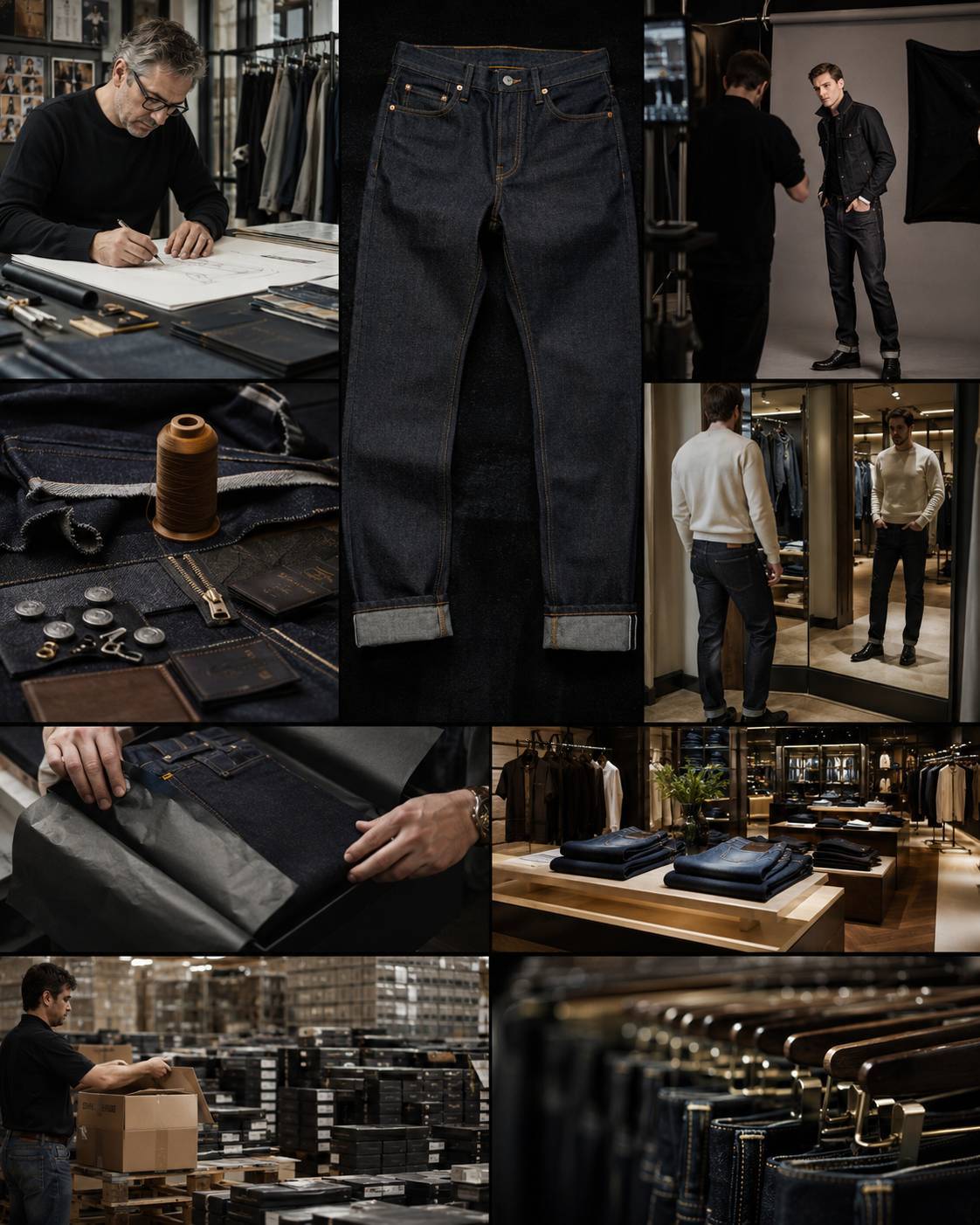
The interesting thing is that a pair of jeans has one of the most complicated production journeys in fashion. A designer may spend months developing one silhouette. A factory may create dozens of samples before achieving the perfect fit. A washing technician may test different formulas to create a specific vintage fade. Behind a simple-looking pair of jeans is a long chain of decisions, skills, and technologies.
Imagine two customers buying jeans on the same day. One buys a $40 pair from a fast-fashion store. Another buys a $180 pair from a premium denim brand. Both customers walk out wearing blue jeans, but their products represent completely different manufacturing philosophies. One focuses on efficiency and affordability; the other focuses on craftsmanship, durability, and uniqueness.
Understanding why jeans are expensive helps consumers make smarter buying decisions — and helps fashion brands understand where real product value comes from.
Why Does Denim Fabric Quality Make Jeans More Expensive?
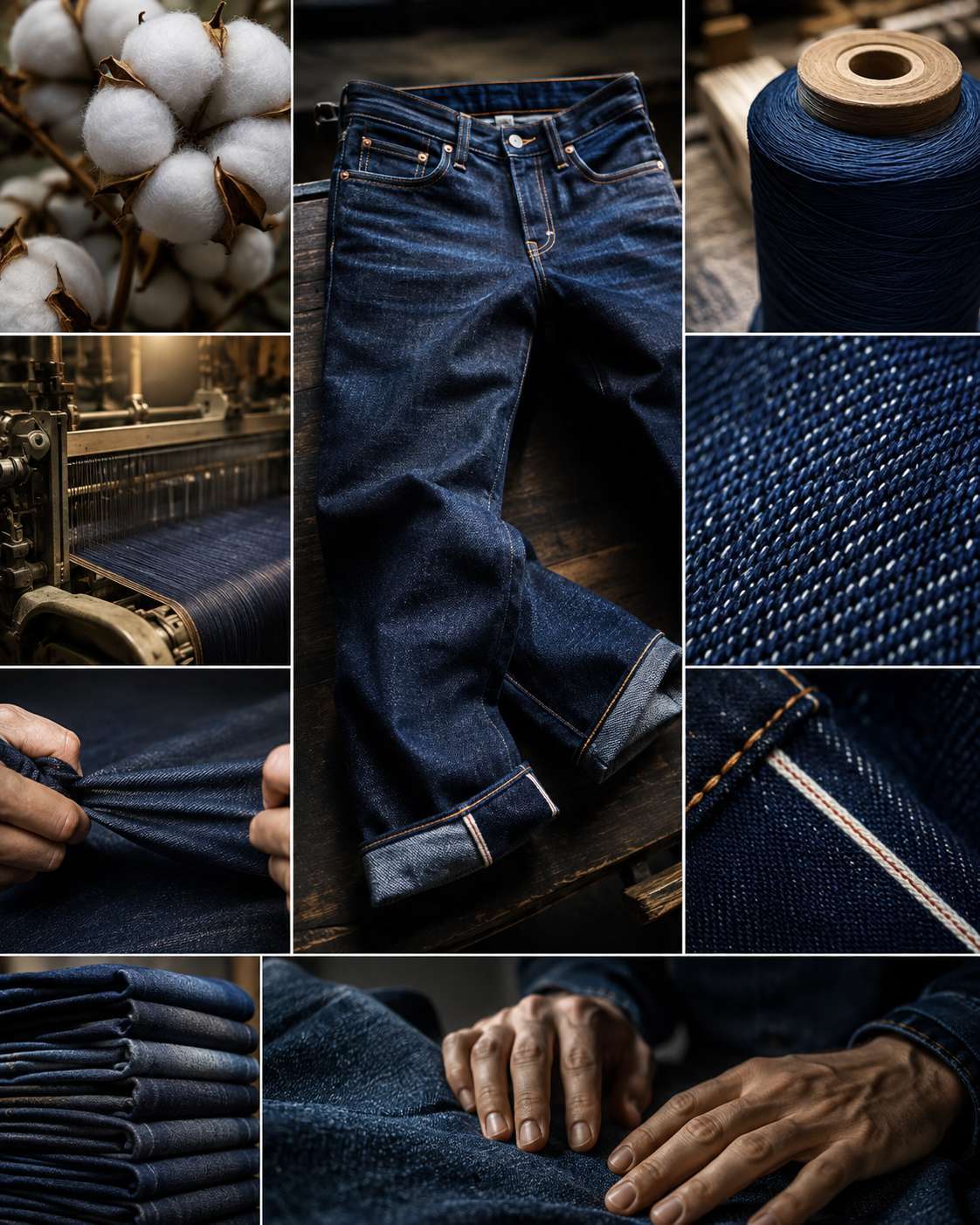
Premium denim fabric makes jeans more expensive because better materials improve comfort, durability, appearance, and wearing experience. Factors such as cotton quality, fabric weight, weaving technology, stretch performance, and special denim development directly influence the final price of jeans.
Why is premium denim fabric more expensive than ordinary denim?
When people look at jeans, they often focus on the style first. However, the foundation of every pair of jeans is the denim fabric itself.
A cheap pair of jeans and an expensive pair of jeans may both look blue, but the fabric structure can be completely different.
Premium denim usually requires:
| Fabric Factor | Impact on Jeans Quality |
| Higher-quality cotton | Softer hand feel and stronger durability |
| Better yarn quality | More stable fabric structure |
| Heavier denim weight | More premium texture and longer lifespan |
Advanced weaving technology | Better appearance and comfort |
Better dyeing process | Richer color and aging effect |
Cotton quality is one of the biggest factors influencing denim pricing. Different cotton fibers create different results in terms of softness, strength, and color absorption. Long-staple cotton, for example, can create smoother and stronger yarn compared with lower-grade cotton.
Modern denim is also more complicated because customers want different experiences. Some consumers prefer rigid raw denim with a traditional feel, while others want comfortable stretch jeans that move easily with the body.
Developing these different fabrics requires textile knowledge, testing, and investment.
A denim manufacturer cannot simply choose any blue fabric and create a premium product. The fabric must match the design concept, target customer, and expected retail price.
Why does selvedge denim cost more than regular denim?
Selvedge denim is one of the best examples of why some jeans become expensive.
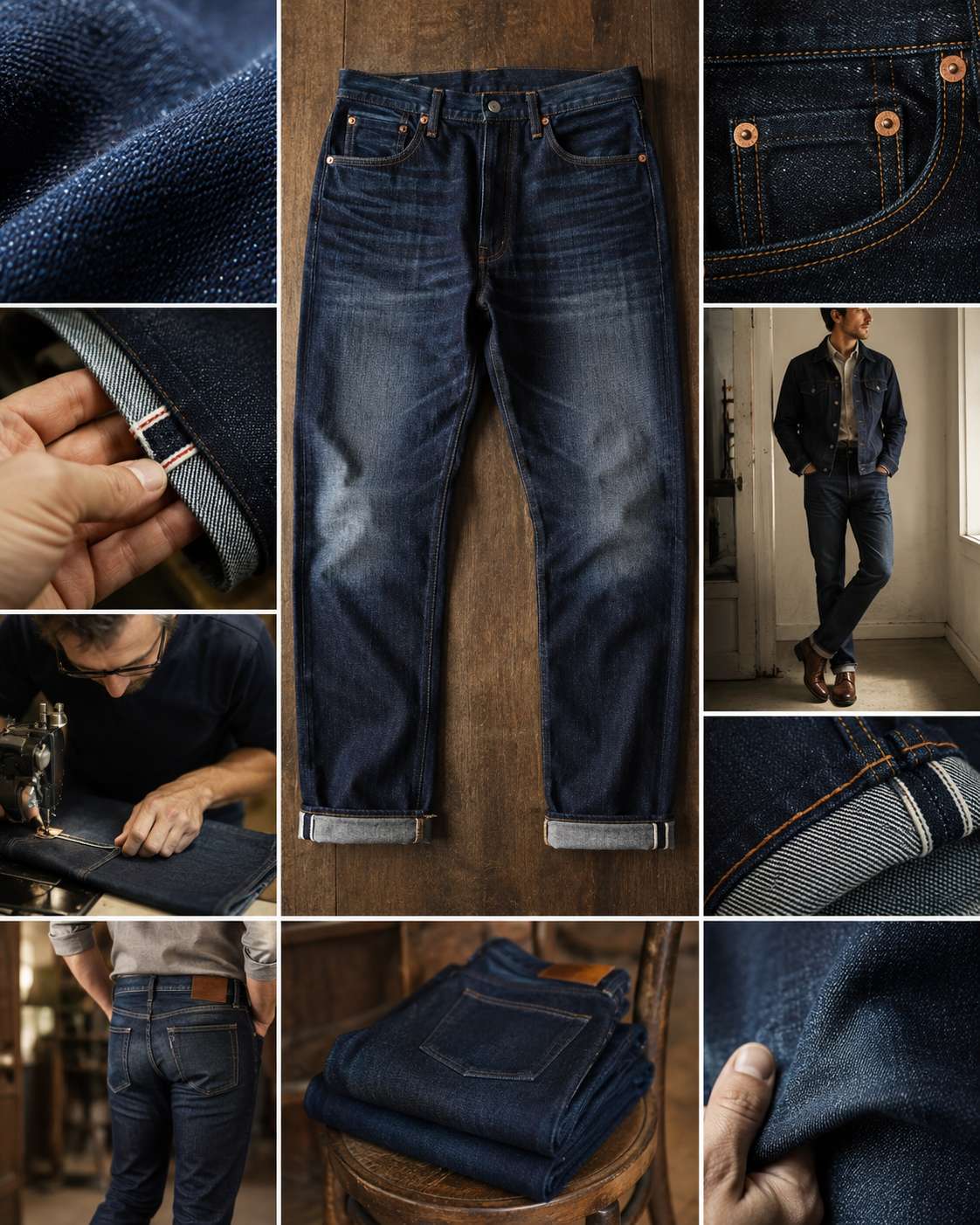
Traditional selvedge denim is produced using shuttle looms, which operate more slowly than modern high-speed weaving machines. The production process creates a clean edge on the fabric, which denim enthusiasts often consider a sign of authenticity and craftsmanship.
The higher price comes from:
slower production speed
specialized weaving equipment
limited production capacity
traditional manufacturing techniques
For denim lovers, selvedge jeans are not just clothing. They represent heritage, craftsmanship, and the idea of owning something that improves with age.
However, expensive does not automatically mean better for everyone.
A customer who wants lightweight everyday jeans may prefer modern stretch denim. A customer who loves vintage denim culture may choose selvedge denim.
The “best” denim depends on the customer’s lifestyle.
Why do premium brands invest in custom denim fabric development?
Many successful denim brands do not simply purchase existing fabric. They develop their own.
Custom denim development allows brands to create:
unique textures
exclusive colors
signature washes
special comfort levels
recognizable product identity
For example, a fashion designer creating oversized baggy jeans may need a heavier denim fabric with a stronger structure. A brand creating skinny jeans may need flexible stretch denim with excellent recovery.
This is why experienced denim manufacturers play an important role. They help brands transform creative ideas into production-ready products.
Why Does Manufacturing Process Increase the Cost of Jeans?
Jeans cost more to manufacture because they require many production steps, skilled workers, technical development, and quality control. Complex designs, customized patterns, and small production quantities increase the manufacturing cost significantly.
Why does making jeans require more craftsmanship than people realize?
Many people assume jeans are simple because they are a basic clothing item.
In reality, jeans are one of the most technically complicated garments.
A complete jeans production process includes:
Design analysis
Pattern development
Sample creation
Fabric cutting
Sewing
Hardware installation
Washing
Finishing
Quality inspection
Every detail affects the final product.
For example:
Pocket position changes the appearance of the hips.
Stitching density affects durability.
Waistband construction affects comfort.
Leg shape determines the overall silhouette.
A professional denim factory does not only manufacture jeans. It solves technical problems.
Why are custom-designed jeans more expensive to produce?
Customized jeans require more development work compared with standard products.
Popular customized styles today include:
plus size jeans
baggy jeans
stacked jeans
straight jeans
skinny jeans
denim jackets
denim shorts
Each style creates different technical challenges.
For example, stacked jeans require careful adjustment of:
inseam length
fabric behavior
leg opening
stacking effect
Plus-size jeans require additional attention because grading patterns incorrectly can affect comfort and appearance.
A designer’s sketch may look simple, but turning it into a wearable product requires professional pattern engineering.
Why do small-batch jeans cost more than mass-produced jeans?
Many boutique brands ask:
“Why does producing 100 pieces cost much more per piece than producing 10,000 pieces?”
The reason is production efficiency.
Factories have fixed costs:
pattern development
sample making
machine preparation
production planning
quality testing
When production volume increases, these costs are distributed across more units.
| Production Quantity | Cost Effect |
| 30-100 pieces | Higher unit cost, more flexibility |
| 500-3000 pieces | Balanced cost and customization |
| 10,000+ pieces | Lower unit cost, efficient production |
This is why many emerging fashion brands choose manufacturers that support low MOQ production. They need flexibility before scaling.
Why Do Jeans Washing and Finishing Techniques Increase Prices?
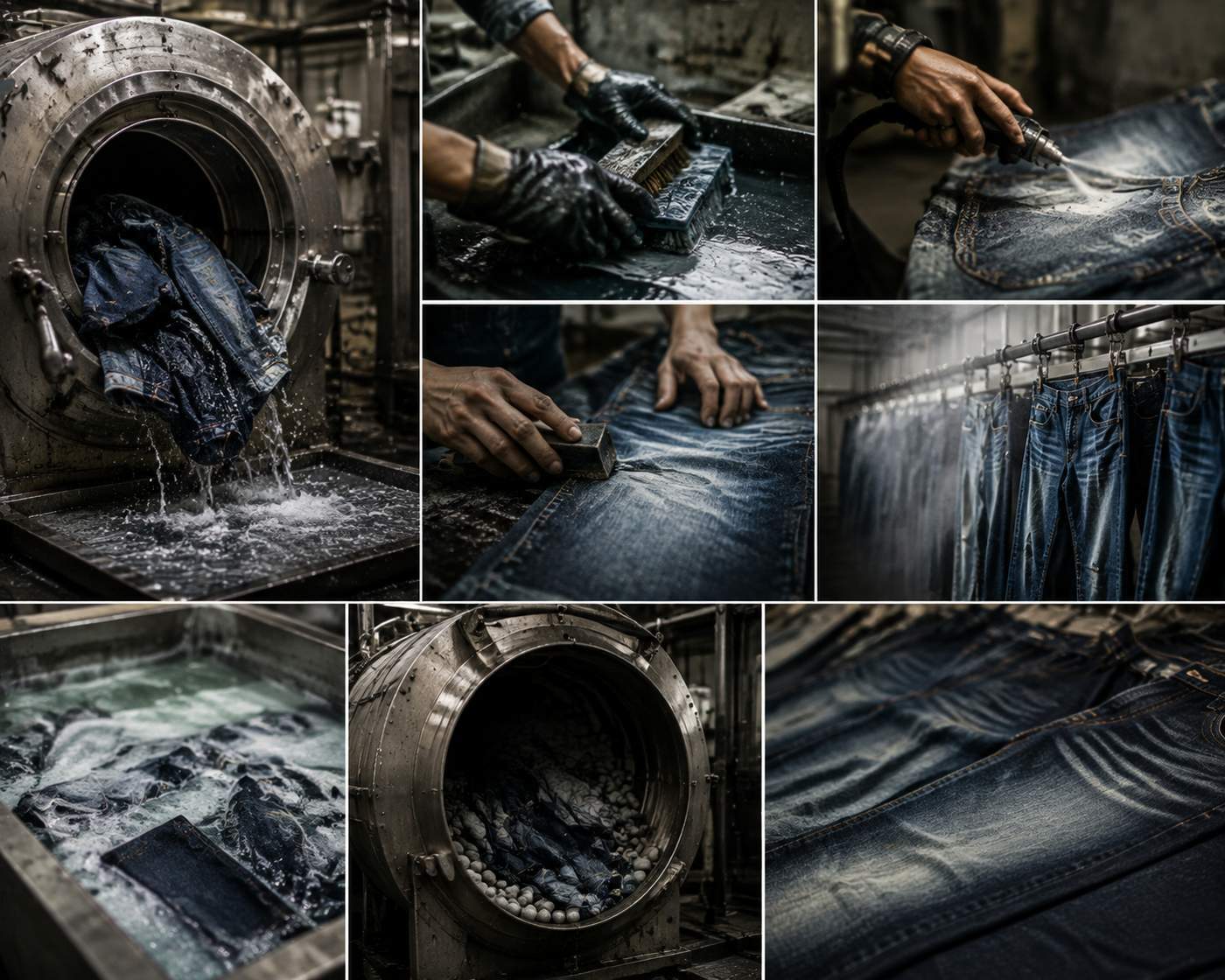
Jeans washing and finishing increase prices because these processes create the final appearance, texture, and personality of denim. Special treatments require skilled workers, testing, equipment, and additional production time.
Why do premium jeans require expensive washing processes?
A pair of jeans is not finished after sewing.
The washing process creates the final character.
Common denim finishing methods include:
stone washing
enzyme washing
acid washing
vintage washing
bleaching
laser fading
A designer may want jeans that look naturally worn after five years of use.
Creating that appearance requires technical knowledge.
Too much washing can damage the fabric. Too little washing can fail to achieve the desired look.
The factory must balance:
appearance
durability
color consistency
Why are distressed and customized jeans more expensive?
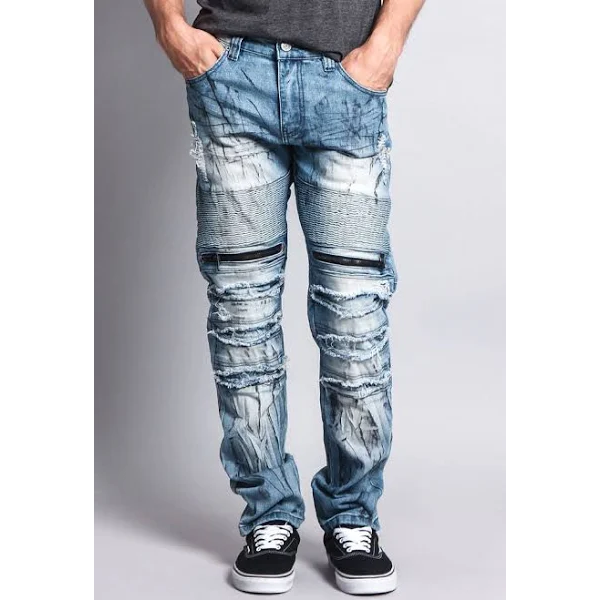
Distressed jeans often look casual, but creating that “effortless” appearance requires effort.
Techniques include:
hand sanding
ripping
repairing
whiskering
laser patterns
A pair of destroyed jeans may require manual processing by skilled workers.
The irony of fashion is that jeans designed to look old often require more work than clean jeans.
Why does sustainable denim production make jeans more expensive?
Sustainability has become another important factor in denim pricing.
Modern denim brands increasingly focus on:
reduced water consumption
eco-friendly dyes
recycled materials
responsible manufacturing
However, sustainable production often requires investment in technology and compliance systems.
Denim production involves multiple stages, including cotton cultivation, dyeing, washing, and finishing, all of which influence environmental impact and production costs.
For brands, the challenge is balancing:
affordable pricing
environmental responsibility
product quality
Why Are Designer Jeans More Expensive Than Factory-Made Jeans?
Designer jeans are more expensive because the retail price includes not only manufacturing costs but also branding, marketing, design development, distribution, and customer experience.
What is the average price for jeans today?
The average price of jeans varies greatly depending on quality and brand positioning.
| Jeans Category | Typical Price Range |
| Budget jeans | $20-$50 |
| Mid-range jeans | $50-$150 |
| Premium denim | $150-$300 |
Luxury designer jeans | $300+ |
A $50 pair of jeans is not necessarily bad.
A $200 pair is not automatically worth four times more.
The difference depends on what customers value.
Is $50 a lot for jeans?
For many consumers, $50 is a reasonable price for everyday jeans.
At this price point, customers usually expect:
acceptable fabric quality
comfortable fit
standard construction
However, brands selling at this level often need efficient production to maintain profitability.
They may use:
standard fabrics
simpler washes
larger production volumes
Is $100 a lot for a pair of jeans?
A $100 pair of jeans sits in an interesting position.
Many consumers consider $100 the point where jeans begin moving from basic clothing into premium territory.
At this price, customers often expect:
better fitting
stronger construction
improved fabric
longer lifespan
For emerging brands, the $100 price range can be attractive because it allows investment in better materials while remaining accessible.
Why do luxury brands charge hundreds of dollars for jeans?
Luxury pricing is influenced by many factors:
brand reputation
marketing
exclusivity
designer influence
retail costs
However, customers should understand one important thing:
A higher price does not always mean higher manufacturing quality.
Some expensive jeans are expensive because of branding.
Others are expensive because of exceptional craftsmanship.
The smartest customers learn to recognize the difference.
Are Expensive Jeans Worth Buying? How to Judge the Real Value of Denim?
Expensive jeans can be worth buying when the higher price represents better materials, better construction, better fit, and longer durability. The true value of jeans should be judged by quality rather than simply the price tag.
Are expensive jeans actually better than cheaper jeans?
Not always.
A good pair of jeans should be evaluated by:
fabric quality
stitching quality
comfort
fit
durability
washing effect
A $120 pair of jeans made with excellent denim may provide more value than three $40 pairs that lose shape quickly.
Why can expensive jeans be a better long-term investment?
The cost-per-wear concept is useful.
For example:
A $50 pair worn 20 times costs:
$2.50 per wear
A $150 pair worn 150 times costs:
$1 per wear
Premium jeans can sometimes become cheaper over time because they last longer.
Why do fashion brands need professional denim manufacturers?
For designers, boutique owners, and online fashion stores, creating successful jeans requires more than a good idea.
They need a manufacturing partner who understands:
denim development
pattern engineering
custom washing
quality control
OEM and ODM production
DiZNEW has more than 20 years of denim manufacturing experience, supporting brands with customized jeans development, from design concepts and samples to finished production.
Whether you are creating:
plus size jeans
baggy jeans
stacked jeans
straight jeans
selvedge jeans
denim jackets
private label denim collections
an experienced denim manufacturer can help turn your vision into a market-ready product.
Final Thoughts: Why Are Jeans So Expensive?
Jeans are expensive because great denim requires much more than fabric and stitching.
The real value comes from:
better materials
professional craftsmanship
advanced washing technology
unique designs
responsible manufacturing
product development expertise
For consumers, understanding these factors helps you choose jeans with real value.
For fashion brands, choosing the right manufacturing partner determines whether a creative idea becomes a successful product.
If you are a designer, boutique owner, or online fashion brand looking for custom jeans manufacturing, OEM, or ODM denim production, DiZNEW can help you develop high-quality denim products from concept to final production. Contact us today to discuss your custom jeans project.
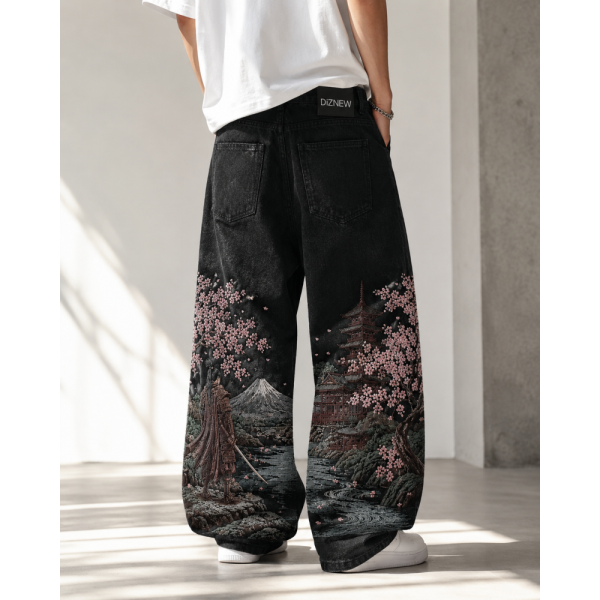
Premium wide-leg denim jeans featuring a vintage washed black finish, detailed Japanese landscape artwork, embroidery-style decoration, and custom brand label options. Designed for streetwear brands, designer labels, and private label collections looking for statement denim with strong visual storytelling.
OEM & ODM Drop Crotch Jeans for Women - Tailored denim solutions designed for brands seeking unique styles and quality.
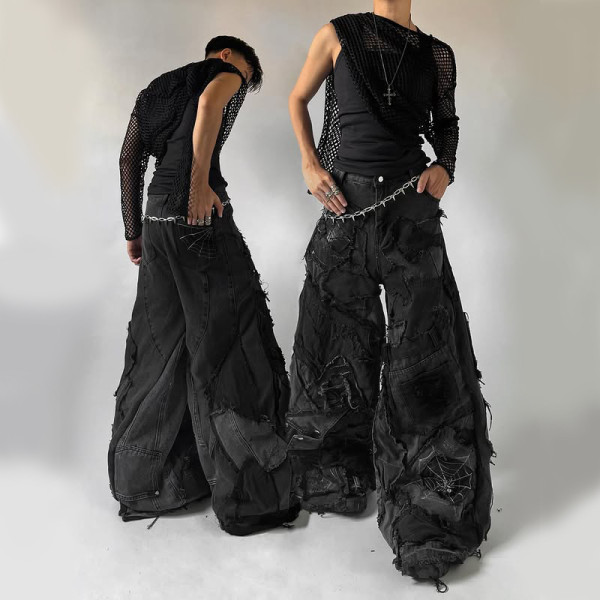
Wholesale Custom Black Wide Leg Jeans - Tailored Denim for Brands. Enjoy OEM/ODM services to elevate your design.
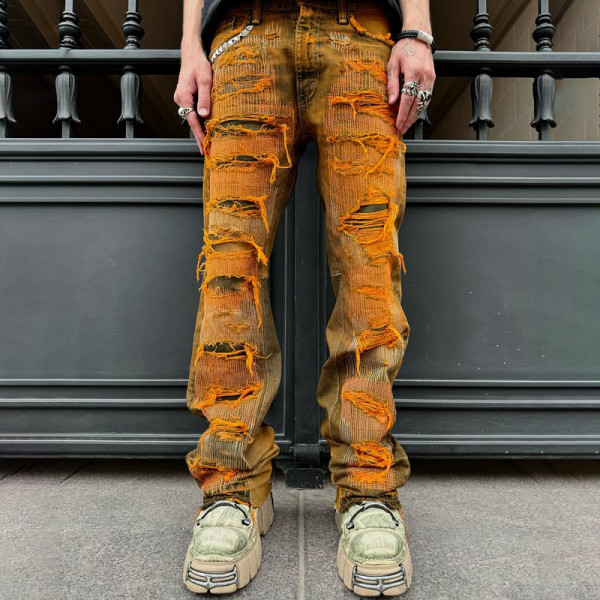
Discover Custom OEM/ODM Mud Yellow Distressed Jeans designed for brands and wholesalers, blending style with top-notch craftsmanship.