Which types of fibres are used to make jeans?
- Share
- publisher
- Jimy
- Issue Time
- Jul 24,2026
Summary
Which types of fibres are used to make jeans? Discover premium cotton and stretch blends our custom B2B factory sources for bulk wholesale export.
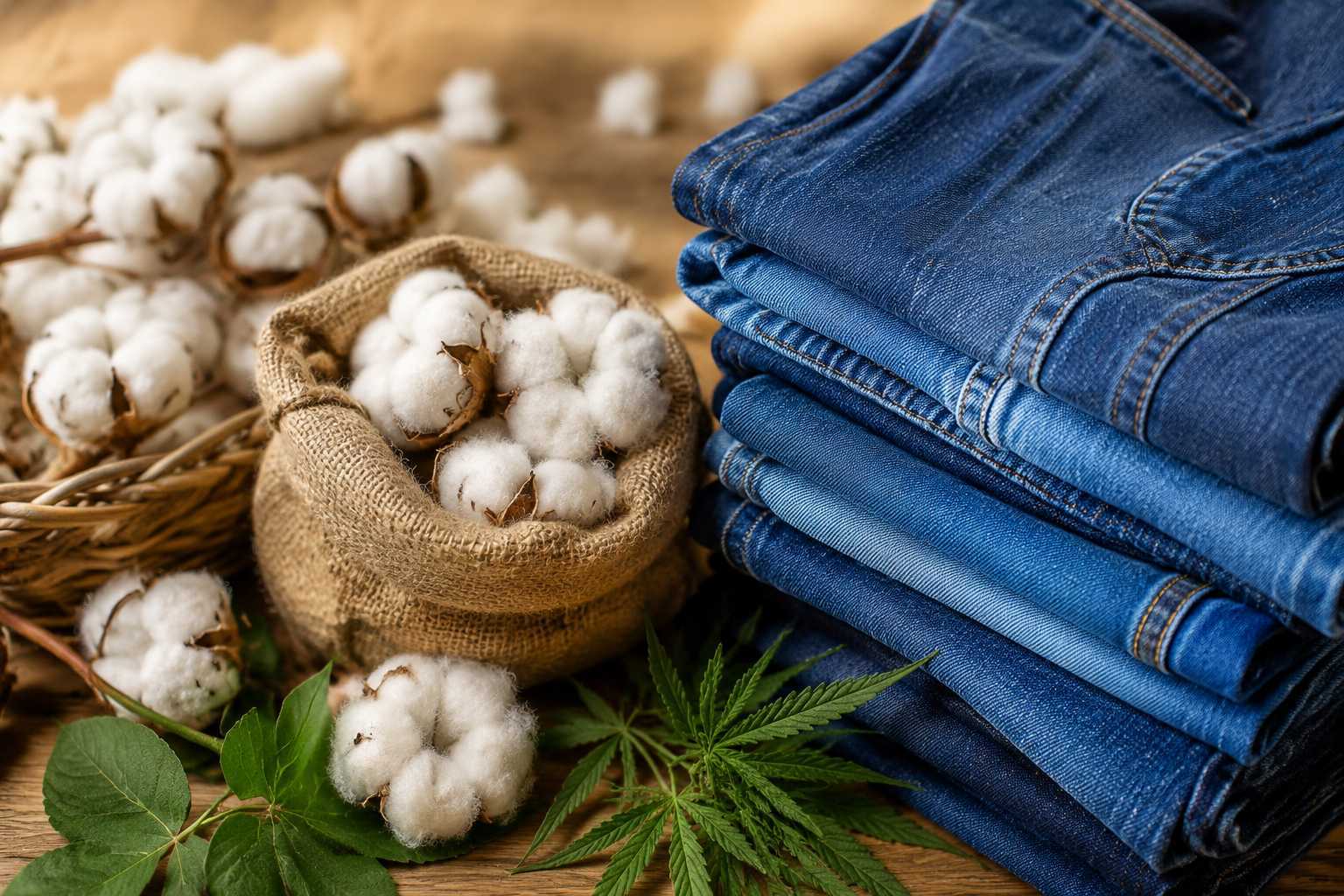
When people buy a pair of jeans, they usually focus on the style, color, fit, and wash effect. They look at whether the jeans have a vintage appearance, a comfortable silhouette, or a design that matches their personal style. However, behind every pair of jeans is a much more important decision that determines almost everything about the final product: the fibre composition of the denim fabric.
A pair of jeans is not simply “blue cotton pants.” The fibres inside the fabric influence how the jeans feel on the body, how they age after repeated washing, how they stretch during daily movement, and even how customers perceive the quality of the product. Two jeans with the same design, same wash, and same color can feel completely different because their fibre combinations are different.
For denim brands, choosing the right fibre is even more important. A streetwear brand creating oversized baggy jeans may need a strong cotton-rich fabric with a structured silhouette. A premium denim brand may prefer 100% cotton selvedge denim to achieve authentic fading. An online boutique selling women’s jeans may require stretch fibres to improve comfort and reduce return rates.
Jeans are mainly made from cotton fibre, which provides the classic strength, breathability, and authentic denim character consumers expect. Modern jeans may also contain elastane, polyester, recycled fibres, Tencel™ (lyocell), hemp, and viscose to improve stretch, durability, softness, and sustainability. The fibre combination determines the jeans’ comfort, appearance, washing effect, and long-term performance.
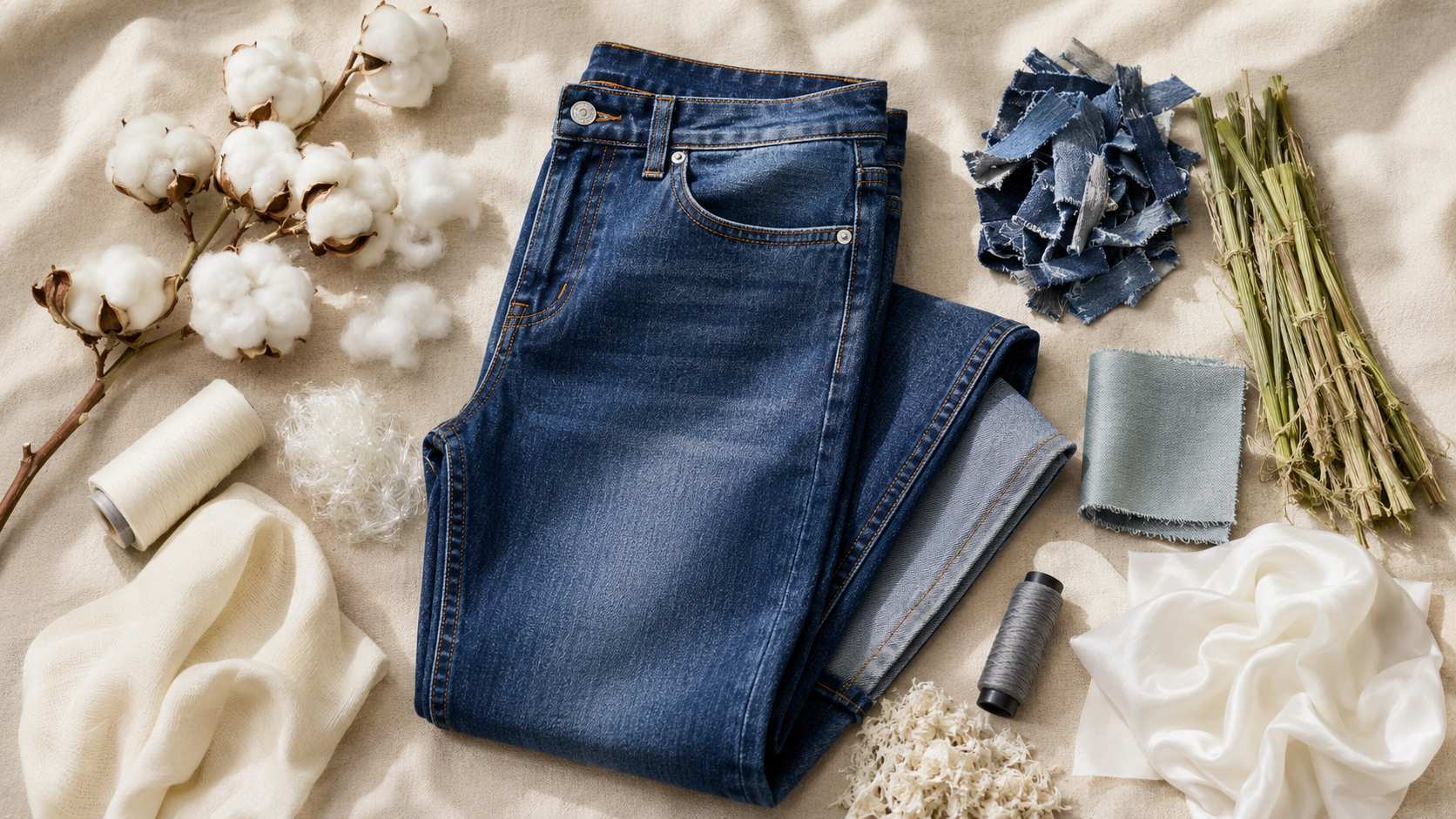
The interesting part is that the “best” fibre composition does not exist universally. The right choice depends on the purpose of the jeans, the target customer, and the brand positioning. A pair of jeans designed for a luxury fashion collection may require completely different materials from jeans designed for everyday online sales.
This is why experienced denim manufacturers spend years developing fabrics and understanding how different fibres react during cutting, sewing, washing, and finishing. A designer may only see the final appearance, but a professional denim factory understands the hidden decisions behind that appearance. Let’s explore what fibres are actually used in jeans and how brands can choose the right composition for their products.
What Is the Most Common Fibre Used in Jeans?
The most common fibre used in jeans is cotton. Cotton is the foundation of traditional denim because it provides strength, breathability, durability, and the natural texture that creates the classic jeans experience. Modern denim may combine cotton with other fibres such as elastane, polyester, or sustainable fibres to improve comfort, stretch, performance, and environmental value.
What Type of Fibre Is Used in Jeans?
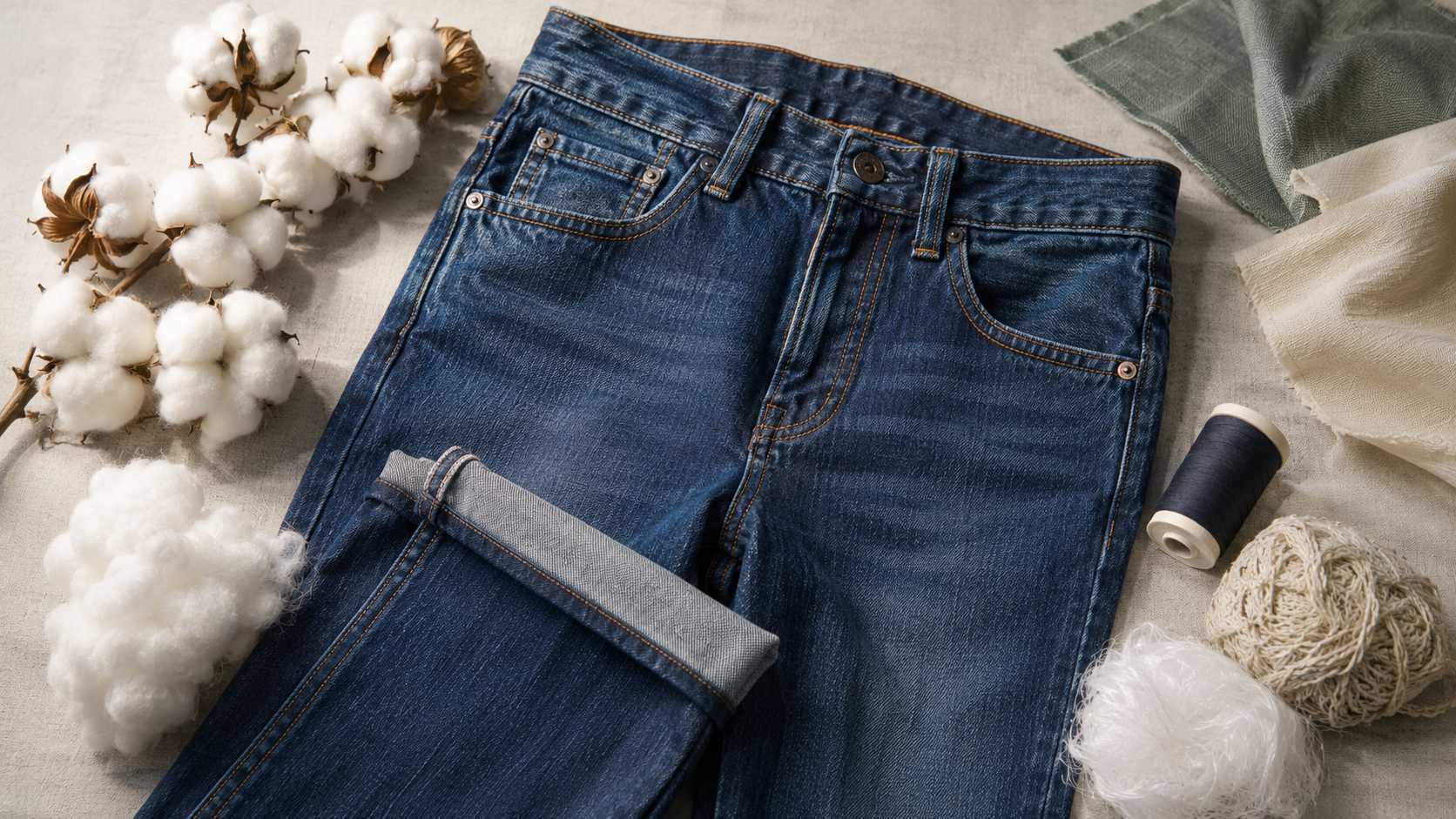
When people search “what type of fibre is used in jeans,” the simple answer is cotton. However, modern denim production is much more diverse than it was decades ago.
Traditional jeans were mainly made from 100% cotton denim, especially workwear jeans and classic rigid denim styles. Cotton became the preferred fibre because it has several characteristics that perfectly match what consumers expect from jeans:
Strong natural fibres that can handle daily wear
Good breathability for long-term comfort
Ability to absorb dyes and create beautiful fading effects
Comfortable hand feel against the skin
Excellent durability after repeated washing
However, the denim industry has evolved. Today, many brands use blended fibre compositions because consumer expectations have changed. Customers want jeans that are not only durable but also comfortable, flexible, lightweight, and sustainable.
Common fibre compositions include:
| Denim Type | Typical Fibre Composition | Main Purpose |
| Classic Rigid Denim | 100% Cotton | Authentic denim feeling and vintage fading |
| Comfort Stretch Denim | 98% Cotton + 2% Elastane | Slight flexibility and comfort |
| High Stretch Denim | 95% Cotton + 5% Elastane | Maximum movement and body fit |
Durable Workwear Denim | Cotton + Polyester Blend | Extra strength and abrasion resistance |
Sustainable Denim | Cotton + Recycled Fibre / Lyocell | Environmental positioning |
For brands developing custom jeans, fibre selection is not just a fabric decision. It directly affects the final product experience.
For example:
A baggy jeans brand usually needs cotton-rich denim because the fabric needs enough structure to maintain the oversized silhouette.
A skinny jeans brand often requires elastane because the garment needs to stretch around the body.
A premium selvedge jeans brand usually prefers 100% cotton because customers expect traditional denim character.
A plus size jeans collection often benefits from comfort stretch fabrics because customers prioritize movement and wearing comfort.
The fibre is the foundation. The design, washing, and craftsmanship build on top of that foundation.
Why Is Cotton the Main Fibre Used in Denim?
Cotton became the dominant fibre in jeans because it creates a unique combination of durability and personality.
Unlike many synthetic fabrics, cotton denim changes over time. A new pair of raw denim jeans may look dark and stiff when first purchased, but after months of wearing, the fabric develops natural fading patterns based on the wearer’s lifestyle.
This aging process is one of the reasons denim lovers appreciate cotton jeans.
The cotton fibres gradually respond to:
Body movement
Friction points
Washing frequency
Daily activities
This creates unique characteristics such as:
Whiskers around the upper thigh area
Honeycomb patterns behind the knees
Natural fading around pockets
Vintage color variations
These details are difficult to replicate with fully synthetic fabrics.
For premium denim brands, this natural evolution is part of the product story.
A customer is not only buying a pair of jeans. They are buying a garment that becomes more personal over time.
What Natural Fibre Is Used to Make Jeans?
Cotton is the primary natural fibre used to make jeans because it offers excellent durability, breathability, comfort, and dye absorption. Other natural fibres such as hemp, organic cotton, and specialty plant-based fibres are also increasingly used in modern sustainable denim development.
Cotton remains the most important natural fibre in denim, but sustainability trends have encouraged brands to explore additional options.
Organic Cotton
Brands choose organic cotton because it supports:
Sustainable product positioning
Premium brand storytelling
Environmentally conscious consumers
However, organic cotton still maintains the key advantages of traditional cotton:
Natural comfort
Strong fibre structure
Denim authenticity
Hemp Fibre
Hemp is becoming more popular in sustainable fashion because of its natural strength.
Advantages include:
High durability
Breathability
Unique texture
Hemp denim often creates a slightly different hand feel and can add a premium natural character.
Tencel™ / Lyocell
Although technically a regenerated fibre rather than a traditional natural fibre, Tencel™ is made from wood pulp and is widely used in sustainable denim.
It provides:
Extremely soft touch
Moisture management
Smooth surface appearance
Many premium brands combine cotton with Tencel™ to create denim that feels softer and more luxurious.
Are 100% Cotton Jeans Better Than Blended Jeans?
This is one of the most common questions from denim buyers, but the answer depends on the product goal.
There is no universal winner between 100% cotton and blended denim.
Advantages of 100% Cotton Jeans
| Benefit | Explanation |
| Authentic Denim Feel | Creates traditional rigid denim experience |
| Better Aging | Develops natural fading patterns |
| Strong Structure | Suitable for vintage and streetwear styles |
Premium Perception | Preferred by denim enthusiasts |
Limitations of 100% Cotton Jeans
Less flexible during movement
Longer break-in period
May feel stiff when new
Requires better pattern development for comfort
Advantages of Cotton Blend Jeans
| Benefit | Explanation |
| Better Comfort | Easier daily movement |
Improved Fit | Adapts better to body shape |
Lower Return Rate | Important for online retailers |
| More Consumer Friendly | Suitable for wider customer groups |
For online fashion brands, especially those selling directly to consumers, comfort is often a major purchase factor. A beautiful pair of jeans that feels uncomfortable may result in customer complaints or returns.
For this reason, many successful brands carefully balance authenticity and comfort instead of choosing one extreme.
A professional denim manufacturer helps brands find this balance through fabric selection, pattern adjustment, washing tests, and sample development.
Why Do Jeans Contain Elastane or Spandex Fibres?
Elastane, also called spandex or Lycra®, is added to jeans to create stretch, improve comfort, and help the garment recover its original shape after wearing. Usually making up 1–5% of the fabric composition, elastane allows jeans to provide better movement while maintaining a structured appearance.
Why Is Stretch Fibre Added to Modern Jeans?
Traditional denim was designed mainly for durability and protection, especially during the early history of jeans as workwear. However, modern consumers expect much more from denim.
People want jeans that can:
Move comfortably during daily activities
Fit different body shapes
Maintain their appearance after long hours of wear
Feel softer from the first day
This is where elastane becomes important.
Elastane is an extremely elastic synthetic fibre that can stretch several times beyond its original length and return to its original shape. When blended with cotton, it gives denim flexibility without completely losing the traditional denim feeling.
A small percentage of elastane can significantly change the wearing experience.
For example:
| Fibre Composition | Characteristics | Common Applications |
| 100% Cotton | Rigid, structured, authentic fading | Selvedge jeans, vintage jeans, streetwear |
| 99% Cotton + 1% Elastane | Slight comfort stretch | Premium casual jeans |
| 98% Cotton + 2% Elastane | Balanced comfort and structure | Everyday jeans |
95% Cotton + 5% Elastane | High flexibility | Skinny jeans, fitted jeans |
The difference between 0% and 2% elastane may look small on paper, but it creates a completely different customer experience.
Which Jeans Usually Use Stretch Fibres?
Stretch fibres are especially common in categories where fit and comfort are important.
Skinny Jeans
Skinny jeans are one of the biggest users of elastane because the silhouette requires the fabric to follow the body closely.
Without stretch, skinny jeans can:
Restrict movement
Feel uncomfortable when sitting
Become difficult to wear for long periods
A small amount of elastane allows the jeans to maintain a slim shape while providing mobility.
Plus Size Jeans
Plus size denim is another category where fibre selection is extremely important.
Customers purchasing plus size jeans often prioritize:
Comfort
Flexibility
Shape retention
Confidence in fit
A well-developed stretch denim can reduce common problems such as:
Tight waist feeling
Limited movement
Fabric pulling around hips and thighs
For brands targeting inclusive sizing, choosing the right stretch level is not only a fabric decision but also a customer experience decision.
Women's Fashion Jeans
Many women's denim collections use stretch fibres because customers often expect:
Comfortable daily wear
Body-friendly fitting
Easy movement
However, the challenge is balancing stretch with quality.
Too much elastane can create problems:
The jeans may lose the authentic denim feeling
Recovery may decrease after repeated wearing
The fabric may appear less premium
This is why professional denim development focuses on the right fibre percentage rather than simply adding more stretch.
Does Stretch Denim Affect Denim Quality?
A common misunderstanding is that stretch denim is lower quality than rigid denim.
This is not always true.
Quality depends on:
Fibre quality
Yarn construction
Fabric weight
Weaving technology
Finishing process
Washing technique
A premium stretch denim can provide excellent durability and comfort.
The key is understanding the purpose of the product.
For example:
A streetwear brand creating oversized stacked jeans may prefer rigid cotton denim because the silhouette requires strong structure.
A contemporary online boutique selling everyday women's jeans may prefer cotton-stretch denim because customer comfort directly affects sales performance.
The right fibre choice depends on the market.
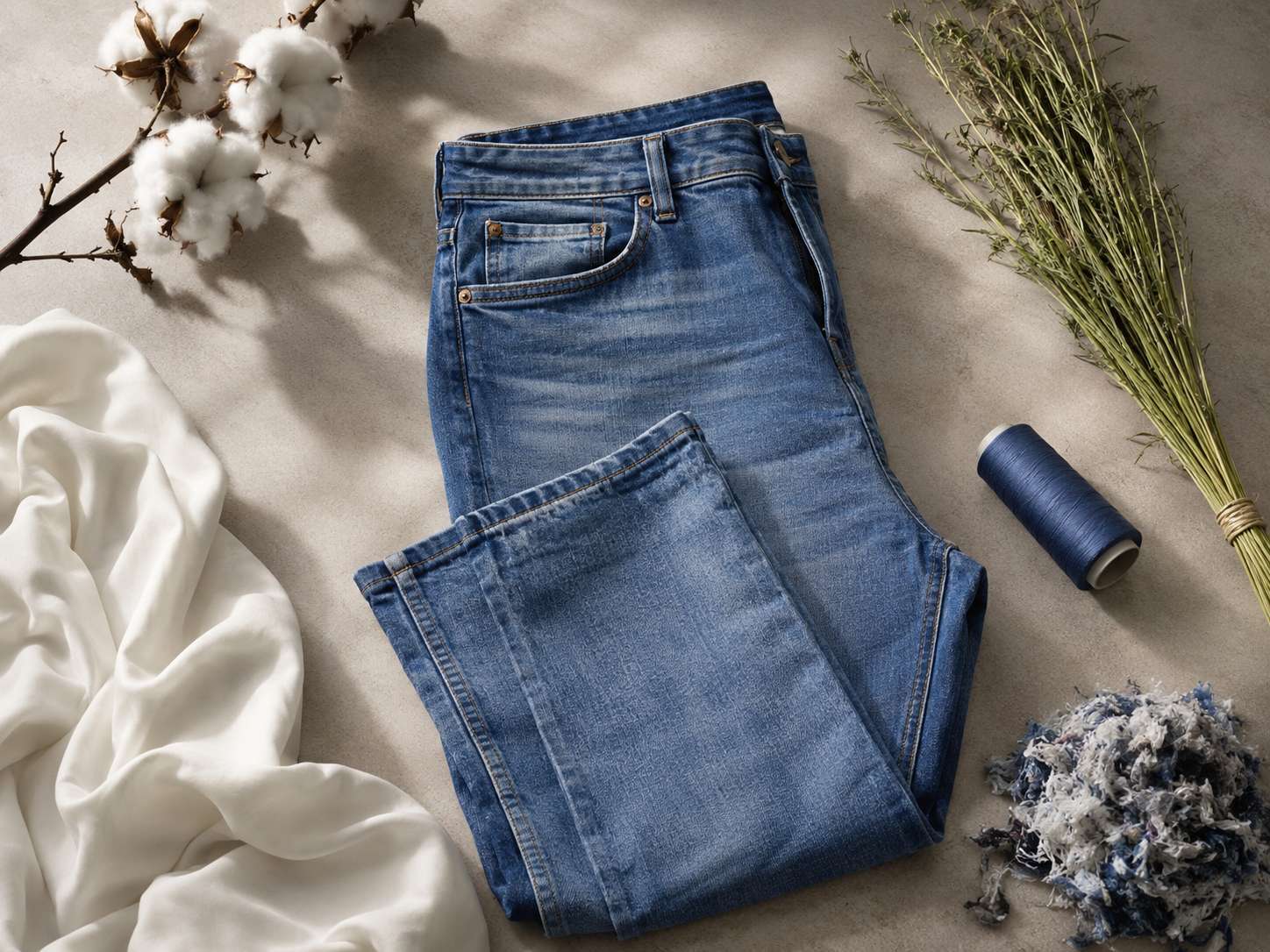
What Other Fibres Are Used in Modern Denim Besides Cotton?
Besides cotton, modern jeans may contain elastane, polyester, recycled fibres, Tencel™ (lyocell), hemp, and viscose. These fibres are added to improve comfort, durability, softness, sustainability, and special performance characteristics depending on the brand’s product positioning.
How Are Different Fibres Used in Modern Denim?
The denim industry has changed significantly in recent years.
In the past, denim development focused mainly on durability. Today, brands must consider:
Customer comfort
Sustainability expectations
Fashion trends
Product differentiation
Production consistency
Different fibres solve different problems.
Polyester Fibre in Jeans
Polyester is a synthetic fibre commonly added to denim when brands need improved durability and performance
Why Is Polyester Added to Denim?
Polyester provides:
Higher abrasion resistance
Better shape retention
Reduced shrinkage
Increased fabric strength
This makes polyester blends popular in:
Workwear jeans
Utility denim
Heavy-duty clothing
For example, a customer buying work jeans may prioritize durability over vintage fading. A cotton-polyester blend can provide longer service life in demanding environments.
However, polyester is usually used carefully in fashion denim because too much polyester can reduce the traditional cotton denim feeling.
Tencel™ / Lyocell Fibre in Jeans
Tencel™ (Lyocell) has become increasingly popular in premium and sustainable denim collections.
It is produced from wood pulp through a regenerated fibre process.
Why Do Brands Use Tencel™ in Denim?
Benefits include:
Very soft hand feel
Smooth surface appearance
Good moisture absorption
Comfortable wearing experience
Tencel™ is often blended with cotton to create denim that feels softer and more premium.
For brands targeting higher-end consumers, this fibre can help create a stronger product story.
Hemp Fibre in Jeans
Hemp is gaining attention as a sustainable denim fibre.
Historically, hemp was used for strong industrial materials, but modern textile technology has improved its softness and usability.
Advantages of Hemp Denim:
Strong natural fibre structure
Good breathability
Sustainable positioning
Unique texture
Hemp blends can create denim with a distinctive premium character.
For brands focused on environmentally conscious consumers, hemp provides another option beyond traditional cotton.
Recycled Fibres in Denim
Sustainability has become a major topic in fashion.
Many brands are exploring recycled materials such as:
Recycled cotton
Recycled polyester
Post-consumer textile fibres
Why Are Recycled Fibres Used?
They help brands communicate:
Lower environmental impact
Circular fashion concepts
Responsible sourcing
However, recycled fibres also create technical challenges.
For example:
Recycled cotton fibres are usually shorter than virgin cotton fibres, which can affect strength and fabric performance.
Therefore, denim manufacturers often blend recycled fibres with new fibres to achieve the right balance.
Viscose / Rayon Fibre in Denim
Viscose is another regenerated fibre sometimes used in fashion denim.
It provides:
Softness
Better drape
Smooth texture
It is commonly used when brands want denim products with a more fashionable and comfortable appearance.
What Material Are Levi Jeans Made Of?
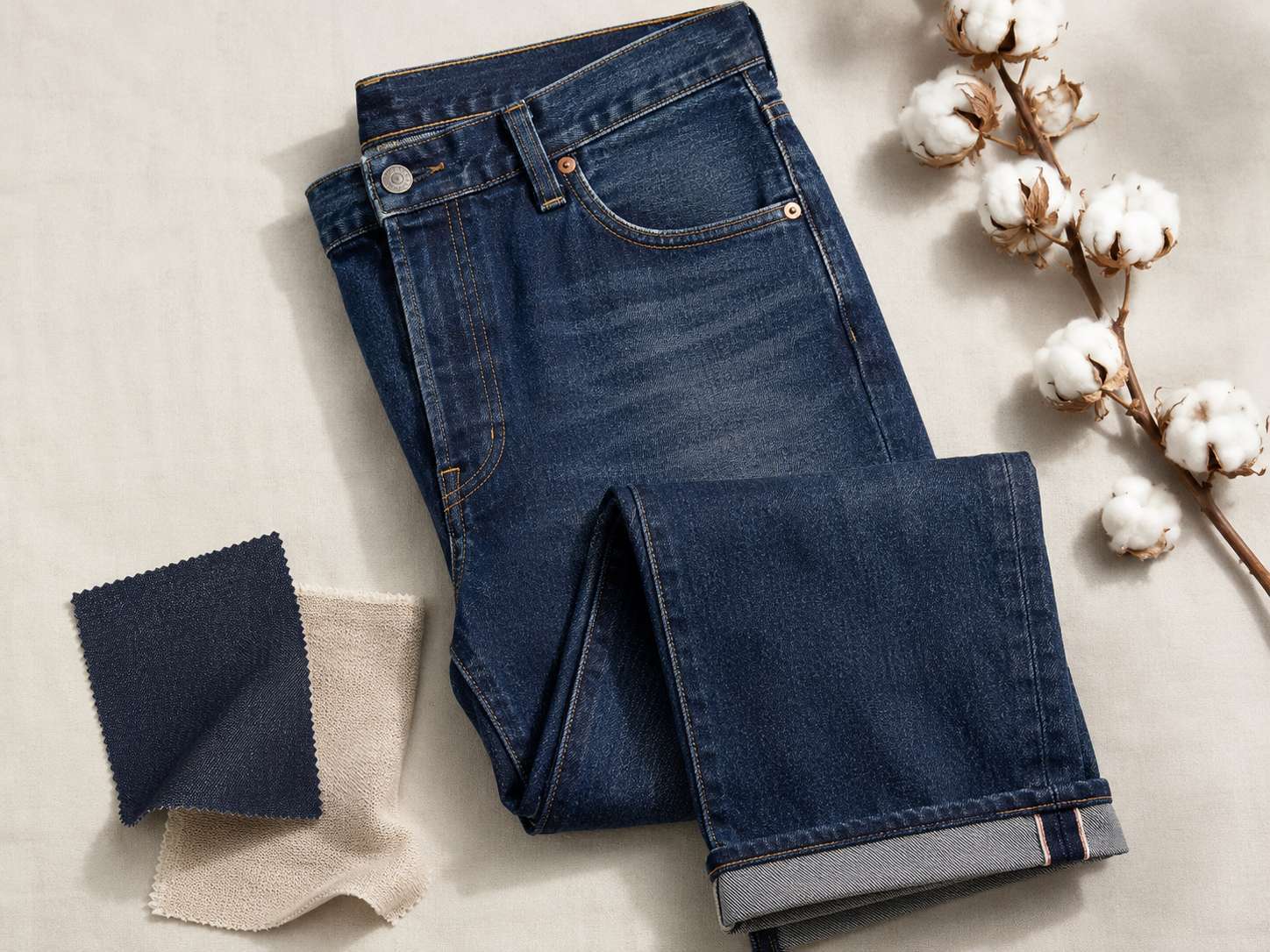
Levi’s jeans are mainly made from cotton, but the exact material composition depends on the specific style and collection. Classic models such as the 501 are traditionally associated with cotton denim, while modern collections may include elastane or other fibres to improve comfort, flexibility, and sustainability.
Why Is Levi’s a Good Example of Denim Fibre Development?
Levi’s is one of the most recognized denim brands worldwide, and its product evolution reflects broader changes in the denim industry.
Traditional Levi’s jeans were built around:
Cotton denim
Durability
Workwear heritage
Authentic fading
Classic rigid denim represents the original philosophy of jeans:
A strong cotton fabric that becomes personalized through years of wear.
However, modern consumers have different expectations.
Many customers now want:
More comfort
Easier movement
Softer fabrics
More sustainable options
Therefore, modern denim brands, including large global companies, increasingly develop different fabric compositions for different customer needs.
A classic rigid jean and a comfort stretch jean may both carry the “jeans” identity, but they serve different markets.
This is why professional denim development does not focus on one “perfect” fibre.
Instead, it focuses on matching the fibre composition with:
Brand identity
Target customer
Price positioning
Product category
A premium streetwear label, an online boutique, and a workwear company may all produce jeans, but their ideal fibre choices can be completely different.
How Does Fibre Composition Affect the Quality and Performance of Jeans?
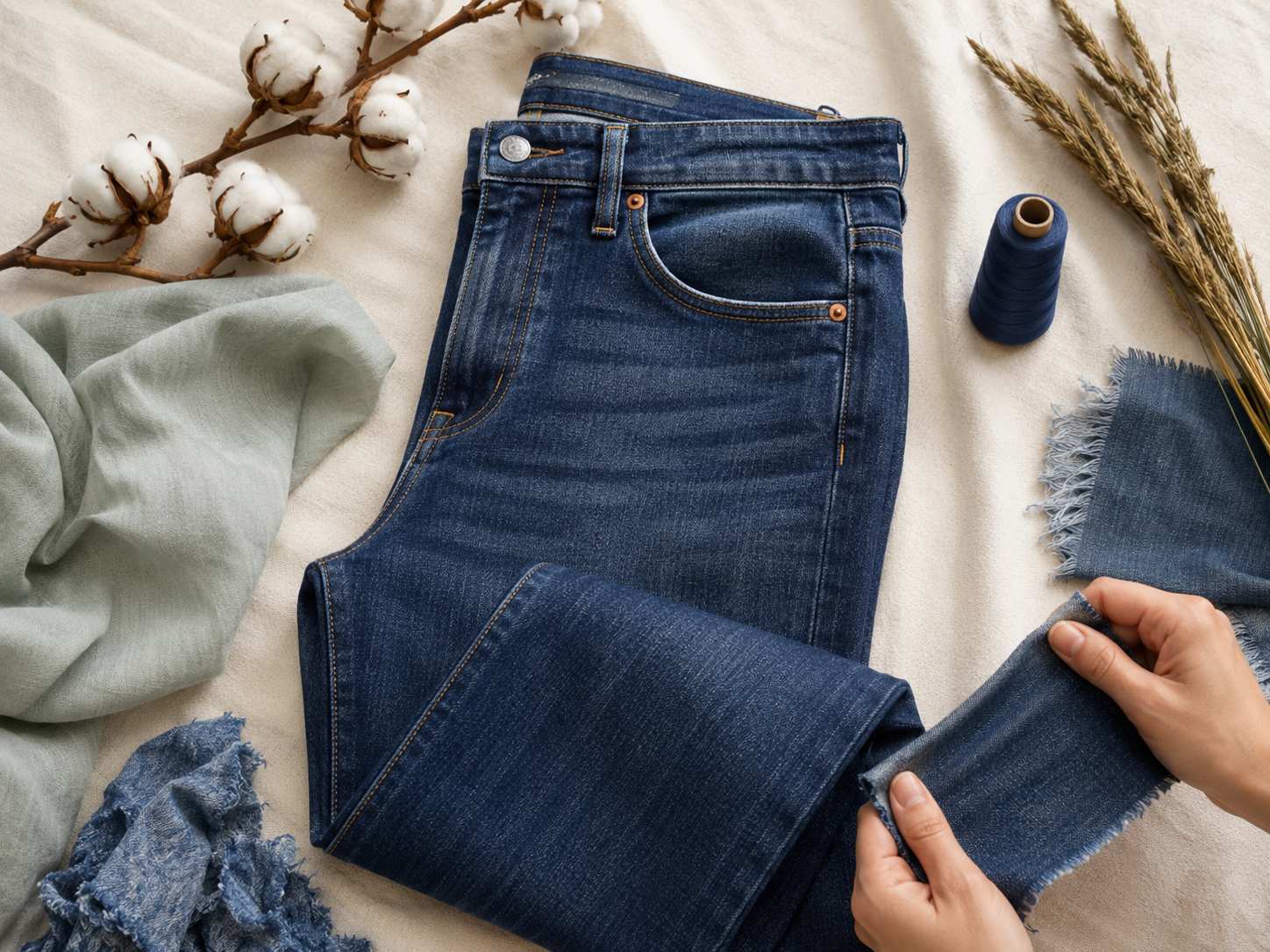
The fibre composition directly determines how jeans feel, fit, stretch, fade, and perform during daily wear. Cotton creates authentic denim character, elastane improves flexibility, polyester increases durability, and sustainable fibres enhance softness and environmental value. The best fibre combination depends on the jeans category, target customers, and brand positioning.
Why Does Fibre Composition Matter in Denim?
Many people judge jeans by their appearance, but experienced denim buyers understand that the fabric composition behind the product is what creates the real difference.
A pair of jeans is a combination of:
Fibre selection
Yarn construction
Fabric weight
Weaving method
Washing process
Garment construction
Among these factors, fibre composition is the foundation.
The same design can create completely different results depending on the fabric.
For example:
A baggy streetwear jean made with lightweight stretch denim may lose its shape and fail to create the oversized silhouette customers expect.
A skinny jean made with rigid 100% cotton denim may look fashionable but become uncomfortable during daily wear.
A premium selvedge jean made with high polyester content may become durable but lose the traditional denim character enthusiasts are looking for.
This is why successful denim brands carefully select fibre combinations before moving into production.
How Do Different Fibre Compositions Affect Different Jeans Styles?
Different denim categories require different fabric characteristics.
A professional denim manufacturer does not simply ask:
“What fabric is cheaper?”
The better question is:
“What fabric creates the best product experience for the target customer?”
| Jeans Category | Recommended Fibre Direction | Why |
| Selvedge Jeans | 100% Cotton | Authentic texture, natural fading, premium denim feeling |
| Vintage Jeans | Cotton-rich rigid denim | Creates classic aging effects and strong character |
| Baggy Jeans | Heavy cotton or cotton-rich denim | Maintains oversized structure and streetwear shape |
Stacked Jeans | Cotton-rich with controlled stretch | Balances stacking effect and wearing comfort |
Skinny Jeans | Cotton + Elastane | Provides body fit and movement |
Plus Size Jeans | Cotton + Elastane | Improves comfort and size flexibility |
Denim Jackets | Cotton-rich denim | Provides durability and structured appearance |
Denim Shorts | Cotton or stretch cotton | Provides comfort and daily wear performance |
How Fibre Choice Influences Denim Appearance
The fibre composition also affects how jeans look after washing.
For example:
100% Cotton Denim
Creates:
Strong vintage fading
Natural color variation
Authentic worn-in appearance
This is why many premium denim collectors prefer rigid cotton jeans.
The fabric develops personality over time.
Stretch Cotton Denim
Creates:
Cleaner appearance
Better body adaptation
More comfortable fitting
This is popular for commercial fashion brands because it meets wider consumer expectations.
Sustainable Fibre Blends
Materials such as Tencel™, hemp, and recycled fibres can create:
Softer touch
Unique surface texture
Strong sustainability messaging
For brands selling premium products, these details can become part of their storytelling.
What Fabric Factors Should Brands Consider Besides Fibre?
Although fibre composition is important, professional denim development requires looking beyond the fibre percentage.
A fabric labeled “98% cotton + 2% elastane” does not automatically guarantee good quality.
Two fabrics with the same composition can perform very differently.
Brands should also consider:
Fabric Weight (Ounce)
Denim weight is usually measured in ounces (oz).
Common denim weights:
| Denim Weight | Characteristics | Common Use |
| 8–10 oz | Lightweight, comfortable | Summer jeans, fashion denim |
| 11–13 oz | Balanced comfort and durability | Everyday jeans |
| 14–16 oz | Heavy structure and premium feeling | Streetwear, vintage denim |
17 oz+ | Extremely heavy denim | Specialty collections |
For example:
A heavyweight 14oz cotton denim can create a strong premium streetwear appearance.
A lightweight stretch denim may be more suitable for everyday commercial jeans.
Yarn Quality
The quality of cotton yarn affects:
Fabric strength
Surface appearance
Softness
Wash effect
Premium denim brands often pay attention to:
Ring-spun yarn
Slub yarn
Open-end yarn
Special texture yarns
These details help create unique denim character.
Weave Structure
Most denim uses a 3/1 twill construction.
The weave influences:
Durability
Surface texture
Fabric stability
Different weaving methods can create different denim personalities.
Shrinkage Control
Cotton naturally reacts to washing.
Professional denim production must control:
Length shrinkage
Width shrinkage
Pattern adjustment
Poor shrinkage control can cause:
Wrong garment measurements
Customer complaints
Increased returns
Washing Reaction
The fibre composition also affects washing performance.
For example:
A rigid cotton jean may develop strong contrast after stone washing.
A stretch denim requires careful washing control because excessive heat or chemical treatment can damage elastane performance.
This is why denim washing is not only a color process. It is a technical process connected with fabric composition.
How Should Brands Choose the Right Fibre Composition for Custom Jeans?
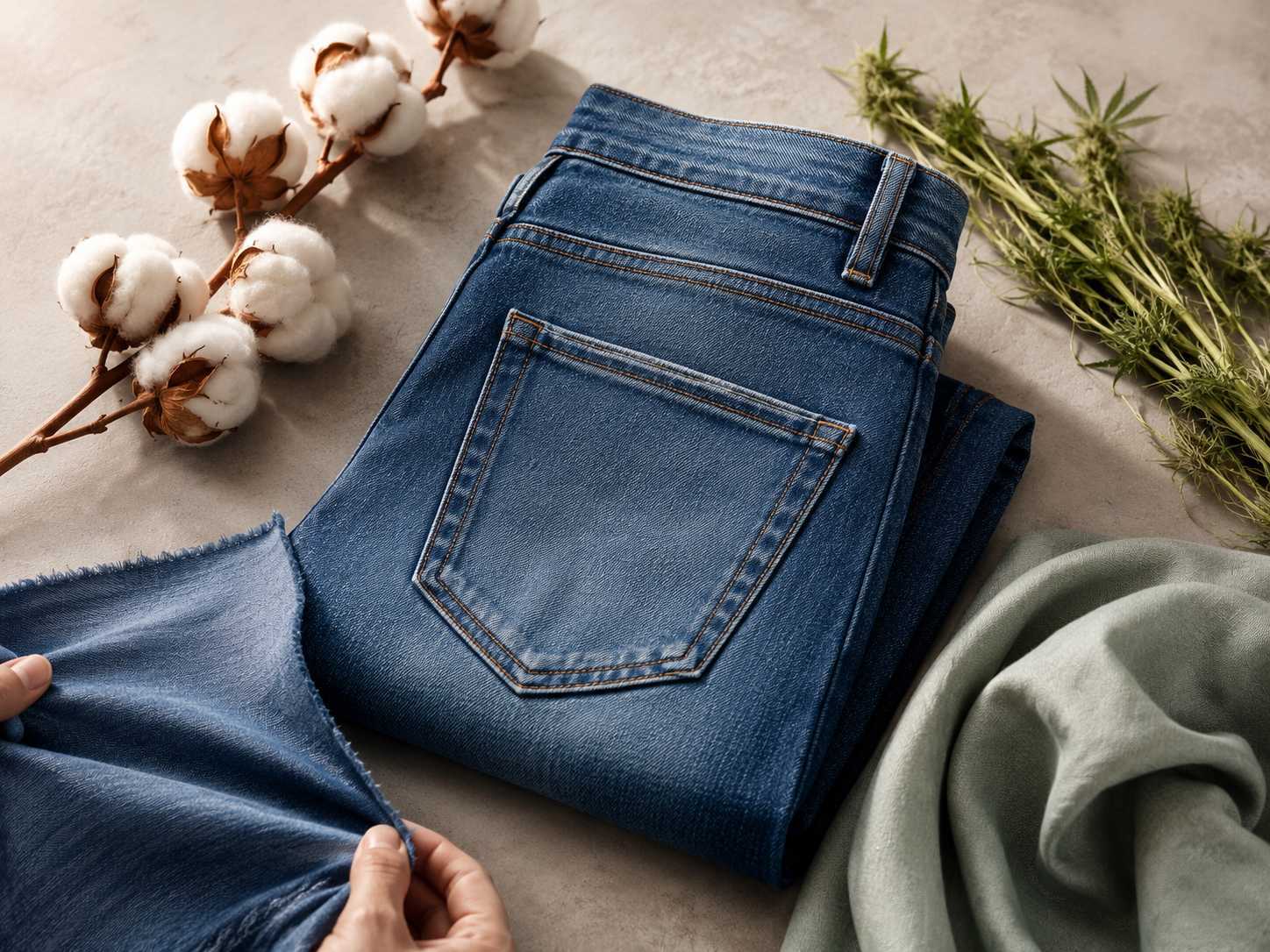
Brands should choose fibre composition based on their target customers, product category, price positioning, and desired performance. Streetwear brands often prefer structured cotton denim, online boutiques may prioritize comfort stretch fabrics, and premium denim brands usually focus on high-quality cotton and sustainable fibre options.
What Fibre Composition Is Best for Different Denim Brands?
There is no single “best” denim fabric.
The correct choice depends on the brand strategy.
For Independent Designer Brands
Independent designers usually focus on:
Unique appearance
Creative concepts
Special washes
Limited production
They often prefer:
100% cotton denim
Heavyweight denim
Special yarns
Unique fibre blends
Because their customers are usually buying design identity rather than only functionality.
For these brands, fabric becomes part of the creative expression.
For Streetwear and Fashion Brands
Streetwear brands often require denim with:
Strong silhouette
Visual impact
Heavy construction
Special washing effects
Popular choices include:
12–16oz cotton denim
Rigid denim
Cotton-rich blends
These fabrics work well for:
Baggy jeans
Stacked jeans
Carpenter jeans
Wide-leg jeans
The goal is usually not maximum softness.
The goal is creating a strong fashion statement.
For Online Boutiques and E-commerce Brands
Online retailers face a different challenge.
Customers cannot touch or try the product before buying.
Therefore, comfort and fit become extremely important.
Many successful online denim brands choose:
Cotton stretch denim
Soft-touch fabrics
Comfortable waist construction
Because better comfort can improve:
Customer satisfaction
Repeat purchases
Lower return rates
Is There an Unhealthiest Fabric to Wear?
There is no single fabric that is scientifically considered the “unhealthiest” for everyone. The comfort and safety of clothing depend on fibre quality, chemical processing, manufacturing standards, and individual skin sensitivity. Low-quality synthetic fabrics or poorly processed materials may cause discomfort for some people, while properly manufactured fabrics can be safe and comfortable.
Natural Fibres vs Synthetic Fibres: Which Is Better?
This question is often discussed among consumers.
Natural fibres such as:
Cotton
Hemp
Organic cotton
Lyocell
are often appreciated because they provide:
Breathability
Softness
Natural comfort
Synthetic fibres such as:
Polyester
Elastane
provide advantages including:
Stretch
Durability
Shape recovery
The reality is more balanced.
Modern denim often combines different fibres because each material solves a different problem.
For example:
A jeans manufacturer may combine:
Cotton for authenticity
Elastane for comfort
Polyester for durability
The result can be a better product than using one fibre alone.
The more important factors are:
Certified raw materials
Safe dyeing processes
Chemical compliance
Proper production control
For international brands, certifications such as REACH compliance and responsible manufacturing standards are important considerations when selecting a denim supplier.
How Can Denim Brands Select the Right Fabric Supplier?
Choosing fibre composition is only the first step.
The real challenge is transforming fabric into a finished product that matches the original design vision.
A reliable denim manufacturer should help with:
Fabric recommendation
Sample development
Pattern adjustment
Washing testing
Quality control
Bulk production consistency
For example, a designer may provide a reference image showing:
Vintage fading
Heavy distressing
Oversized silhouette
Special embroidery
The factory needs to understand how fabric composition, construction, and finishing techniques work together to achieve the final result.
This is especially important for brands developing:
Custom jeans
Private label denim
OEM collections
ODM fashion lines
Why Choose DiZNEW for Custom Denim Manufacturing?
DiZNEW is a professional denim manufacturer from China with more than 20 years of experience in denim development and production.
We help brands transform ideas from sketches into finished denim products, including:
Baggy jeans
Stacked jeans
Straight jeans
Selvedge jeans
Skinny jeans
Plus size jeans
Denim jackets
Denim shorts
Denim shirts
Our advantages include:
| Capability | Details |
| Denim Experience | 20+ years in denim development |
| Custom MOQ | Starting from 30 pieces |
| Production Scale | From small designer projects to 10,000+ piece orders |
Development Ability | From design concept to finished sample |
Specialization | Complex washes, embroidery, distressing, and customized details |
Customer Base | US brands, designers, online boutiques, and fashion retailers |
Whether you are creating your first denim collection or expanding an existing brand line, the right fibre choice is the foundation of product success.
If you are looking for a reliable denim manufacturer to develop custom jeans with your own design, fabric selection, logo, labels, and production requirements, contact DiZNEW today to discuss your denim project and bring your ideas into reality.
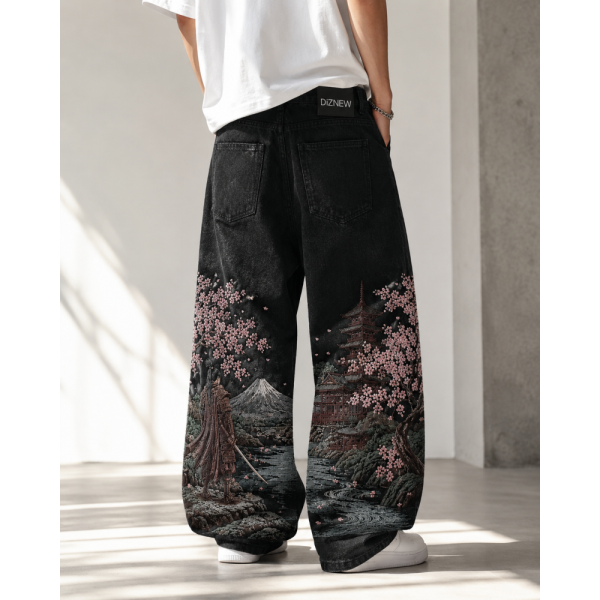
Premium wide-leg denim jeans featuring a vintage washed black finish, detailed Japanese landscape artwork, embroidery-style decoration, and custom brand label options. Designed for streetwear brands, designer labels, and private label collections looking for statement denim with strong visual storytelling.
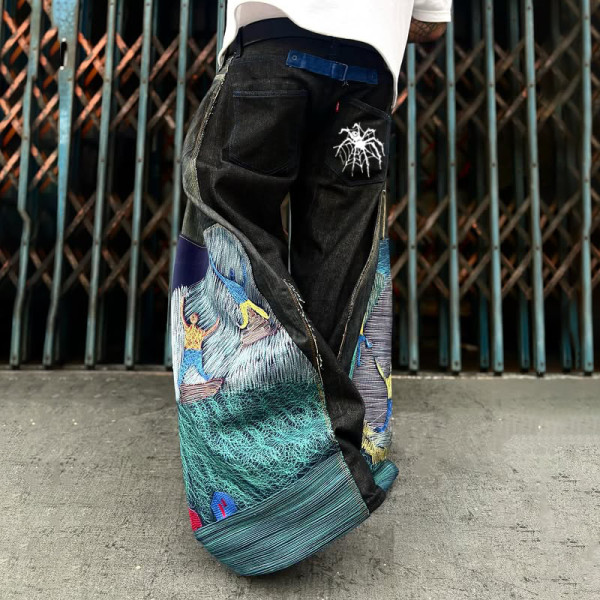
Discover our Custom OEM/ODM Wide Leg Denim Jeans featuring unique Green and Black Split Embroidery. Perfect for wholesale orders!
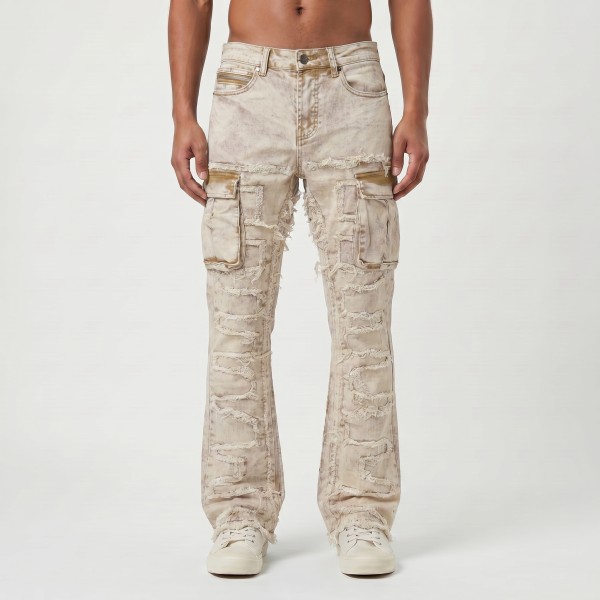
Beige flared cargo jeans with oversized pockets and distressed panels. Built for bold designer and boutique streetwear.
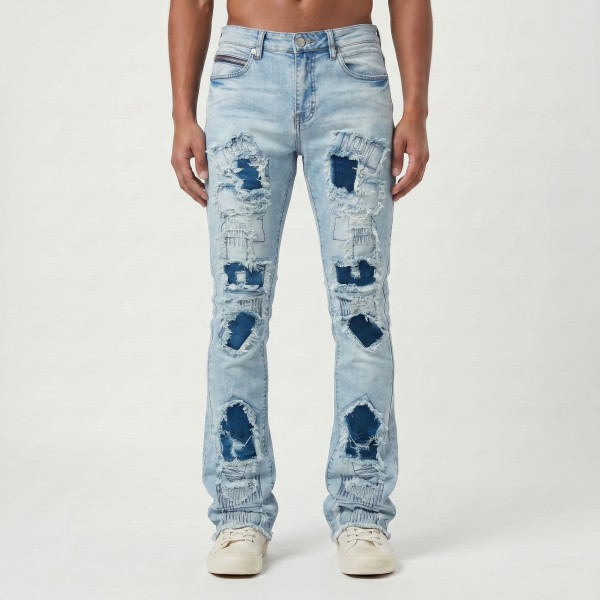
Light wash flared jeans with bold ripped patches and raw hem. Designed for boutique and Y2K-inspired fashion brands.