What should I look for before buying men's jeans online?
- Share
- publisher
- Jimy
- Issue Time
- Aug 3,2026
Summary
What to look for before buying men's jeans online? See how our B2B custom denim factory crafts precise, high-quality jeans for e-commerce brands.
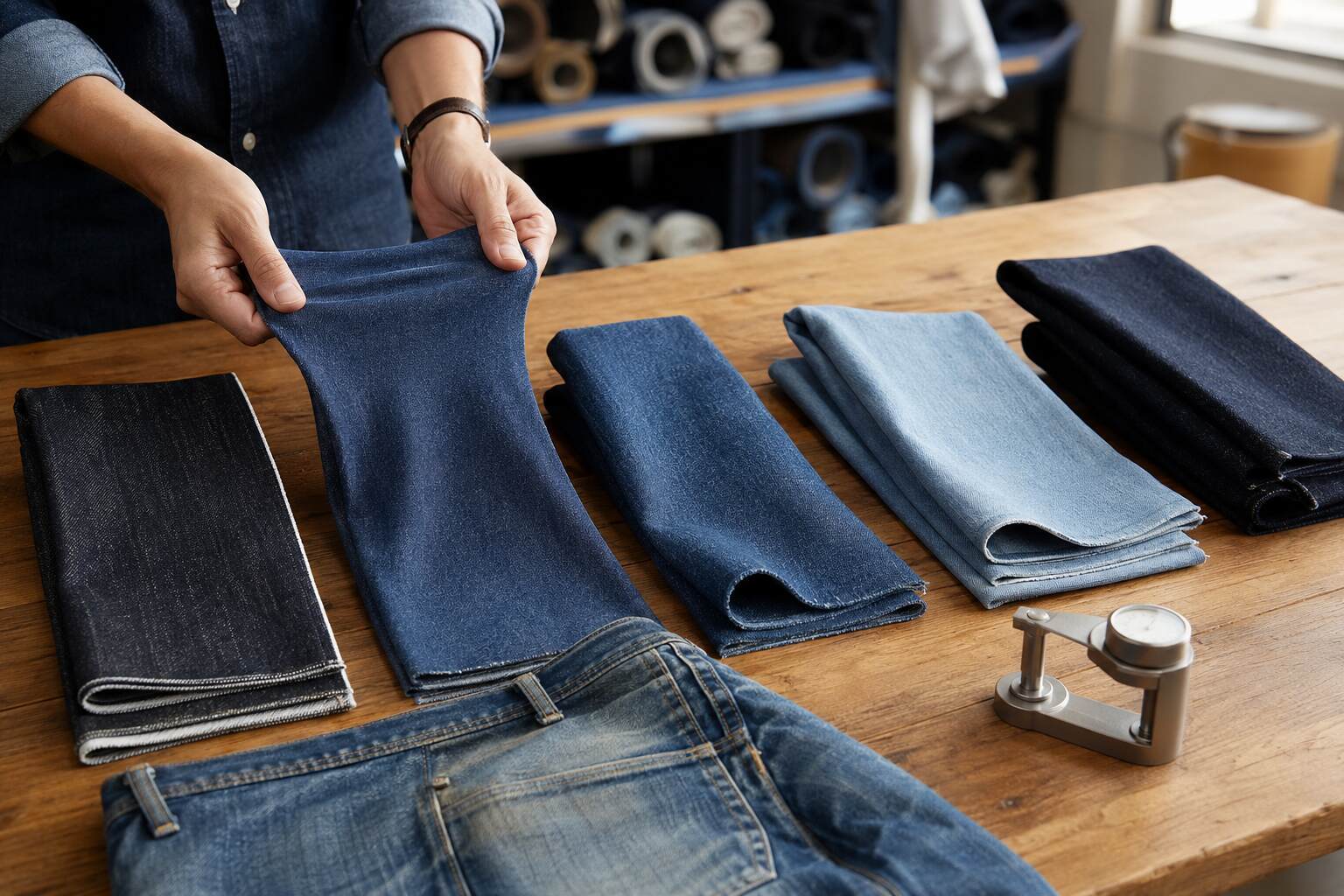
Buying men’s jeans online looks simple until the order arrives. The waist size appears correct, yet the thighs feel restrictive. The product photos show structured denim, but the actual fabric is thin and overly stretchy. The inseam matches your usual size, yet the jeans stack awkwardly above your shoes. These problems occur because shoppers often compare size labels and prices while overlooking garment measurements, fabric composition, rise, construction, and wash performance.
Online shopping also removes the fitting room from the decision. You cannot touch the denim, test the waistband, examine the inside seams, or see how the jeans move when you sit down. However, that does not mean buying jeans online has to be a gamble. A detailed product page can tell you almost everything you need to know—if you understand what to look for.
Before buying men’s jeans online, compare the garment measurements with a pair you already own, choose a fit that suits your body and footwear, and check the denim’s fiber content, weight, stretch, stitching, hardware, wash, and shrinkage. You should also review customer photos, return terms, and seller credibility. Never rely only on the labeled waist size, model image, brand name, or price.
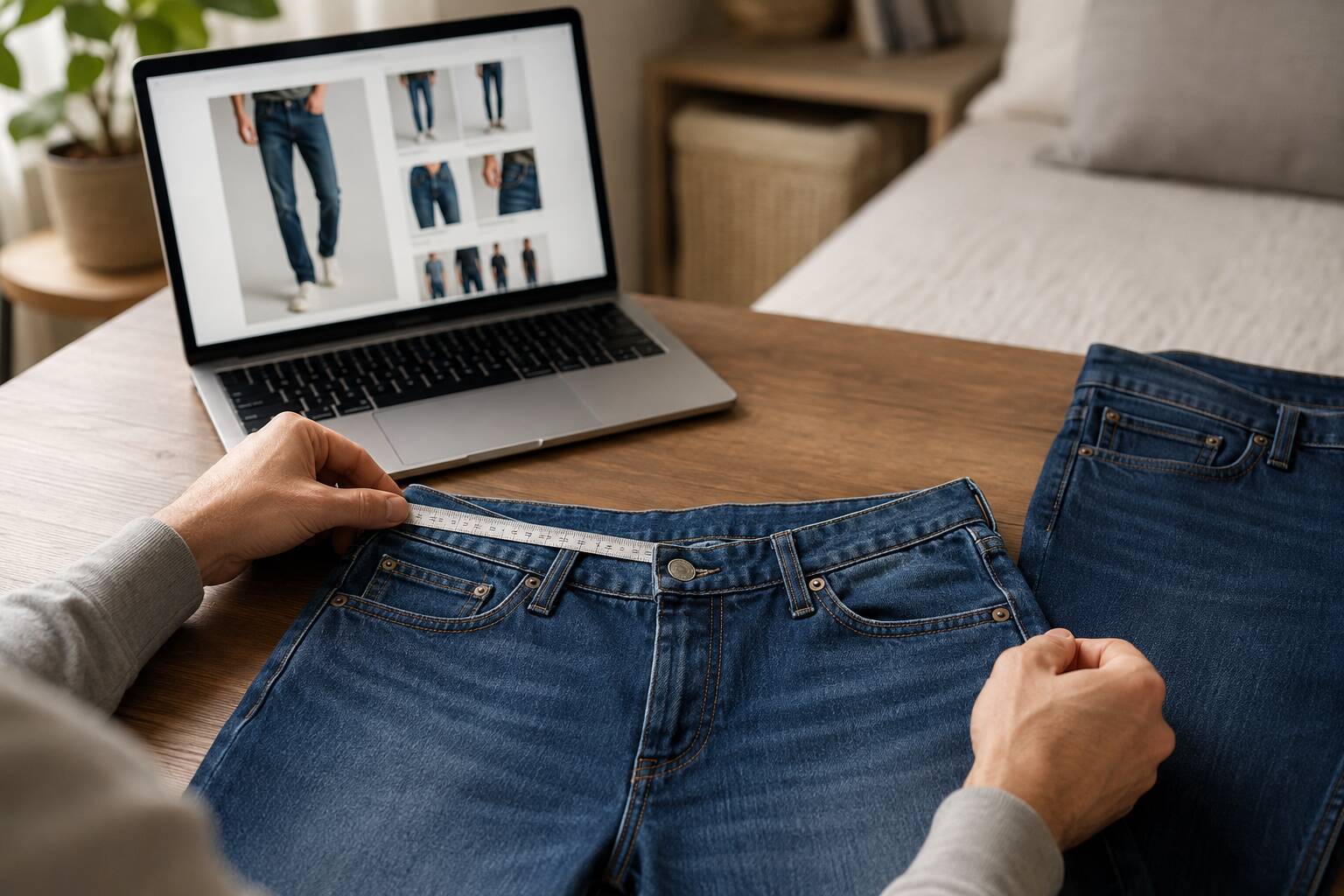
The best jeans are not necessarily the heaviest, most expensive, or most fashionable pair. They are the jeans that fit your body, support your lifestyle, and retain their shape after repeated wear.
Imagine opening two packages containing jeans that look nearly identical online. One pair becomes a weekly favorite. The other stays in the wardrobe after a single uncomfortable afternoon. The difference is rarely luck—it usually comes down to the details you checked before clicking “Buy.”
How Do I Choose the Right Men’s Jeans Size When Shopping Online?
To choose the right jeans size online, measure a pair that already fits you well and compare its waist, rise, thigh, inseam, and leg opening with the seller’s garment chart. Do not rely only on your usual labeled size. Allow for the behavior of the fabric: rigid denim may relax with wear, while stretch denim should fit comfortably from the beginning.
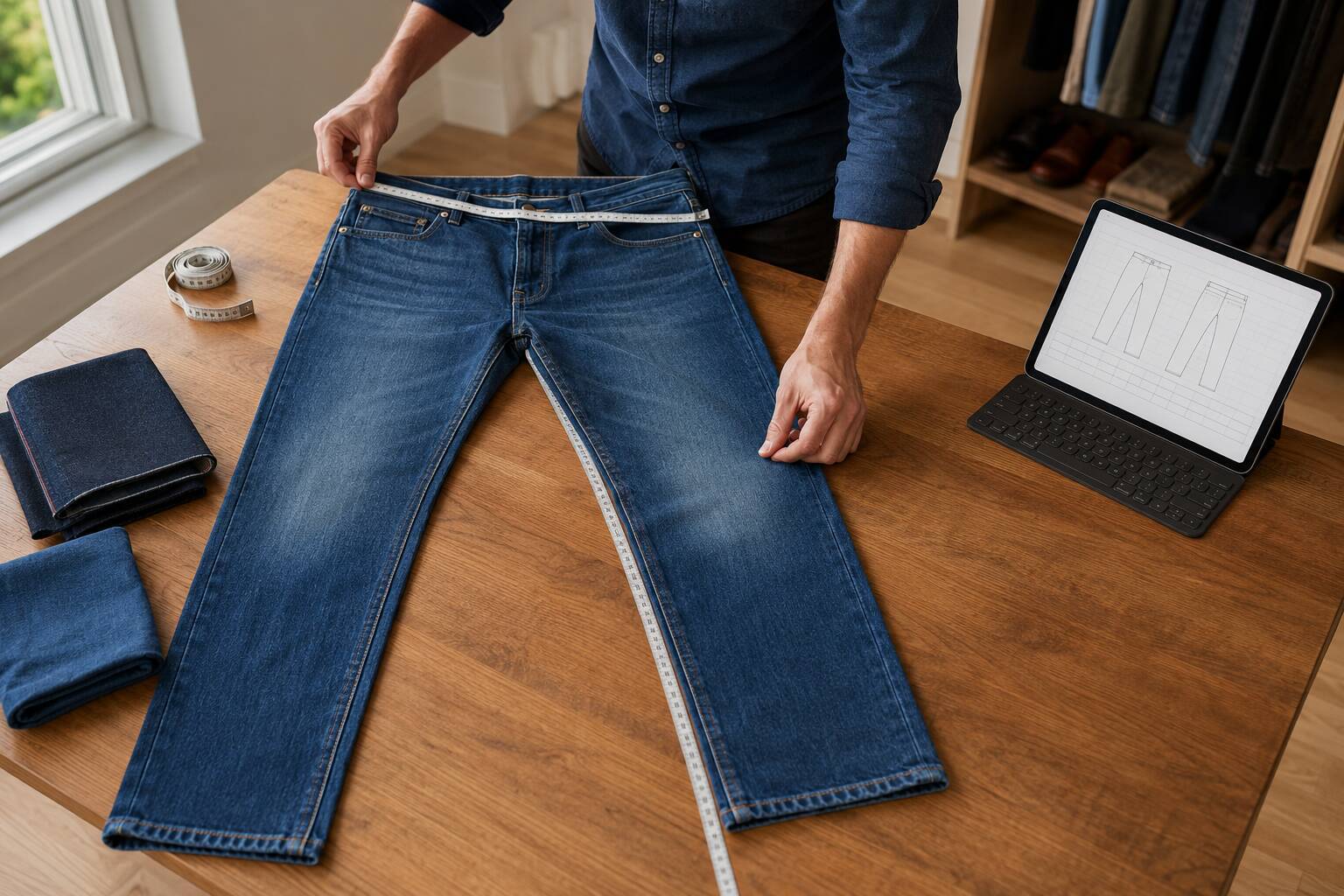
Which Jeans Measurements Should I Take Before Ordering?
Start with a pair of jeans that fits you well. Button it, lay it flat on a smooth surface, and remove any wrinkles without stretching the fabric. Measure the waistband straight across and double that number to estimate the waist circumference.
The waist measurement alone is not enough. Two pairs labeled W32 can feel completely different if one has a higher rise, a narrower thigh, or a smaller seat. Record these measurements:
| Measurement | How to Measure | Why It Matters |
| Waist | Across the closed waistband, then double it | Determines waistband fit |
| Front rise | Crotch seam to the top front waistband | Controls where the jeans sit |
| Back rise | Crotch seam to the top back waistband | Affects seat coverage and comfort |
Thigh | Across the leg near the crotch | Critical for athletic or larger thighs |
Inseam | Crotch seam to the hem | Determines overall length |
Knee | Across the leg at knee level | Shows how strongly the leg tapers |
Leg opening | Across the bottom hem | Affects silhouette and footwear pairing |
Compare these numbers with the product’s actual garment measurements, not a generic body-size conversion. Ideally, the seller should explain whether measurements were taken flat and provide a reasonable production tolerance.
What Is the 2 Finger Rule for Jeans?
The two-finger rule is a quick waistband test. When the jeans are fastened, you should generally be able to slide two fingers between your waist and the waistband without forcing them. If you cannot insert two fingers, the waist may be too tight. If you can easily fit an entire hand inside, the jeans may be too loose.
This is a useful guideline, but it is not a universal sizing law. Rigid denim often feels snug at first and may relax after several wears. Highly elastic jeans can pass the test initially but become loose later if the fabric has poor recovery. High-rise jeans also sit on a different part of the body than low-rise jeans, changing how the waistband feels.
Comfort should therefore be tested through movement, not only finger space. You should be able to sit, bend, walk, and climb stairs without the waistband digging in or the fly area pulling sharply.
Should I Measure My Body or Jeans I Already Own?
Measuring an existing pair is usually more reliable because it gives you a garment-to-garment comparison. Body measurements remain useful, especially when you do not own a well-fitting pair, but they do not automatically tell you how much ease has been added to a pattern.
A 34-inch body waist does not always require jeans with a 34-inch measured waistband. The correct garment measurement depends on rise, fabric stretch, intended silhouette, and where the waistband sits.
Should New Jeans Feel Tight When First Worn?
Rigid 100% cotton denim may feel slightly snug, particularly at the waist and upper thigh, but it should not cause pain or severely restrict movement. The fabric often relaxes by approximately half a size in high-pressure areas, although the exact amount depends on weave density, finishing, and wear.
Stretch jeans should feel comfortable from the first fitting. Buying them excessively tight and expecting dramatic expansion can place stress on seams and elastane fibers. Always read the fiber composition before deciding whether to size up or down.
Which Men’s Jeans Fit Is Best for My Body Type and Style?
The best fit follows your body without restricting movement or creating uncontrolled excess fabric. Straight and tapered jeans suit many men, athletic fits provide more thigh room, and relaxed or baggy cuts create a looser silhouette. Rise, thigh width, inseam, and leg opening are just as important as the fit name, which can vary significantly between brands.
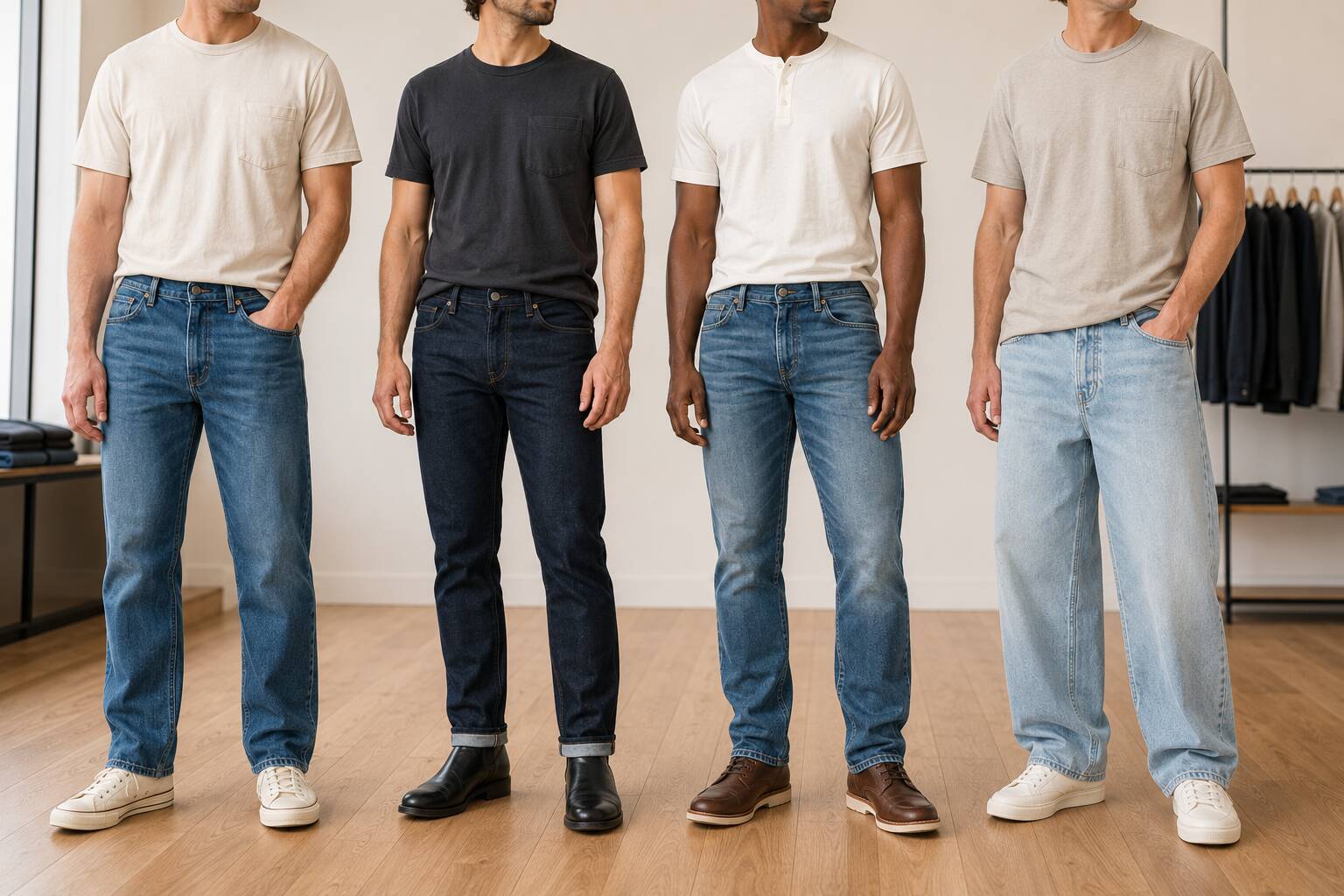
What Is the Difference Between Common Men’s Jeans Fits?
Fit names are useful starting points, but they are not standardized. One brand’s slim fit may be another brand’s skinny fit. Always confirm the measurements.
| Fit | Typical Shape | Often Suitable For |
| Skinny | Close from thigh to ankle | Lean builds and fitted styling |
| Slim | Trim with slightly more room | Modern everyday outfits |
| Straight | Similar width from knee to hem | Versatile body types and footwear |
Tapered | Roomier thigh, narrower ankle | Athletic builds or clean silhouettes |
Relaxed | Extra seat and thigh room | Comfort and casual wear |
Baggy | Intentionally oversized throughout | Streetwear and loose styling |
Stacked | Extra-long inseam creating folds | Sneakers and contemporary streetwear |
Bootcut | Wider below the knee | Boots and Western-inspired looks |
Athletic men often experience a waistband gap when jeans fit the thighs. An athletic taper or relaxed taper can solve this by combining more room above the knee with a cleaner lower leg. Larger men may benefit from a mid- or high-rise design with adequate back rise, rather than simply choosing a wider waist.
Shorter men often look more balanced in a mid-rise straight or gently tapered fit with limited fabric stacking. Taller men should check both inseam and rise because extra leg length alone will not compensate for a short body section.
How Should Men’s Jeans Fit Around the Waist, Seat, and Thighs?
The waistband should stay in position without requiring a tightly fastened belt. The seat should follow the body without sagging heavily or pulling into sharp horizontal lines. The thighs should allow walking, sitting, and bending without feeling compressed.
Pulling lines around the crotch and upper thigh usually indicate insufficient room. Excess fabric collapsing below the seat can mean the rise or seat shape is too large. These issues cannot always be solved by changing the waist size because the underlying problem may be the pattern.
Which Rise and Leg Opening Should I Choose?
Mid-rise jeans are the most adaptable choice for many shoppers. Low-rise jeans create a casual or fashion-driven appearance but may provide less coverage when sitting. High-rise jeans can visually lengthen the legs and work well with tucked shirts, though comfort depends on torso length.
The leg opening should also suit your shoes. A narrow opening works with low-profile sneakers, while straight or bootcut openings sit more naturally over boots. Stacked jeans require deliberate extra length; accidental bunching caused by the wrong inseam rarely creates the same controlled appearance.
What Should I Avoid When Buying Jeans?
Avoid choosing a pair because it looks good on the model alone. Styling, pinning, lighting, and body proportions can change the presentation. Check the model’s height, worn size, and relevant measurements when provided.
You should also avoid:
Selecting jeans only by the size printed on the label
Ignoring thigh, rise, and leg-opening measurements
Buying extremely tight rigid denim and hoping it transforms completely
Assuming all “premium denim” claims indicate premium construction
Choosing high-stretch fabric when long-term shape retention is important
Following a trend that conflicts with your comfort or regular footwear
Ignoring care instructions, shrinkage warnings, and return restrictions
The right fit is not determined by whether skinny, baggy, or straight jeans are currently fashionable. A trend can influence the look you want, but your proportions, comfort, and intended use should make the final decision.
What Denim Fabric Should I Choose for Comfort and Durability?
Choose denim according to how you plan to wear it. Rigid 100% cotton denim offers structure, durability, and personalized fading, while stretch denim improves mobility and immediate comfort. Midweight denim around 11–13 ounces is versatile for everyday use; lighter fabric suits warm conditions, while 14-ounce or heavier denim provides more structure but requires a longer break-in period.
Is 100% Cotton Denim Better Than Stretch Denim?
Neither option is automatically better. Rigid denim provides a traditional hand feel, develops natural wear patterns, and often retains a structured silhouette. It may initially feel firm, particularly in heavier weights.
Stretch denim normally combines cotton with elastane or another elastic fiber. A small amount of stretch can make fitted jeans more comfortable without dramatically changing their appearance. However, more stretch does not always mean better comfort over time. Low-quality stretch fabric may develop baggy knees, waistband growth, or permanent rippling.
For everyday slim or skinny jeans, a controlled stretch blend can be practical. For straight, selvedge, workwear-inspired, or vintage-style jeans, many buyers prefer 100% cotton.
What Denim Weight Is Best for Men’s Jeans?
Denim weight is normally expressed in ounces per square yard. It influences structure, warmth, drape, and break-in, but it does not independently prove quality.
| Denim Weight | General Character | Common Use |
| Under 10 oz | Light, soft and breathable | Hot weather and lightweight styles |
| 10–12 oz | Comfortable and adaptable | Casual everyday jeans |
| 12–14 oz | Structured and durable | Premium all-season jeans |
Above 14 oz | Heavy and firm | Workwear, raw denim and statement styles |
A well-woven 11-ounce denim can outperform a poorly constructed 14-ounce fabric. Yarn quality, weave consistency, dyeing, finishing, seams, and care all influence durability.
What Is the Difference Between Raw, Washed, and Selvedge Denim?
Raw denim has not received the same garment-washing treatment as conventional pre-washed jeans. It begins darker and stiffer, then develops fades based on the wearer’s movement. Pre-washed denim feels softer immediately and can include stone washing, enzyme washing, bleaching, whiskers, fading, tinting, or distressing.
Selvedge refers to the self-finished edge created on certain looms. It is valued for heritage, construction, and appearance, but a selvedge edge alone does not guarantee that the fabric, pattern, sewing, or wash is superior.
Will Jeans Shrink, Stretch, or Fade?
Most jeans change slightly. Rigid denim tends to relax in areas exposed to pressure, while washing may temporarily tighten the fibers again. Unsanforized denim can shrink considerably, whereas sanforized denim is treated to limit shrinkage.
Dark indigo and raw denim can transfer color onto light furniture, footwear, or clothing. This is not always a defect, but the seller should communicate it clearly. Washing jeans inside out in cool water and avoiding excessive tumble drying can help preserve color, fit, and elastic recovery.
Listings that hide fiber composition, denim weight, wash method, or care instructions deserve caution. Strong chemical odors, severe color transfer, uneven surface texture, and fabric that feels unusually weak may indicate poor finishing or inadequate washing control.
How Can I Tell Whether Men’s Jeans Are High Quality from an Online Listing?
Good-quality men’s jeans combine appropriate denim with secure construction. Look for even stitching, reinforced stress points, strong pocketing, smooth zippers, firmly attached buttons and rivets, balanced seams, and consistent washing. A trustworthy listing should show close-up images and disclose fiber composition, measurements, care instructions, and fabric characteristics rather than relying on vague terms such as “luxury” or “premium.”
How to Identify Good Quality Jeans for Men?
Begin with the areas that carry the most stress: the crotch, inseam, side seams, pocket corners, belt loops, fly, and waistband. These sections should show even stitches with no obvious skipping, unraveling, or loose thread ends.
Bartacks or rivets should reinforce pocket corners and other pressure points. Belt loops should be securely attached at both ends. The zipper should move smoothly without catching the fly fabric, while buttons should feel stable rather than hollow or loose.
Pocketing is often overlooked. Thin pocket bags can tear long before the denim wears out. Good jeans use pocket fabric suitable for repeated friction from phones, keys, and wallets.
The wash should also look intentional. Whiskers, fading, grinding, and distressing should support the design rather than appearing randomly placed. Heavy distressing needs reinforcement because open holes and ground areas can expand during wear.
Which Construction Details Indicate Durable Jeans?
Double-needle stitching can improve strength and visual consistency in selected areas. Chain-stitched hems are valued in many traditional jeans, while lockstitch construction can also perform well when the thread, stitch density, and tension are appropriate.
Do not judge quality from a single feature. A leather patch, copper-colored rivets, selvedge edge, or heavy fabric may add value, but none can compensate for poor pattern balance or weak sewing.
A useful online listing should include front, back, side, inside, and close-up views. Examine whether the side seams hang straight, the pockets are symmetrical, and the hems appear level. Twisted legs can result from fabric torque or construction problems, although mild twisting may naturally occur in some raw denim.
How Can Product Photos Reveal Jeans Quality?
Zoom in on the stitching around the fly, waistband, pockets, yoke, and hem. Look for inconsistent stitch length, crooked seams, severe puckering, unsecured threads, or uneven wash placement.
Compare customer photos with studio photographs. Some color variation is normal because screens and lighting differ, but major differences in fit, wash, or fabric thickness are warning signs. If every wash color uses the same digitally altered image, you may not be seeing the actual product.
Does Heavier Denim Always Mean Better Quality?
No. Heavy denim can be durable and visually substantial, but weight may also reduce comfort and mobility. Fabric quality depends on fiber strength, yarn construction, weaving, dyeing, shrinkage control, and finishing.
A lighter pair made with good yarns and stable construction may last longer than heavyweight jeans with weak seams. Evaluate the garment as a system: fabric, pattern, sewing, hardware, washing, and quality control must work together.
Be cautious when a product page lacks measurements, close-ups, fiber percentages, or care instructions. Vague marketing cannot replace technical information.
What Should I Check Before Placing the Final Online Order?
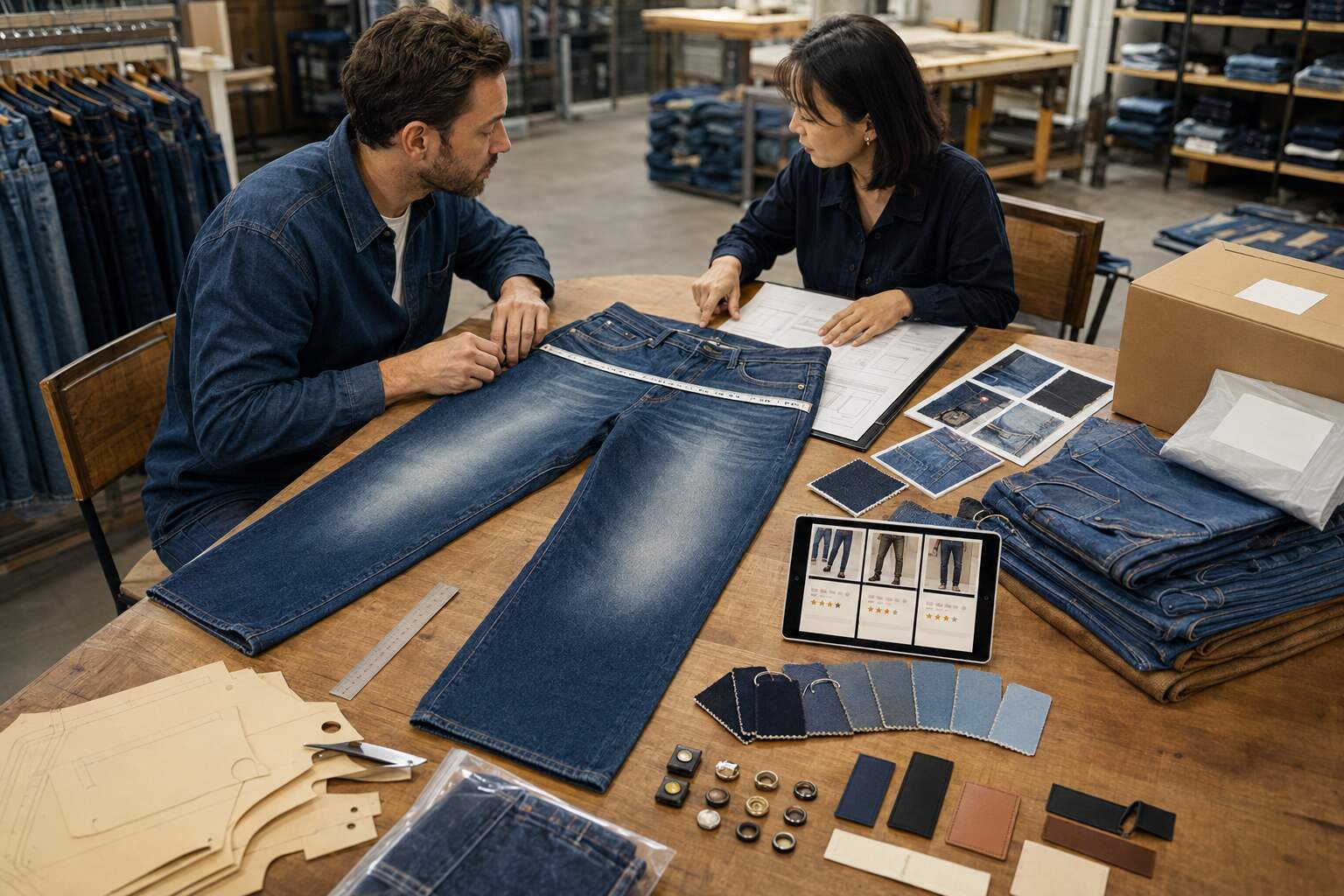
Before ordering, confirm the actual garment measurements, fabric composition, wash, product images, customer feedback, delivery cost, and return policy. Buy from sellers that provide transparent specifications, secure payment, responsive support, and realistic product claims. For custom or private-label jeans, confirm sampling, MOQ, grading, tolerances, branding, production time, quality control, and bulk-order capacity in writing.
Where to Buy Good Jeans for Men Online?
Good jeans can be purchased from established denim brands, specialist retailers, reputable marketplaces, independent designers, and qualified custom manufacturers. The best place depends on whether you want a standard retail product or jeans made for your brand.
Do not evaluate a seller by popularity alone. A smaller specialist may provide better fabric information and sizing support than a large marketplace store. Look for:
Detailed garment measurements
Clear fiber percentages and care instructions
Original front, back, side, and close-up images
Verified reviews with customer photographs
Accessible customer service
Secure payment and buyer protection
Clear shipping, exchange, and refund conditions
Reviews are most useful when they identify consistent patterns. One complaint about sizing may be personal preference; twenty reports of a small waist or weak zipper suggest a genuine product issue. Focus on comments about thigh room, rise, shrinkage, color accuracy, knee recovery, seam strength, and comfort after washing.
What Return, Exchange, and Shipping Terms Should I Check?
Read the return policy before paying. Confirm the return window, product condition requirements, final-sale exclusions, return shipping costs, and refund timeline. International buyers should also check duties, taxes, and whether original shipping charges are refundable.
Altered, washed, worn, embroidered, or customized jeans are often non-returnable. That makes measurement confirmation especially important for personalized products.
What Should Brands and Boutique Owners Confirm Before Ordering Custom Jeans?
Retail buying and custom manufacturing require different checks. A brand owner needs to evaluate whether the manufacturer can reproduce the approved design consistently across sizes and production quantities.
Before placing a private-label order, confirm:
| Requirement | What to Clarify |
| MOQ | Minimum quantity per style, color and wash |
| Development | Tech pack, reference sample or sketch requirements |
| Fabric | Composition, weight, stretch, shade and shrinkage |
Fit | Base size, grading rules and measurement tolerances |
Branding | Labels, buttons, rivets, patches and packaging |
Wash | Approved wash standard and acceptable shade range |
Sampling | Cost, timeline and revision process |
Production | Bulk lead time and available capacity |
Quality | Inspection standard and approval procedure |
Shipping | Incoterms, packing method and delivery plan |
A low MOQ is useful for testing demand, but it should not be the only deciding factor. The manufacturer must also be capable of maintaining wash consistency, executing complicated details, controlling measurements, and scaling production after the test succeeds.
Make Your Next Denim Order More Predictable
Buying men’s jeans online becomes much easier when you stop treating the size label as the complete product specification. Fit comes from the relationship between waist, rise, seat, thigh, inseam, and leg opening. Quality comes from the relationship between fabric, pattern, stitching, hardware, washing, and quality control.
For designers, boutique owners, and fashion brands, these same principles are even more important. Your customers will judge the final garment by how it fits, feels, photographs, and performs—not by how impressive the original design file looked.
DiZNEW has more than 20 years of denim development and manufacturing experience, supporting custom, OEM, and ODM projects for designers, online boutiques, and premium fashion brands. We can develop plus-size, baggy, stacked, straight, selvedge, skinny, jogger, and other specialized jeans, as well as denim jackets, shirts, and shorts. Our team can translate sketches, reference images, or technical packages into physical samples, including complex washes, distressing, embroidery, trims, and private-label details.
With orders starting from 30 pieces and production support for programs of 10,000 pieces or more, DiZNEW can help brands test a new design and scale successful products without changing manufacturing partners.
Have a men’s jeans concept, reference image, or tech pack? Contact DiZNEW for a custom quotation, fabric recommendation, development plan, and production timeline.
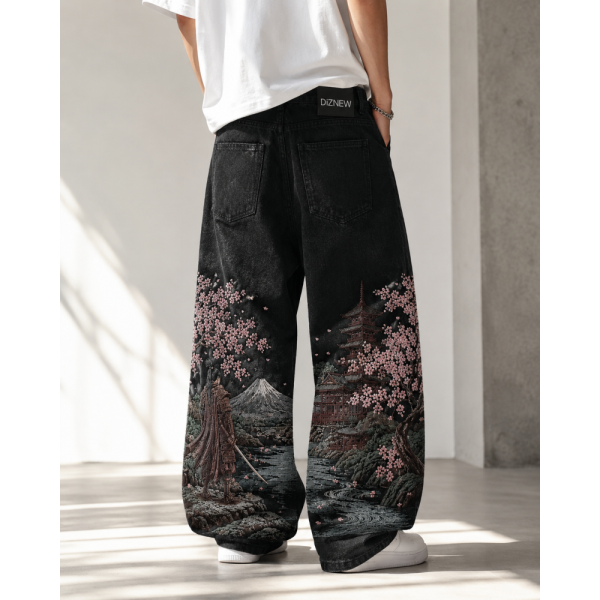
Premium wide-leg denim jeans featuring a vintage washed black finish, detailed Japanese landscape artwork, embroidery-style decoration, and custom brand label options. Designed for streetwear brands, designer labels, and private label collections looking for statement denim with strong visual storytelling.
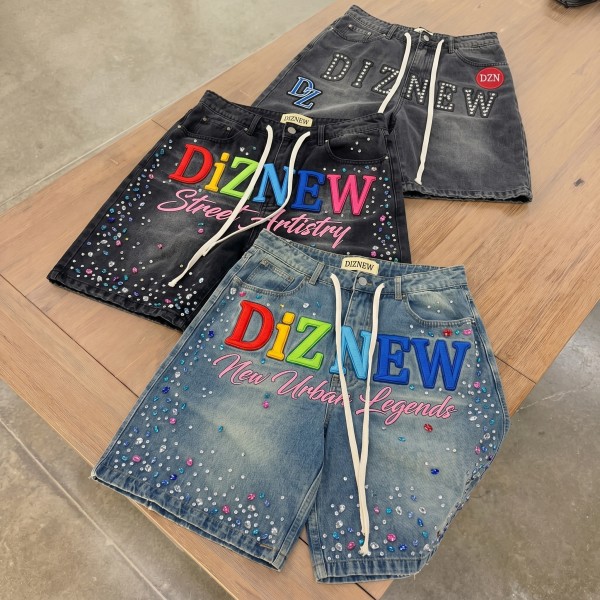
Custom Rhinestone Logo Denim Shorts: Wholesale supply direct. We manufacture premium embroidered baggy jean shorts for brands.
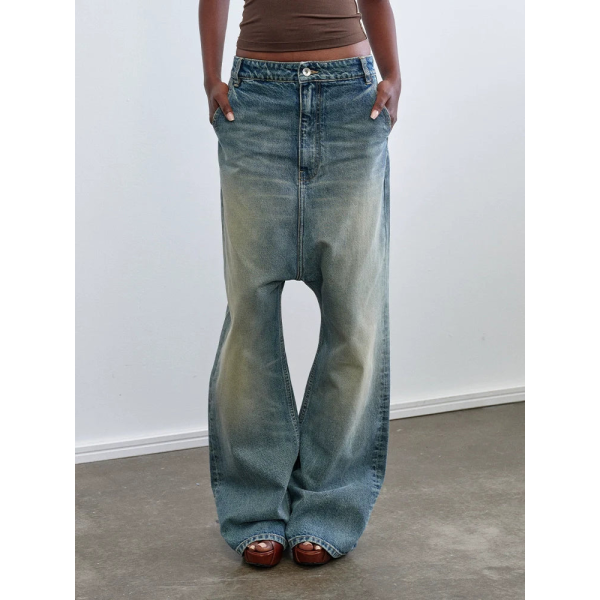
OEM & ODM Drop Crotch Jeans for Women - Tailored denim solutions designed for brands seeking unique styles and quality.
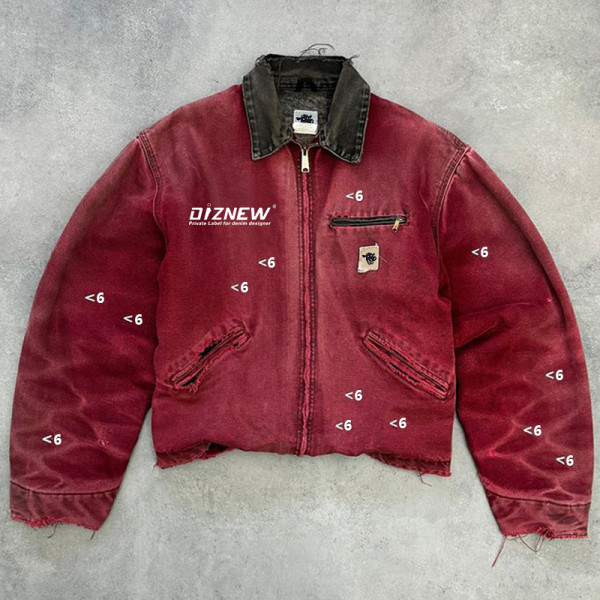
Discover this unique washed red canvas jacket featuring distressed details and vintage workwear aesthetics, perfect for bold fashion statements.