What Makes Jeans Look Masculine or Feminine? Top Questions Answered
- Share
- Issue Time
- Dec 1,2025
Summary
Discover the key features that make jeans look masculine or feminine. Get answers to your top questions and elevate your denim game today!
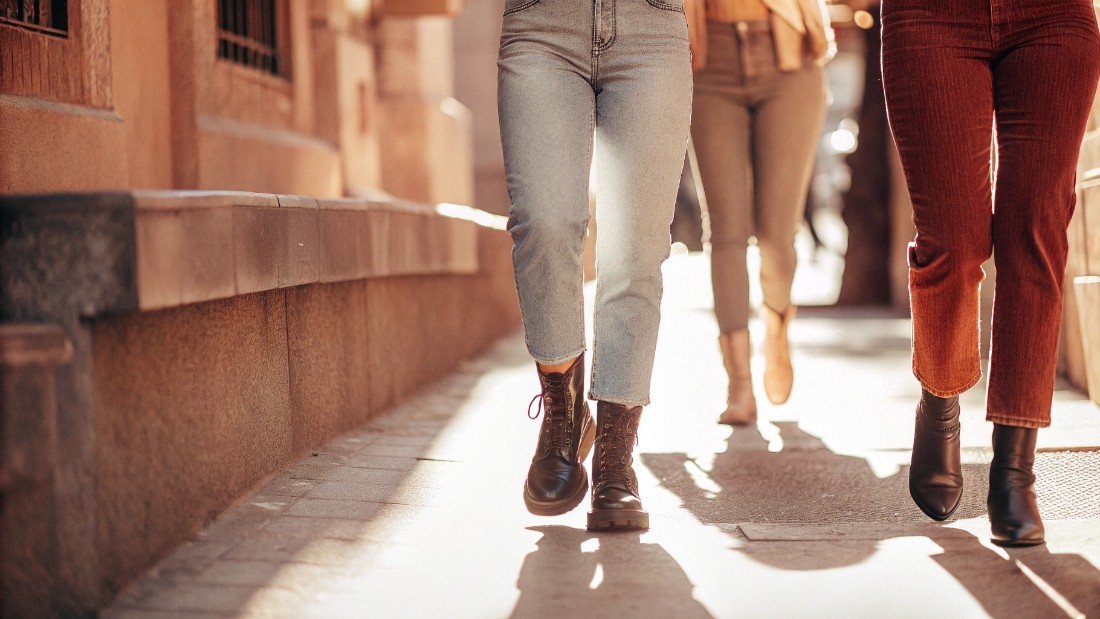
From sun-bleached vintage selvedge to curve-hugging stretch denim, the language of jeans is as rich and diverse as the people who wear them. But what exactly turns a simple pair of denim pants into a statement of masculinity, femininity—or something in between? Is it the cut? The wash? The hardware? Or is it all in the styling and cultural context?
Whether you’re a boutique owner sourcing custom baggy jeans for influencers, a designer sketching the next high-rise skinny jean, or an online retailer deciding if a unisex denim jacket will fly off the shelf, understanding the subtle signals that make jeans read “masculine” or “feminine” is essential.
Jeans read masculine or feminine based on silhouette, rise, fabric weight, wash, and detailing. Straight or relaxed cuts, rigid denim, minimal distressing, and brass hardware often read masculine. Skinny, high-rise, stretch fabrics, light whiskering, and embellishments skew feminine. Cultural context—how people in France, Spain, or Germany perceive “masculine” versus “feminine”—also matters. Styling choices like belts, shoes, and layering finalize the gender expression.
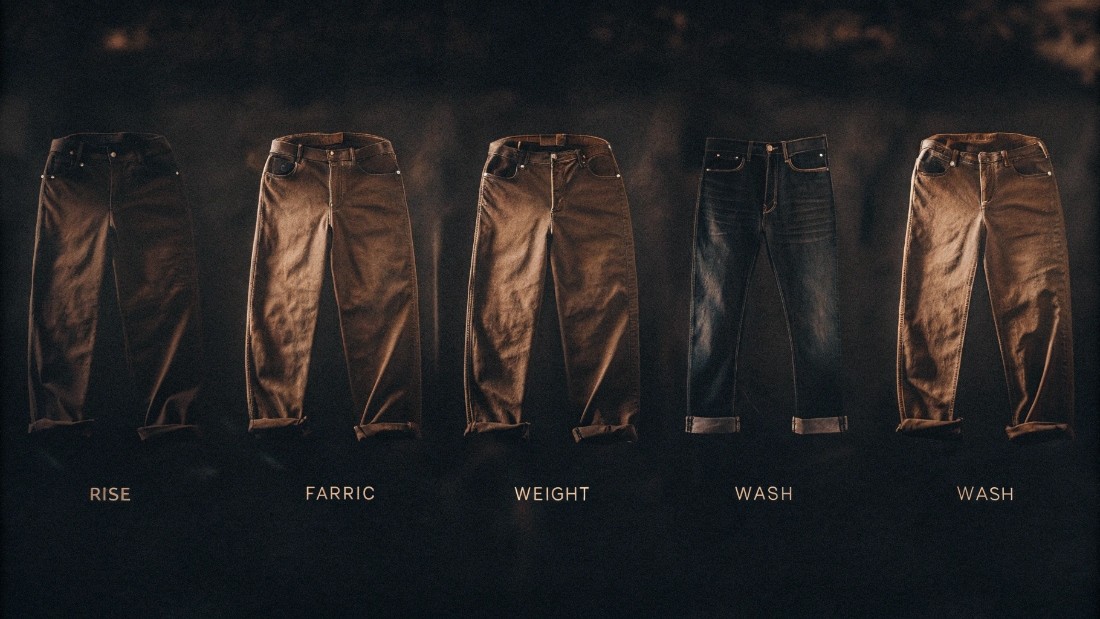
But beyond technical specs, every pair of jeans has a story. Think of the flared “bell bottom” rage of the ’70s or the minimalist skinny craze of the early 2000s—cultural moments that hinged on how denim communicated identity.
Stick around as we dive into silhouette, rise, wash, and more, and show you how to create the perfect “male,” “female,” or gender-neutral jean for your market. You might even uncover a winning idea for your next DiZNEW custom denim collection.
How Does the Cut and Silhouette Influence Gender Perception?
Silhouette is the most immediate signifier of gender in denim. Straight, relaxed, or baggy cuts read masculine due to their boxier shape and roominess. Skinny, high-waist, flare, and “thick” styles accentuate curves and read feminine. Baggy jeans can be styled for either gender—wider leg openings and lower rises skew masculine; tapered bags with cinched waists skew feminine. Understanding these visual cues helps boutiques and brands curate collections that resonate.
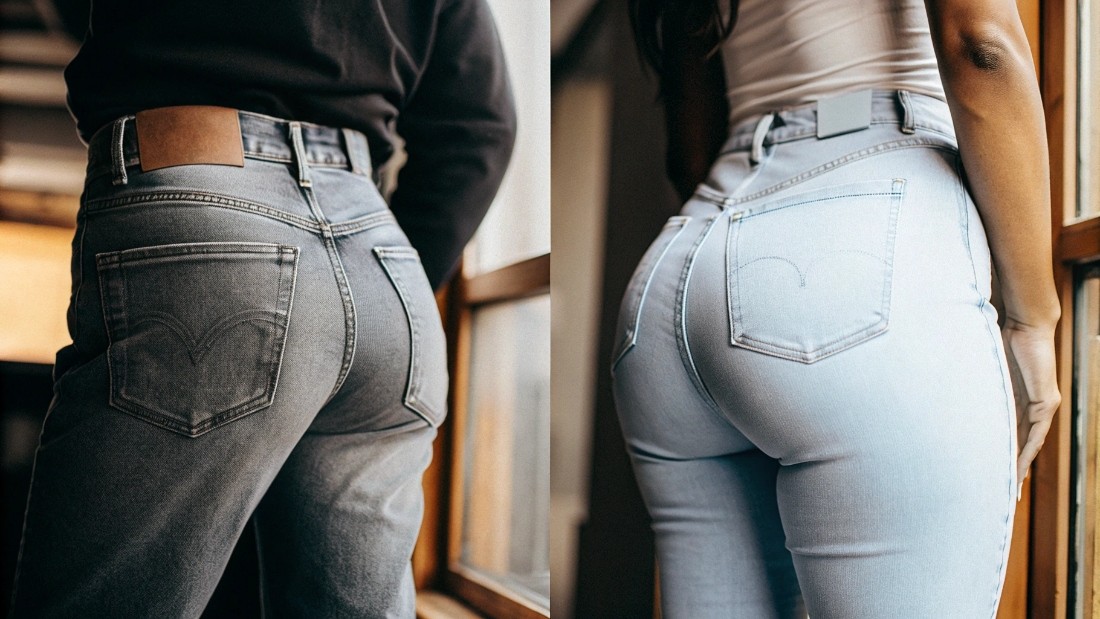
The cut and silhouette of a jean shape the body’s outline and thus play a major role in perceived gender signals. Here’s how key silhouettes translate:
1. Straight and Relaxed Jeans
These have a consistent width from hip to hem. They evoke a utilitarian, workwear aesthetic—think traditional “men’s jeans.” The straight line minimizes hip and thigh emphasis, borrowing from classic menswear. Brands like Levi’s 501 or DiZNEW’s own straight-leg offerings read as decidedly masculine, but can also adopt a unisex appeal when offered in smaller sizes or softer washes.
2. Baggy Jeans
Baggy jeans have a roomy hip and thigh, often dropping into a wide leg opening. In men’s collections, they reference ’90s hip-hop culture and skatewear; in women’s, a high-waisted tapered version nods to Y2K fashion. Key differentiator: rise height and leg opening width.
Baggy-masculine: low to mid-rise, very wide leg, minimal taper.
Baggy-feminine: high-rise, slight taper at ankle, cinched waist detail.
3. Skinny and Slim-Fit Jeans
These hug the thigh and taper toward the ankle, accentuating the natural leg curve. In womenswear, they often feature stretch denim and are paired with a high rise—this duo sculpts an hourglass silhouette. Men’s skinny jeans might use rigid denim but remain tighter through the leg; mid- or low-rise positions them firmly within a masculine punk or rock aesthetic.
4. Flare and Bootcut Jeans
Flares widen dramatically from the knee down. Originally a women’s silhouette in the ’70s, they have bi-gender appeal today. Men’s flares are generally more subtle—2–4 inches wider at the hem—while women’s can be 6–8 inches wider for dramatic effect. Both can be gender-fluid if rise and hip fit are tailored accordingly.
5. “Thick” or Curvy Styles
Denim engineered to accentuate curves—often labeled “thick”—features extra room at the hip and thigh, paired with a snug waist. These are marketed heavily to women but can also be adopted for men who prefer a pronounced silhouette. Understanding your customer’s preferred leg shape and curve enhancement is critical when customizing at DiZNEW.
When curating or designing jeans, consider offering multiple silhouettes with clear styling tips so buyers understand the gender signals each silhouette sends. This clarity reduces returns and builds brand loyalty.
Why Does Rise Height and Fit Matter for Masculine or Feminine Vibes?
Rise height shifts both comfort and gender perception. High-rise jeans—sitting at or above the navel—elongate the leg, creating an hourglass shape viewed as feminine. Mid-rise offers a balanced, unisex look. Low-rise—sitting on the hips—reads casual and can skew masculine if paired with a loose hip fit. Women wearing men’s low-rise can maintain femininity by selecting a slimmer leg and adding a belt.
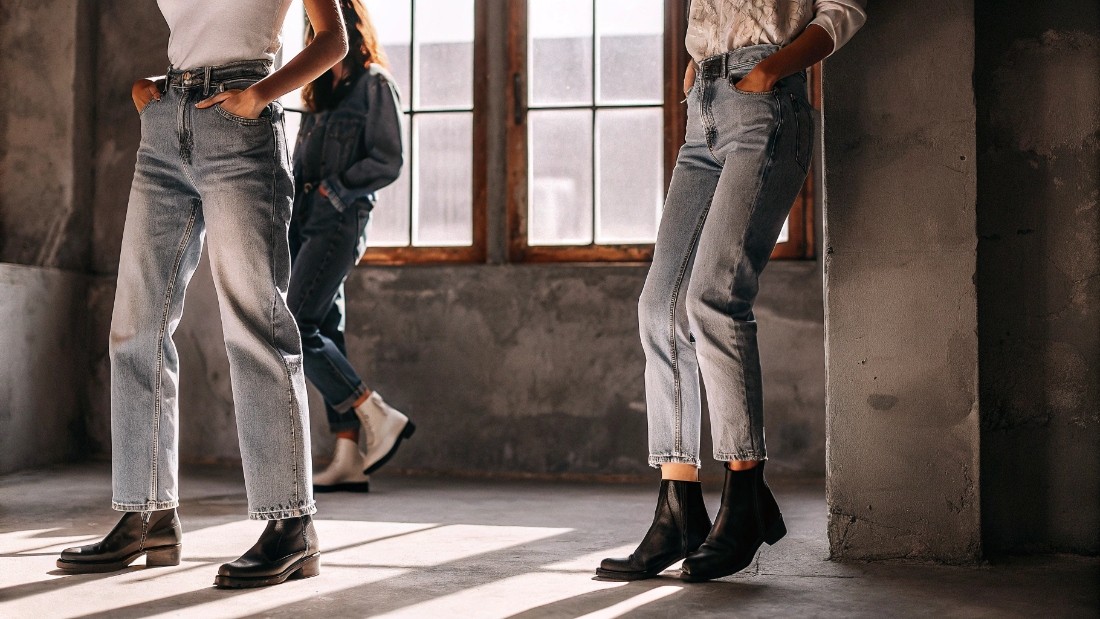
Rise height affects where the jean sits on the torso and how it frames the waist and hips:
Popular in women’s collections, high-rise jeans tuck the tummy, emphasize the waist, and elongate the leg line—hallmarks of a feminine silhouette. They pair well with cropped tops or tucked-in shirts. For men’s high-rise, DiZNEW offers heritage cuts reminiscent of ’50s workwear; these have a straighter waist-to-hip ratio, avoiding hourglass cues.
2. Mid-Rise Jeans
Mid-rise is the most versatile, appealing to both genders. It sits just below the navel and flatters a wide range of body types. Unisex lines often default to mid-rise, as this fit balances comfort, modernity, and gender neutrality. Mid-rise with a straight leg is a core DiZNEW offering for small buyers seeking simple deep customization.
3. Low-Rise Jeans
Low-rise jeans sit at the hips, exposing more torso. In men’s fashion, this is tied to casual streetwear and performance denim. It reads masculine, especially in a loose hip fit. Women wearing men’s low-rise jeans can maintain a feminine feel by choosing a narrower leg, adding a belt, or tucking in a form-fitting top.
4. Cropped and Super-High Rises
Cropped rises (above the natural waist) can be ultra-feminine; they pair with high-waist skirts and give a retro vibe. Super-high rises—over 12 inches—are trending in niche womenswear. While rare in menswear, they can appear in avant-garde collections.
Fit considerations:
Waist-to-Hip Ratio: Women’s rises often include more hip curve shaping. Men’s are straighter.
Comfort Stretch: Adding 1–3% elastane helps all rises feel comfortable, but higher stretch ratios typically found in feminine styles.
Button and Zip Placement: Central buttons and zips on women’s high-rises are sometimes hidden by fabric overlap; men’s often have visible hardware.
When customizing with DiZNEW, specify exact rise measurements and stretch percentages. Small changes—1 cm in rise or 2% extra stretch—can shift a jean from masculine to feminine. Educational spec sheets with rise diagrams also help clients visualize the difference.
What Role Do Fabric, Wash and Hardware Details Play?
Denim weight, stretch, wash, distressing, and hardware shape gender cues. Rigid, heavyweight selvedge denim with minimal wash and heavy brass rivets reads masculine. Stretch denim with soft hand-feel, light whiskering, and silver-tone hardware reads feminine. Distressing patterns—like horizontal knee fades—lean masculine; subtle sandblasting and small whiskers at the hips read feminine. Pocket shape and zip-side orientation (left vs. right) further differentiate men’s vs. women’s jeans.

Fabric and finish are tactile signals of gender:
1. Denim Weight & Composition
12–16 oz rigid denim: Strong structure, minimal drape, masculine workwear associations.
8–12 oz stretch denim (97% cotton, 3% elastane): Soft drape, body-conforming, feminine styling.
Blended fabrics (e.g., cotton-modal, Tencel): Extra softness and shine for women’s premium jeans.
2. Wash and Distressing
Rigid or Raw Denim: No wash, dark indigo hue—utilitarian and masculine.
Stonewash, acid wash: Vintage effect, can lean masculine or feminine depending on color tone.
Whiskering & Honeycombs:
Masculine: large, bold age marks at knees and back of knee.
Feminine: finer, high-placed whiskers around the hips.
Distressing: Large knee holes read rebellious and masculine; micro-distressing around pockets reads dainty and feminine.
3. Hardware Details
Rivets & Buttons: Brass or copper rivets, visible shank buttons read masculine. Silver or matte nickel with hidden buttons read more delicate, feminine.
Zipper Orientation:
Menswear: zip with pull tab on wearer’s right side.
Womenswear: pull tab on left side or concealed.
Embellishments: Rhinestones, embroidery, decorative studs signal femininity; leather patch logos and heavy metal studs signal masculinity.
4. Pocket Shape & Placement
Front Pockets: Deeper, vertically oriented pockets on men’s jeans—functional size. Shallower, angled pockets on women’s—emphasize hip curve.
Back Pockets: Lower placement on feminine cuts elongates legs; higher placement on masculine cuts adds structure.
Data Snapshot:
| Denim Attribute | Masculine Typical | Feminine Typical |
Fabric Weight | 14–16 oz | 8–12 oz + elastane |
| Wash | Raw / Dark Indigo | Light wash + whiskers |
| Hardware | Brass rivets | Silver/nickel hidden |
Distressing | Large knee holes | Micro-whiskers |
| Pocket Depth | 20–22 cm | 15–17 cm |
By specifying these details to DiZNEW’s factory team, brands can fine-tune every element—from 13.5 oz Japanese selvedge to a custom bronze button stamped with their logo.
Is Jeans “Masculine” or “Feminine” in Different Languages and Cultures?
Gendered language shapes perception. In French, “les jeans” is masculine plural; in Spanish “los jeans” also masculine; in German “die Jeans” is feminine plural. Despite grammatical gender, style cues remain consistent across markets. However, local trends—like tapered cuts in Paris or embellished denim in Madrid—blend gender lines. Understanding these nuances helps brands tailor marketing and design for each region.
Grammatical gender in language doesn’t always align with stylistic gender cues, but it influences marketing tone:
1. French Market (“les jeans” – masculine plural)
France’s strong tailoring tradition favors clean cuts. Straight- and slim-fit jeans dominate men’s lines, while women’s collections often introduce curves through stretch fabrics and high rises. Despite “jeans” being grammatically masculine, womenswear advertising heavily features feminine cues—floral embroidery or subtle distressing. Brands like DiZNEW can recommend different wash and distress levels for the Paris market versus North America.
2. Spanish Market (“los jeans” – masculine plural)
Spain’s vibrant culture embraces color and embellishment. Both men’s and women’s lines may feature bleach splatters, embroidery, or sequins. High-rise feminine cuts are very popular, but unisex relaxed baggy jeans are trending among younger consumers. Localizing design to include Spanish patchwork or regional motifs can boost appeal.
3. German Market (“die Jeans” – feminine plural)
Germany’s precision and engineering ethos favor clean, functional denim. Rigid selvedge and dark washes sell well for both genders, though women sometimes prefer slight whiskering. Surprisingly, German women are adopting men’s straight-leg rigid jeans paired with heels for a gender-neutral look. Brands can offer reversible patches or modular hardware to cater to this appetite for innovation.
4. Other Regions
Latin America: Light washes and stretch are key for feminine lines; men’s often feature distressed knee panels.
East Asia: Ultra-skinny and super-high-rise for women; men lean toward slim-tapered.
Middle East: Modest cuts like wide-leg or more coverage through higher rises.
Table: Regional Trends in Denim Gender Expression
| Region | Masculine Trend | Feminine Trend |
| Europe-FR | Slim straight, raw | High-rise, light wash |
Europe-ES | Embellished denim | Embroidery, sequins |
Europe-DE | Rigid selvedge, dark | Light whisker, modest curve |
| Latin America | Knee distress, low-rise | Stretch, medium wash |
| East Asia | Slim-tapered, black wash | Super-skinny, super-rise |
By factoring in these linguistic and cultural nuances, DiZNEW’s design team can adjust patterns, washes, and trims to resonate with each target market—boosting sales and reducing design risk.
How Can Styling & Customization Finalize the Gender Expression?
Styling cements a jean’s gender message. Pair straight-leg, rigid denim with work boots and oversized tees for a masculine vibe. Combine high-rise skinny jeans with heels, delicate blouses, and statement belts for a feminine look. Androgynous styling—think chunky sneakers and neutral tops—works with mid-rise unisex cuts. Deep customization—embossed logos, embroidery, bespoke hardware—lets brands own their gendered or gender-neutral niche.
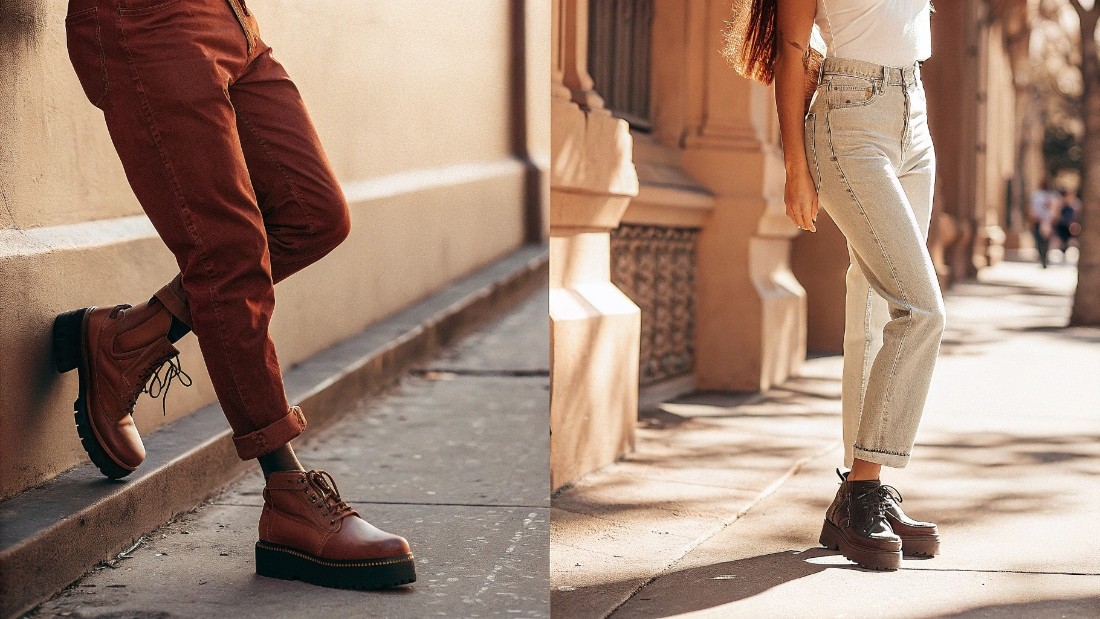
The final step in dialing in gender perception is styling and customization:
1. Masculine Styling
Tops: Oversized flannel, boxy jackets, leather bombers.
Footwear: Work boots, sneakers, loafers.
Accessories: Chunky belts, metal-buckle buckles, minimal jewelry.
Customization: Leather patch logos, engraved brass buttons, thick thread topstitching.
2. Feminine Styling
Tops: Fitted blouses, lace-trim camis, crop tops.
Footwear: Heeled boots, strappy sandals, pointed-toe flats.
Accessories: Thin belts, dainty necklaces, stacked rings.
Customization: Embroidery, rhinestone rivets, silver matte hardware.
3. Androgynous & Gender-Neutral
Cuts: Mid-rise straight-leg, loose taper, unisex sizing.
Styling: Chunky sneakers, neutral tees, minimalist jackets.
Customization: Debossed logos, monochrome washes, reversible patches.
4. Deep Customization for Brands
Working with DiZNEW’s OEM/ODM service, buyers can:
Develop unique pocket shapes or angles.
Specify custom belt-loop widths and placements.
Choose from 200+ hardware finishes: antique brass, matte gunmetal, rose gold.
Add woven or leather labels, debossed hangtags, and custom packaging.
Case Study: A boutique in California approached DiZNEW for a limited-edition “gender fluid” denim line. By choosing mid-rise straight-leg silhouettes, two-tone gray washes, hidden buttons, and reversible canvas patches, they sold out 1,500 units in three weeks. The secret was blending masculine structure with feminine subtleties and offering genuine customization that told a story.
Conclusion and Call to Action
Jeans are more than just pants—they’re a canvas for personal and cultural expression. From the cut and rise to fabric, wash, hardware, language, and styling, every decision sends a subtle signal of masculinity, femininity, or something in between.
At DiZNEW, we understand these nuances and specialize in deep customization—from small runs of 30 pieces to bulk orders of 10,000+. Whether you’re a designer, boutique owner, or e-commerce entrepreneur, our 20+ years of expertise in plus sizes, baggy, stacked, selvedge, and jogger jeans ensure your brand’s vision comes to life.
Ready to elevate your denim collection? Contact DiZNEW today to discuss your unique specs, request a sample, and get a competitive quote. Let’s craft the perfect jeans that speak your brand’s language—masculine, feminine, or beyond.
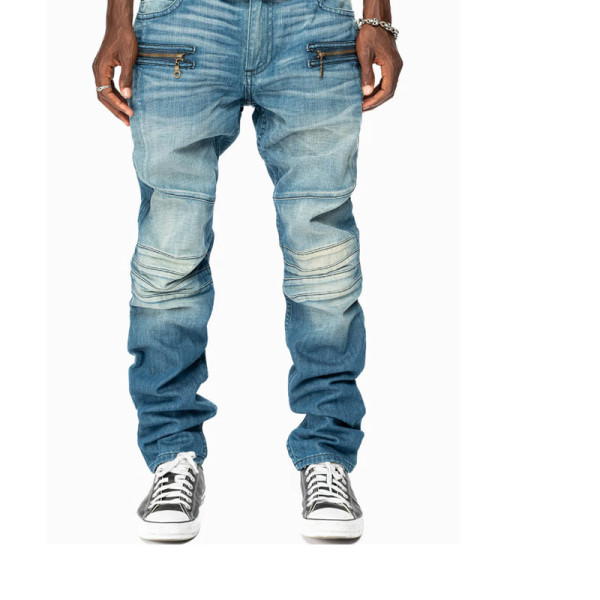
Custom Blue Cycling Jeans: Tailored for performance with OEM & ODM services. Perfect for brands seeking unique denim solutions.
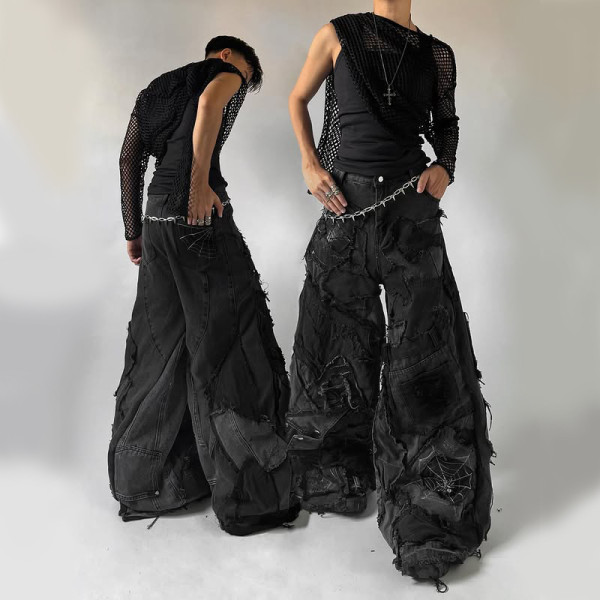
Wholesale Custom Black Wide Leg Jeans - Tailored Denim for Brands. Enjoy OEM/ODM services to elevate your design.
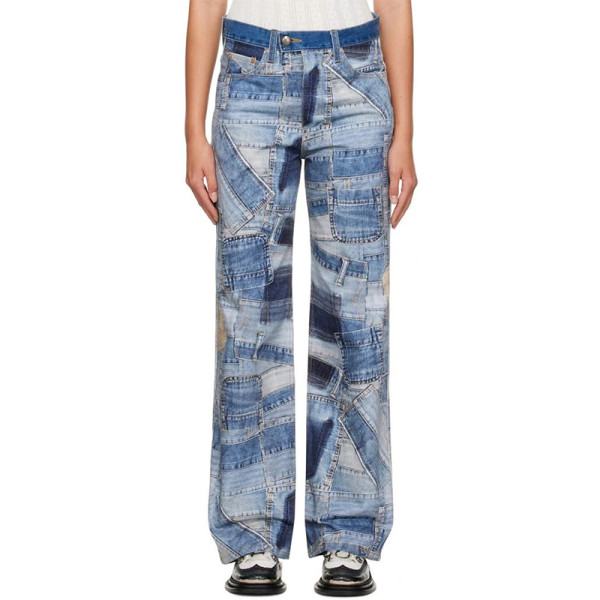
Elevate your collection with our OEM/ODM Custom Digital Printing Blue Patchwork Jeans, perfect for brands seeking unique styles in bulk.
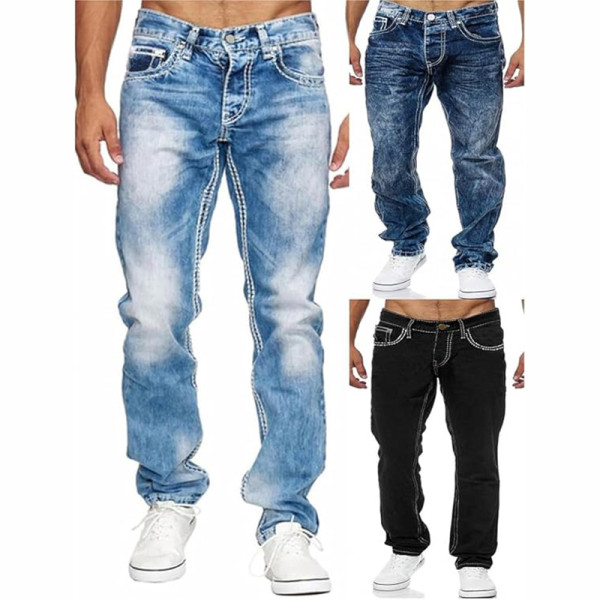
Classic straight jeans with bold contrast stitching in light blue, dark blue, and black — made for standout collections.