What Kind of Jeans Would a Billionaire Wear?
- Share
- Issue Time
- May 15,2026
Summary
Discover the quiet luxury denim billionaires prefer. Partner with our integrated B2B factory to craft ultra-premium, custom jeans for your brand.
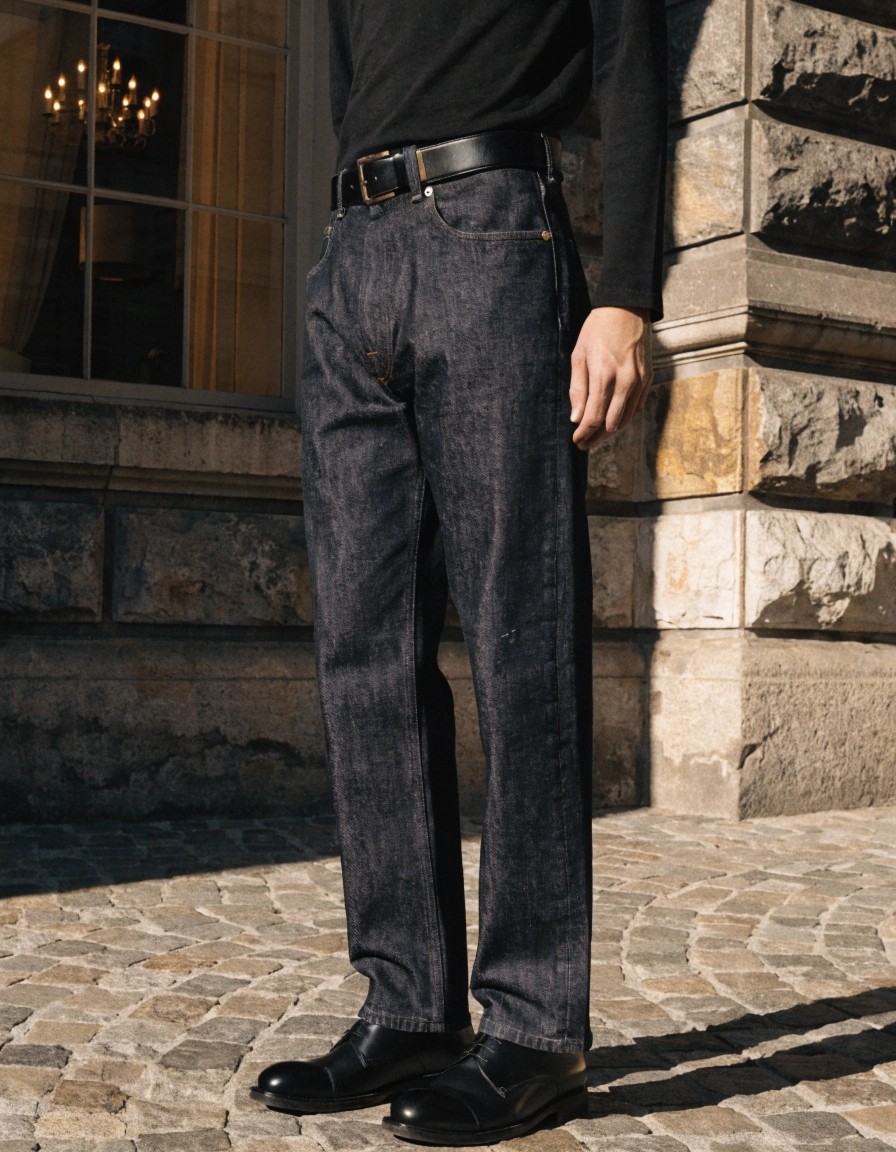
Jeans are one of the strangest symbols in fashion. They started as workwear, became a uniform for rebels, turned into everyday basics, and somehow ended up hanging inside the wardrobes of CEOs, celebrities, tech founders, investors, and luxury shoppers. So when people ask, “What kind of jeans would a billionaire wear?” they are not really asking about denim alone. They are asking: What does modern wealth look like when it tries not to look rich? The answer is less about gold buttons and giant logos, and more about fit, fabric, confidence, and restraint.
A billionaire would most likely wear jeans that look simple but feel exceptional: premium dark-wash or raw denim, a clean straight-leg or relaxed fit, minimal branding, refined hardware, and a perfect custom-like fit. Some may choose luxury brands such as Loro Piana, Brunello Cucinelli, Tom Ford, Zegna, Brioni, Khaite, Frame, or Japanese selvedge denim. The richest-looking jeans are not always the most expensive—they are the best made.
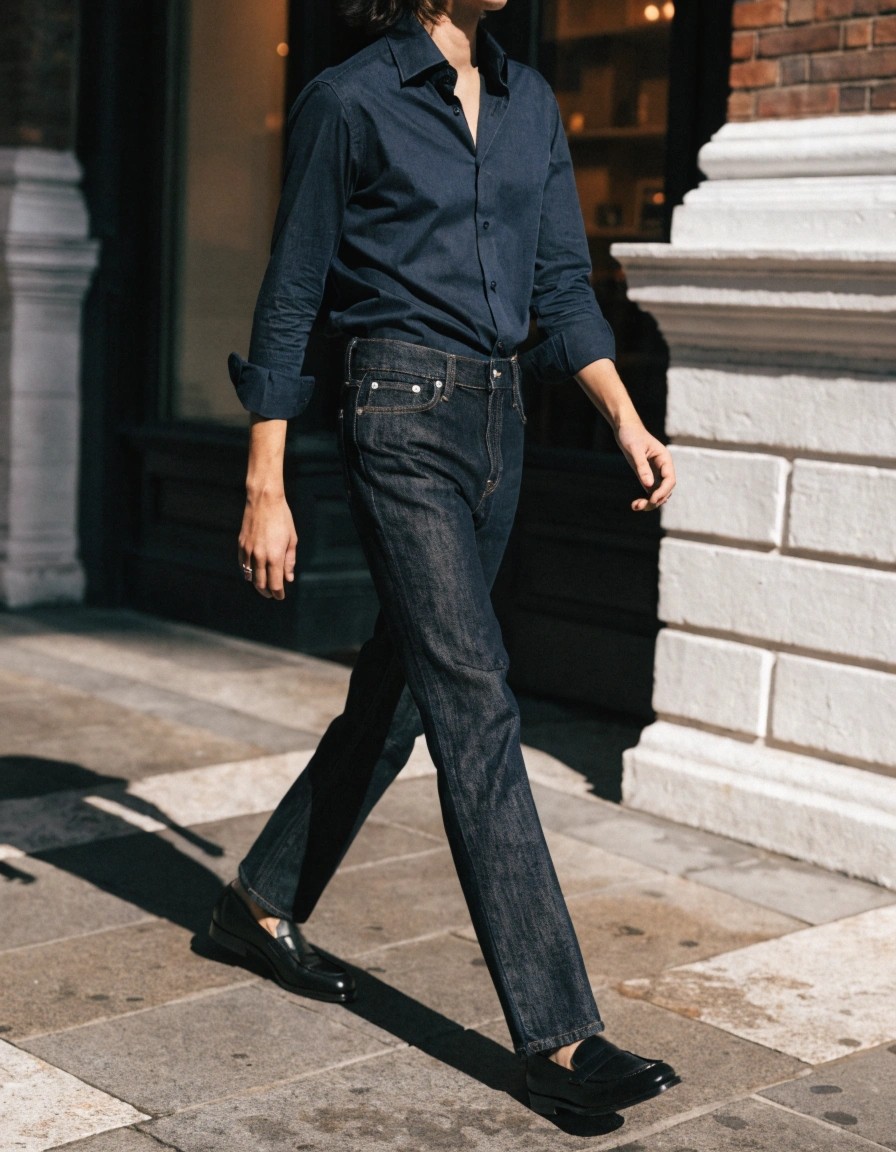
Think about walking into a private dinner in New York, Los Angeles, Miami, or Austin. One guest wears heavily branded jeans with loud stitching and a huge logo belt. Another wears dark straight-leg jeans, a soft cashmere sweater, handmade loafers, and no visible logo. Most people may not notice the second outfit immediately—but someone with a trained eye will know. That is the real billionaire-denim story: the less it shouts, the more it usually costs.
Do Billionaires Really Wear Jeans, or Do They Avoid Denim?
Yes, billionaires wear jeans, but usually in a more controlled and intentional way. They tend to choose jeans that match their lifestyle: simple jeans for tech founders, polished dark denim for investors, luxury designer denim for public figures, and custom jeans for people who want privacy, perfect fit, and exclusivity. Billionaire jeans are less about looking casual and more about making casual look expensive.
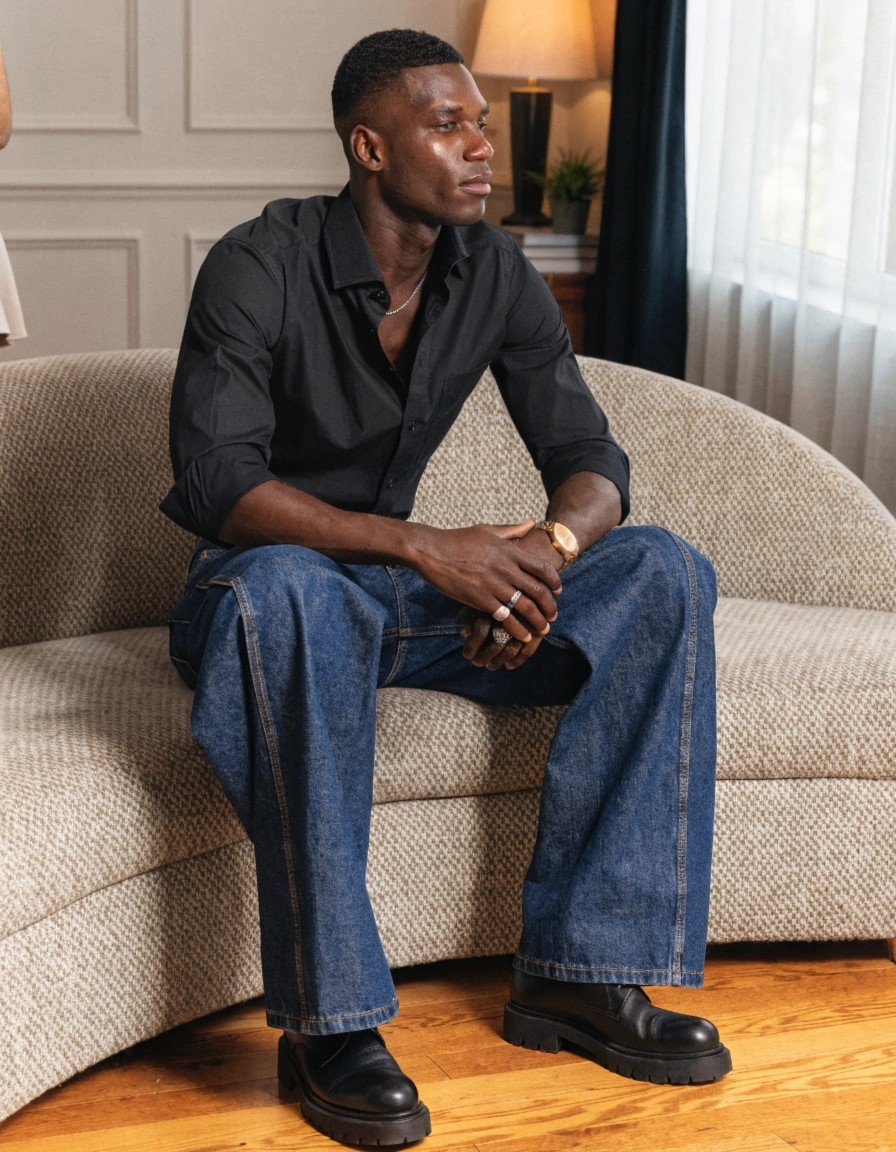
Billionaires do not all dress the same. That is the first mistake many people make when imagining “rich people jeans.” A software founder may wear the same basic-looking denim every week because he values consistency and hates wasting time choosing outfits. A luxury real estate investor may wear dark indigo straight-leg jeans with a blazer because the outfit says “relaxed but powerful.” A celebrity entrepreneur may wear stacked jeans, distressed denim, or wide-leg jeans because their personal image is part of the business.
So, do billionaires avoid denim? Not anymore. Denim has become acceptable in places where it once felt too casual: private offices, luxury resorts, members-only clubs, airport lounges, art events, and even some business meetings. The key difference is context. A billionaire is unlikely to wear cheap-looking jeans to a high-stakes meeting, but they may wear tailored dark denim with a soft jacket, suede shoes, and a watch that costs more than a car.
The modern rich look is not always formal. In fact, many wealthy people prefer clothing that gives them freedom. They travel often, move between cities, sit through meetings, attend dinners, and want clothes that work across different environments. Jeans are useful because they sit between casual and polished. They are not as stiff as suit trousers, but the right pair can still look serious.
Why Do Billionaires Still Wear Jeans in Daily Life?
Because jeans are practical. They are easy to repeat, easy to style, and easy to make personal. Billionaires may have access to anything, but that does not mean they want complicated clothing every day. A well-made pair of jeans works with a T-shirt, a knit polo, a cashmere hoodie, a blazer, a denim jacket, or a leather jacket.
But the “daily life” billionaire jean is not random. It usually has at least four qualities:
| Denim Feature | Why It Matters for a Wealthy Look |
| Clean fit | Makes the body look balanced and intentional |
| Premium fabric | Holds shape better and ages beautifully |
| Minimal branding | Signals confidence instead of showing off |
Controlled wash | Looks refined, not messy |
There is also a privacy angle. Very wealthy people often do not want to look like walking advertisements. Loud logos attract attention. Clean denim avoids it. This is why https://en.wikipedia.org/wiki/Quiet_luxuryhttps://en.wikipedia.org/wiki/Quiet_luxury it lets people dress expensively without making the outfit feel like a performance.
Which US State Has No Billionaires, and Why Does This Question Connect to Wealth Culture?
This question sounds unrelated to jeans, but it reveals how people search for wealth signals online. According to Forbes’ 2025 state-by-state wealth ranking, Alaska, Delaware, and West Virginia were the only U.S. states without a resident billionaire. Visual Capitalist reported the same three states in its 2025 billionaire map.
Why does that matter in an article about jeans? Because “billionaire style” is not only about money—it is also about geography, culture, industry, and social environment. A billionaire in Silicon Valley may dress differently from one in Palm Beach. A Texas energy billionaire may prefer rugged denim and boots. A New York finance billionaire may choose dark designer jeans with a tailored coat. A Los Angeles entertainment billionaire may wear relaxed, vintage-inspired jeans with luxury sneakers.
For denim brands and boutique owners, this matters a lot. Your customer is not buying only fabric. They are buying an identity. Some want to look like old money. Some want to look like a founder. Some want luxury streetwear. Some want custom jeans nobody else can copy.
Are Billionaire Jeans About Status, Comfort, or Personal Branding?
They are about all three—but the balance changes depending on the customer.
For a tech billionaire, jeans may be about comfort and routine. For a fashion entrepreneur, jeans may be part of personal branding. For a luxury buyer, jeans may be about status, but not necessarily visible status. And for high-end boutique customers, jeans are often about belonging to a taste group: people who understand fabric, fit, wash, silhouette, and small details.
This is why a brand should not design “expensive jeans” by simply adding more decoration. A billionaire-level jean is not automatically covered in crystals, patches, embroidery, or exaggerated distressing. In many cases, the more expensive choice is actually the more controlled one: cleaner seams, better denim, better fit, better wash, better hardware, and better finishing.
The real lesson? Billionaire jeans are not about denim being casual. They are about making casual clothing feel intentional, elevated, and personal.
What Makes Jeans Look Expensive Without Looking Flashy?
Jeans look expensive when the fit is clean, the fabric has structure, the wash is controlled, and the branding is subtle. Dark indigo, black, raw denim, off-white, and clean medium washes often look more luxurious than heavily distressed jeans. The richest-looking jeans usually have balanced proportions, premium stitching, high-quality hardware, and a silhouette that feels effortless, not overdesigned.
The easiest way to make jeans look cheap is to make them do too much at once. Too much fading, too much whiskering, too much distressing, too much contrast stitching, too many logos, too many patches, too many zipper details. Of course, there are luxury streetwear brands that make loud denim look expensive—but that requires strong design control, premium fabric, excellent washing, and a clear customer identity. Without that, loud denim can quickly look like fast fashion.
Expensive-looking denim usually starts with restraint. A clean dark wash is one of the safest choices because it works almost like a trouser. It can be worn with loafers, Chelsea boots, sneakers, blazers, wool coats, cashmere sweaters, silk shirts, and basic white tees. Vogue has also continued to highlight dark-wash denim as an elevated wardrobe choice, including straight, relaxed, and baggy options.
The next factor is fit. A perfect fit does not mean tight. In luxury denim, “perfect” means the jeans match the body and the styling purpose. Straight-leg jeans should fall cleanly from the hip. Slim jeans should shape the leg without pulling. Baggy jeans should have volume but still look designed. Stacked jeans should gather intentionally at the ankle, not collapse into messy fabric. Wide-leg jeans should have enough structure to create shape instead of looking lazy.
How to Look Wealthy in Jeans Without Wearing Big Logos?
To look wealthy in jeans, start with a simple rule: upgrade the fabric, simplify the design, and sharpen the styling. A clean pair of jeans with a good sweater, quality shoes, and a tailored outer layer will usually look richer than logo-heavy denim worn with random pieces.
Here is a practical styling guide:
| Goal | Best Denim Choice | What to Pair It With | What to Avoid |
| Quiet luxury | Dark straight-leg jeans | Cashmere knit, loafers, wool coat | Heavy rips, giant logos |
| Founder casual | Clean slim or straight jeans | Premium T-shirt, suede jacket, sneakers | Overly tight fits |
| High-end streetwear | Baggy or stacked jeans | Oversized tee, bomber, luxury sneakers | Weak fabric, poor wash control |
Boutique luxury | Custom fit jeans | Branded trims, refined label, unique wash | Generic off-the-shelf fit |
Resort wealthy lo3ok | White or ecru jeans | Linen shirt, soft leather sandals | Transparent thin fabric |
Quiet luxury does not mean boring. It means the details are quieter. A tonal stitch, a custom leather patch, a clean waistband, a precise pocket shape, and a rich indigo shade can all make jeans feel expensive without screaming for attention.
Fashion editors often describe black straight jeans and dark refined denim as easy ways to create a more expensive look, especially when paired with leather, silk, or polished footwear. That advice is practical because it works for real customers, not only runway models.
Why Do Dark Wash, Black, White, and Raw Denim Look More Expensive?
Dark denim looks expensive because it hides visual noise. It creates a long, clean line on the body. It also photographs well for online boutiques, which is important if you sell jeans through Shopify, Instagram, TikTok Shop, Amazon, or a private e-commerce store.
Black denim gives a sharper, more urban feeling. It works well for premium skinny jeans, stacked jeans, slim straight jeans, denim jackets, and fashion-forward streetwear collections. White or ecru denim can look extremely wealthy, but only if the fabric is thick enough and the fit is right. Thin white denim can look cheap very quickly.
Raw denim and rinse-wash denim appeal to customers who care about authenticity. These customers often understand fabric weight, fading, selvedge edges, indigo dye, and long-term wear. They may not want trendy jeans. They want jeans that age with them.
What Details Make Jeans Look Billionaire-Level?
Small details decide whether a pair of jeans feels ordinary or premium. This is especially important for brands creating private-label or OEM denim. Customers may not be able to explain every technical detail, but they can feel the difference.
Important details include:
| Detail | Premium Effect |
| Denim weight | Gives structure and better drape |
| Pocket placement | Shapes the body visually |
| Hardware | Buttons, rivets, and zippers affect perceived value |
Stitch density | Cleaner stitching feels more refined |
Wash consistency | Makes bulk production look professional |
Waistband construction | Improves comfort and fit |
Label and patch | Supports brand identity |
Shrinkage control | Prevents customer complaints after washing |
A billionaire-level jean should feel “settled.” Nothing should look accidental. Even distressing should look controlled. Even baggy jeans should have proportion. Even stacked jeans should be engineered, not just too long.
For brands, this is the difference between selling jeans and building a denim identity. The customer does not only ask, “How much is it?” They ask, “Does this make my brand look premium?”
Would a Billionaire Choose Selvedge Denim, Designer Jeans, or Custom Jeans?
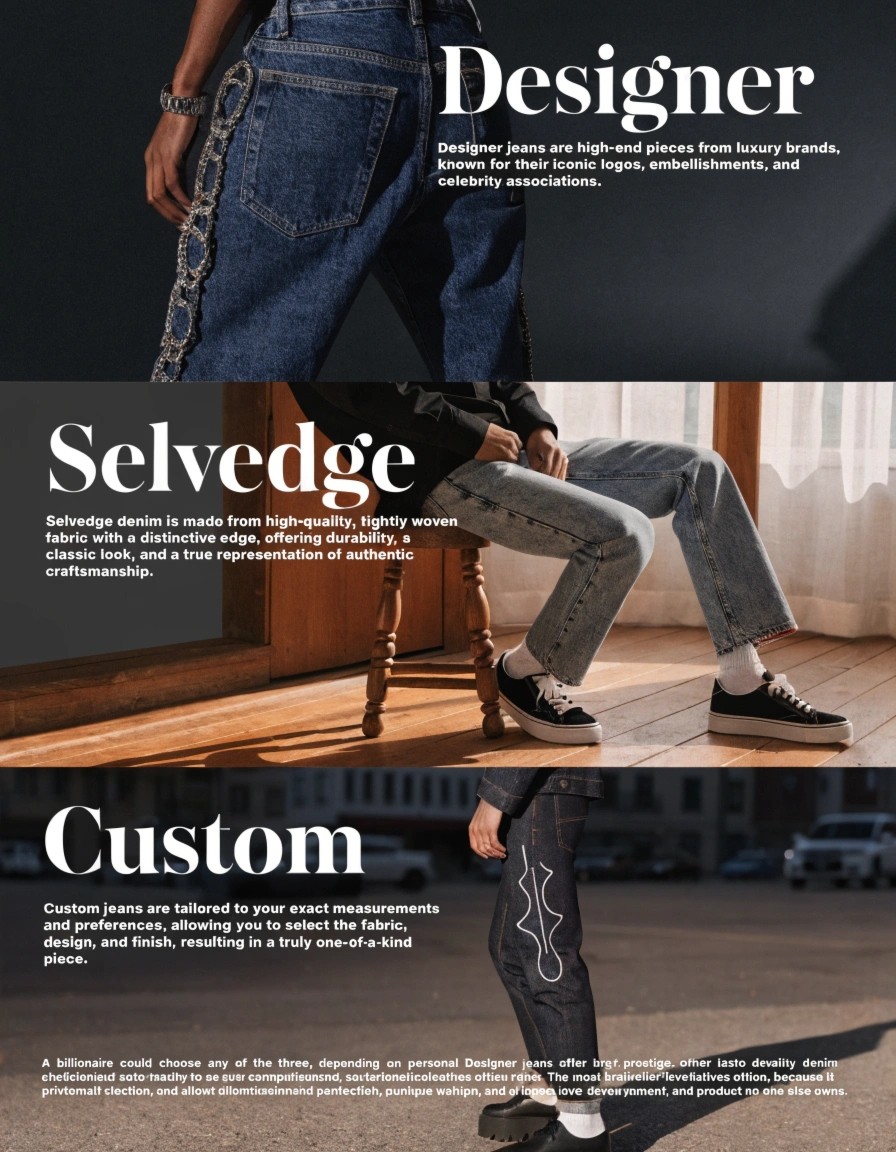
A billionaire could choose any of the three, depending on personal taste. Designer jeans offer brand prestige, selvedge denim offers craftsmanship and authenticity, and custom jeans offer exclusivity and perfect fit. The most billionaire-level option is often custom denim because it allows private fabric selection, personalized fit, unique washing, logo development, and a product no one else owns.
This is where the conversation gets more interesting. Most people assume rich people simply buy famous brands. Sometimes they do. But very wealthy customers often care about things beyond brand names: privacy, fit, rarity, fabric, comfort, and the ability to get exactly what they want.
Designer jeans are easy. You walk into a luxury store or order from a premium platform, and you can buy jeans from brands like Tom Ford, Zegna, Brioni, Brunello Cucinelli, Loro Piana, Celine, Amiri, The Row, Visvim, or Maison Margiela. MR PORTER’s current designer jeans selection includes many of these high-end labels, with examples such as Zegna, Brioni, Brunello Cucinelli, Loro Piana, Tom Ford, Celine, Kiton, and Visvim denim pieces.
Selvedge denim is different. It is less about obvious luxury and more about insider knowledge. A denim enthusiast may care more about Japanese shuttle-loom fabric than a designer logo. They may look for raw denim, rope dyeing, chain stitching, hidden rivets, natural fading, and long-term break-in. To the average person, the jeans may look simple. To a denim person, they look serious.
Custom jeans are the third path—and for many high-end customers, the most powerful one. Custom denim gives control. You can choose the fabric, wash, silhouette, rise, inseam, pocket shape, thread color, trims, logo position, patch material, embroidery, distressing, packaging, and fit adjustments. For a fashion designer or boutique owner, custom jeans are not just clothing. They are a product strategy.
What Brand of Jeans Do Rich People Wear?
Rich people wear different denim brands depending on lifestyle. Some choose quiet luxury labels such as Loro Piana, Brunello Cucinelli, Zegna, Brioni, and The Row. Some choose fashion denim brands such as Khaite, Frame, Citizens of Humanity, Agolde, Rag & Bone, Mother, or Acne Studios. Vogue’s 2025 denim brand guide included names ranging from Levi’s to Khaite and Frame, showing how luxury denim now spans heritage classics, premium contemporary labels, and fashion houses.
But here is the more important point: rich people do not always wear the most recognizable denim brand. Many prefer jeans that fit their body and lifestyle. A billionaire may wear a $300 selvedge jean more often than a $1,500 designer jean if the $300 pair fits better. Another may pay for custom jeans because standard sizing never works perfectly.
For brands selling to wealthy or aspirational customers, the lesson is clear: do not only copy luxury labels. Study why they feel luxurious. Usually, it comes down to fabric, proportion, restraint, consistency, and story.
Would Billionaires Prefer Selvedge Denim for Craftsmanship?
Some absolutely would. Selvedge denim appeals to people who like objects with history and construction. It has a collector mindset behind it. Customers who buy selvedge often care about where the fabric comes from, how it fades, and how long it lasts. That makes selvedge denim a natural fit for “quiet wealth” because the value is not always obvious to everyone.
Selvedge jeans also create an emotional relationship with the wearer. Raw denim fades according to the owner’s body, habits, phone pocket, wallet position, walking pattern, and wash routine. In a world where many products feel disposable, this makes denim feel personal.
For a boutique brand, selvedge denim can be a strong premium category. It works especially well for straight-leg jeans, relaxed jeans, denim jackets, and heritage-inspired collections. But it must be developed carefully. Selvedge denim often has lower stretch, different shrinkage behavior, and a more rigid hand feel. Customers need the right fit guidance.
Are Custom Jeans the Most Billionaire-Level Choice?
In many ways, yes. Custom jeans are the most personal version of denim. A billionaire may not need a logo to prove wealth. What they may want is something that fits perfectly and cannot be easily copied.
For designers and boutique owners, custom denim also solves a major business problem: sameness. Many online stores sell similar jeans from similar suppliers. Customers scroll quickly and forget them. But when a brand has its own fit, wash, logo, pocket design, hardware, and story, it becomes harder to replace.
Custom jeans can include:
| Custom Area | Options |
| Fabric | Cotton denim, stretch denim, selvedge denim, recycled denim, coated denim |
| Fit | Plus size, baggy, stacked, straight, skinny, jogger, wide-leg |
| Wash | Raw, rinse, stone wash, enzyme wash, acid wash, vintage wash |
Branding | Custom logo button, rivet, leather patch, woven label, hangtag |
Design | Embroidery, distressing, whiskering, patches, cargo pockets |
Product line | Jeans, denim jackets, denim shorts, denim shirts, sets |
This is where a factory like DiZNEW becomes valuable. A design idea is not enough. The product has to be engineered into a real garment that fits, washes correctly, survives production, and matches the brand’s target price.
What Jeans Cost $100,000?
There are several famous examples of extremely expensive jeans, but the most credible “$100,000 jeans” stories usually involve rare vintage denim or auction pieces rather than normal retail jeans. A pair of Levi’s jeans believed to date to 1873 sold for $100,000 at the Durango Vintage Festivus auction, according to the Durango Herald. Smithsonian Magazine also reported that work pants recovered from an 1857 shipwreck sold for $114,000 at auction.
There are also fashion rankings that mention ultra-luxury novelty jeans, such as Dussault Apparel’s “Trashed Denim” at $250,000 and diamond-decorated Secret Circus jeans at much higher claimed prices. But these are not the normal meaning of billionaire style. They are collector stories, publicity stories, or extreme luxury objects.
The bigger lesson is this: price alone does not create taste. A $100,000 vintage jean may be valuable because of history. A $250,000 novelty jean may be valuable because of rarity or diamonds. But the jeans a billionaire actually wears on a regular day are probably much quieter: beautiful fabric, clean cut, perfect fit, and no need to explain themselves.
Which Jeans Fit Best for a Billionaire Look: Straight, Slim, Baggy, or Wide-Leg?
The safest billionaire-style fit is a clean straight-leg jean because it looks timeless, balanced, and easy to dress up. Slim jeans work for polished casual outfits, while baggy, stacked, and wide-leg jeans work for luxury streetwear. The best fit depends on the customer’s body, lifestyle, and brand identity—not one universal trend.
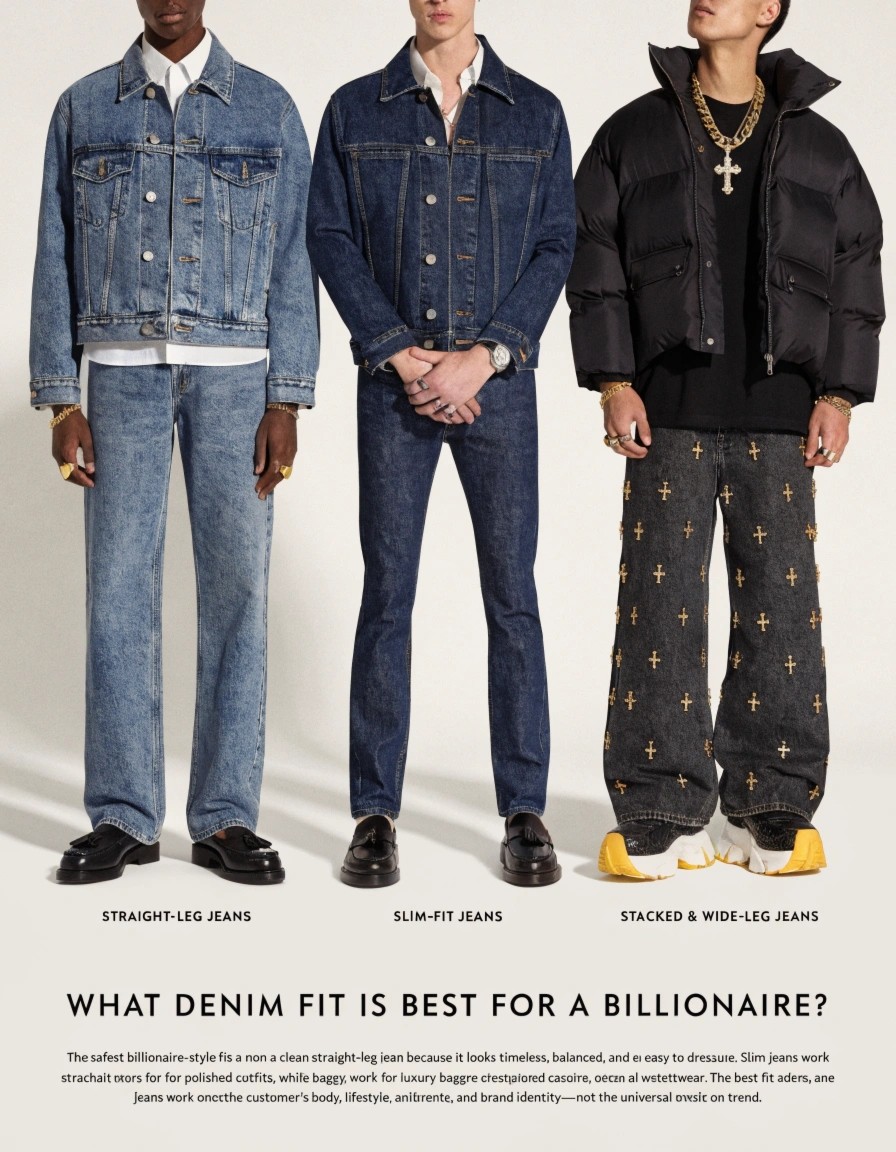
Fit is where luxury denim either succeeds or fails. A beautiful fabric can still look cheap if the pattern is wrong. A simple jean can look expensive if the fit is excellent. That is why high-end denim development spends so much time on pattern adjustment, sample fitting, wash shrinkage, and proportion control.
Straight-leg jeans are the most reliable option because they do not chase trends too aggressively. They work for men and women, younger and older customers, quiet luxury and everyday casual. A straight fit can be worn with sneakers, boots, loafers, heels, shirts, sweaters, blazers, denim jackets, and coats. It gives enough room to look relaxed but enough structure to look mature.
Slim jeans still have a place, especially for customers who want a sharp, clean look. The problem is not slim denim itself; the problem is overly tight denim that pulls at the thigh, knee, and crotch. Luxury slim jeans should skim the body, not squeeze it.
Baggy, stacked, and wide-leg jeans are more expressive. They are popular in streetwear, music culture, online boutiques, influencer brands, and fashion-forward denim collections. Vogue’s 2026 denim trend report shows denim moving across multiple directions at once, including the return of skinny jeans, continued straight-leg styles, and ultra-wide silhouettes. That means brands should not think in only one fit. A strong denim brand often needs a fit architecture.
Are Straight-Leg Jeans the Safest Billionaire-Style Fit?
Yes. If you had to build one billionaire-style jean, start with straight-leg. It is timeless, commercial, gender-flexible, and easy to make premium. A dark straight-leg jean with the right rise and inseam can move from office casual to dinner to travel day without looking out of place.
Straight-leg jeans also work well for private-label brands because they have broad customer appeal. They can be developed in plus sizes, men’s sizing, women’s sizing, relaxed versions, cropped versions, selvedge versions, and stretch versions.
For a luxury look, focus on:
| Fit Element | Recommended Direction |
| Rise | Mid-rise or high-rise for clean proportions |
| Leg opening | Balanced, not too narrow |
Length | Slight break or clean full length |
Fabric | Medium-heavy denim for structure |
Wash | Dark indigo, rinse, black, ecru, or clean vintage |
A straight-leg jean is also easier to style for online product photos. It does not require extreme styling to look good. That matters for boutique owners because customers need to imagine themselves wearing it.
Can Slim or Skinny Jeans Still Look Wealthy?
Yes, but they need precision. Skinny jeans had a long trend cycle, then many shoppers moved toward relaxed and wide fits. But fashion is not linear. Skinny and slim fits continue to appear in designer collections and customer wardrobes, especially when styled in a modern way.
A wealthy-looking slim jean should use good stretch recovery. If the fabric bags out at the knee or seat, it loses the luxury feeling. It should also avoid excessive fading in high-stress areas unless that is part of a deliberate vintage design.
Slim jeans work best with:
Chelsea boots
Fine-gauge knitwear
Leather jackets
Long coats
Minimal sneakers
Tailored blazers
For high-end brands, slim jeans are useful because they serve customers who want a sharper silhouette. But they should not feel like cheap jeggings. The fabric needs body, the waistband needs support, and the wash must be refined.
Do Baggy Jeans, Stacked Jeans, and Wide-Leg Jeans Fit the Billionaire Streetwear Look?
Absolutely. Not every billionaire wants old-money quiet luxury. Some want cultural power. Luxury streetwear is built around attitude, scarcity, and silhouette. Baggy jeans, stacked jeans, wide-leg jeans, carpenter jeans, cargo denim, and heavily washed denim can all look expensive if the design is controlled.
Stacked jeans are especially popular in certain online boutique and streetwear markets. The key is inseam planning. If the jean is simply too long, it looks sloppy. If the leg shape, fabric weight, and stacking area are engineered properly, it looks intentional.
Baggy jeans need structure. Thin denim can collapse and make the fit look weak. For a premium baggy jean, choose fabric that can hold volume. The wash should also match the silhouette. A clean dark baggy jean feels different from a dirty vintage-wash baggy jean. Both can be premium, but they speak to different customers.
Wide-leg jeans are strong for fashion-led brands. They photograph well, create movement, and feel modern. They work beautifully for women’s premium denim, gender-neutral collections, and boutique statement pieces.
Which Fit Should a High-End Denim Brand Develop for Wealthy Customers?
A high-end denim brand should build around its customer first. Do not start with “What fit is trending?” Start with “Who is wearing this, where are they going, and what do they want to feel?”
Here is a useful product-development matrix:
| Customer Type | Best Fits | Best Washes | Best Product Opportunity |
| Quiet luxury buyer | Straight, slim straight, trouser denim | Dark indigo, black, ecru | Premium basics, repeat orders |
| Streetwear buyer | Baggy, stacked, wide-leg, cargo denim | Vintage, dirty wash, black, coated | High-margin statement jeans |
| Boutique owner | Straight, flare, baggy, plus size | Trend-led seasonal washes | Private-label collections |
Designer brand | Custom silhouettes | Experimental wash and trims | Signature denim identity |
Heritage denim customer | Selvedge straight, relaxed straight | Raw, rinse, natural fade | Craftsmanship storytelling |
For DiZNEW’s target customers—denim designers, online boutique owners, influencer stores, and high-end custom/OEM brands—this is especially important. The best product is not always the most complicated. It is the one that matches the customer’s audience and can be produced consistently.
How Can Brands Create Billionaire-Level Jeans for High-End Customers?
Brands can create billionaire-level jeans by treating denim as a complete product system: premium fabric, accurate pattern, fit testing, wash development, custom trims, logo placement, packaging, and production consistency. The goal is not just to make jeans expensive—it is to make them feel exclusive, wearable, durable, and clearly aligned with the customer’s brand identity.
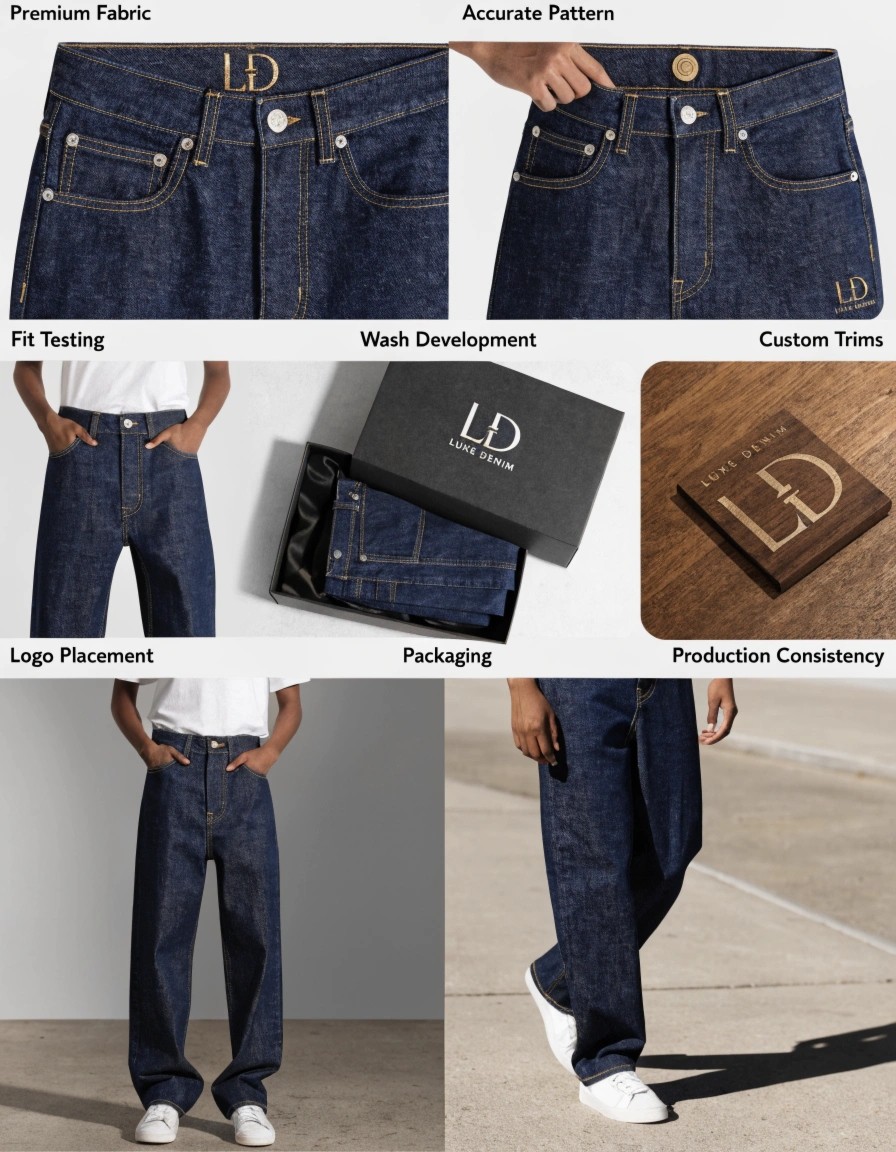
A premium jean is not created at the final photo shoot. It is created long before that—during fabric selection, pattern making, sample development, washing tests, fitting, revision, trim selection, and bulk production planning. This is why experienced denim manufacturing matters so much.
Many new boutique owners make the same mistake: they focus only on the outside design. They choose a picture, request a similar look, add a logo, and expect the product to feel premium. But denim is technical. Two jeans can look similar in a photo and feel completely different in real life.
The fabric may shrink differently. The wash may change the hand feel. The pocket placement may make the body look wider or flatter. The waistband may roll. The zipper may feel cheap. The distressing may break during wear. The inseam may twist. The logo patch may fade badly. These problems do not always show up in a design sketch, but customers notice them immediately.
How Can a Denim Brand Make Jeans Look Wealthy from the First Sample?
Start with a clear target customer. Is this jean for a high-end boutique customer in Los Angeles? A plus-size fashion customer in Atlanta? A streetwear buyer in New York? A quiet luxury shopper in Dallas? A designer launching a premium denim capsule online?
Once the customer is clear, the development process becomes smarter:
| Development Step | Why It Matters |
| Fabric selection | Controls structure, comfort, shrinkage, and price |
| Pattern development | Creates the real silhouette |
| First sample | Tests design feasibility |
Wash test | Shows color, hand feel, shrinkage, and surface effect |
Fit correction | Improves comfort and body proportion |
Trim approval | Confirms brand identity and quality level |
Size grading | Ensures plus sizes and full-size ranges fit correctly |
Bulk production control | Protects consistency across orders |
The first sample should not be treated as the final product. It is a learning tool. Premium denim often needs revision. That is normal. The goal is to get the product right before bulk production.
What Should Boutique Owners and Designers Customize First?
If budget is limited, customize the most visible and brand-building elements first. These usually include fit, wash, logo trims, and packaging.
For example, an online boutique selling stacked jeans should focus on inseam, leg opening, fabric weight, wash effect, and ankle stacking. A quiet luxury brand should focus on dark wash, clean fit, tonal stitching, subtle hardware, and premium labels. A plus-size denim brand should focus on comfort, rise, waistband stability, thigh fit, hip shape, and stretch recovery. A designer brand should focus on signature details that competitors cannot easily copy.
Customization options may include:
Custom logo buttons
Custom rivets
Leather patches
Woven labels
Hangtags
Embroidery
Pocket shape
Special stitching
Distressing
Whiskering
Washed effects
Denim jackets and matching sets
Denim shorts
Denim shirts
Baggy jeans
Straight jeans
Selvedge jeans
Skinny jeans
Jogger jeans
Plus-size jeans
The smartest brands do not customize everything randomly. They choose details that support their story. A luxury brand may need fewer decorations but better fabric. A streetwear brand may need stronger washing and bolder silhouette. A boutique brand may need trend speed and flexible MOQ.
How Can OEM/ODM Manufacturing Turn a Sketch into Billionaire-Level Jeans?
A sketch is the dream. Manufacturing is the discipline that makes it real.
In OEM/ODM denim development, the process usually moves from idea to technical interpretation. A customer may provide a drawing, reference photo, measurement chart, logo file, or even just a concept. The factory then helps translate that into fabric choice, pattern, sample, wash, trims, and construction.
A good denim factory does not only ask, “What do you want?” It should also ask, “How will this be worn? What market is it for? What price level do you need? Do you need stretch? Do you need plus sizes? Do you need 30 pieces first, or are you planning 10,000 pieces later?”
That matters because the best development path changes by order type. A 30-piece custom order for an influencer boutique needs flexibility. A 10,000-piece bulk order needs repeatability, production planning, and strict quality control. A complex designer jean with special distressing needs technical wash experience. A selvedge jean needs fabric and shrinkage knowledge. A plus-size jean needs proper grading, not just enlargement.
Why Is a Professional Custom Jeans Factory Important for Premium Denim Brands?
Because denim is one of the most technical casualwear categories. Unlike a basic T-shirt, jeans involve heavy fabric, stress points, metal trims, washing, shrinkage, fit balance, pocket placement, and construction durability. A small mistake can ruin the final product.
A professional custom jeans factory helps brands reduce risk. It can advise whether a design is production-friendly, whether a wash effect is stable, whether a fabric matches the target fit, and whether a detail will survive real wear. This is especially important for high-end customers who expect consistency.
For DiZNEW’s customers, the opportunity is clear. The U.S. market has many boutique owners, denim designers, online stores, and influencer brands that want something better than generic wholesale jeans. They want custom denim with their own logo, their own fit, their own wash, and their own brand feeling.
DiZNEW’s strengths match that need: over 20 years of denim R&D and manufacturing experience, the ability to customize many denim categories, flexible MOQ from 30 pieces, capacity for large 10,000-piece orders, and deep experience with complex denim styles. For buyers who want plus-size jeans, baggy jeans, stacked jeans, straight jeans, selvedge jeans, skinny jeans, jogger jeans, denim jackets, denim shorts, or denim shirts, the right factory partner can turn a concept into a sellable product.
Final Thoughts: Billionaire Jeans Are Not About Price—They Are About Precision
So, what kind of jeans would a billionaire wear?
Probably not the loudest pair in the room. Probably not the jeans with the biggest logo. And probably not a random trendy pair bought only because everyone else is wearing it.
A billionaire would wear jeans that fit their life. That might mean dark straight-leg jeans with quiet luxury energy. It might mean Japanese selvedge denim that only denim experts recognize. It might mean relaxed wide-leg jeans styled with a cashmere hoodie and luxury sneakers. It might mean custom jeans made for one body, one wardrobe, and one private standard.
For fashion brands, boutique owners, and designers, the message is even more important: your customers do not just want jeans—they want jeans that make their brand feel richer, sharper, and more personal. That requires better fabric, better fit, better washing, better trims, and better manufacturing support.
If you are planning to launch a premium denim line, create private-label jeans, develop custom stacked jeans, design plus-size denim, produce luxury streetwear jeans, or turn your sketch into a real product, DiZNEW can help you build it from idea to finished garment.
Ready to create your own billionaire-level jeans collection? Contact DiZNEW to request a custom denim quote, discuss your design, choose fabrics and washes, develop samples, and start building denim products with your own logo, your own fit, and your own brand identity.