Sample vs Bulk: Why Denim Color Difference Happens
- Share
- publisher
- Jimy
- Issue Time
- Jun 8,2026
Summary
Learn why sample vs bulk denim color difference happens. Our B2B factory ensures wholesale consistency with strict QC and expert wash facilities.
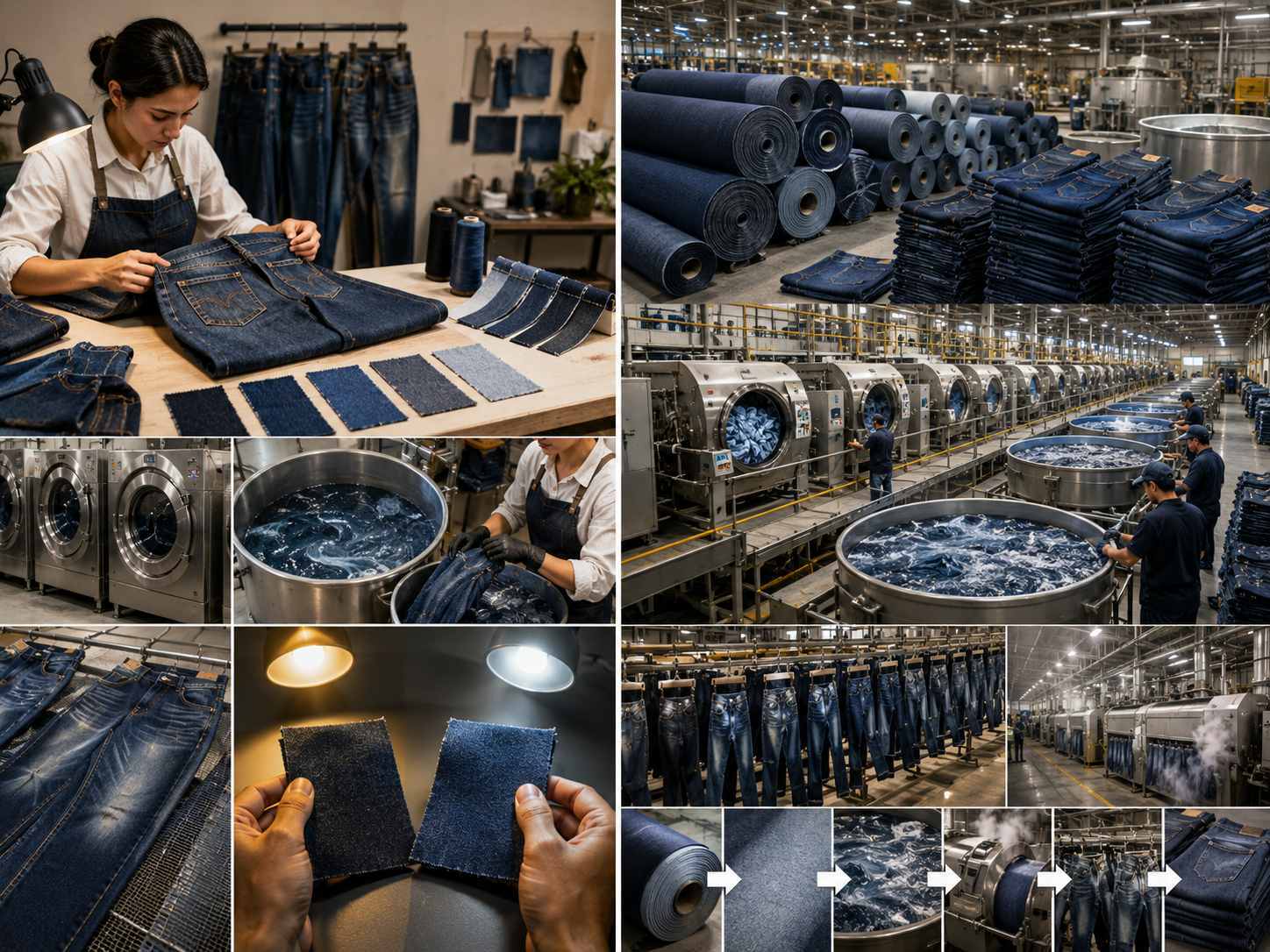
A buyer approves a beautiful denim sample. The wash is perfect, the whiskers look natural, the vintage blue feels exactly right, and the fit photo looks ready for an online boutique launch. Then bulk production arrives. The jeans are still well made, but the color looks slightly darker, lighter, greener, redder, or less “washed down” than the approved sample. For many new denim brands, this moment feels confusing and frustrating. They may ask, “Did the factory change something?” But in denim manufacturing, the answer is often more complex. Denim is not a flat, solid-color fabric like a basic cotton T-shirt. It is yarn-dyed, washed, abraded, chemically treated, dried, pressed, packed, and judged under different light sources.
Denim color difference between sample and bulk happens because indigo dye lots, fabric rolls, washing conditions, garment size, machine load, chemical ratio, drying temperature, and lighting can all shift the final shade. A professional denim factory controls this risk through fabric lot sorting, wash panels, PP samples, shade bands, bulk testing, and clear color tolerance before mass production.
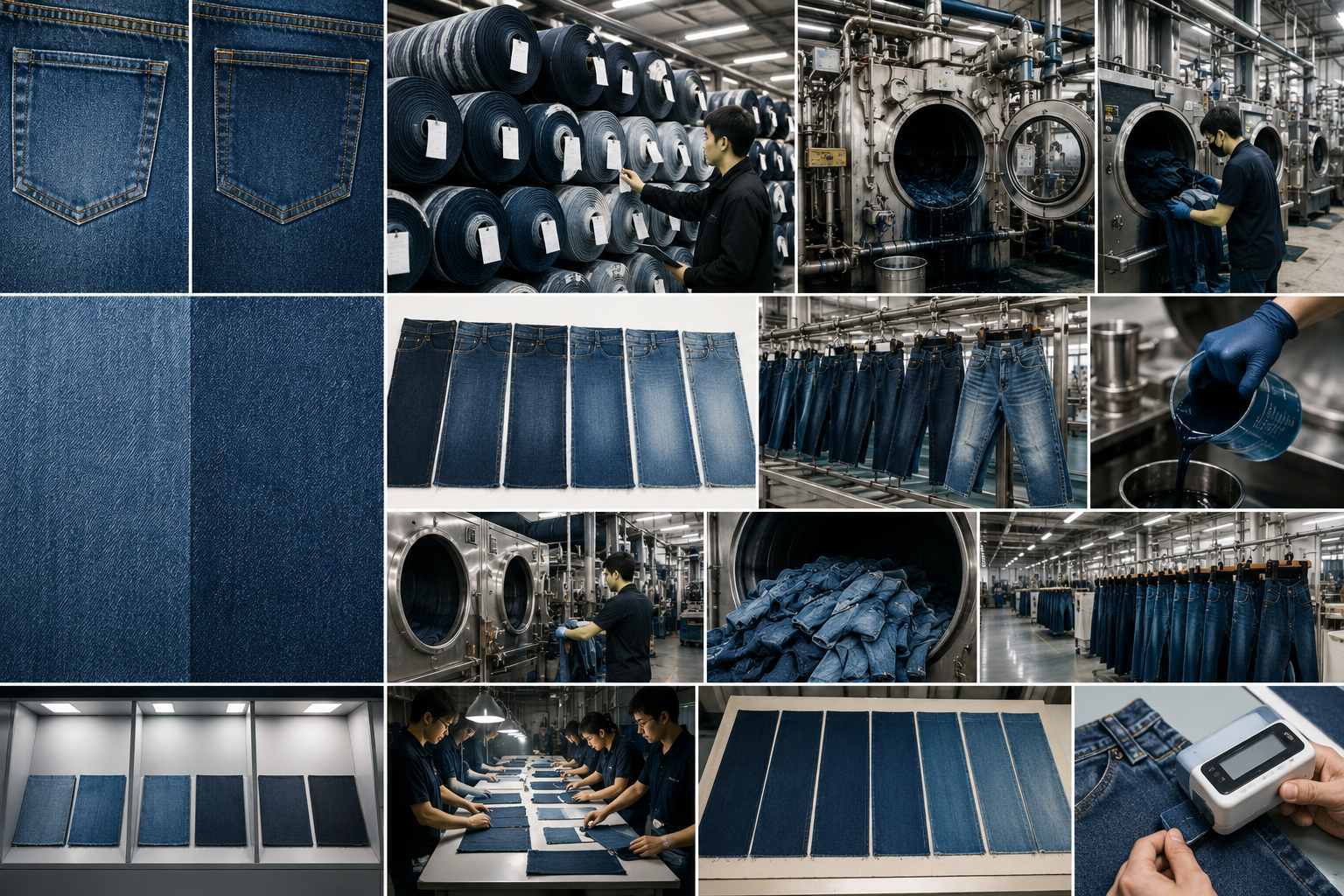
Think of denim color like coffee roasting. Two cups may come from the same bean, same roast profile, and same barista, but a small change in water, heat, grind, or timing can change the final taste. Denim works the same way. The art is not pretending every pair is mathematically identical. The real skill is controlling variation so the final bulk order still looks intentional, premium, and brand-right.
Why Does the Approved Denim Sample Look Different from Bulk Production?
An approved denim sample may look different from bulk production because samples are made in smaller batches with tighter manual control, while bulk orders involve larger fabric quantities, more machines, bigger wash loads, different roll lots, and longer production time. Even when the factory follows the same recipe, denim color can shift slightly due to fabric, washing, drying, finishing, and viewing conditions.
What Does “Sample Color” Really Mean in Custom Denim Manufacturing?
In custom denim manufacturing, a sample color is not just one color. It is a production target. When a buyer approves a sample, they are usually approving a combination of fabric base shade, wash effect, fading level, hand feel, contrast, whisker placement, damage effect, stitching contrast, and overall garment appearance. That means the sample is a visual standard, but it also has to be translated into a repeatable production process.
This is where many buyers misunderstand denim. They expect the bulk order to match the approved sample like a printed color code. But denim is not produced like printing a logo on paper. Indigo dye sits mainly on the surface of the yarn, which is why denim fades beautifully over time. That same property also makes denim more sensitive to washing, friction, abrasion, enzyme action, bleaching, and drying.
A sample room may produce one or two pieces under very controlled conditions. The wash technician can observe the garment closely, adjust timing, check the shade, and correct details by hand. In bulk production, however, the factory may need to process 300, 1,000, or 10,000 pieces. The goal becomes consistency across many garments, many sizes, and sometimes several fabric rolls.
For small custom orders, such as 30 pieces for a boutique launch, the factory may have more flexibility to monitor each garment. For larger OEM/ODM orders, the factory needs a more systematic process: fabric roll inspection, shade grouping, production planning, wash trial, PP sample approval, inline QC, final inspection, and packing by shade band if needed.
Why Is Sample Color Easier to Control Than Bulk Denim Production?
Sample color is easier to control because the sample quantity is small. One garment can be washed, reviewed, adjusted, dried again, and corrected if necessary. Bulk production is different. Once hundreds of garments enter washing machines, the result depends on more variables: machine capacity, garment weight, water volume, chemical ratio, stone quantity, enzyme activity, temperature, time, and drying method.
Let’s say a buyer approves a pair of baggy jeans with a medium vintage blue wash. The sample may be made from one fabric roll and washed in a small drum. The bulk order may include multiple rolls of fabric and several wash batches. Even if every roll is technically “same color,” the beginning of one roll may not be visually identical to the end of another. When those rolls become garments and enter washing, small differences can become more visible.
Bulk production also includes size variation. A size 28 skinny jean and a plus size baggy jean do not behave the same in washing. A larger garment carries more fabric weight, absorbs more water, and may have different friction inside the machine. If the style includes stacked legs, heavy whiskers, hand sanding, resin, cargo pockets, patchwork, or contrast panels, the color behavior becomes even harder to control.
This does not mean color difference is a factory excuse. A skilled denim manufacturer should anticipate variation and manage it. The key is not simply “make it the same.” The key is to define what “acceptable same” means before bulk production starts.
How Do Lab Samples, PP Samples, and Bulk Samples Differ in Color Accuracy?
A lab sample or first sample usually proves the idea. It answers questions like: Is this wash direction possible? Does the fabric react well? Can the factory create the requested vintage effect? Does the designer’s sketch translate into a real garment?
A PP sample, or pre-production sample, is more serious. It should be made with confirmed bulk fabric, confirmed trims, confirmed pattern, and confirmed wash process. For denim, the PP sample is often the most important approval stage because it becomes the bridge between creative design and mass production.
A bulk sample or shipment sample shows what the actual production looks like after the factory applies the approved process at scale. Smart buyers do not rely only on the first development sample. They approve the process step by step: fabric swatch, wash panel, fit sample, PP sample, size set sample, and bulk reference sample.
This staged approval system is especially important for high-end custom denim, online boutique drops, and influencer brands. Customers buying fashion jeans online judge color quickly. If the website photo shows a strong light blue wash but the delivered jeans look dark navy, return rates and complaints can rise.
Why Should Buyers Understand That Denim Color Is a Controlled Range, Not a 100% Identical Match?
The most professional way to think about denim color is “controlled range,” not “absolute match.” Even luxury denim brands accept reasonable shade tolerance because denim is a living fabric. A good factory controls the range so the jeans look consistent when displayed together, photographed together, and shipped to customers.
For buyers, this mindset helps avoid unrealistic expectations. The right question is not only, “Can you match this sample exactly?” A better question is, “How will you control shade variation in bulk production?” The answer should include fabric lot control, wash testing, shade banding, QC standards, and approval samples.
The more complex the denim style, the more important this becomes. Simple raw straight jeans are easier to control than heavily washed stacked jeans with whiskers, grinding, spray, tinting, and hand sanding. Plus size jeans, baggy jeans, denim jackets, denim shorts, and denim shirts also behave differently because fabric surface area and garment structure change the wash result.
In short, sample-to-bulk color difference is not always a quality failure. It becomes a quality failure when the variation is uncontrolled, uncommunicated, or outside the approved tolerance. A professional denim supplier helps the buyer understand this before production, not after shipment.
How Do Fabric Dye Lots and Indigo Dyeing Cause Denim Shade Variation?
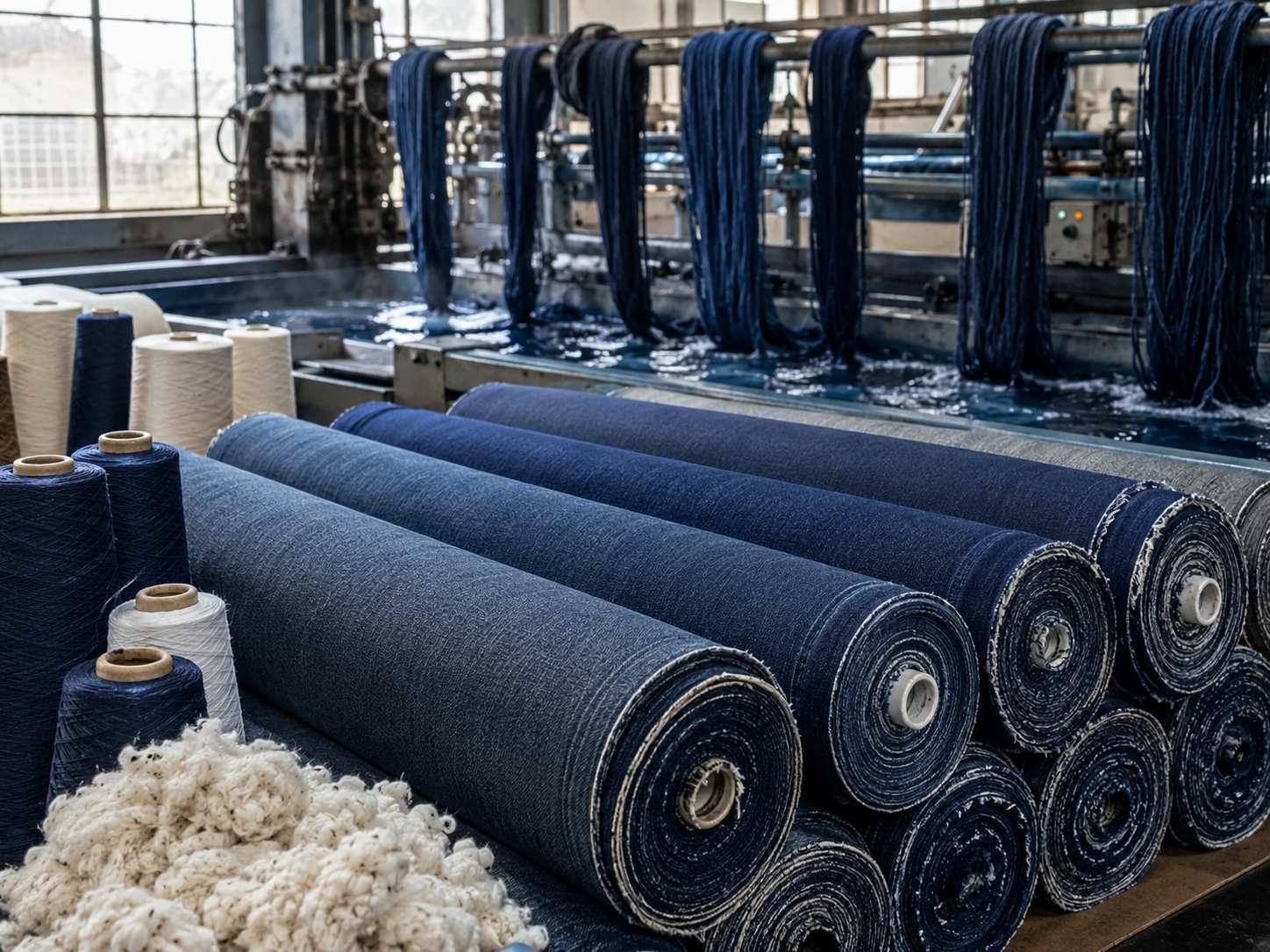
Fabric dye lots and indigo dyeing cause denim shade variation because denim yarns are dyed in batches, and each batch can absorb indigo slightly differently. Cotton quality, yarn tension, dye concentration, oxidation, rope dyeing conditions, fabric roll position, and storage can all affect shade. Even before washing, two denim rolls may not be perfectly identical.
What Is Dye Lot Variation in Denim Fabric?
Dye lot variation means fabric from different dyeing batches may show slight color differences, even when the same formula is used. In denim, this is very common because indigo dyeing is a layered process. The yarn is dipped into indigo, exposed to air for oxidation, and repeated several times to build depth. Small differences in timing, concentration, yarn quality, humidity, or machine condition can change the shade.
For a buyer, dye lot variation becomes important when the order requires multiple fabric rolls. If one roll is slightly red-cast indigo and another is slightly green-cast indigo, the difference may look small in fabric form. After washing, fading, enzyme treatment, or bleaching, the difference may become more obvious.
This is why fabric inspection is not just about checking defects like holes, stains, or weaving problems. It is also about checking shade. A professional denim factory will compare rolls, group similar shades, and avoid mixing obvious shade differences in the same garment batch.
For example, if a brand orders 1,000 pieces of straight jeans, the factory may use several fabric rolls. If shade grouping is ignored, some finished jeans may look darker and some lighter even though they are technically from the same fabric article. If shade grouping is managed well, the final shipment looks much more consistent.
Why Does Indigo-Dyed Denim Naturally Have More Shade Movement?
Indigo is famous because it fades. That is exactly why people love denim. But the same beauty creates production challenges. Unlike reactive dyed solid fabrics, indigo often stays more on the yarn surface instead of fully penetrating the fiber core. During washing and wearing, the surface dye gradually comes off, revealing lighter shades underneath.
This is why raw denim can fade at the knees, thighs, seat, pockets, and hems. It is also why factory washing can create vintage blue, stone wash, acid wash, dirty wash, snow wash, and worn-in effects. The more the factory manipulates the surface, the more shade movement can appear.
A buyer who wants perfectly flat, uniform color may actually be asking denim to behave like a different fabric. Denim’s personality is contrast, depth, grain, and movement. Premium denim does not always mean “no variation.” Often, premium denim means the variation looks intentional, balanced, and controlled.
For fashion brands, this is a major design opportunity. A boutique owner may want a clean dark indigo skinny jean with minimal shade movement. A streetwear brand may want baggy jeans with strong fading, stacking, whiskers, and high-low contrast. A high-end designer may want selvedge jeans with natural character and controlled irregularity. Each style requires a different tolerance standard.
How Can Yarn Dyeing, Fabric Rolls, and Fabric Batches Affect Bulk Color?
Bulk color begins before cutting. It begins at yarn and fabric level. Cotton fiber quality affects dye absorption. Yarn count affects surface appearance. Weaving density affects how light reflects from the fabric. Fabric weight affects how the garment reacts in washing. Stretch denim with spandex may respond differently from rigid 100% cotton denim.
Fabric rolls also have positions. The outer layer of a roll may experience different tension, storage exposure, or handling compared with inner layers. Within one roll, edge-to-center or beginning-to-end shade variation may occur. That is why factories sometimes inspect roll shade before cutting.
For high-quality production, fabric rolls should be recorded and controlled. The factory should know which rolls are used for which cutting lots. If a problem happens later, traceability helps identify whether the issue came from fabric, washing, cutting, or finishing.
This is especially important for large orders. A 30-piece custom order may use a small amount of fabric from one roll. A 10,000-piece order may require many rolls and multiple production batches. Without proper batch management, the risk of color difference rises quickly.
How to Tell Lowest Quality Denim to Highest Quality Before Bulk Production?
You can often judge denim quality before bulk production by looking at fiber, yarn, weave, weight, dye depth, stretch recovery, hand feel, shrinkage, colorfastness, and finishing potential. Low-quality denim often feels loose, flat, overly thin, unstable, or harsh in a cheap way. It may have poor recovery, uneven dyeing, weak construction, or obvious shade inconsistency.
High-quality denim usually has better yarn regularity, cleaner weaving, stronger fabric body, more stable shrinkage, better color depth, and a more attractive fading character. But “highest quality” does not always mean heaviest or stiffest. The right quality depends on product type. A selvedge jean may need rigid character and rich indigo depth. A women’s skinny jean may need stretch recovery and comfort. A plus size jean may need structure, softness, and shape retention. A denim jacket may need body and surface texture.
Here is a practical buyer-focused comparison:
| Quality Factor | Lower Quality Denim | Higher Quality Denim | Why It Matters for Color |
| Dye Consistency | Uneven shade between rolls | Better shade control | Reduces sample-to-bulk difference |
| Fabric Hand Feel | Limp, rough, unstable | Balanced body and touch | Affects perceived value |
| Stretch Recovery | Bags out quickly | Recovers after movement | Keeps fit and appearance clean |
Weave Regularity | Slubs or defects look uncontrolled | Texture looks intentional | Improves premium look |
Shrinkage Control | Unpredictable after wash | Tested and managed | Prevents fit and shade surprises |
Wash Reaction | Fades unevenly or harshly | Fades with depth and balance | Essential for custom washes |
A professional factory should help buyers choose denim based on the target customer, not just price. For online boutique owners, the best fabric is not always the cheapest one that looks okay in a sample. It is the fabric that can survive bulk washing, photography, customer wear, and repeat orders.
Why Can Different Fabric Rolls Create Shade Difference Even in the Same Order?
Different rolls can create shade difference because each roll may come from a slightly different dyeing condition, production position, or storage environment. Even when a mill labels the fabric as the same article and same color, small visual differences can still exist.
This is why roll sorting matters. Before cutting, the factory should compare roll shades under controlled lighting. Similar rolls can be grouped into the same cutting and sewing batch. If one roll is noticeably different, the factory can isolate it, use it for a separate shade band, or ask the buyer for approval before proceeding.
For brands, this is a hidden but important part of quality control. Customers do not see fabric roll numbers. They only see whether the jeans they receive match the product photos and whether different units in the same drop look consistent. Good roll management protects the brand’s reputation before the customer ever opens the package.
Why Does Denim Washing and Finishing Change the Final Bulk Color?
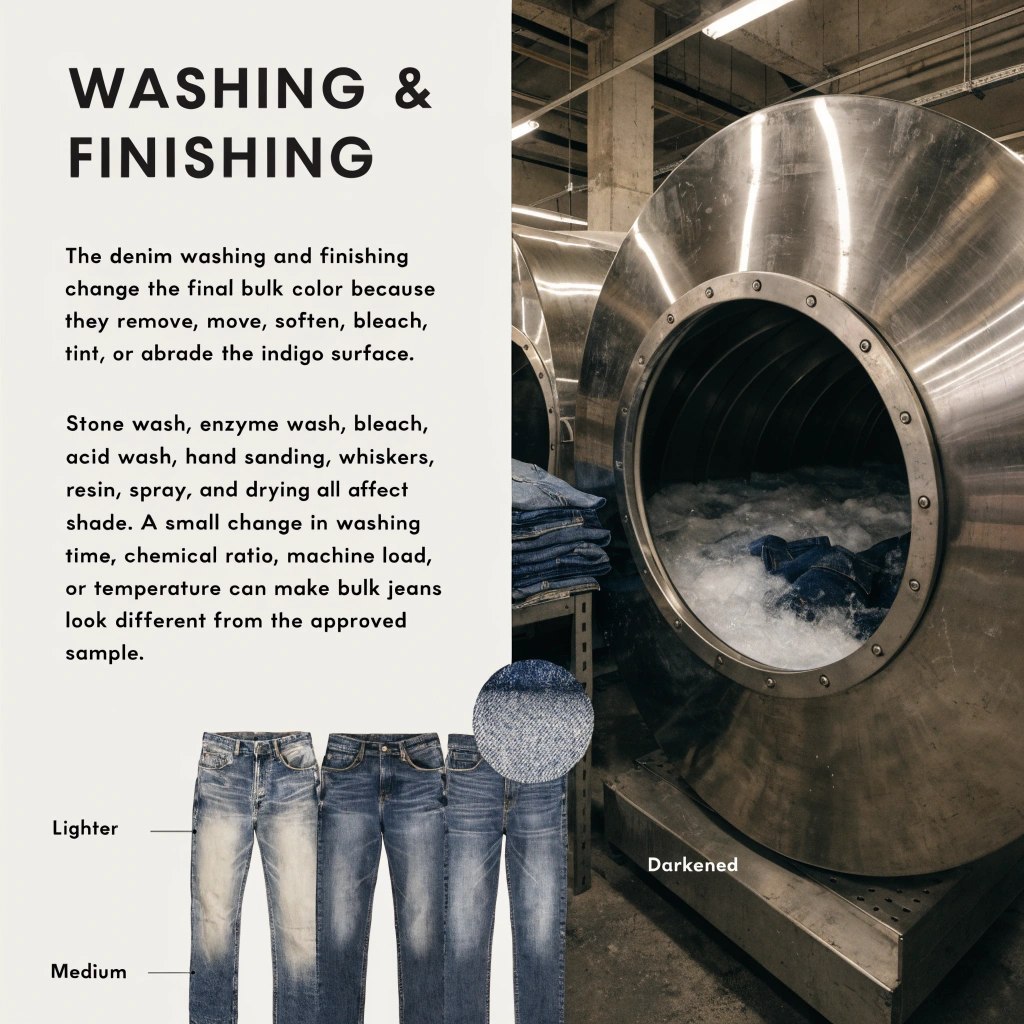
Denim washing and finishing change the final bulk color because they remove, move, soften, bleach, tint, or abrade the indigo surface. Stone wash, enzyme wash, bleach, acid wash, hand sanding, whiskers, resin, spray, and drying all affect shade. A small change in washing time, chemical ratio, machine load, or temperature can make bulk jeans look different from the approved sample.
How Do Stone Wash, Enzyme Wash, Bleach Wash, Acid Wash, and Hand Sanding Influence Denim Color?
Denim washing is where fabric becomes fashion. A raw indigo garment may look dark and stiff before wash. After washing, it can become soft, vintage, bright, cloudy, worn-in, or heavily distressed. Each wash method changes color differently.
Stone wash uses friction to remove indigo from the fabric surface. Enzyme wash uses enzymes to clean or break down surface fibers, creating a smoother and more faded look. Bleach wash chemically lightens the garment. Acid wash creates high-contrast, irregular patterns. Hand sanding removes color from specific areas such as thighs, knees, seat, pockets, and hems. Whiskers imitate natural wear lines near the crotch and hip area.
These effects are not only technical. They are emotional. A buyer does not simply order “blue jeans.” They order a lifestyle feeling: clean minimal, vintage Western, streetwear stacked, Y2K washed, luxury selvedge, oversized skater, or boutique glam. Washing is the language that creates that feeling.
But washing also increases risk. The more effects you add, the more variables you introduce. A dark rinse wash is relatively stable. A heavily washed baggy jean with whiskers, grinding, spray tint, hand sanding, and uneven fading requires much more control.
Why Can Bulk Washing Create Different Results from the Approved Sample Wash?
Bulk washing can differ from sample washing because the machine environment changes. A sample may be washed alone or in a small batch. Bulk garments are washed in larger loads, where garments rub against each other differently. The ratio of garment weight to water, chemical, stone, enzyme, and machine space affects the final result.
Imagine cooking pasta. If you cook one small portion, it is easy to control. If you cook for 200 people, you need much more discipline. The recipe may be the same, but the equipment, volume, heat distribution, and timing can change the result. Denim washing works in a similar way.
Bulk washing also has batch-to-batch issues. The first batch may run after a machine cleaning. The second batch may run when the water temperature is slightly different. The third batch may have garments from another fabric roll. Unless the factory monitors and records conditions, color can drift.
Professional denim factories use wash standards, trial washes, batch records, shade checking, and approval samples to reduce this risk. For complex custom jeans, the factory may need multiple rounds of wash testing before bulk production. This is not delay for the sake of delay. It is insurance for the brand.
How Do Washing Time, Water Temperature, Chemical Ratio, Machine Load, and Drying Conditions Affect Shade?
Small process changes can create visible shade shifts. Longer washing time can remove more indigo and create a lighter look. Higher temperature may accelerate chemical or enzyme action. More bleach can push the garment toward a paler or more uneven effect. More garments in the machine can reduce movement and friction, making fading less aggressive. Fewer garments can increase friction and make the wash stronger.
Drying is also important. Tumble drying, hanging, oven drying, and temperature settings affect hand feel, shrinkage, and sometimes shade perception. Over-drying can make fabric feel harsh or change the look of surface fibers. Under-drying can affect final pressing and packing.
This is why a professional wash recipe should include more than “enzyme wash 20 minutes.” It should include fabric weight, garment quantity, water level, temperature, chemical dosage, time, machine type, drying method, and target shade. For large orders, the factory should also compare the first bulk batch with the approved PP sample before continuing all production.
Why Are Complex Custom Jeans Styles More Sensitive to Color Difference?
Complex custom jeans are more sensitive because each design detail reacts with color. For example, stacked jeans have extra length and folds around the ankle. Those folds can create different abrasion and shadow effects. Baggy jeans have more fabric area, so fading may appear broader and more dramatic. Skinny jeans stretch across the body, which can make the shade look lighter when worn. Plus size jeans have more surface area and may require adjusted wash handling to keep shade consistent.
Denim jackets, shorts, shirts, and cargo jeans also behave differently. A denim jacket has panels, seams, collar, cuffs, and chest pockets. These structures catch abrasion differently. Denim shorts may show stronger thigh fading because the garment area is smaller. Denim shirts often use lighter fabric, so color movement may happen faster.
This is one reason buyers should work with a factory that understands both denim product development and bulk manufacturing. A general clothing factory may sew simple jeans, but complex denim customization requires wash knowledge, pattern knowledge, fabric knowledge, and QC experience.
What Is the Rule for Denim on Denim, and Why Does Shade Matching Matter for Styling?
The classic rule for denim on denim is simple: avoid making the top and bottom look accidentally mismatched. You can either match shades intentionally for a clean set, or contrast them clearly for a styled outfit. The problem happens when the jacket and jeans are almost the same shade but not quite. That can look like a production mistake instead of a fashion choice.
For brands selling denim sets, denim jackets with jeans, or coordinated boutique drops, shade matching is critical. If the buyer wants a matching denim-on-denim set, the factory should use controlled fabric lots and wash testing for both garments. A jacket and jean may not wash the same way because they have different garment structures, even if they use the same fabric.
If the buyer wants contrast, the contrast should be obvious: dark indigo jacket with light wash jeans, black denim shirt with blue stacked jeans, or vintage washed jacket with raw-looking straight jeans. Intentional contrast feels stylish. Weak contrast feels like bad matching.
For online stores, this matters even more because customers buy from photos. A denim set that looks matched in photos but arrives with visible shade difference can hurt reviews. A good factory helps buyers plan color direction before sampling, not after the collection is already photographed.
What Production Factors Make Sample-to-Bulk Color Matching More Difficult?
Sample-to-bulk color matching becomes harder when fabric weight, stretch content, shrinkage, garment size, sewing structure, wash complexity, lighting, photography, and buyer expectations are not controlled. Different jeans styles also react differently in washing. Fit can even change color perception because tight, loose, folded, or stretched fabric reflects light in different ways.
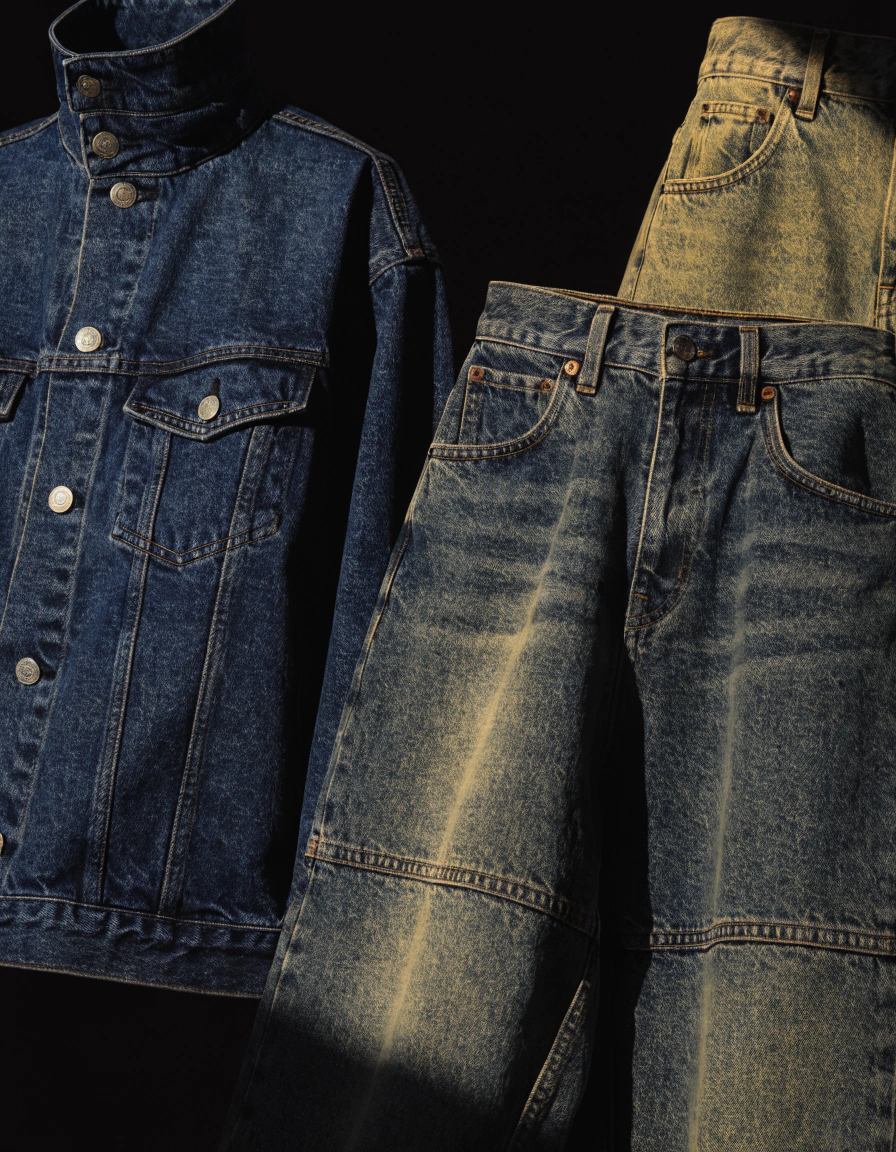
How Do Fabric Weight, Stretch Content, Shrinkage, and Weave Construction Affect Color Appearance?
Fabric weight changes how denim absorbs water, chemicals, and friction. Heavy denim may require stronger washing or longer time to reach the target shade. Lightweight denim may fade faster and feel softer sooner. A 14 oz selvedge fabric and a 9 oz stretch denim cannot be treated as the same material.
Stretch content also matters. Denim with spandex, polyester, or other fibers may reflect light differently and react differently in washing. Stretch denim may look lighter when pulled across the body because the yarns open slightly. It may also require careful temperature control to protect elasticity.
Shrinkage is another hidden factor. If a garment shrinks more than expected, the fit changes. When fit changes, the way the fabric sits on the body changes. A jean that becomes tighter may look lighter in stretched areas. A jean that stays relaxed may show deeper shade and softer folds.
Weave construction affects surface texture. Twill direction, yarn thickness, slub character, and density all influence how light hits the fabric. That is why two fabrics with the same color name can look very different after wash. One may fade with a clean blue tone, while another may show more grain, vertical texture, or uneven vintage character.
Why Do Plus Size Jeans, Baggy Jeans, Stacked Jeans, Skinny Jeans, and Denim Jackets React Differently in Washing?
Different product types behave differently because shape and fabric distribution matter. Plus size jeans use more fabric and may have larger panels. During washing, larger panels can fold differently and absorb more water. If not handled well, fading may become uneven or heavier in certain areas.
Baggy jeans have wide legs and more garment volume. They often create stronger casual folds and a more relaxed washed look. Stacked jeans have extra inseam length, so the ankle area may create special shadow and folding effects. Skinny jeans often include stretch and are worn close to the body, making fit and recovery especially important.
Denim jackets have collars, cuffs, plackets, chest pockets, seams, and multiple layers. These areas create different abrasion points. A jacket may look darker in flat body panels but lighter at seams and edges. Denim shorts expose fewer areas but may have concentrated fading on the front thigh and hem.
For custom denim brands, this means one wash standard cannot be blindly applied to every style. A wash that looks perfect on straight jeans may look too aggressive on a denim shirt. A vintage effect that works on a jacket may look too flat on stacked jeans. Professional development means adjusting wash technique to the actual product.
What Is the 2 Finger Rule for Jeans, and How Can Fit Affect the Way Denim Color Looks?
The 2 finger rule for jeans is a quick fit test: you should be able to slide two fingers between the waistband and your waist. If two fingers fit comfortably, the waist is usually snug but not painfully tight. If you cannot fit two fingers, the jeans may be too tight. If there is too much space, the jeans may be too loose.
This rule is mostly used by consumers, but it also matters in product development. Fit affects color perception. Tight jeans stretch the fabric, especially around the hip, thigh, seat, and knee. When denim stretches, the surface can reflect more light, making some areas look lighter. Loose jeans create folds and shadows, which can make color look deeper or more uneven.
For brands, this means fit approval and color approval should not be separated completely. A sample may look perfect on a hanger but different on a model. A skinny jean may look lighter when worn. A baggy jean may show deeper shadow in folds. A stacked jean may look darker around the ankle because of fabric bunching.
What Is the 2 Finger Test for Jeans, and Why Should Buyers Check Fit Before Approving Bulk Samples?
The 2 finger test is basically the practical action behind the 2 finger rule. The wearer puts on the jeans, closes the waistband, and checks whether two fingers can slide between body and waistband. It is not a complete fit test, but it is a useful first check for comfort and waist balance.
For buyers approving samples, this test can prevent mistakes. If the approved sample is too tight, the final product may look different on real customers. Tightness can create pulling lines, stress marks, and lighter-looking stretch areas. If the sample is too loose, the garment may sit lower on the body, creating different folds and shade perception.
However, the 2 finger test should not be the only approval method. Buyers should also check seat fit, thigh comfort, rise, inseam, leg opening, mobility, pocket position, and size grading. For plus size jeans, the waistband test is important but not enough. The jean must also support shape, comfort, and movement.
A professional denim factory can help develop size sets and fit comments before bulk production. This is especially valuable for online boutique owners because customers cannot try before buying. Better fit means fewer returns, better reviews, and stronger brand loyalty.
How Can Lighting, Photography, Screen Display, and Buyer Expectations Create Perceived Color Difference?
Sometimes the jeans are not as different as they appear. Lighting can change everything. Denim viewed under daylight, warm indoor light, cool LED light, warehouse light, or studio flash can look like five different shades. A medium blue jean may look bright in sunlight, dull in yellow light, and slightly green under certain LEDs.
Photography adds another layer. Camera settings, editing filters, background color, model skin tone, and screen brightness can all shift denim color. A buyer may approve a sample from a phone photo, then feel surprised when the physical garment looks different. This is why physical sample approval is always better than photo-only approval for custom denim.
Buyer expectations also matter. Some buyers say “light blue,” but they mean vintage icy blue. Others say “dark wash,” but they mean deep rinse indigo. Words are not enough. Reference samples, Pantone direction, fabric swatches, wash panels, and real garments reduce misunderstanding.
For best results, buyers should approve denim samples under consistent lighting and keep one approved sealed reference sample. Factories should also keep duplicate samples for production comparison. This shared reference helps both sides discuss color objectively instead of relying on memory or photos.
How Can Brands Reduce Denim Color Difference Before Bulk Production?
Brands can reduce denim color difference by approving fabric swatches, wash panels, PP samples, and bulk samples step by step. They should define color tolerance, confirm fabric lots, test washing conditions, check fit, review shade bands, and work with an experienced denim OEM/ODM factory that understands custom jeans development and bulk quality control.
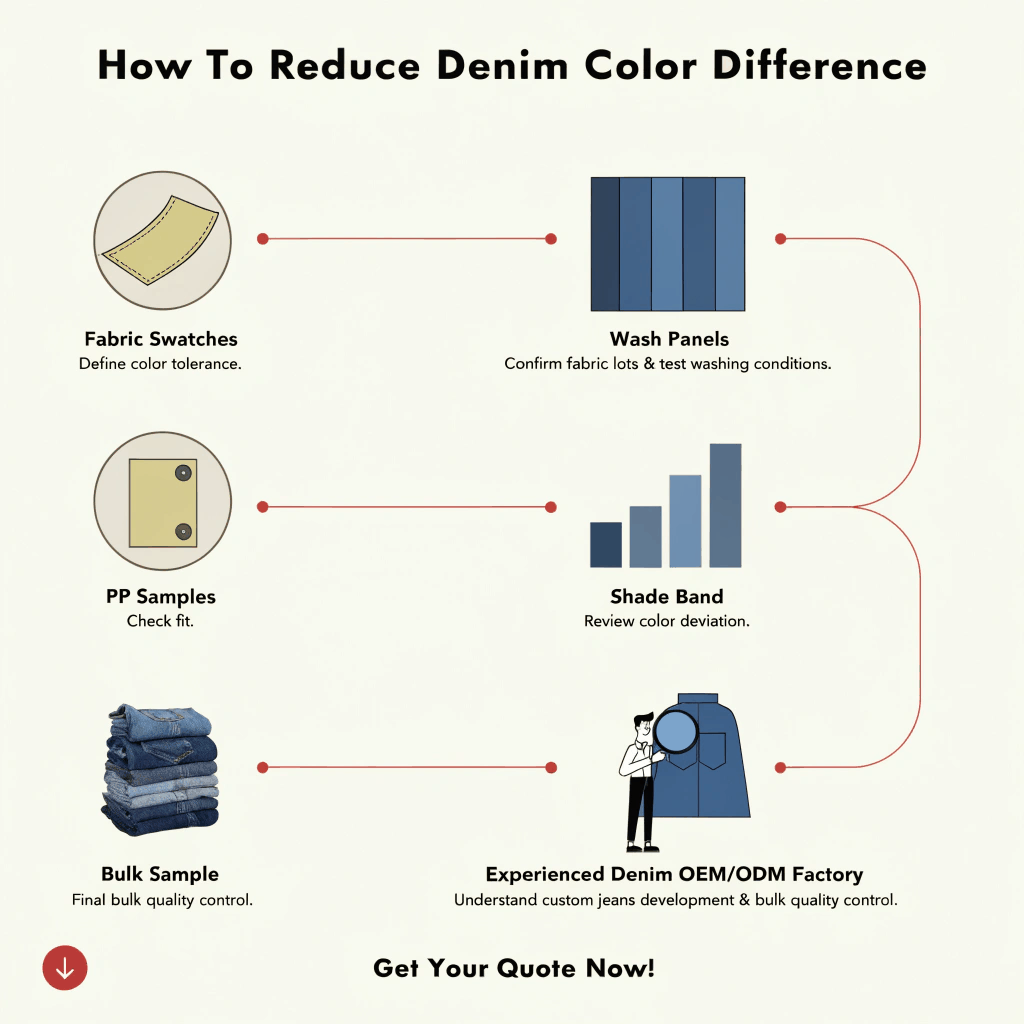
Why Should Buyers Approve Fabric Swatches, Wash Panels, PP Samples, and Bulk Production Samples Step by Step?
Step-by-step approval is the safest way to control denim color. A fabric swatch shows the base fabric color before garment washing. A wash panel shows how the fabric reacts to washing. A fit sample checks pattern and silhouette. A PP sample confirms the production-ready garment. A bulk sample confirms the actual production result.
Skipping these steps may save time at the beginning, but it can create expensive problems later. If the fabric is wrong, washing cannot fully fix it. If the wash is wrong, sewing quality cannot hide it. If the fit is wrong, the color may look different on the body. Denim production is a chain, and each step affects the next one.
For small brands, this process may sound formal, but it is very practical. If you are launching 30 custom pieces, you want them to look right because every customer matters. If you are producing 10,000 pieces, you need process control because even a small mistake becomes expensive at scale.
A good factory should guide buyers through the approval process. The buyer should not have to guess what to approve next. Clear communication reduces risk and builds trust.
How Do Professional Denim Factories Use Shade Bands, Roll Sorting, Wash Testing, and Color Matching?
Professional denim factories control color before, during, and after production. Before cutting, they inspect fabric and sort rolls by shade. During sampling, they develop wash panels and compare results with the buyer’s target. Before bulk, they make PP samples and confirm the wash recipe. During production, they check the first bulk output against the approved sample. After washing, they sort finished garments by shade if necessary.
Shade bands are useful because they define acceptable variation. Instead of saying “same as sample,” the factory and buyer can agree on a range: approved standard, slightly lighter acceptable, slightly darker acceptable, and unacceptable outliers. This makes QC more objective.
Color matching can be visual and instrumental. Many factories use trained QC eyes under controlled lighting. Some use color measurement tools for more technical evaluation. For denim, visual judgment remains very important because fading, texture, contrast, and wash effect are not just flat color numbers.
The best factories combine technical control with fashion sense. A machine may measure color difference, but it cannot always decide whether a vintage wash looks premium or cheap. Experienced denim people can see whether the wash has depth, whether the whiskers are natural, whether the fading is balanced, and whether the bulk order matches the brand’s style.
What Color Tolerance Should Brands Expect for Custom Denim Jeans?
For custom denim jeans, brands should expect reasonable shade tolerance, especially for washed, distressed, vintage, or heavily customized styles. The tolerance should be discussed before bulk production. A clean dark rinse may have tighter tolerance. A heavily washed vintage baggy jean may need a wider acceptable range because the design itself includes more variation.
Tolerance also depends on order size. A 30-piece custom order can often be controlled more closely because the batch is small. A 10,000-piece order needs more systematic batch control, shade grouping, and production planning. Large orders can still be consistent, but they require discipline.
Here is a practical guide:
| Denim Style Type | Color Difference Risk | Recommended Control Method |
| Raw or rinse straight jeans | Low to medium | Fabric lot control, rinse test, PP sample |
| Dark skinny jeans | Medium | Stretch recovery test, shade check, fit approval |
| Light wash baggy jeans | Medium to high | Wash panel, shade band, bulk wash test |
Stacked jeans with fading | High | PP sample, hand sanding standard, batch QC |
Acid wash or bleach wash jeans | High | Small-batch trial, clear tolerance, visual standard |
Denim jacket and jeans set | High | Fabric lot pairing, wash test for both garments |
Plus size custom jeans | Medium to high | Size set check, wash adjustment, fit review |
The goal is not to scare buyers. The goal is to plan correctly. When tolerance is clear, factories can control production better and buyers can make smarter approval decisions.
How Can Fit Checks, Including the 2 Finger Test, Help Brands Avoid Sample Approval Mistakes?
Fit checks help because color and fit interact. A jean that is too tight can make the shade look lighter in stretched areas. A jean that is too loose can create folds and shadows. A waistband that fails the 2 finger test may cause discomfort and returns, even if the wash color is beautiful.
During sample approval, buyers should test the jean on the right body type or fit model. For online brands, it is also useful to check how the jeans look in product photos, model photos, and natural light. A color that looks amazing flat may look different when worn.
Fit checks are especially important for custom categories such as plus size jeans, baggy jeans, stacked jeans, skinny jeans, and jogger jeans. Each category has a different wearing experience. Plus size customers may care about comfort, coverage, stretch, and waistband stability. Streetwear customers may care about stacking, leg volume, and wash effect. Boutique customers may care about shape, photo appeal, and trend accuracy.
A good denim factory should not only ask, “What color do you want?” It should also ask, “Who is your customer? How should the jeans fit? What fabric weight do you prefer? Do you need stretch? What wash feeling fits your brand?”
How Can Working with an Experienced OEM/ODM Denim Jeans Manufacturer Reduce Sample-to-Bulk Risk?
An experienced OEM/ODM denim jeans manufacturer reduces risk because it understands how design ideas become real bulk products. Many buyers can describe a style, but they may not know which fabric, wash, pattern, and process will achieve it. A factory with denim experience can identify risks early.
For example, if a buyer wants a very light bleach wash on stretch skinny jeans, the factory may warn that strong bleaching can affect hand feel or elasticity. If a buyer wants a matching denim jacket and jeans set, the factory may suggest fabric lot pairing and separate wash trials. If a buyer wants stacked jeans with heavy fading, the factory may recommend a PP sample with confirmed inseam, stacking effect, and hand sanding standard.
This kind of advice saves money. It prevents brands from approving a beautiful but unrealistic sample that cannot be repeated in bulk. It also helps brands build products that customers actually want to wear.
For designers, an experienced factory helps translate sketches into patterns, fabric choices, washing effects, trims, labels, and packaging. For online boutique owners, it helps turn trend ideas into sellable products. For high-end denim brands, it supports deeper customization, better finishing, and stronger quality control.
What Should Designers, Online Boutique Owners, and High-End Denim Brands Confirm Before Bulk Production?
Before bulk production, buyers should confirm the fabric article, fabric weight, stretch content, wash standard, approved sample, size chart, trims, labels, stitching, packaging, color tolerance, delivery schedule, and inspection method. For custom denim, they should also confirm whether the order includes special effects such as whiskers, grinding, holes, spray, tinting, embroidery, patchwork, rivets, leather patches, or logo hardware.
Designers should focus on whether the final product expresses the original idea. Online boutique owners should focus on photo accuracy, fit consistency, and customer satisfaction. High-end brands should focus on fabric quality, wash depth, finishing details, and repeatability.
A simple pre-bulk checklist can help:
| Before Bulk Production | Buyer Should Confirm |
| Fabric | Weight, content, stretch, hand feel, shade |
| Wash | Color target, fading level, special effects |
| Fit | Waist, hip, thigh, rise, inseam, leg opening |
Color Tolerance | Approved range, shade band, rejection standard |
Branding | Logo, labels, buttons, rivets, patches, packaging |
Quantity | MOQ, size ratio, bulk quantity, reorder plan |
QC | Sample approval, inline check, final inspection |
The more detailed the confirmation, the smoother the production. Denim rewards preparation. The brands that prepare well usually get better samples, better bulk consistency, and better customer feedback.
Final Thoughts: Turn Denim Color Risk into a Brand Advantage
Denim color difference between sample and bulk is not a small topic. It touches fabric dyeing, indigo chemistry, washing craft, garment fit, lighting, photography, customer expectations, and factory quality control. For a new buyer, this may feel overwhelming. But for a professional denim brand, understanding this process becomes a competitive advantage.
When you know why color difference happens, you can ask better questions. You can approve samples more carefully. You can choose better fabric. You can define realistic tolerance. You can avoid photo-to-product mismatch. Most importantly, you can work with a factory that knows how to control the process instead of simply reacting after problems appear.
DiZNEW is a China-based denim jeans manufacturer with over 20 years of experience in denim research, development, manufacturing, and sales. We support custom jeans production for many denim categories, including plus size jeans, baggy jeans, stacked jeans, straight jeans, selvedge jeans, skinny jeans, jogger jeans, denim jackets, denim shorts, and denim shirts. Whether you are a designer, online boutique owner, influencer store, high-end denim label, or growing fashion brand, DiZNEW can help you turn your sketch, reference sample, or product idea into real custom denim products.
We support flexible custom orders starting from 30 pieces, and we also handle large bulk orders up to 10,000 pieces or more. Our team is experienced in complex denim customization, OEM/ODM production, private label jeans, logo customization, fabric selection, wash development, sample making, and bulk quality control.
If you are planning a custom denim collection and want better control over sample-to-bulk color difference, send DiZNEW your design idea, reference photo, tech pack, or target wash. We will help you review the fabric, fit, wash process, MOQ, customization options, and production solution before bulk manufacturing.
Your customers do not just buy jeans. They buy fit, color, confidence, and brand feeling. Let DiZNEW help you make denim products that look right, feel right, and sell better.
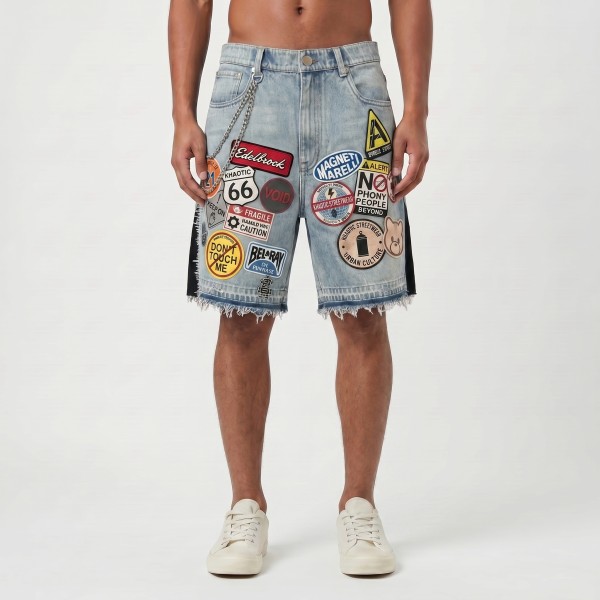
Streetwear-inspired custom denim shorts with utility pockets, distressed wash, and fringe hem for bold collections.
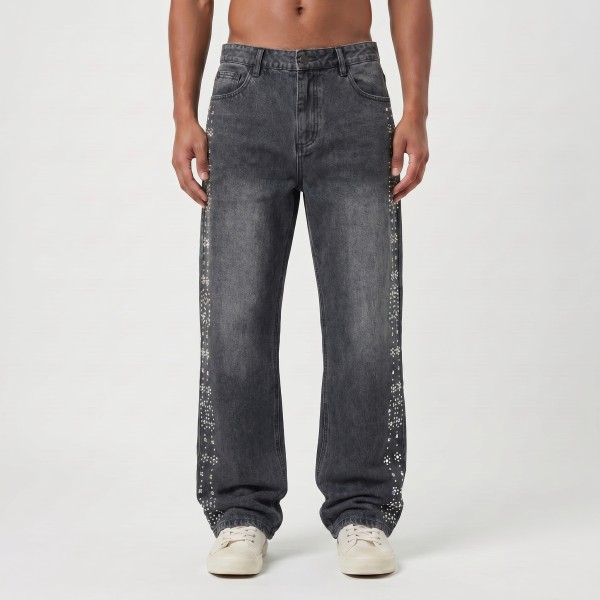
Discover premium DiZNEW denim jeans with decorative studs for a sparkling, stylish look. Order today!
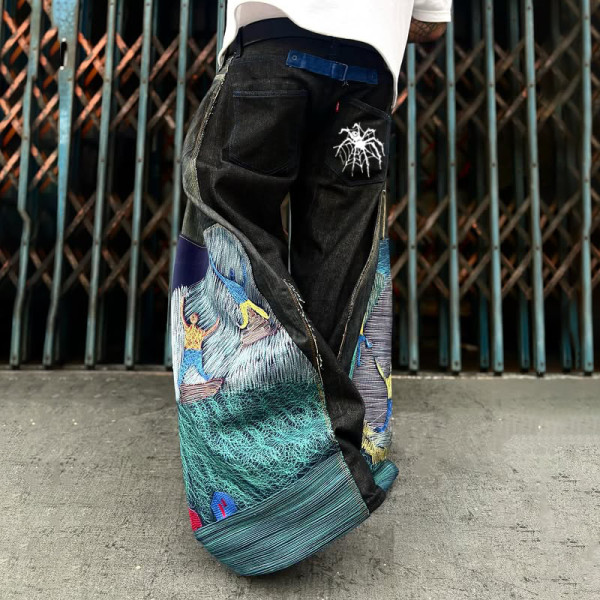
Discover our Custom OEM/ODM Wide Leg Denim Jeans featuring unique Green and Black Split Embroidery. Perfect for wholesale orders!
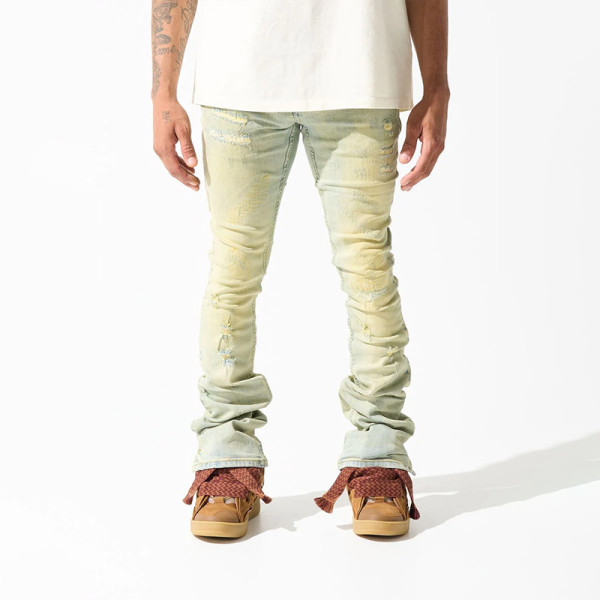
Skinny stacked jeans with distressed detailing and yellow-tinted bleach wash — bold choice for trendsetters.