How to make skinny jeans baggy?
- Share
- publisher
- Jimy
- Issue Time
- Jun 10,2026
Summary
Consumers ask how to make skinny jeans baggy. Update your line! Our B2B factory offers custom CAD pattern making and OEM baggy denim production.
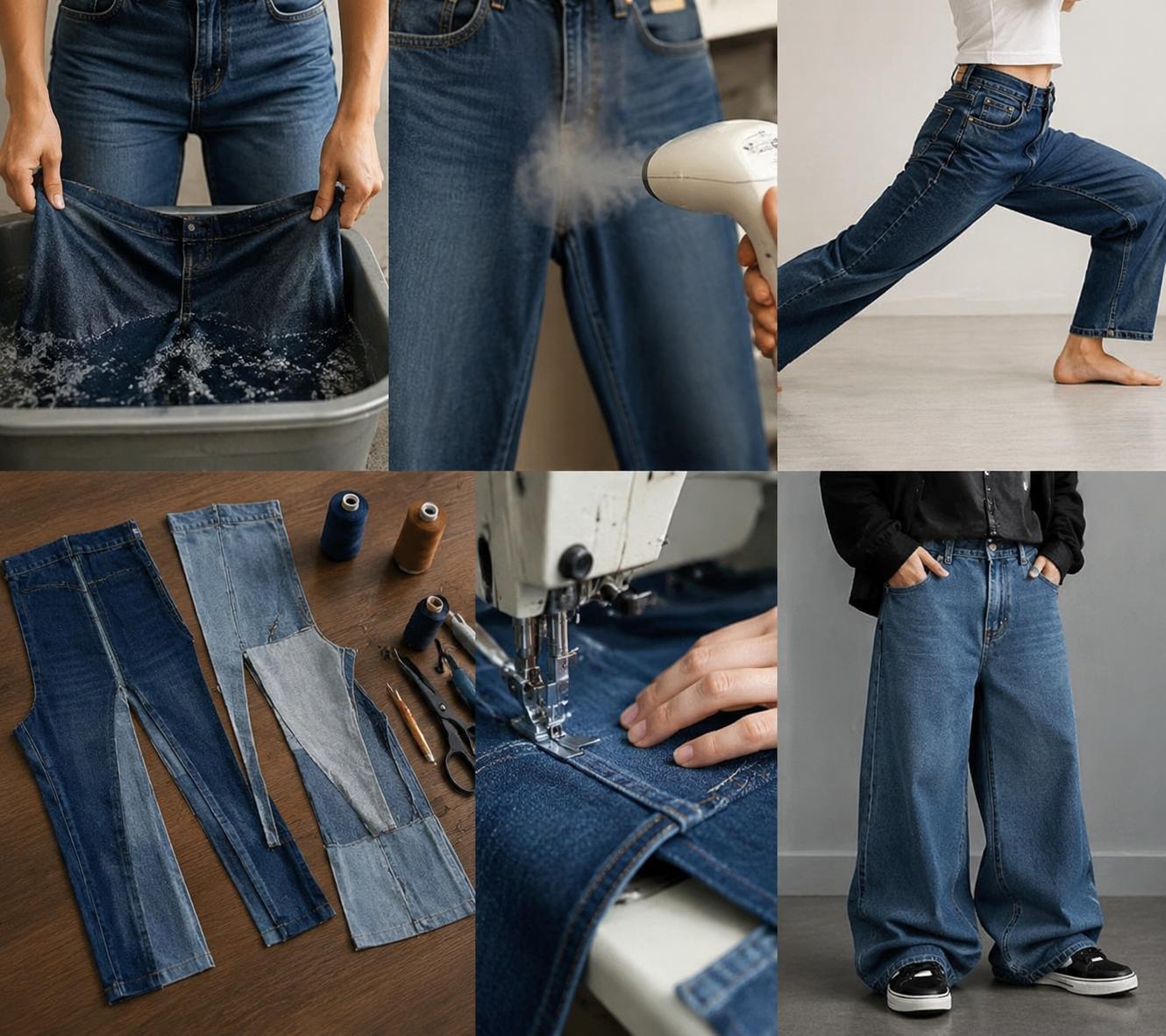
Skinny jeans used to be the “safe” denim choice. They were easy to style, easy to tuck into boots, and everywhere from mall stores to luxury campaigns. But fashion has shifted. Today, many consumers want more room, more comfort, more attitude, and more personality from their denim. Baggy jeans, stacked jeans, relaxed straight jeans, wide-leg jeans, and loose-fit streetwear denim are no longer just trend pieces. They have become everyday wardrobe staples, especially for Gen Z shoppers, online boutique customers, and streetwear-focused brands.
So it makes sense that many people are now asking: how to make skinny jeans baggy? Maybe you have an old pair of skinny jeans sitting in your closet. Maybe you are a designer trying to understand whether an existing slim pattern can be developed into a baggy fit. Or maybe you are a boutique owner wondering if DIY-style baggy denim could become your next best-selling product.
You can make skinny jeans feel looser by stretching the fabric with warm water, steam, body movement, or a waistband stretcher. However, to make skinny jeans truly baggy, you usually need to add fabric panels, change the leg shape, or create a new denim pattern. No-sew methods can relax tight jeans, but professional customization gives the best baggy fit.
Here is the truth: making skinny jeans baggy is not only a DIY question. It is also a fit, fabric, pattern, and production question. A customer may want comfort. A designer may want a new silhouette. A brand may want a sellable product with consistent sizing. One pair of old skinny jeans can teach us a lot about denim construction, but a real baggy jeans collection requires deeper thinking. Let’s start with the closet-level solution, then move into what professional denim development looks like.
Can You Really Make Skinny Jeans Baggy?
Yes, you can make skinny jeans baggy to a certain degree, but the final result depends on the original jeans. Stretch denim can be loosened slightly, while rigid skinny jeans may need sewing or fabric inserts. If you want a true oversized baggy fit, the best option is usually a new pattern instead of only stretching an existing skinny pair.
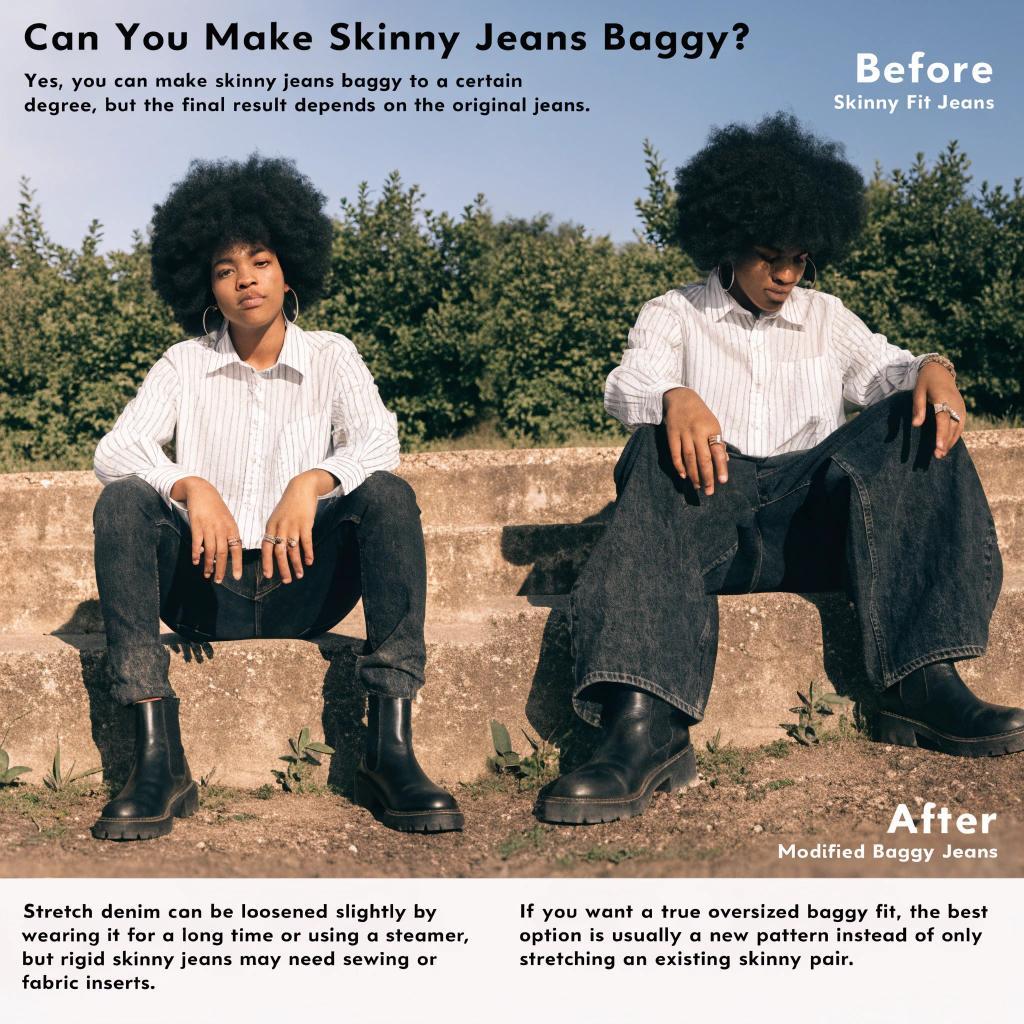
Can I make my skinny jeans baggy?
The honest answer is: yes, but only within limits. Skinny jeans are designed to follow the body closely. The pattern is narrow through the thigh, knee, calf, and leg opening. Baggy jeans are built differently from the start. They need more space in the rise, crotch, hip, thigh, knee, and hem. That means you cannot always “stretch” a skinny jean into a real baggy jean because the original pattern simply does not contain enough fabric.
Think of it like changing a fitted shirt into an oversized hoodie. You can loosen it, style it differently, or add panels, but the base structure still matters. Denim is the same. If your skinny jeans are made from stretch denim with elastane, you may be able to relax the waistband, hips, thighs, and calves enough to make them more comfortable. But if your goal is a slouchy streetwear silhouette, you need more fabric volume.
For personal DIY, the goal is usually comfort. You want the jeans to stop squeezing your legs. You want more breathing room when sitting, walking, or bending. In this case, stretching, steaming, and wearing the jeans in can help. But for designers and boutique owners, the goal is different. You need a product that looks intentional, fits multiple sizes, photographs well, and can be reproduced for customers. That is where DIY alteration is not enough.
What types of skinny jeans are easier to alter?
Not all skinny jeans behave the same way. The easiest jeans to loosen are usually made with stretch denim. These fabrics often include cotton blended with elastane, spandex, Lycra, polyester, or other stretch fibers. They can expand when pulled and recover after movement. This is why many tight jeans feel better after you wear them for a few hours.
Rigid denim is different. A 100% cotton skinny jean can soften with wear, but it does not stretch in the same way. It may relax slightly at pressure points, but it will not suddenly become wide through the leg. Heavyweight rigid denim is even harder to alter because the fabric is dense, the seams are stronger, and the shape is more fixed.
Here is a simple comparison:
| Original Skinny Jeans Type | Can It Feel Looser? | Can It Become Truly Baggy? | Best Method |
| Stretch skinny jeans | Yes | Limited | Warm water, steam, movement, light alteration |
| Rigid cotton skinny jeans | Slightly | Usually no | Sewing panels or new pattern |
| Thin lightweight denim | Yes | Sometimes | Stretching or panel inserts |
Heavyweight denim | Slightly | Difficult | Professional alteration |
Jeans with extra seam allowance | Yes | Sometimes | Letting out seams |
Super tight jegging-style jeans | Yes | Rarely | Stretching, but not true baggy fit |
When is altering skinny jeans not worth it?
Altering skinny jeans is not always the smart move. If the jeans are extremely tight in the crotch, thigh, or calf, you may not have enough structure to work with. If the fabric is already worn out, overstretched, faded unevenly, or damaged at the seams, alteration may shorten the garment’s life. If the fabric has too much elastane and poor recovery, it may become loose in an unattractive way, creating waves, sagging, or knee bags.
From a fashion brand perspective, alteration is even more limited. A one-off DIY project may look creative, but a commercial product needs consistency. If you are selling baggy jeans online, your customers expect the product in size S, M, L, XL, plus sizes, and sometimes custom measurements. You cannot rely on random altered skinny jeans for that. You need a professional pattern, proper grading, fabric testing, sample fitting, wash development, and production control.
This is why many designers use DIY alteration as inspiration, not as the final production method. They may cut open a skinny pair, add panels, test proportions, or create a rough prototype. But once the silhouette is approved, a factory like DiZNEW can develop a clean OEM/ODM pattern that turns the idea into a real product.
In other words, DIY tells you what is possible. Professional denim development tells you what is scalable.
How Can You Make Skinny Jeans Baggy Without Sewing?
You can make skinny jeans looser without sewing by using warm water, steam, gentle pulling, body movement, a waistband stretcher, or leg stretching tools. These methods help relax tight denim fibers and improve comfort. However, no-sew methods cannot add new fabric, so they usually make skinny jeans looser rather than truly baggy.
Is there a way to make skinny jeans looser?
Yes, there are several ways to make skinny jeans looser, especially if the jeans are made from stretch denim. The most common methods include wearing them repeatedly, spraying tight areas with warm water, steaming the fabric, doing movement stretches, or using a waistband stretcher. These methods are popular because they do not require cutting, sewing, or professional tools.
But it is important to manage expectations. “Looser” and “baggy” are not the same thing. Looser means the jeans feel more comfortable. Baggy means the silhouette has visible extra volume. If your jeans are tight at the thigh, warm water may help them relax a little. But it will not create the oversized leg shape of proper baggy jeans.
For consumers, this distinction matters because it prevents disappointment. For fashion brands, it matters even more because customer fit expectations are tied directly to product reviews, return rates, and repeat orders. If a product is called “baggy jeans,” it needs to fit like baggy jeans, not just slightly relaxed skinny jeans.
How to turn skinny jeans into baggy jeans without sewing?
If you want to try a no-sew method at home, focus on controlled stretching. Do not pull aggressively at seams or belt loops, because those areas can rip. Start with the tightest zones: waistband, hips, thighs, knees, calves, and leg opening.
A practical no-sew process looks like this:
| Step | What To Do | Best For | Risk Level |
| 1 | Spray tight areas with warm water | Waist, thigh, calf | Low |
| 2 | Wear the jeans while damp | Overall fit relaxation | Medium |
| 3 | Do squats, lunges, and sitting movements | Hip, seat, knee | Medium |
4 | Use steam on tight panels | Thigh, calf, knee | Low |
5 | Insert a rolled towel or foam roller into the leg | Calf and knee width | Medium |
6 | Use a waistband stretcher | Waist comfort | Low |
7 | Air dry while stretched | Holding shape temporarily | Low |
The key is patience. Denim responds better to gradual pressure than sudden force. If you pull too hard, you can distort the seams, damage the elastane, or create uneven stretching. For stretch jeans, too much heat can weaken recovery. For rigid denim, too much force may stress the stitching.
The no-sew method works best when your jeans are only slightly tight. For example, maybe they fit the waist but squeeze the thighs. Or maybe they feel good standing but uncomfortable when sitting. In these cases, stretching can improve wearability. But if you want your skinny jeans to look like wide-leg jeans, no-sew methods will not be enough.
Can heat, water, or movement stretch skinny jeans safely?
Warm water and steam can help relax cotton fibers, especially when combined with body movement. This is why many people feel their jeans become more comfortable after wearing them for a while. The pressure from your body slowly reshapes the fabric in high-tension areas.
However, there is a fine line between stretching and damaging. Stretch denim often contains elastic fibers that provide comfort and recovery. When you use too much heat, overwash the jeans, or pull too aggressively, those fibers may lose strength. The result can be a pair of jeans that feels loose but does not look good. You may see baggy knees, wavy seams, twisted legs, or a sagging seat.
A safer approach is to stretch only the areas you need. If the waistband is tight, focus on the waistband. If the calves are tight, stretch the lower leg. Avoid stretching the whole garment unless you want the entire fit to relax.
For DIY wearers, this means better comfort. For brands, this shows why fabric selection is so important. A good baggy jean does not only depend on pattern. It also depends on denim weight, shrinkage, recovery, wash effect, hand feel, and how the fabric behaves after repeated wear.
How long does it take to make skinny jeans feel looser?
Some jeans feel looser after 30 minutes of wear. Others need several wears. Stretch denim usually changes faster than rigid denim. But the loosened effect may not be permanent. After washing and drying, the jeans may tighten again, especially if they are exposed to heat.
If you want to maintain a looser fit, avoid high-heat drying. Wash less often when possible. Air dry the jeans in a slightly stretched position. You can also repeat the warm-water stretching process when needed.
From a product development angle, this is one reason why brands test denim before bulk production. A sample may look perfect after sewing, but the real question is how it behaves after washing, wearing, sitting, shipping, photographing, and customer use. For baggy jeans, stability matters. The jeans should be relaxed without becoming sloppy.
That balance is where experienced denim manufacturing becomes valuable.
How Do You Turn Skinny Jeans Into Baggy Jeans With Sewing?
To turn skinny jeans into baggy jeans with sewing, you usually need to add extra fabric through side panels, inseam panels, or gussets. This increases the width through the thigh, knee, calf, and hem. For a clean result, match the denim weight, wash, stretch level, and stitching style, or use contrast fabric intentionally.
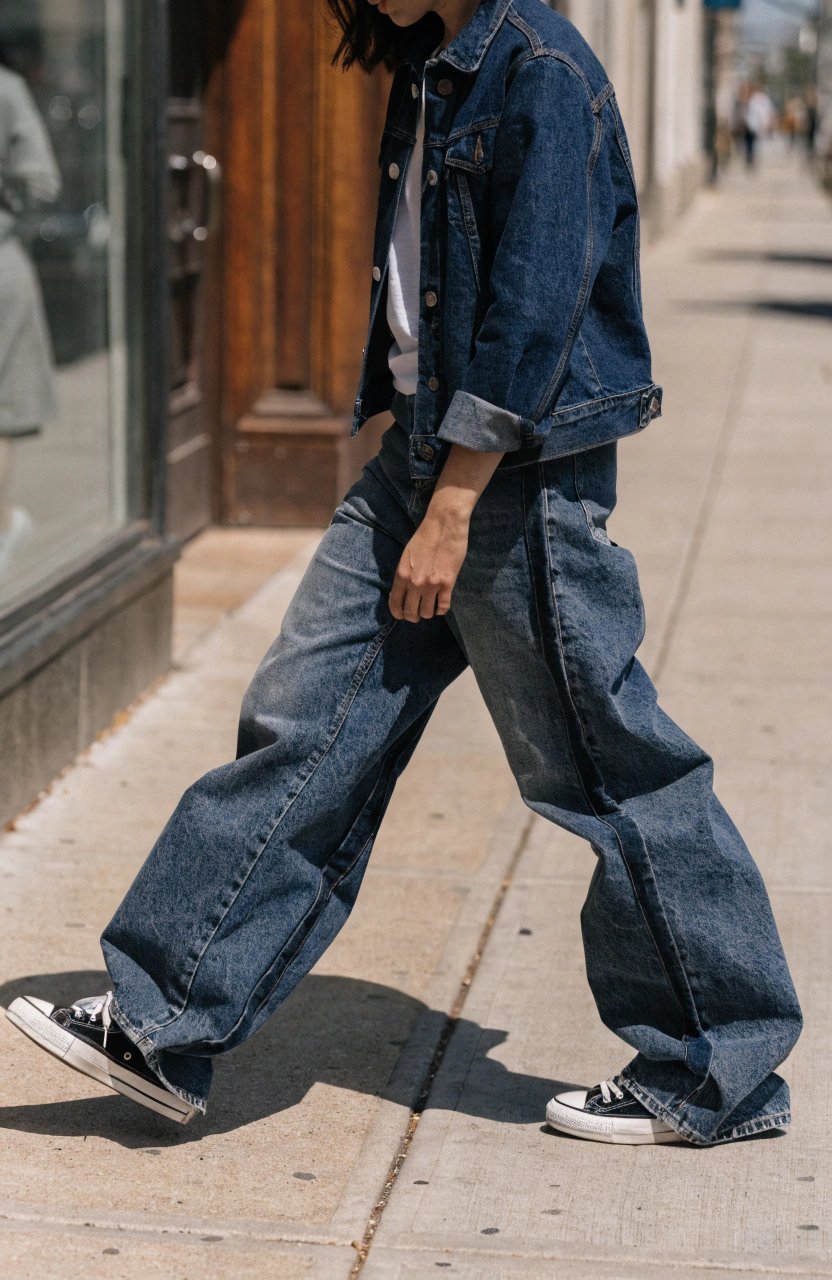
How can side panels turn skinny jeans into a baggy fit?
Side panels are one of the most effective ways to add real width to skinny jeans. Instead of only stretching the existing fabric, you open the side seam and insert a new strip of denim or contrast fabric. This gives the leg more volume and can change the visual style dramatically.
For example, if each side panel adds 2 inches of width, the total leg circumference can increase by about 4 inches. That can move a jean from skinny to relaxed, or from slim to loose. But the final look depends on proportion. If the panel is too narrow, the jeans still look tight. If the panel is too wide, the silhouette may look awkward unless the design is intentional.
Matching the fabric is also difficult. Denim has many variables: weight, color, shade, twill direction, stretch, shrinkage, fading, and wash effect. A panel made from the wrong denim can look like a repair instead of a design. Sometimes that is okay. Contrast panels can create a cool streetwear look. But if you want a premium boutique product, the panel must be planned carefully.
For brands, panel construction can become a strong design feature. You can use darker side panels, washed contrast strips, printed denim, cargo panels, raw-edge panels, or branded tape. This is where a simple alteration idea becomes a real product concept.
Can inseam panels make skinny jeans wider?
Inseam panels can also make skinny jeans wider, especially through the inner thigh, knee, calf, and hem. This method may look more subtle than side panels because the insert sits on the inside leg. It can preserve the outer side seam, which is often more visible in product photos.
However, inseam alteration is technically sensitive. The crotch area carries a lot of stress. If the panel is not shaped correctly, the jeans can pull, twist, or feel uncomfortable when walking. The seam must be strong, smooth, and properly finished. Poor sewing can cause rubbing, puckering, or tearing.
This is why professional denim factories use specialized machines for jeans construction. Industrial sewing can handle thick seams, chain stitching, bar tacks, waistband attachment, belt loops, pocket setting, and heavy denim layers more consistently than most home machines.
If you are doing a personal DIY project, inseam panels can work. But if you are developing a product for customers, do not treat this as a casual alteration. The fit must be tested on real bodies and graded across sizes. A baggy jean that looks great in size M may not work in plus sizes unless the pattern is adjusted properly.
What measurements are needed before altering skinny jeans?
Before changing skinny jeans into a baggy shape, measure the garment carefully. Guessing is the fastest way to ruin the fit.
Important measurements include:
| Measurement Point | Why It Matters |
| Waist | Determines comfort and rise position |
| Hip | Controls seat room and body balance |
Front rise | Affects crotch depth and styling |
Back rise | Affects seat coverage and comfort |
Thigh width | Critical for baggy fit |
| Knee width | Controls leg shape |
Calf width | Important for skinny-to-baggy conversion |
Leg opening | Defines straight, loose, wide, or stacked silhouette |
Inseam | Affects stacking and length |
Outseam | Helps control overall proportion |
A true baggy jean is not just “wider everywhere.” Good baggy jeans still need shape. The waist should sit correctly. The crotch should not drop randomly unless it is a planned low-crotch streetwear fit. The thigh should have room without looking inflated. The hem should match the intended style: wide-leg, stacked, straight, balloon, carpenter, jogger, or relaxed.
This is where many DIY conversions fail. They add width but lose balance. The jeans become bigger, but not better.
Should you DIY or use a professional denim factory?
DIY is great for learning. It is also great for one-of-one fashion. If you are a creator, stylist, or student, cutting and rebuilding old skinny jeans can help you understand garment structure. You can test ideas quickly and cheaply.
But if you are a designer, boutique owner, influencer brand, or premium denim label, a professional denim factory gives you much more control. You can develop the fit from the beginning instead of fighting against an old skinny pattern. You can choose fabric weight, color, stretch, wash, trims, pocket shape, rivets, buttons, zipper, embroidery, leather patch, woven label, and logo placement.
At DiZNEW, this is the kind of work that matters most. Many clients come with a sketch, reference photo, sample, or even a rough idea. The job is not only to “make jeans.” The job is to translate a concept into a wearable, sellable, repeatable denim product.
That is the real difference between alteration and development.
What Design Details Can Make Skinny Jeans Look More Baggy and Trendy?
Design details can make skinny jeans look more relaxed by changing the visual balance. Stacked hems, raw hems, distressing, fading, cargo pockets, side panels, wider leg openings, oversized tops, and streetwear styling can reduce the tight appearance. However, visual tricks help the look, while pattern changes create the actual baggy fit.
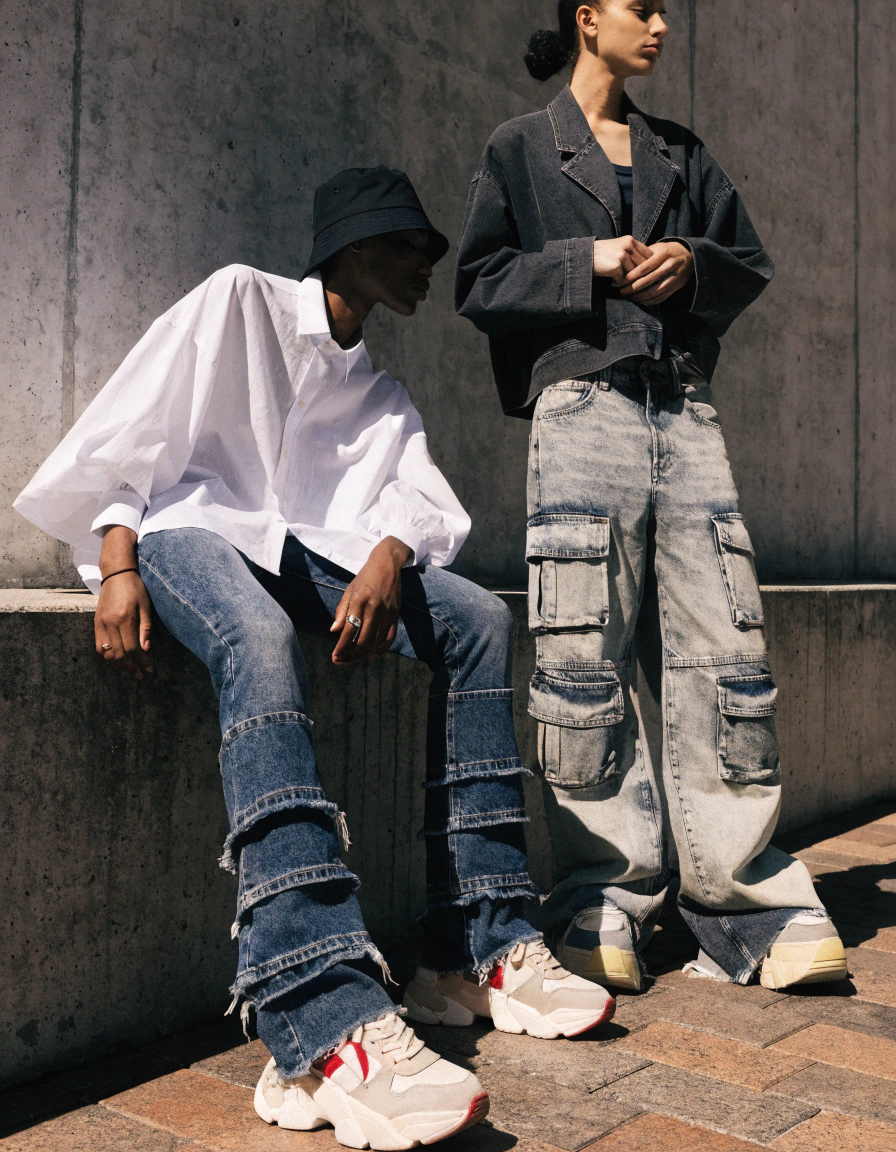
Why does Gen Z not like skinny jeans?
Gen Z does not reject skinny jeans only because of fit. The shift is also cultural. Skinny jeans are strongly connected with the millennial fashion era: ankle boots, long cardigans, slim silhouettes, and polished casual dressing. Gen Z grew up with a different style language. They often prefer comfort, individuality, thrifted looks, vintage references, Y2K influence, streetwear, oversized proportions, and gender-fluid styling.
Baggy jeans communicate something different from skinny jeans. They feel relaxed. They allow movement. They work with sneakers, hoodies, cropped tops, boxy jackets, oversized shirts, and layered outfits. They also photograph well on social media because the silhouette is more expressive.
But the story is not as simple as “skinny jeans are dead.” Fashion cycles are more complex. Skinny jeans can come back in updated ways: cleaner washes, longer inseams, better stretch, sleeker styling, or luxury runway interpretations. The real change is that skinny jeans are no longer the default. Consumers now want options.
For brands, this is important. The opportunity is not just to copy one trend. The opportunity is to understand why customers are moving toward looser denim. They want comfort, identity, and versatility. A good denim brand should offer fit choices that match different lifestyles.
How can styling make skinny jeans appear less tight?
If you are not ready to cut or alter your skinny jeans, styling can make them look less tight. Pair them with oversized tops, boxy T-shirts, relaxed denim jackets, bomber jackets, hoodies, or longer shirts. The contrast between a fitted bottom and loose upper body can make the outfit feel more modern.
Shoes also matter. Skinny jeans with sleek ankle boots may look very 2010s. But skinny jeans with chunky sneakers, skate shoes, or layered socks can feel more streetwear-inspired. You can also let the hem stack slightly over the shoe if the jeans are long enough. This creates a visual break and makes the lower leg look less sharp.
Wash and finishing also change perception. A faded, distressed, or whiskered skinny jean often looks more casual than a clean dark indigo skinny jean. Raw hems, released hems, slits, and ankle distressing can soften the narrow silhouette.
However, styling has limits. If the jeans are physically tight, styling will not solve comfort. If you are selling a product, styling cannot replace fit. Customers may buy because of photos, but they return because of poor comfort. So visual design and real fit must work together.
What design details help create a baggy jeans effect?
Several design details can push skinny or slim jeans toward a baggier, trendier look:
| Design Detail | Effect |
| Stacked hem | Creates streetwear volume near the shoe |
| Raw hem | Makes the jeans feel more relaxed and unfinished |
| Distressing | Adds casual, worn-in character |
Side panels | Adds real width and design impact |
Cargo pockets | Creates visual bulk and utility style |
Carpenter loop | Adds workwear influence |
Faded wash | Softens the tight silhouette |
Whiskering | Adds vintage character |
Wider leg opening | Changes the whole proportion |
Low-rise or relaxed rise | Creates Y2K or slouchy styling |
For designers, these details are not decoration. They are product language. A stacked jean speaks to a different customer than a clean straight jean. A heavily distressed baggy jean speaks to a different boutique than a premium selvedge wide-leg jean. A plus size baggy jean needs different thinking from a skinny-to-baggy DIY conversion.
This is why DiZNEW works with many categories: plus size jeans, baggy jeans, stacked jeans, straight jeans, selvedge jeans, skinny jeans, jogger jeans, denim jackets, denim shorts, and denim shirts. The style range matters because buyers are not all looking for the same denim story.
Which baggy jeans styles are popular for brands and boutiques?
For online boutiques and influencer brands, the most commercially interesting styles often include baggy jeans, stacked jeans, wide-leg jeans, straight-leg jeans, cargo jeans, carpenter jeans, jogger jeans, and plus size loose-fit denim. These styles are easy to photograph, easy to style, and easier to connect with streetwear, vintage, and casual lifestyle content.
A boutique may choose a washed black stacked jean with logo embroidery for a streetwear audience. A premium brand may choose a clean indigo selvedge loose straight jean. A women’s boutique may choose a high-waisted wide-leg jean with a soft stone wash. A plus size brand may focus on comfort stretch denim with proper thigh and seat room.
The point is not just to make jeans bigger. The point is to make the right kind of bigger.
Good baggy jeans need intentional proportion. The rise, hip, thigh, knee, inseam, hem, wash, and fabric weight must all support the customer’s body and style. If one part is wrong, the product may look cheap or feel uncomfortable. If all parts work together, baggy jeans can become a strong repeat seller.
When Should You Customize New Baggy Jeans Instead of Altering Skinny Jeans?
You should customize new baggy jeans when you need a true oversized fit, consistent sizing, brand logo details, special washes, plus size options, or bulk production. Altering skinny jeans can work for personal DIY, but custom denim development is better for designers, boutiques, and brands that want sellable OEM/ODM products.
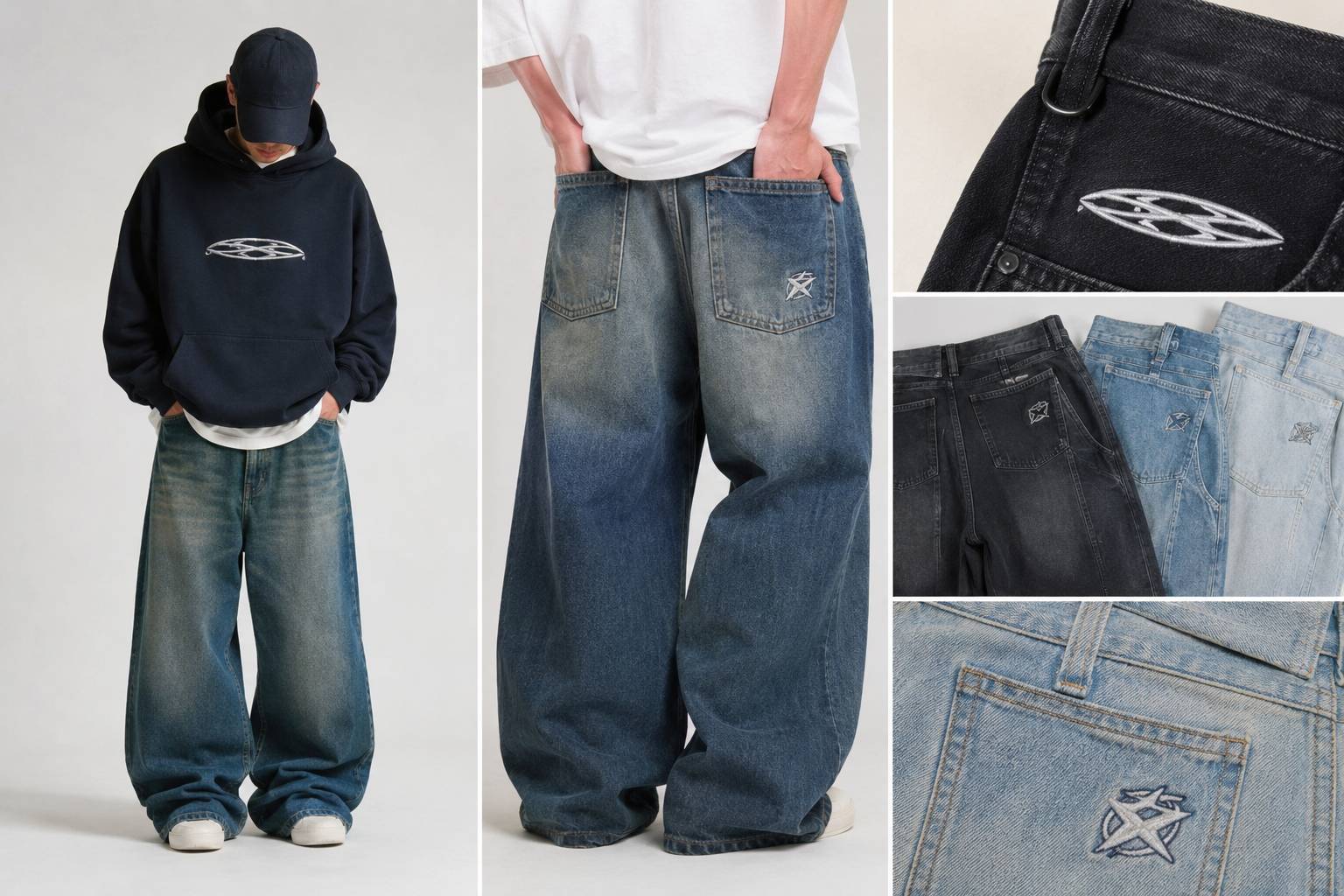
Why is a new custom pattern better for real baggy jeans?
A new custom pattern is better because baggy jeans require a different structure from skinny jeans. The difference is not only leg width. A real baggy fit needs adjusted rise, crotch depth, hip room, thigh shape, knee width, hem opening, and overall balance.
If you simply add fabric to skinny jeans, you may fix the width but not the proportion. The crotch may still feel tight. The back rise may still pull down when sitting. The knee position may look wrong. The hem may not stack properly. The jeans may look altered instead of designed.
A custom pattern solves these issues from the beginning. It allows the designer to define the target silhouette: relaxed straight, loose fit, wide-leg, stacked, baggy cargo, oversized Y2K, skater fit, or plus size baggy. Once the base pattern is approved, the factory can grade it into multiple sizes and prepare it for production.
For brands, this is the difference between a cool idea and a business-ready product.
What should designers prepare before developing custom baggy jeans?
Before contacting a denim factory, designers should prepare as much visual and technical information as possible. You do not need to have a perfect tech pack, but the clearer your idea is, the faster development can move.
Useful materials include:
| What To Prepare | Why It Helps |
| Reference photos | Shows the target style clearly |
| Design sketch | Explains original design details |
| Size chart | Helps define fit expectations |
Fabric preference | Controls weight, stretch, hand feel |
Wash reference | Shows color, fading, and finish |
Logo artwork | Used for embroidery, patch, buttons, labels |
Trim requirements | Defines zipper, rivets, button, labels |
Target customer | Helps adjust fit and price level |
Order quantity | Helps plan production and costing |
For example, if you want stacked jeans, the inseam and leg opening are critical. If you want plus size baggy jeans, seat and thigh comfort are especially important. If you want selvedge baggy jeans, fabric width and construction need special planning. If you want jogger jeans, waistband and cuff construction become key.
A good factory does not only ask, “What jeans do you want?” It asks, “Who will wear them, how should they fit, what price point do you need, and how should the product represent your brand?”
How can OEM/ODM denim manufacturing help small brands?
OEM/ODM denim manufacturing helps small brands turn ideas into real products. OEM usually means the brand provides the design and the factory produces it. ODM means the factory can help with design development, pattern ideas, fabric options, and production solutions.
For small brands, this support is valuable because denim is complex. A T-shirt is relatively simple. Jeans are not. Jeans involve fabric shrinkage, cutting direction, seam strength, pocket placement, waistband shape, rivets, washing, finishing, measurement tolerance, size grading, and packaging. If you want complex baggy jeans, stacked jeans, distressed jeans, cargo jeans, or custom logo denim, experience matters.
DiZNEW is a Chinese jeans R&D and manufacturing factory with more than 20 years of denim experience. The company supports custom denim products across many categories, including plus size jeans, baggy jeans, stacked jeans, straight jeans, selvedge jeans, skinny jeans, jogger jeans, denim jackets, denim shorts, and denim shirts. For emerging brands, the low MOQ of 30 pieces is helpful for testing the market. For growing brands, DiZNEW can also handle large orders up to 10,000 pieces.
This flexibility is important because not every brand starts at the same level. A designer may need a small custom sample run. An online boutique may need 100 pieces for a first drop. A premium label may need repeated production with strict quality control. A larger buyer may need thousands of pieces with stable delivery.
When should brands move from DIY alteration to bulk production?
You should move from DIY alteration to bulk production when people want to buy the style, not just compliment it. If your altered skinny jeans get attention on Instagram, TikTok, or in your boutique, that is a signal. But before selling, you need to make the design repeatable.
Ask yourself:
Can this fit be produced in different sizes?
Can the fabric be sourced consistently?
Can the wash be repeated from batch to batch?
Can the logo details be applied cleanly?
Can customers wear it comfortably?
Can the cost support your target retail price?
Can the design be produced again if it sells out?
If the answer is yes, it may be time to work with a professional denim manufacturer.
For boutique owners, this can be the difference between reselling common jeans and building a recognizable denim product. For designers, it can turn a sketch into a real collection. For influencer brands, it can transform audience taste into a sellable private-label product.
The best denim products are not random. They are developed through fit testing, fabric selection, washing, sampling, correction, and production. That is exactly where DiZNEW can support.
Final Thoughts: From Skinny Jeans Alteration to Custom Baggy Jeans Production
So, how do you make skinny jeans baggy? If you are working with one pair at home, start with no-sew stretching methods. Use warm water, steam, gentle movement, and gradual pressure to make the jeans feel looser. If you want a more dramatic change, sewing side panels or inseam panels can add real width. But if you want a true baggy jeans silhouette, especially for commercial selling, the smarter choice is custom denim development.
Skinny jeans can be loosened. They can be restyled. They can even be rebuilt. But real baggy jeans need more than extra space. They need proportion, fabric knowledge, wash control, pattern engineering, and production experience.
For consumers, this means choosing the method that matches your goal. For brands, it means choosing the right manufacturing partner.
If you are a designer, online boutique owner, influencer store, premium denim label, or small fashion brand looking to develop custom baggy jeans, stacked jeans, plus size jeans, straight jeans, jogger jeans, selvedge jeans, denim jackets, denim shorts, or denim shirts, DiZNEW can help turn your idea into a real product.
With more than 20 years of denim R&D and manufacturing experience, DiZNEW supports OEM/ODM customization, private label branding, logo development, fabric sourcing, pattern making, sample creation, complex denim washing, small-batch orders starting from 30 pieces, and large-volume production up to 10,000 pieces.
Have a sketch, reference photo, tech pack, or just a rough denim idea? Send your design concept to DiZNEW and start your custom jeans inquiry today. Your next best-selling baggy jeans collection may begin with one simple question: “Can we make this fit better?”
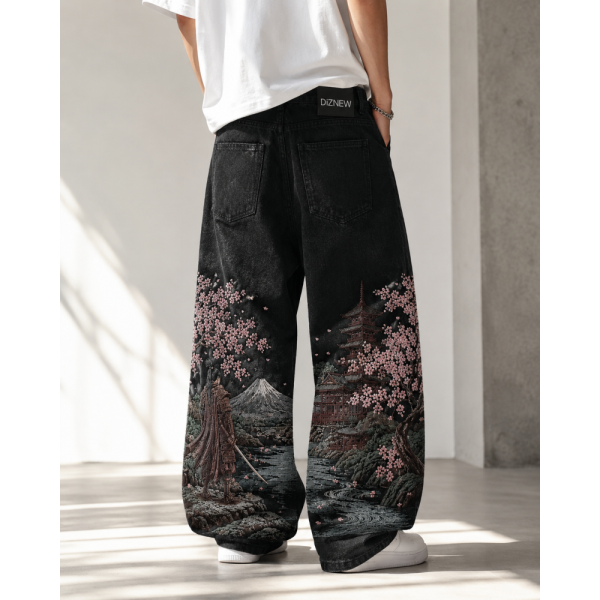
Premium wide-leg denim jeans featuring a vintage washed black finish, detailed Japanese landscape artwork, embroidery-style decoration, and custom brand label options. Designed for streetwear brands, designer labels, and private label collections looking for statement denim with strong visual storytelling.
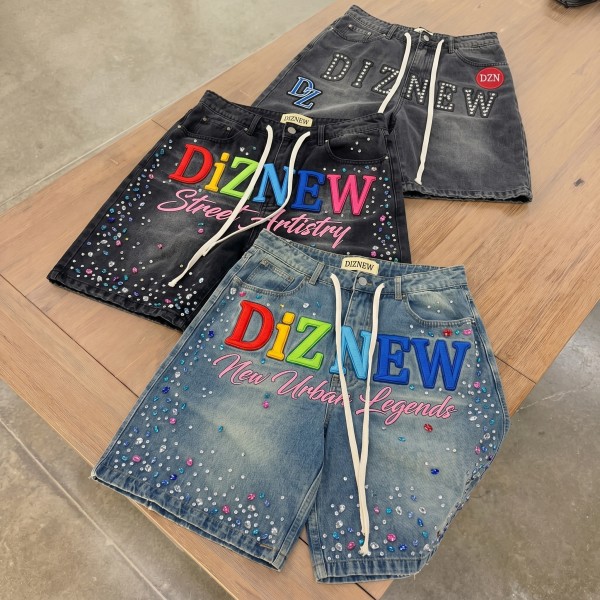
Custom Rhinestone Logo Denim Shorts: Wholesale supply direct. We manufacture premium embroidered baggy jean shorts for brands.
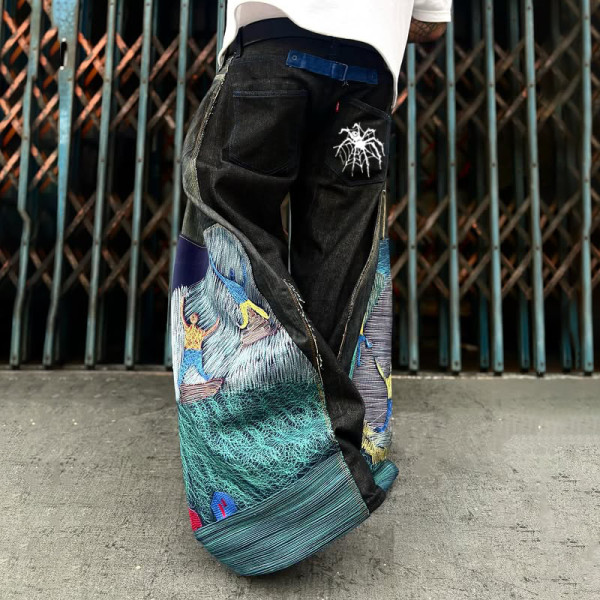
Discover our Custom OEM/ODM Wide Leg Denim Jeans featuring unique Green and Black Split Embroidery. Perfect for wholesale orders!
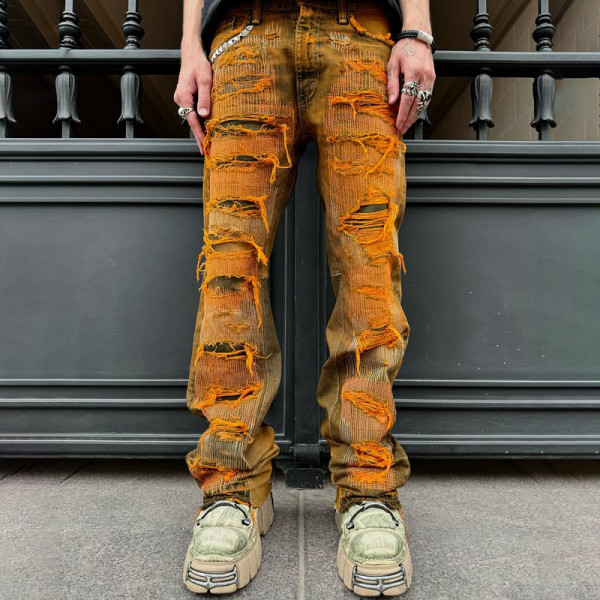
Discover Custom OEM/ODM Mud Yellow Distressed Jeans designed for brands and wholesalers, blending style with top-notch craftsmanship.