How to Turn a Denim Sketch Into a Production-Ready Sample
- Share
- Issue Time
- Jul 3,2026
Summary
Transform denim sketches into ready samples. Our integrated B2B factory offers expert CAD pattern making, sourcing, and custom sample production.
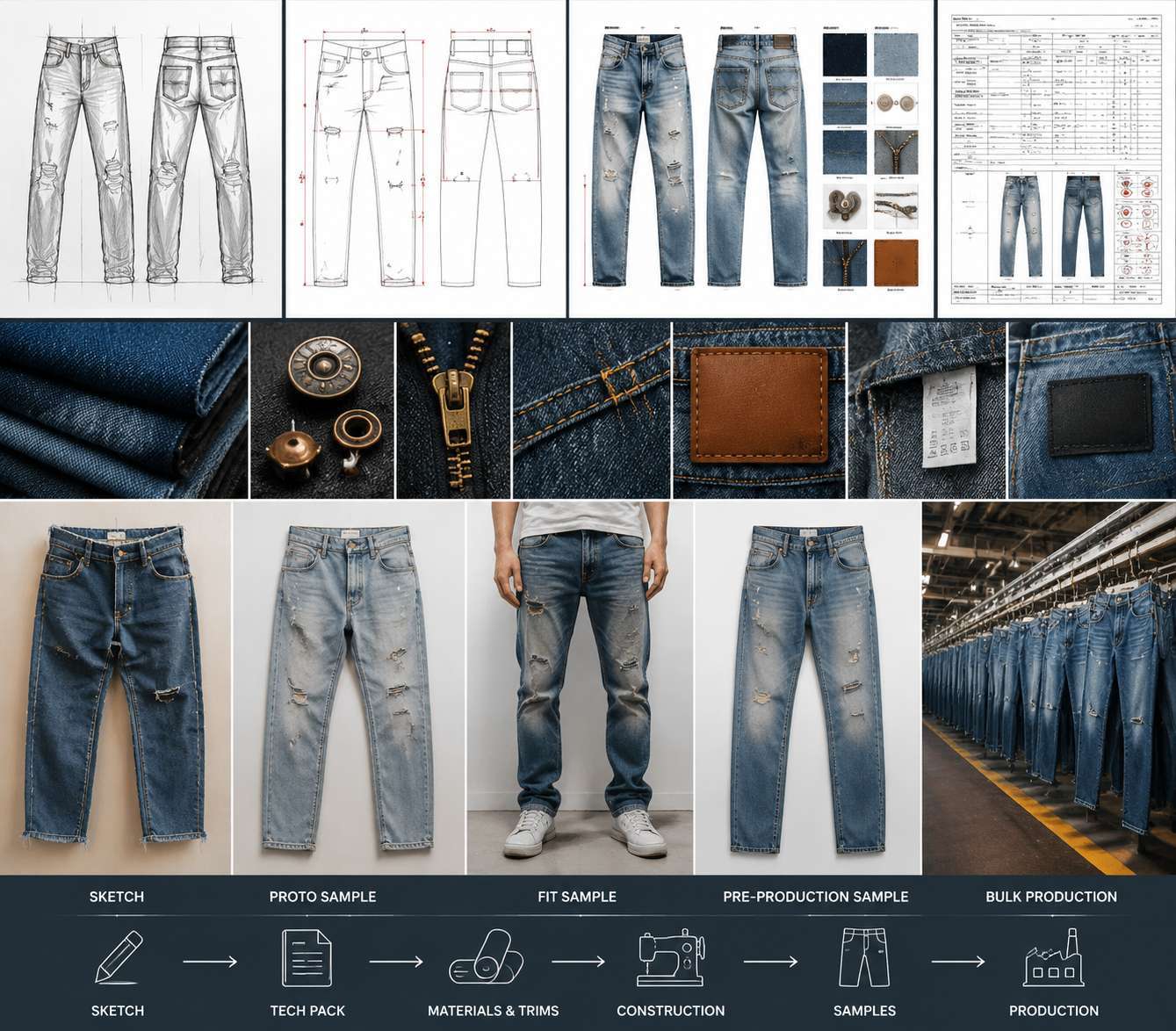
A denim sketch is exciting because it feels like the beginning of a real brand. Maybe it is a baggy jean with exaggerated stacking, a plus size fit with a better waist-to-hip shape, a vintage-wash denim jacket, or a streetwear jean covered with embroidery, distressing, and custom hardware. But here is the truth many new designers learn quickly: a sketch is not the same thing as a production instruction. A sketch tells the factory what the idea looks like. It does not fully explain how the garment should be patterned, measured, cut, sewn, washed, finished, labeled, packed, inspected, and repeated in bulk.
To turn a denim sketch into a production-ready sample, convert the idea into a technical working drawing and tech pack, confirm fabric, wash, trims, measurements, labels, and construction details, then develop a proto sample, fit sample, and pre-production sample. Once the final sample is approved, the factory can use it as the standard for bulk denim production.
This process may sound technical, but it is the bridge between creativity and business. A designer can have a great idea, but a factory needs clear details to make it real. For denim especially, small decisions matter: fabric weight, shrinkage, stretch recovery, pocket placement, rivets, wash effect, waistband fit, inseam length, and finishing quality. The better the development process, the fewer surprises you face when your first real product arrives.
What Does It Mean to Turn a Denim Sketch Into a Production-Ready Sample?
Turning a denim sketch into a production-ready sample means changing a creative idea into a physical garment that a factory can accurately repeat. This includes working drawings, tech packs, fabric selection, wash testing, pattern making, sample development, fit corrections, trims approval, and final pre-production sample approval before bulk manufacturing begins.
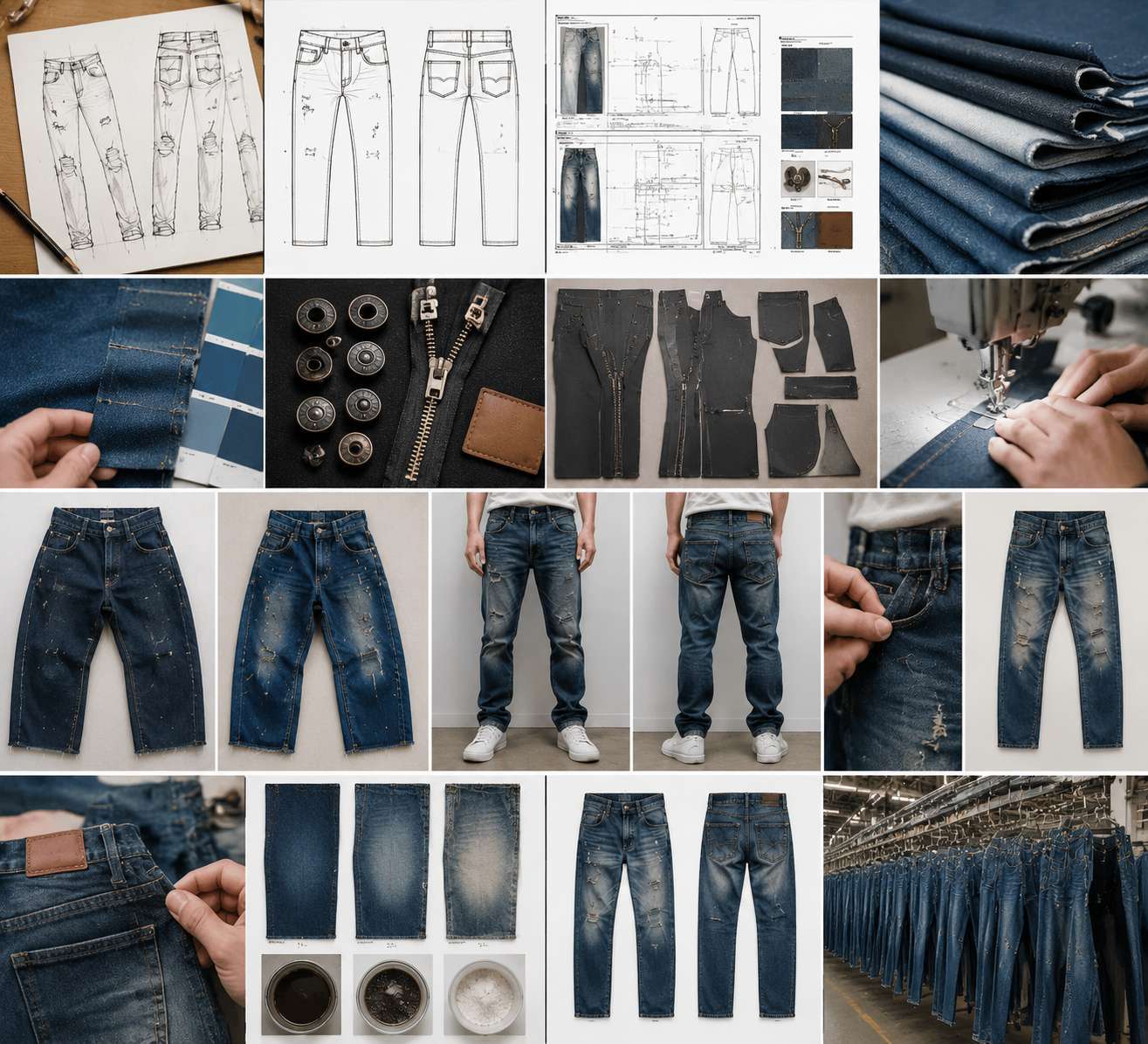
Why is a denim sketch not enough for factory production?
A fashion sketch is usually expressive. It may show attitude, shape, proportion, mood, and styling direction. That is useful for creativity, but it is not enough for production. A factory cannot accurately produce jeans from a loose sketch unless the design details are translated into technical information.
For example, a sketch may show “baggy jeans,” but what does baggy mean? Is the rise low, mid, or high? What is the thigh measurement? How wide is the leg opening? Is the inseam long enough for stacking? Should the denim be rigid or stretch? Are the pockets oversized? Is the wash light blue, vintage dirty, acid wash, enzyme wash, or raw? Should the belt loops be standard, wide, reinforced, or 7-loop western style?
These details affect the final product. Without them, the factory must guess. Guessing leads to sample mistakes, longer development time, higher cost, and bulk production risk.
What is a production-ready denim sample?
A production-ready denim sample is the approved final sample that reflects the buyer’s confirmed design, fit, fabric, wash, trims, labels, measurements, stitching, finishing, and packaging. It is not just a “nice-looking sample.” It is the standard that guides bulk production.
In garment development, several sample stages may appear:
| Sample Type | Purpose | What It Checks |
| Concept sample | Tests the idea visually | Style direction and basic look |
| Proto sample | First physical version | Construction feasibility and basic shape |
| Fit sample | Improves body fit | Measurements, rise, waist, hip, leg shape |
Salesman sample | Used for selling or marketing | Appearance, photos, buyer presentation |
Pre-production sample | Final approved standard | Bulk production accuracy |
For denim, the pre-production sample is especially important because washing and finishing can change measurements, hand feel, color, and appearance. If the PP sample is not controlled, bulk production can look different from what the buyer approved.
How to get your designs made into clothes?
To get your designs made into clothes, you need to move from idea to technical execution. The typical path is:
Create a fashion sketch or design idea.
Convert it into a working drawing or technical flat.
Prepare a tech pack with measurements, fabric, trims, labels, and construction notes.
Choose a manufacturer that understands your product category.
Develop the first sample.
Review fit, wash, fabric, and workmanship.
Revise the sample if needed.
Approve the pre-production sample.
Start small-batch or bulk production.
If you do not have a full tech pack yet, an experienced OEM/ODM factory can often help you fill in missing details. This is common for boutique owners, influencer brands, and new denim designers who may have a strong creative idea but limited technical production experience.
Why is denim sample development more complex than basic clothing?
Denim sample development is more complex because jeans are shaped by both sewing and washing. A T-shirt sample mainly depends on fabric, pattern, stitching, and print. Jeans also depend on shrinkage, wash recipe, fabric weight, stretch recovery, fading effect, hardware, rivets, waistband construction, pocket placement, and finishing.
A pair of stacked jeans may look wrong if the inseam is too short or the fabric is too soft. Plus size jeans may fail if the waist-to-hip grading is not correct. Selvedge jeans need clean construction and careful hem finishing. Denim jackets need proper shoulder balance, sleeve shape, and wash control.
Dive Deeper
The biggest mistake many new designers make is thinking that a factory can read the designer’s mind. A sketch may feel clear to the person who drew it, but factories work through measurable instructions. Production is not based on emotion; it is based on repeatable standards.
This does not mean creativity is less important. In fact, clear technical development protects creativity. If you want a specific silhouette, you need measurements. If you want a specific wash, you need reference standards. If you want a special pocket shape, you need a working drawing. If you want your own logo, you need label placement, size, material, and artwork. The more clearly you define the design, the more likely the final sample will match your idea.
Denim adds another layer because the fabric changes during production. Washing can shrink the garment. Stone washing can soften the hand feel. Enzyme washing can change the surface. Stretch denim can recover differently depending on fiber content. Heavy denim may hold shape better but feel stiffer. Lightweight denim may feel comfortable but lack structure for baggy or stacked silhouettes.
For boutique brands, this is why sampling should not be treated as a delay. Sampling is product insurance. It gives the buyer a chance to test fit, fabric, wash, construction, and customer appeal before ordering more pieces. A small sample mistake is much cheaper than a bulk production mistake.
DiZNEW is valuable for this stage because it specializes in denim development, not just general apparel production. For buyers who want plus size jeans, baggy jeans, stacked jeans, straight jeans, selvedge jeans, skinny jeans, jogger jeans, denim jackets, denim shorts, or denim shirts, a denim-focused factory can help translate creative ideas into production-ready garments with better accuracy.
What Information Should Designers Prepare Before Denim Sampling?
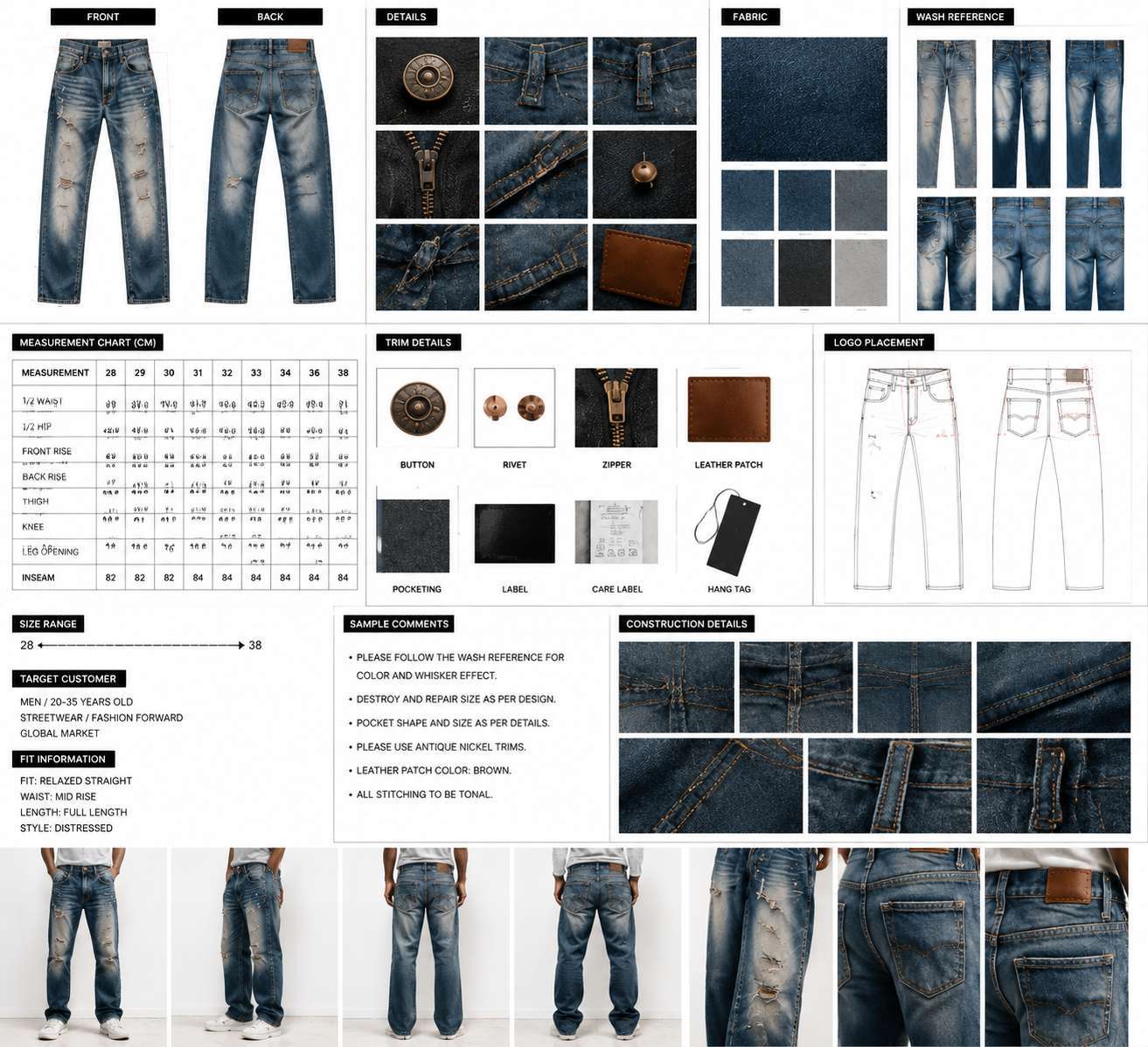
Before denim sampling, designers should prepare a working drawing, tech pack, measurement chart, fabric direction, wash reference, trim details, logo placement, size range, target customer, and sample comments. The more specific the information, the easier it is for the factory to create an accurate denim sample and reduce costly revisions.
How do you produce working drawings for designs created in garment making?
Working drawings, also called technical flats, are clean two-dimensional drawings that show the garment clearly. Unlike fashion sketches, they are not mainly about mood or pose. They are about construction.
For jeans, a working drawing should usually include front and back views. For complex designs, side views or detail views may also be needed. The drawing should show:
Denim Detail Why It Matters
Waistband shape Controls rise, comfort, and fit
Belt loops Shows number, width, placement, and reinforcement
Front fly Defines zipper, button fly, or special closure
Pockets Shows shape, size, placement, and stitching
Yoke Affects back fit and visual shape
Seams Guides construction and panel layout
Leg shape Defines skinny, straight, baggy, flare, or stacked fit
Hem Controls cuff, stacking, or finished length
Trims Shows rivets, buttons, patches, labels, and embroidery
A good working drawing should be simple, clean, proportionate, and easy for pattern makers to read. It does not need to be artistic. It needs to be useful.
What should be included in a denim tech pack?
A denim tech pack is the garment’s instruction manual. It should include everything the factory needs to understand and repeat the design.
A strong denim tech pack usually includes:
Flat sketch or working drawing
Measurement spec sheet
Size chart and grading rules
Fabric composition and weight
Stretch or rigid fabric information
Wash reference
Color standard
Stitching details
Thread color
Pocket placement
Hardware and trims
Buttons, rivets, zippers, snaps, or drawstrings
Leather patch or logo patch details
Woven label placement
Hang tag requirements
Packaging method
Tolerance standards
Sample correction notes
The tech pack does not need to be perfect at the beginning, especially for new designers. But the more complete it is, the smoother the sample process becomes.
What can I use to sketch on jeans?
There are two ways to think about sketching on jeans: sketching the design before production and marking directly on denim during development.
For digital design, designers can use tools such as Adobe Illustrator, Photoshop, Procreate, CLO 3D, or simple tablet drawing apps. Digital sketches are useful for creating front and back views, adding stitching lines, marking embroidery placement, and building tech pack visuals.
For marking directly on denim, designers can use tailor’s chalk, washable fabric markers, disappearing ink pens, white pencils, masking tape, or embroidery placement stickers. These tools are useful for marking distressing zones, embroidery placement, laser wash areas, pocket changes, patch placement, or hand-painted design locations.
Permanent markers, paint pens, spray paint, bleach, or fabric paint should only be used when the mark is part of the final design concept, such as graffiti denim, hand-drawn streetwear jeans, painted denim jackets, or custom artistic finishes.
Can a factory work from only a sketch or reference photo?
Yes, an experienced factory can often start from a sketch, reference photo, AI image, mood board, physical sample, or simple design description. But the buyer should understand that a sketch alone leaves room for interpretation.
For example, if a designer sends a photo of oversized jeans and says, “Make this,” the factory still needs to know the target fabric, size range, inseam, waist measurement, wash, pocket design, logo placement, and order quantity. If the buyer does not provide those details, the factory has to suggest them.
DiZNEW can support buyers who do not yet have a complete tech pack. The factory can help clarify fabric, wash, fit, trims, size range, labels, hardware, and packaging based on the buyer’s sketch or reference image.
What denim details should be confirmed before making the first sample?
Before making the first sample, designers should confirm the fit direction, fabric, wash, trims, logo details, and target customer.
For example:
Decision Area Example Options
Fit Skinny, straight, baggy, stacked, flare, jogger, plus size
Fabric Rigid denim, stretch denim, selvedge denim, lightweight, heavyweight
Wash Raw, stone wash, acid wash, enzyme wash, vintage wash, dirty wash
Trims Buttons, rivets, zippers, patches, labels, hang tags
Market U.S. boutique, streetwear brand, plus size customer, premium buyer
These decisions help the factory choose the right development path.
How do fabric, wash, and shrinkage affect the final denim sample?
Denim can change significantly during washing. A pattern that looks correct before washing may become shorter, tighter, softer, or differently shaped after washing. This is why shrinkage testing matters.
Fabric weight also changes the result. A 14oz denim will not behave like a lightweight 8oz denim. Stretch denim will not behave like rigid cotton denim. Selvedge denim may require different finishing decisions than standard denim.
Wash is also critical. A light vintage wash, heavy enzyme wash, acid wash, or dirty wash can change the look and hand feel of the jeans. If the wash reference is unclear, the sample may miss the brand’s target look.
Dive Deeper
Preparation is where brands save money. Many sampling problems happen before the first sample is even made. If the working drawing is unclear, the factory may create the wrong pocket shape. If the fabric is not confirmed, the fit may change later. If the wash reference is vague, the color may not match expectations. If measurement tolerances are missing, the buyer and factory may disagree about what is acceptable.
For denim, preparation should be visual and technical. A mood board is helpful, but it is not enough. A reference photo is helpful, but it does not define measurement. A fabric swatch is helpful, but it does not define shrinkage. A good development package combines all of these.
Boutique owners should also prepare their target customer profile. A jean for a Gen Z streetwear buyer is not developed the same way as a jean for a premium selvedge customer. A plus size jean for online boutiques needs different fit attention than a slim fashion jean. A denim jacket for an influencer brand may need strong visual details for social media, while a workwear jean may need stronger stitching and hardware.
This is why DiZNEW often works best as a development partner, not just a sewing supplier. Buyers can provide sketches, reference images, samples, or tech packs, and the factory can help turn them into workable denim products. The more the buyer communicates the target market, price point, style direction, and quality expectation, the more accurate the sample can be.
Good preparation also supports better quotation. A factory cannot give a precise price if it does not know the fabric, wash, trims, labels, quantity, size range, and packaging. A basic jean and a heavily distressed stacked jean may both be “jeans,” but their production cost can be very different.
For new brands, the goal is not to prepare everything perfectly from day one. The goal is to prepare enough information to begin a professional conversation with the factory. From there, sample development can refine the idea step by step.
How Does a Factory Turn a Denim Sketch Into a Real Sample?
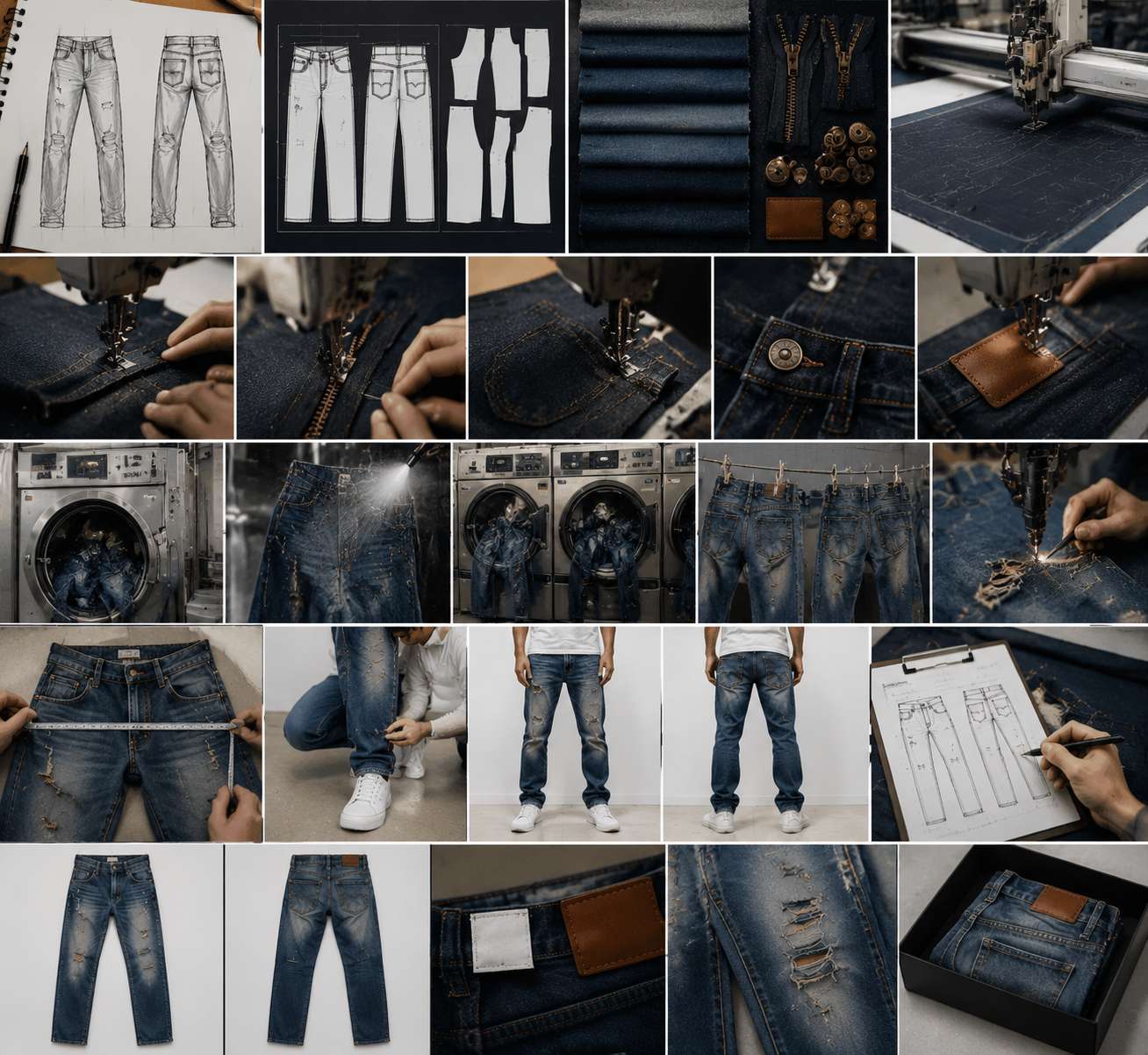
A factory turns a denim sketch into a real sample by creating a pattern, sourcing fabric and trims, cutting the fabric, sewing the first proto sample, applying wash and finishing, checking measurements, reviewing fit, making corrections, and developing a final pre-production sample. This sample becomes the standard for future production.
How is a denim pattern made from a sketch?
Pattern making turns a design idea into cuttable fabric shapes. For jeans, the pattern includes many key areas: waistband, front rise, back rise, hip, thigh, knee, leg opening, inseam, yoke, pockets, fly, belt loops, and hem.
A good pattern controls both appearance and comfort. If the back rise is too short, the jeans may pull when sitting. If the hip is too tight, the customer cannot move comfortably. If the thigh is too narrow, baggy jeans will not look baggy. If the inseam is wrong, stacked jeans will not stack properly.
Pattern making is where the sketch becomes engineering.
What happens during proto sample development?
The proto sample is the first physical version of the design. It tests whether the design can be made and whether the basic silhouette is correct.
The first proto sample may not be perfect. That is normal. Its purpose is to reveal issues. The factory and buyer may check whether the fabric behaves correctly, whether the pockets are in the right place, whether the construction is practical, and whether the general fit matches the design direction.
For complex denim, the proto sample is often the first real conversation between the idea and the body.
How does a fit sample improve the jeans?
A fit sample improves the garment by correcting measurements and body shape. Fit corrections may include waist gapping, hip tightness, rise adjustment, inseam length, thigh width, knee position, leg opening, pocket placement, stacking effect, waistband comfort, and overall balance.
Fit comments should be clear. Instead of saying “make it more oversized,” a designer should say, “Increase thigh by 2 cm, increase leg opening by 1.5 cm, and add 3 cm to inseam for stacking.” Instead of saying “pockets look weird,” mark the desired pocket position on a photo.
Plus size jeans, baggy jeans, stacked jeans, and complex streetwear denim often need more careful fitting because small changes can affect the whole silhouette.
What is a pre-production sample and why does it matter?
A pre-production sample, often called a PP sample, is the final approved sample before bulk production. It should confirm the final fabric, wash, trims, labels, measurements, stitching, construction, packaging, and workmanship.
The PP sample matters because bulk production should follow it. If the buyer approves a PP sample with unclear details, the bulk order may not match expectations. If the PP sample is accurate, it becomes a quality standard for inspection.
How to get your designs made into clothes with a manufacturer?
To get your designs made into clothes with a manufacturer, contact the factory with your design files, reference images, target quantity, size range, fabric preference, customization needs, and timeline. The factory can then review feasibility, quote the project, develop the sample, revise it, and prepare for production.
For denim, it is helpful to share:
Sketch or reference image
Target fit
Size range
Fabric preference
Wash reference
Logo and label details
Trims and hardware expectations
Target order quantity
Target market
Any physical sample if available
This helps the manufacturer understand both the garment and the business goal.
Dive Deeper
Factory sample development is a collaborative process. The designer brings vision. The factory brings production knowledge. The best results happen when both sides communicate clearly.
A designer may focus on the look: oversized, vintage, distressed, clean, premium, western, streetwear, or luxury. The factory must turn those words into technical choices. “Vintage” may become enzyme wash, hand sanding, whiskers, grinding, tinting, or dirty wash. “Streetwear” may become oversized leg shape, longer inseam, wider belt loops, bold stitching, and custom patches. “Premium” may become heavier fabric, cleaner finishing, better trims, and stricter measurement tolerance.
One critical point is that the first sample is not always the final answer. New designers sometimes feel disappointed when the first sample needs changes. But sample corrections are normal. In fact, professional brands expect revisions. The goal is not to avoid corrections. The goal is to make each correction precise.
Denim sample development also requires sequencing. You should not finalize bulk production before confirming fabric and wash. You should not approve a fit before checking post-wash measurements. You should not approve labels before confirming size placement. You should not approve hardware without checking durability and appearance.
For online boutique brands, a good sample can also become a marketing asset. Once the sample is approved, it can be used for model photos, product videos, pre-launch content, buyer feedback, and influencer testing. This is especially useful for limited drops and low MOQ launches.
DiZNEW can support this process from sketch to sample by helping with fabric selection, wash development, pattern making, sampling, logo customization, trims, labels, packaging, and scalable production. For buyers who want to build a serious denim product, the factory relationship should begin before bulk production, not after.
What Mistakes Should Brands Avoid When Developing Denim Samples?
Brands should avoid incomplete tech packs, unclear working drawings, vague fit comments, wrong fabric choices, poor wash references, missing measurement tolerances, late design changes, and ignoring shrinkage. Denim samples often need revision, but clear communication, detailed comments, and proper sample approval can reduce mistakes before bulk production begins.
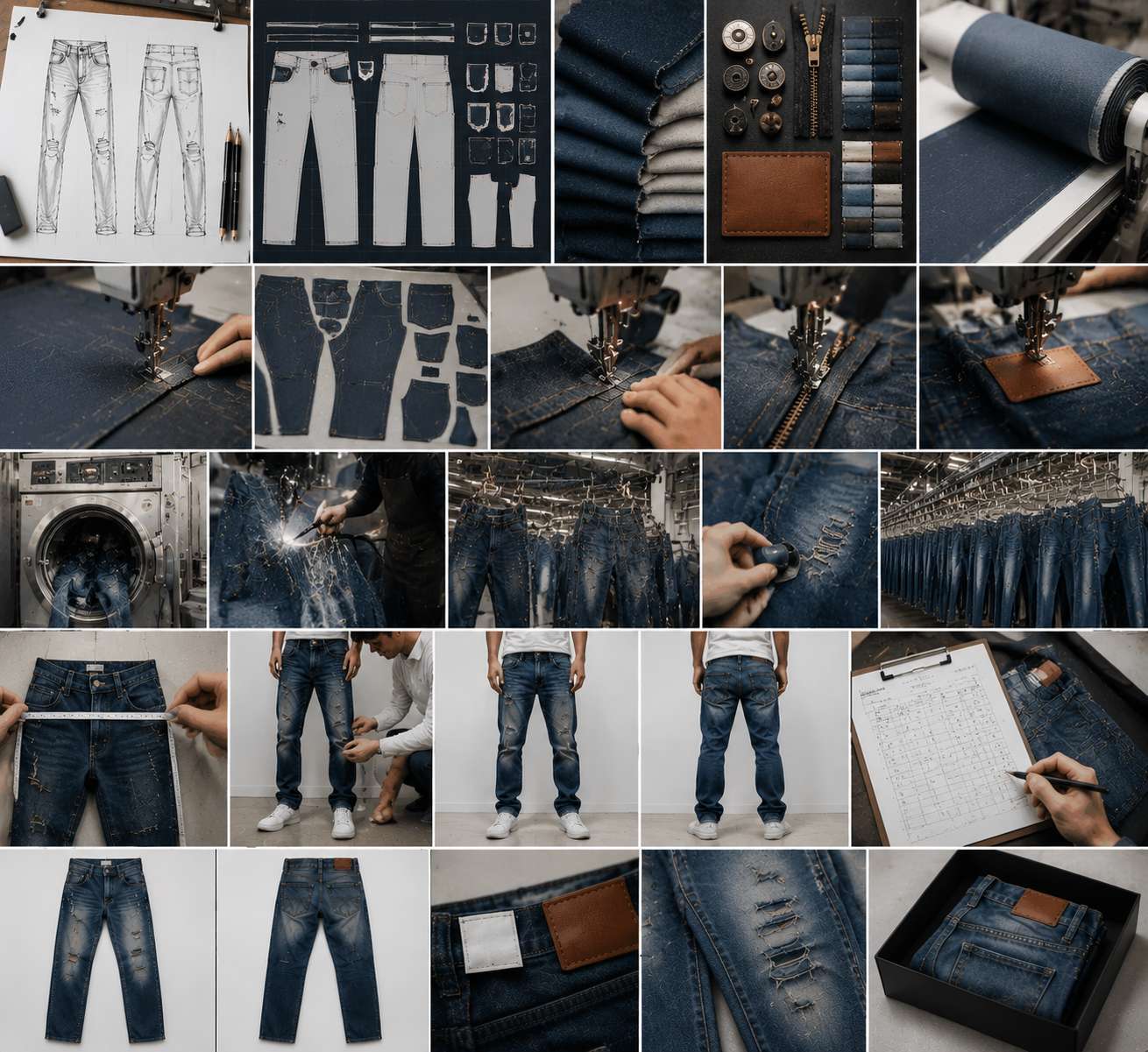
Why do denim samples often fail the first time?
Denim samples often fail the first time because the information is incomplete or unclear. Common reasons include:
| Problem | Result |
| Incomplete tech pack | Factory must guess details |
Unclear working drawing | Wrong pockets, seams, or proportions |
Wrong fabric choice | Fit and structure do not match the design |
Unclear wash reference | Color or effect is different from expected |
| Missing tolerances | Buyer and factory disagree on measurements |
| Poor fit communication | Corrections are vague or misunderstood |
Ignoring shrinkage | Final garment changes after washing |
Late design changes | Sampling timeline and cost increase |
These problems are common, but they are preventable.
What mistakes happen when working drawings are not clear enough?
Unclear working drawings can cause wrong pocket shape, wrong seam placement, wrong panel construction, wrong trim placement, wrong leg shape, or wrong proportions. For denim, front and back views are especially important because jeans have many visible construction details.
If the design includes cargo pockets, patchwork, distressing, embroidery, contrast stitching, stacked legs, or special waistband details, the drawing should show those clearly. A vague sketch may look stylish, but it can create confusion in the sample room.
How can designers give better sample comments to the factory?
Good sample comments should be specific, visual, and measurable. Designers should compare the sample against the tech pack, take clear photos, mark changes directly on the images, and separate comments by category.
For example:
Fit correction: “Reduce waist by 2 cm.”
Wash correction: “Make wash lighter at thigh area.”
Trim correction: “Change button to matte black.”
Construction correction: “Move back pocket 1.5 cm higher.”
Branding correction: “Leather patch should be 6 cm x 4 cm.”
Avoid vague comments like “make it cooler,” “make it better,” or “more premium.” These words mean different things to different people.
How many sample rounds does denim usually need?
Simple denim styles may need fewer rounds, while complex styles may need more. A basic straight jean may move quickly if the tech pack is clear. A stacked jean, distressed jean, plus size jean, selvedge jean, cargo jean, or heavy-wash jean may require extra corrections.
Sampling should be seen as an investment. Each round improves the product and reduces risk before bulk production.
How can low MOQ sampling reduce risk for boutique brands?
Low MOQ production helps boutique brands test the market before committing to large inventory. Instead of ordering hundreds or thousands of pieces immediately, a brand can test a smaller batch, review customer feedback, check size performance, study returns, and improve the next order.
DiZNEW’s 30-piece MOQ is useful for designers and boutique owners who want to launch custom denim without taking excessive inventory risk. Once a style performs well, the brand can reorder or scale to larger production.
Dive Deeper
Mistakes in denim sampling are not always bad. Sometimes a sample mistake reveals something important about the design. Maybe the fabric is too soft for the silhouette. Maybe the wash removes too much structure. Maybe the rise needs adjustment for the target customer. Maybe the pocket placement looks good in a drawing but not on the body.
The real danger is not making mistakes during sampling. The real danger is ignoring them or moving into bulk too early.
New brands often feel pressure to launch quickly. They may approve a sample even though the fit is not right because they want to start selling. But denim customers are demanding. If the waistband gaps, the inseam feels wrong, the wash is inconsistent, or the fabric stretches out too much, customers will notice. Online reviews can damage a product quickly.
This is why a disciplined development process matters. The buyer should review the sample carefully, measure it, try it on, compare it to the tech pack, check the wash, inspect stitching, test hardware, and confirm packaging. If possible, the sample should be tested on the target body type, not just a mannequin.
For plus size denim, fit testing is even more important. A plus size pattern should not simply be a larger version of a small size. It needs thoughtful grading, waist support, hip shape, rise balance, thigh comfort, and movement testing. For baggy and stacked denim, the brand should check whether the silhouette looks intentional, not just oversized. For selvedge and premium denim, inside finishing and fabric behavior matter more.
Low MOQ is powerful because it allows brands to learn from the market. A 30-piece test order can reveal which sizes sell fastest, which photos convert best, whether customers like the wash, and whether the fit needs adjustment. This is much smarter than guessing at scale.
DiZNEW supports small-batch custom denim development so brands can test ideas before placing bigger orders. This is especially valuable for U.S. boutique owners, online stores, denim designers, and influencer-led brands that need fresh products but want to control risk.
How Can DiZNEW Help Brands Develop Production-Ready Custom Denim Samples?
DiZNEW helps brands develop production-ready custom denim samples by turning sketches, working drawings, reference photos, AI images, physical samples, or tech packs into real denim products. The factory supports fabric selection, wash development, pattern making, fit correction, trims, labels, packaging, low MOQ testing, and scalable OEM/ODM production.
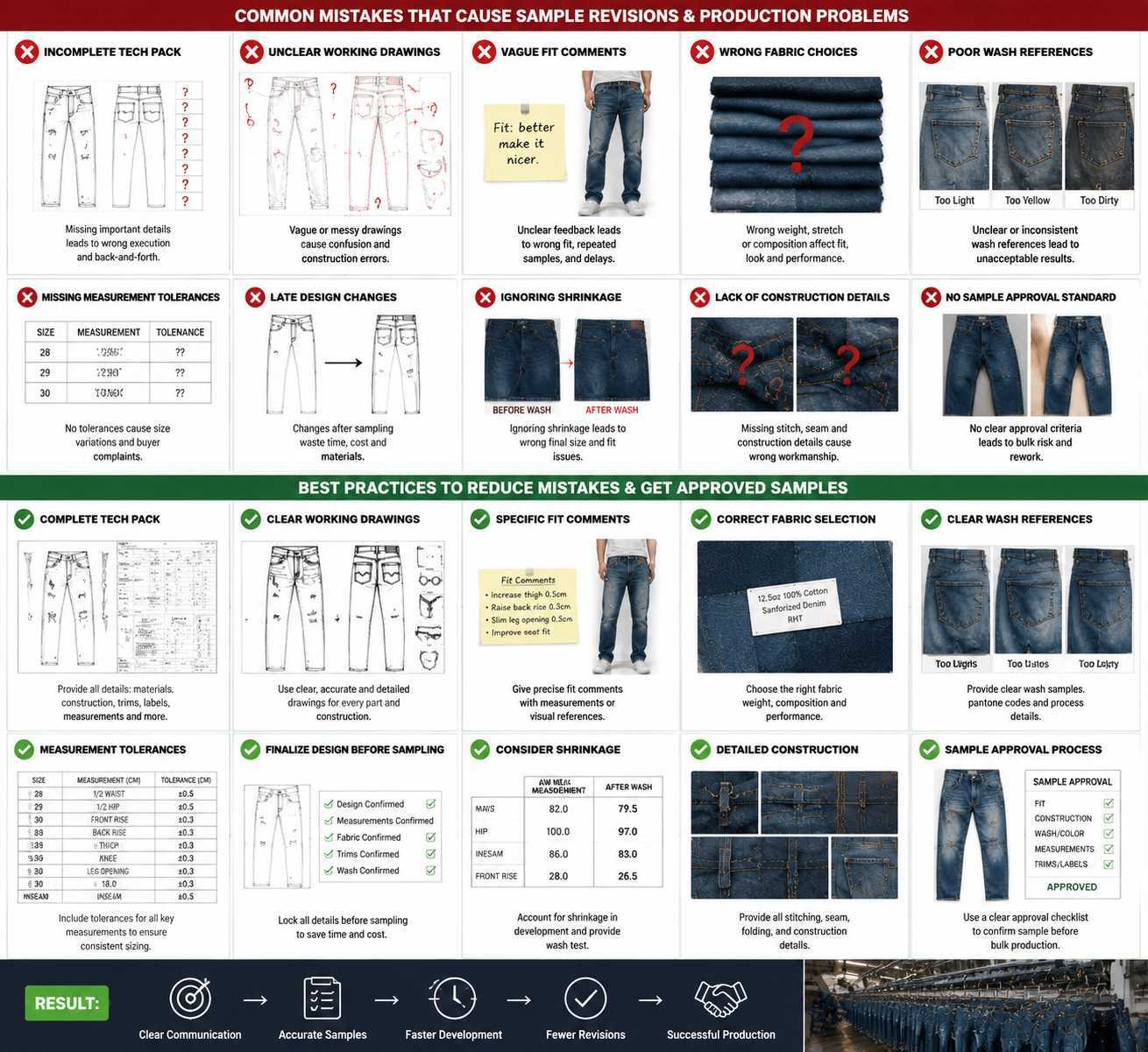
What denim products can DiZNEW develop from a sketch?
DiZNEW can develop a wide range of denim products, including:
Plus size jeans
Baggy jeans
Stacked jeans
Straight jeans
Selvedge jeans
Skinny jeans
Jogger jeans
Denim jackets
Denim shorts
Denim shirts
Custom washed jeans
OEM/ODM private label denim products
This product range gives brands the flexibility to build full denim collections instead of only one basic style.
How does DiZNEW support OEM/ODM denim sample development?
DiZNEW can start from different levels of buyer preparation. Some clients have a full tech pack. Some have only a sketch. Some have AI-generated design images. Some have reference photos. Some have a physical sample they want to modify.
The factory can help confirm:
Fabric
Wash
Fit
Pattern
Measurements
Trims
Buttons
Rivets
Zippers
Leather patches
Woven labels
Hang tags
Packaging
Size range
Production quantity
This support is especially useful for boutique owners and online brands that have strong design ideas but need manufacturing guidance.
Why is a specialized denim factory better than a general clothing supplier?
A specialized denim factory understands denim-specific problems. Jeans are not just basic pants. They require knowledge of washing, shrinkage, stretch recovery, waistband construction, rivets, pocket placement, fading, fabric weight, inseam control, and fit balance.
A general clothing supplier may be able to make simple garments, but complex denim needs more experience. Styles such as stacked jeans, baggy jeans, plus size jeans, selvedge jeans, distressed jeans, and custom washed jackets require careful development.
A specialized factory can help prevent problems before they happen.
How to produce your own clothing line with custom denim?
To produce your own clothing line with custom denim, start with a focused product plan. Do not launch too many random styles at once. Choose a clear target customer and build around hero products.
A practical first denim line could include:
| Brand Direction | First Product Ideas |
| Streetwear boutique | Baggy jeans, stacked jeans, denim jackets |
| Plus size brand | Curve-fit jeans, stretch straight jeans, high-rise denim |
| Premium denim label | Selvedge jeans, raw denim, clean straight fits |
Influencer brand | Trend jeans, denim shorts, cropped jackets |
Western-inspired brand | Bootcut jeans, heavy denim, reinforced belt loops |
Online boutique | Straight jeans, baggy jeans, denim shirts, shorts |
Start with samples, then test small MOQ production. Build product photos, launch online, collect customer feedback, and reorder the styles that sell well.
How can brands move from sample approval to bulk production?
After the sample is approved, brands should confirm the PP sample, size chart, grading, fabric standard, wash standard, trims, labels, packaging, quantity, and inspection requirements. Then they can place a small test order or bulk order.
How can designers request a custom denim sample from DiZNEW?
To request a custom denim sample from DiZNEW, prepare whatever materials you have: sketch, working drawing, reference image, AI design, sample garment, or tech pack. Then share your target quantity, size range, market, fabric preference, wash effect, logo details, and customization needs.
Even if your idea is not fully technical yet, DiZNEW can help guide the development process.
Dive Deeper
For many new brands, the hardest step is not designing. It is turning design into a supply chain. A clothing line is not only a collection of ideas. It is a system of product development, costing, sampling, photography, marketing, inventory, fulfillment, and reordering.
Denim makes that system more challenging, but also more rewarding. Jeans are high-value products with strong repeat potential. If a customer loves the fit, they may come back for another wash, another color, another rise, or a matching jacket. This makes denim a powerful category for boutique owners and online fashion brands.
The smartest way to start is with a focused collection. Instead of producing 20 styles at once, a new brand might begin with three strong products: one baggy jean, one straight jean, and one denim jacket. Or a plus size boutique might start with one high-rise straight jean and one relaxed baggy jean. Or a streetwear brand might start with one stacked jean and one oversized denim jacket.
A focused line makes sampling easier, photography stronger, inventory safer, and marketing clearer. Customers understand the brand faster.
DiZNEW’s 30-piece MOQ supports this kind of launch strategy. A buyer does not need to order thousands of pieces before testing the market. They can develop samples, approve a small batch, sell online, collect real customer feedback, and then scale successful products. This approach reduces risk while still allowing custom branding.
As the brand grows, DiZNEW can support larger production up to 10,000 pieces. That means buyers do not have to change factories once a product becomes successful. They can develop, test, improve, and scale with one denim-focused manufacturing partner.
For U.S. boutique owners, denim designers, online store owners, and influencer-led brands, this is the ideal path: start with a strong idea, turn it into a production-ready sample, test with low MOQ, then scale the products your customers actually want.
Final Thoughts: Your Denim Sketch Can Become a Real Product With the Right Development Partner
A denim sketch is the beginning, not the final instruction. To turn it into a production-ready sample, you need working drawings, tech pack details, fabric decisions, wash direction, pattern making, trims, fit corrections, and PP sample approval. The process may seem detailed, but every step protects your brand from mistakes.
If you want to get your designs made into clothes, the most important thing is to translate your creative idea into factory-readable information. If you want to produce your own clothing line, the best path is to start focused, develop strong samples, test with small MOQ, and scale based on real customer demand.
DiZNEW is a China-based denim R&D, manufacturing, and sales factory with more than 20 years of experience. We help U.S. boutique owners, denim designers, online stores, influencer brands, and high-end custom clients turn sketches, reference photos, physical samples, AI images, and tech packs into real custom denim products.
We can customize plus size jeans, baggy jeans, stacked jeans, straight jeans, selvedge jeans, skinny jeans, jogger jeans, denim jackets, denim shorts, denim shirts, and more. We support custom fabric, wash, fit, labels, buttons, rivets, leather patches, hang tags, packaging, and OEM/ODM private label production.
With a low MOQ starting from 30 pieces and capacity for larger orders up to 10,000 pieces, DiZNEW can help your brand move from first idea to sample, from sample to small-batch launch, and from best-selling style to scalable production.
Ready to turn your denim sketch into a production-ready sample? Contact DiZNEW today to request a quote, develop your custom sample, and start building your own denim line.
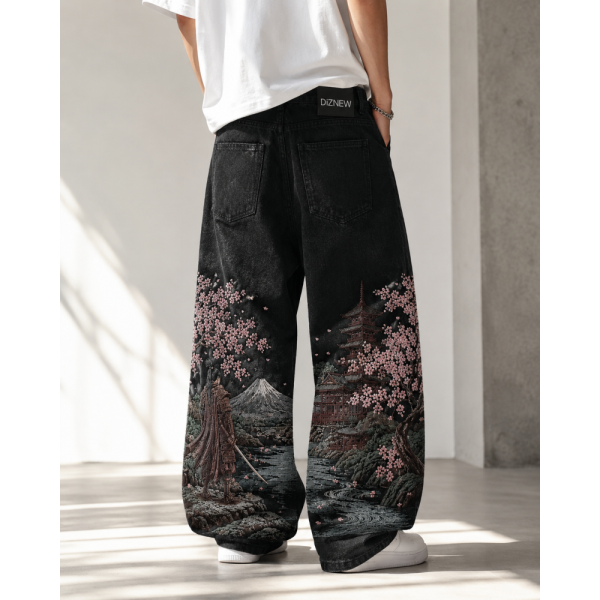
Premium wide-leg denim jeans featuring a vintage washed black finish, detailed Japanese landscape artwork, embroidery-style decoration, and custom brand label options. Designed for streetwear brands, designer labels, and private label collections looking for statement denim with strong visual storytelling.
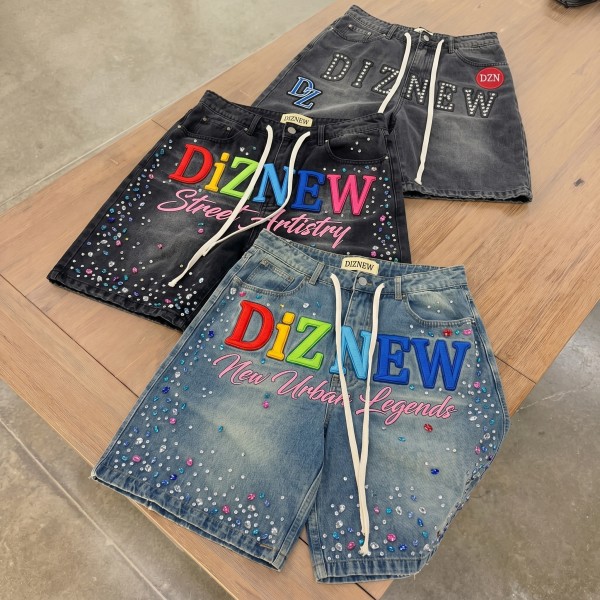
Custom Rhinestone Logo Denim Shorts: Wholesale supply direct. We manufacture premium embroidered baggy jean shorts for brands.
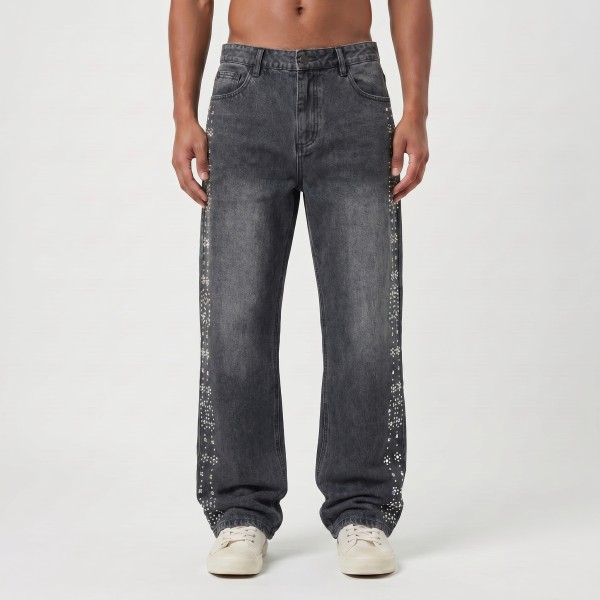
Discover premium DiZNEW denim jeans with decorative studs for a sparkling, stylish look. Order today!
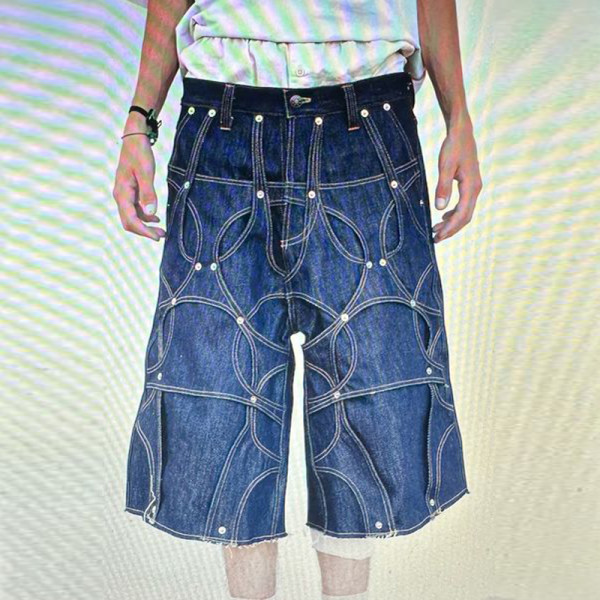
These designer denim shorts for men feature intricate decorative stitching and rivet details, perfect for streetwear fashion. The wide-leg silhouette adds a bold look, ideal for trendsetters.