How does raw denim differ from regular jeans?
- Share
- Issue Time
- Jan 2,2026
Summary
Uncover how raw denim stands apart from regular jeans. Explore its unique characteristics, benefits, and why it's a must-have for denim enthusiasts.
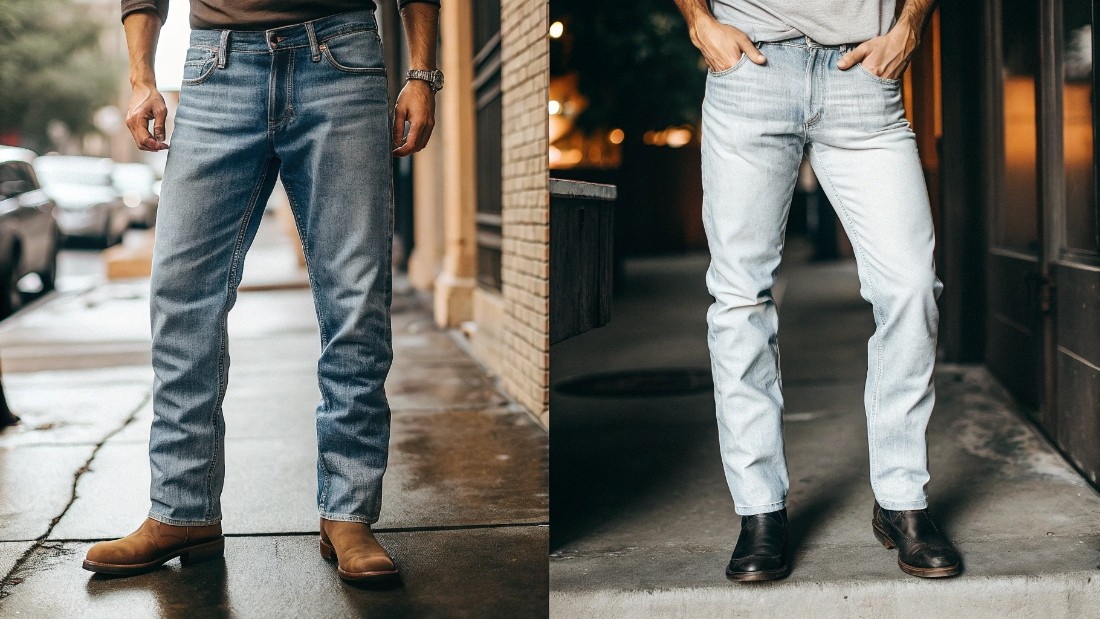
As a designer, you know fabric is everything. But the distinction between "raw" and "regular" denim isn't just technical—it's a choice that defines your entire brand story and production process.
Raw denim is denim fabric in its purest form, completely unwashed and untreated after being dyed. Regular jeans are made from denim that has been pre-washed to be softer and achieve a specific look.
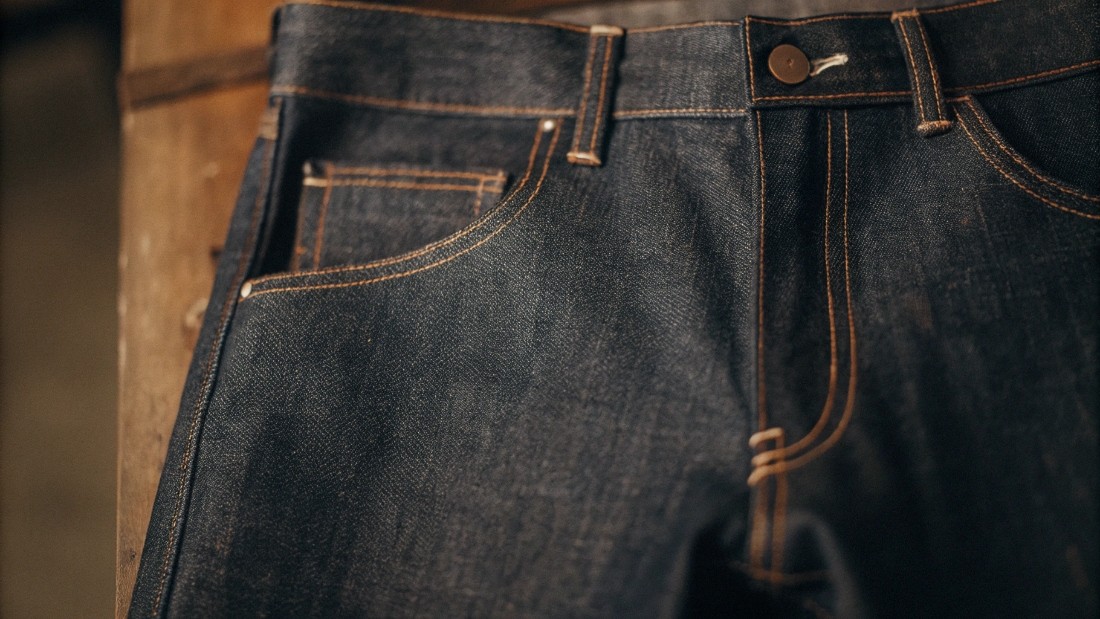
Dean, your insights are spot-on. You've perfectly captured the philosophy behind the raw denim movement—it's a reaction against mass-produced, artificial distressing. From my perspective on the factory floor, the difference is night and day. "Regular" jeans arrive at my facility, and my job is to beat them up.
We use washing, sandblasting, lasers, and hand-sanding to make a brand-new product look old. When a client orders raw denim jeans, my job is the opposite. I have to preserve the fabric's integrity completely. It's about careful cutting and sewing, delivering a pristine, "blank canvas" to the customer. It's a fundamentally different approach to making a pair of jeans.
Is Raw Denim Better Than Regular Denim?
You're trying to build a collection and need to decide where to invest. The debate over "better" can be a trap, leading you to pick a material that doesn't align with your target customer.
Neither is inherently better; they serve entirely different customers and purposes. Raw denim is for the enthusiast who wants personalization, while regular denim is for the consumer who wants immediate comfort and a consistent look.
In my 20 years of manufacturing, I've seen brands succeed wildly with both, and fail by choosing the wrong one for their audience. The question isn't "which is better?" but "who is my customer?" If your customer is a denim purist who geeks out on fabric and loves the idea of creating their own unique fades over two years, then raw denim is undeniably "better" for them.
But if your customer is the average person who wants to walk out of a store with a pair of soft, comfortable, perfectly faded jeans they can wear that night, then pre-washed "regular" denim is "better." One sells a journey; the other sells a destination. Your job as a designer is to decide which trip you want to sell. A brand built on heritage and craft leans toward raw. A brand built on fashion trends and accessibility leans toward washed.
What's So Special About Raw Denim?
You see a pair of stiff, dark, plain jeans and have to justify a premium price. If you can't articulate what makes them special, your customers will just see an uncomfortable pair of pants.
What's special about raw denim is its potential to become a one-of-a-kind garment. It acts as a blank canvas that fades and creases based on the wearer's unique body and lifestyle.
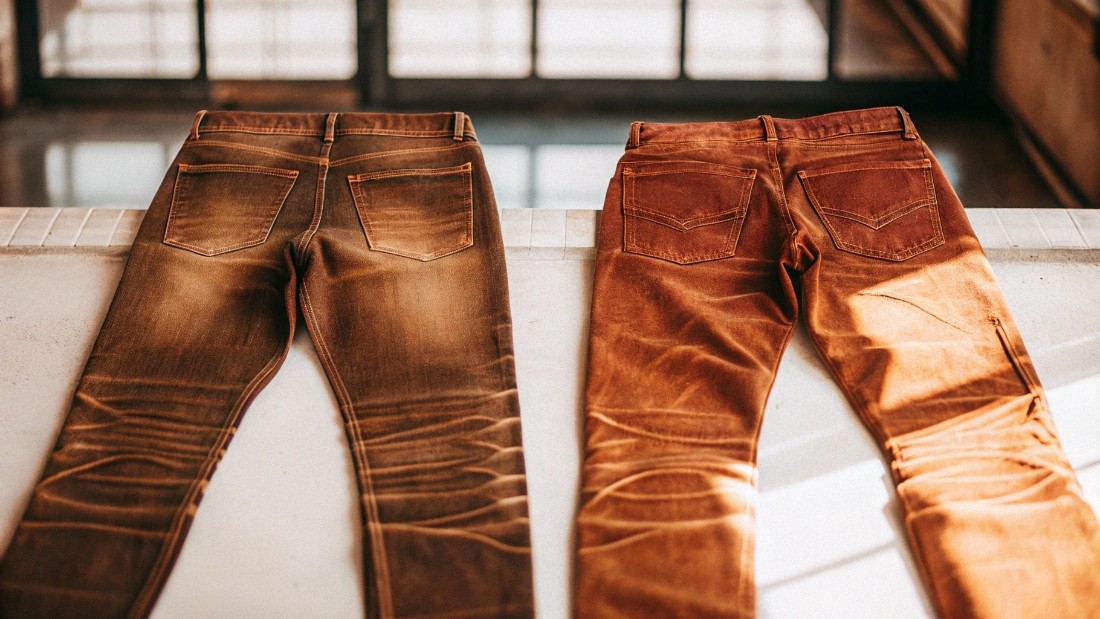
The magic of raw denim is in its transformation. As you correctly pointed out, a new pair feels stiff as cardboard. That's because the fabric still contains the starches (we call it "sizing") from the weaving process, which are normally washed out. This initial stiffness is part of the process.
As the owner wears the jeans, their body heat and movement slowly break down that stiffness. Their unique way of sitting, walking, and the items they put in their pockets create distinct wear patterns. The high-stress areas, like the creases on the lap (whiskers) and the backs of the knees (honeycombs), lose indigo faster.
Over months and years, the jeans develop a fade pattern that is a perfect diary of the owner's life. No two pairs will ever look the same. You're not just selling a pair of pants; you're selling a personalized experience and a product that grows with its owner.
How Can You Tell If Jeans Are Raw Denim?
In a market full of confusing terms like "dry," "raw," and "unwashed," you need to be able to identify the real thing instantly to ensure quality and authenticity for your brand.
You can tell raw denim by three key signs: a stiff, almost paper-like feel; a deep, uniform dark indigo color with zero pre-made fades or distressing; and a slight sheen from the starches left in the fabric.
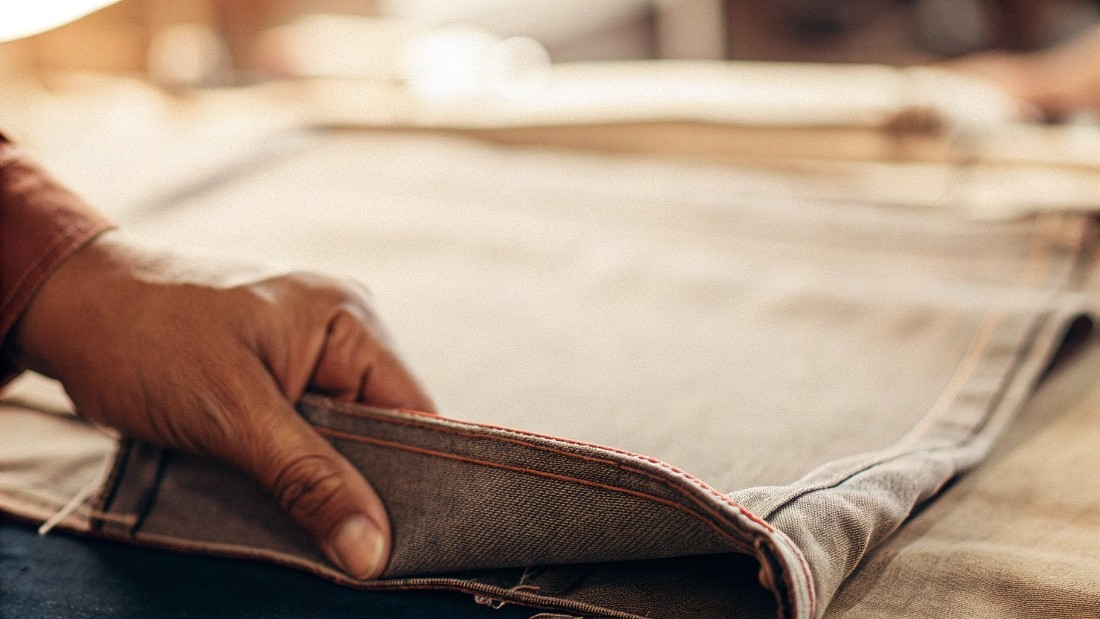
When I'm inspecting a roll of fabric, these are the exact markers I look for. First is the hand-feel. If the jeans are soft and pliable right off the shelf, they are not raw. Raw denim is rigid. You can often stand a new pair up on its own. Second is the color. It should be a deep, consistent shade of indigo from the waistband to the hem.
Look closely at the thighs and seat—if you see even the slightest hint of a lighter blue or pre-set crease lines, it's a washed jean, even if it's a very light "rinse wash." Real raw denim is a uniform canvas. Third is a subtle detail: the sheen. That starchy sizing often gives the fabric a slight gloss under the light. These three physical traits are foolproof indicators that the denim is in its pure, untouched state, straight from the mill.
Are Levi's Jeans Raw Denim?
Levi's is the most iconic jeans brand in the world. Your customers will naturally look to them as the standard, so understanding their product lineup is crucial for market context.
Very few Levi's jeans sold today are raw denim. The vast majority are pre-washed for softness and style. However, their high-end "Levi's Vintage Clothing" (LVC) line does offer authentic, raw denim shrink-to-fit 501s.
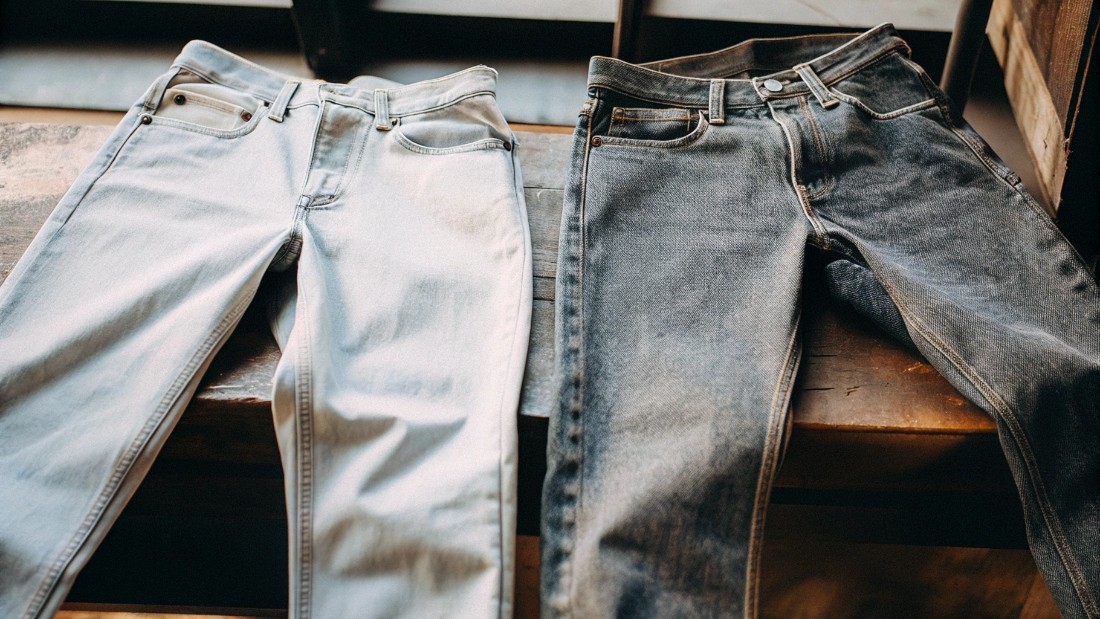
This is a common point of confusion, and it’s a great example of how a brand adapts to the mass market. The original Levi's 501 from the late 1800s was the definition of raw denim. People bought them stiff, unwashed, and oversized, and shrunk them to fit in the bathtub. Today, Levi's is a global giant that needs to cater to a customer who wants immediate comfort.
Therefore, almost all the Levi's you see in a typical department store have gone through a washing process in a factory like mine. They are not raw. However, for the true denim heads, Levi's created the LVC line. This is where they reproduce their most iconic historical models using the original methods and fabrics. So, if you buy a pair of LVC 1947 501s, you are getting a true raw denim product. The mainline Levi's? That's built for the modern consumer who prioritizes out-of-the-box comfort over the raw denim journey.
Levi's Product Tiers
| Levi's Line | Denim Type | Target Customer | Key Feature |
| Standard Levi's (e.g., at Macy's) | Pre-washed | Mass-market consumer | Immediate comfort, consistent style |
| Levi's Premium | Higher-quality washed denim | Style-conscious consumer | Better fabrics and details |
| Levi's Vintage Clothing (LVC) | Raw, selvedge denim | Denim purist, enthusiast | Historical reproductions, personalization |
Conclusion
Raw denim is the pure, unwashed foundation for enthusiasts who value personalization. Regular jeans are pre-washed for immediate comfort and consistent style, serving the broader mass market. Your choice defines your brand.
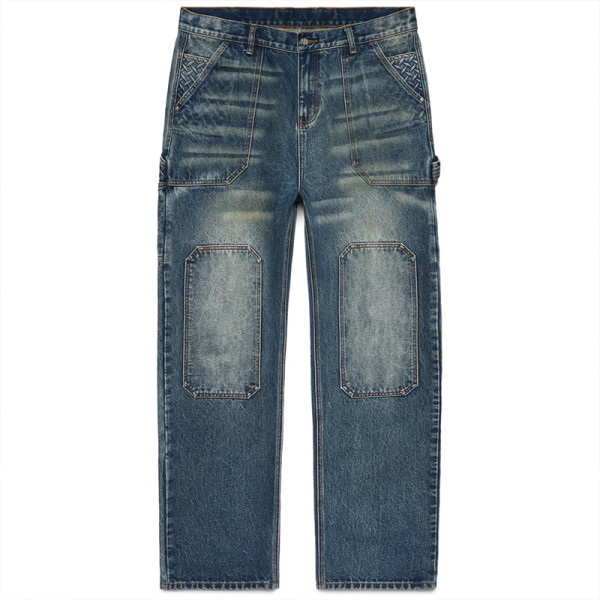
Utility carpenter jeans with embossed woven pockets, reinforced knee patches, side tool loop, and a relaxed straight fit.
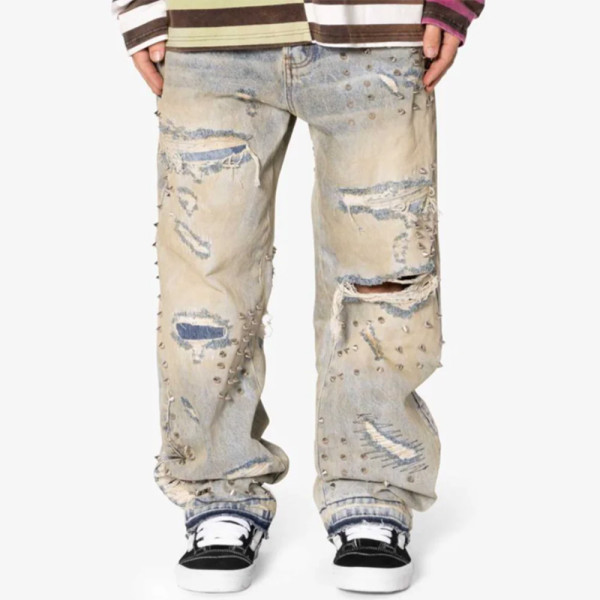
Extreme distressed baggy jeans with stud details—perfect for bold boutique lines & edgy designer labels.
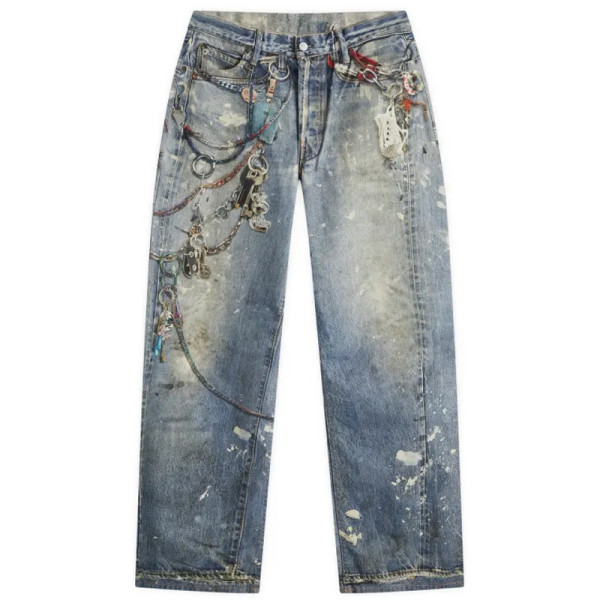
Loaded with chains and chaos—these jeans bring punk rebellion with dirty wash and full metal drip.
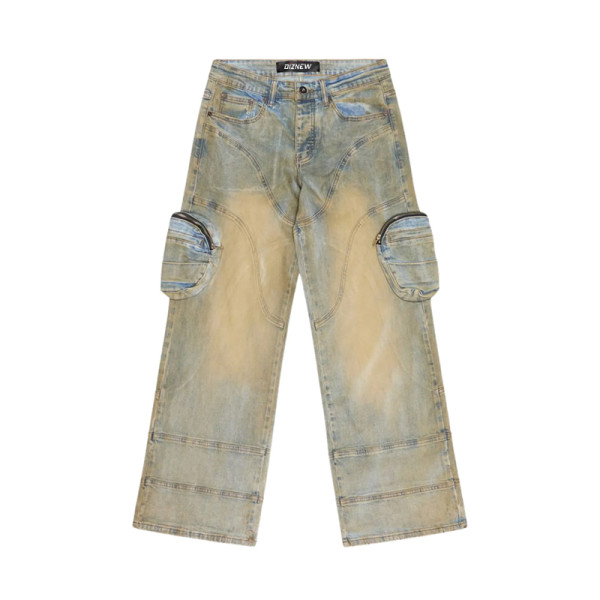
Wide-leg light-wash denim with 3D curved seams and side zip pockets—vintage meets futuristic utility.