Find China Denim Fabric Suppliers: B2B Sourcing Guide
- Share
- Issue Time
- Jan 27,2026
Summary
Practical guide to sourcing Chinese denim mills, MOQ, fabric specs, sampling and QC — plus our factory’s material sourcing, sampling and door-to-door export.
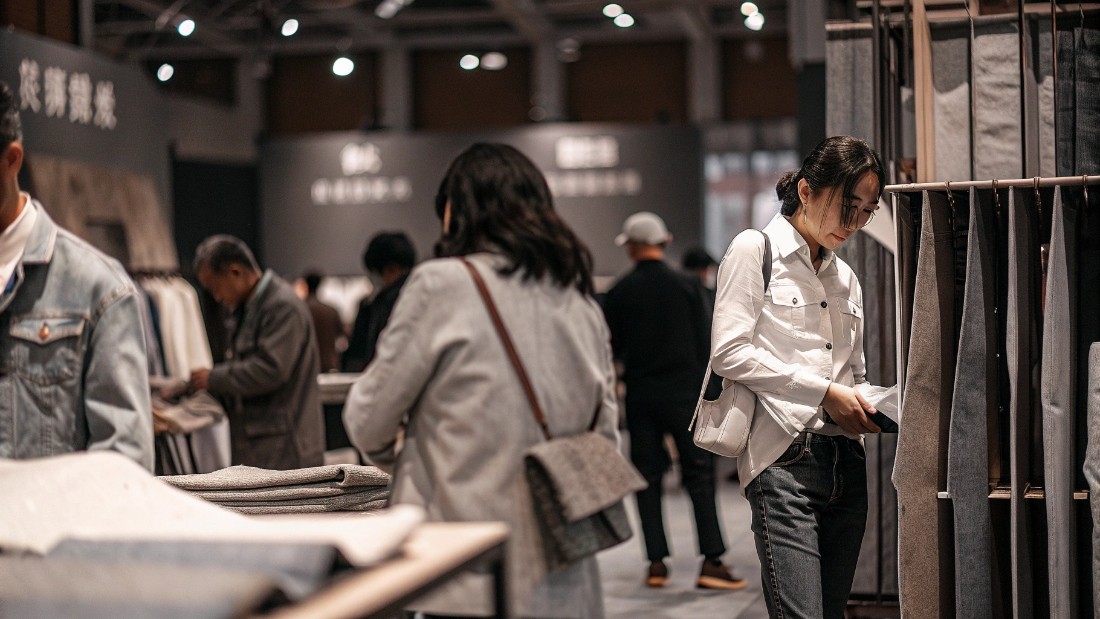
If you design jeans, run a boutique, or manage a small-to-medium apparel brand, sourcing the right denim fabric can make—or break—your product. China remains one of the largest and most capable destinations for denim mills, converters, and full-package jean factories, offering everything from budget stretch denim for fast-turn athleisure to artisanal selvedge woven on shuttle looms.
But the real challenge isn’t just “finding China” on a map; it’s finding the right partner in China who understands fit, finish, custom wash techniques, branding and logistics, and can move between 30-piece sample runs and 10,000-piece production without losing quality control.
You can find reliable Chinese denim fabric suppliers through major B2B platforms (Alibaba, Global Sources), trade shows (Intertextile, Canton Fair), sourcing agents, and direct outreach to mills in Jiangsu, Zhejiang and Guangdong. Compare suppliers on fabric specs, lead times, MOQ flexibility, and verification (factory audits and third-party testing). Consider China alongside Turkey, India, Pakistan and Italy for quality/cost trade-offs depending on your product positioning.
Keep reading—because I’ll show you proven search terms, supplier vetting checklists, cost breakdowns for making jeans in China, and a step-by-step workflow designers use to go from sketch to finished pair of jeans. I’ll also share real-world examples of pitfalls (like customs delays, color mismatch, and unprotected tech packs) and how to avoid them—plus a ready-to-use email template to contact suppliers today.
Why Choose a Chinese Denim Fabric Supplier for Your Jeans or Denim Apparel?
Chinese denim suppliers offer a wide range of fabrics (rigid, stretch, selvedge), competitive pricing due to integrated supply chains, and flexible manufacturing that supports small lots (from 30 pcs) to mass runs (10,000+). China’s dense production clusters make quick sampling, diversified finishing (washing, coating), and OEM/ODM services easier to access than many other sourcing countries.
Range and technical depth: You’ll find raw selvedge, cone-denim shuttle-woven fabrics, power-stretch blends for skinny jeans, and heavy 16–21 oz workwear denims. Advanced dye houses in China can do precise indigo depth, rope dyeing, and vintage wash recipes—critical for signature washes and repeatability. For highly bespoke requests (e.g., asymmetrical stacks, engineered tapering with precise whiskering), Chinese factories can translate tech packs into repeatable wash recipes and laser patterns.
Cost structure and MOQ flexibility: Many factories in China can accommodate lower MOQs for designers and online boutique owners—DiZNEW, for example, accepts starting orders of 30 pieces while scaling to large orders like 10,000 pieces. That flexibility matters for testing new styles or limited-edition drops. Labor costs remain lower than in Italy, but higher than some South Asian alternatives, making China a mid- to low-cost option with higher technical capabilities.
Quality control, certifications and capacity: Top-tier Chinese suppliers pursue certifications (ISO, OEKO-TEX, Bluesign in some dyehouses) and will allow third-party audits. Large factories have modern production lines plus experienced quality managers; smaller mills may provide artisanal feel but require tighter oversight.
Comparisons with other countries: Turkey is strong for quick delivery to Europe and mid-to-high-end denim; India and Pakistan are cost-competitive for basic denims and high-volume spinning; Italy still leads for luxury selvedge suiting and niche premium fabrics. Choosing China often becomes a pragmatic balance—good technical capability, scalable production, and cost-effectiveness for brands selling in the US, EU, and domestic Chinese markets.
Critical considerations:
IP protection: Chinese suppliers can and do respect IP, but you must protect designs and trademarks contractually and via registered logos. Use NDAs selectively and clearly own development samples’ rights in contracts.
Wash reproducibility: Complex wash recipes are factory-specific. Save wash formulas, and insist on wash reels/samples and lab documentation.
Lead time expectations: Sample-to-production can be fast if mills are local; but shipping, customs, and peak seasons (Chinese New Year, Golden Week) can cause delays—plan buffer weeks.
Where Are China’s Major Denim Hubs and How Do They Differ?
Major denim hubs include Jiangsu and Zhejiang (mills and garment factories), Guangdong (OEM/ODM garment finishing and export hubs), Shandong and Hebei (spinning and dyeing clusters), and Shanghai (design, sourcing and trade shows). Clusters differ by specialization: mills and yarn spinners cluster inland, while coastal ports and southern provinces focus on garment finishing and export packaging.
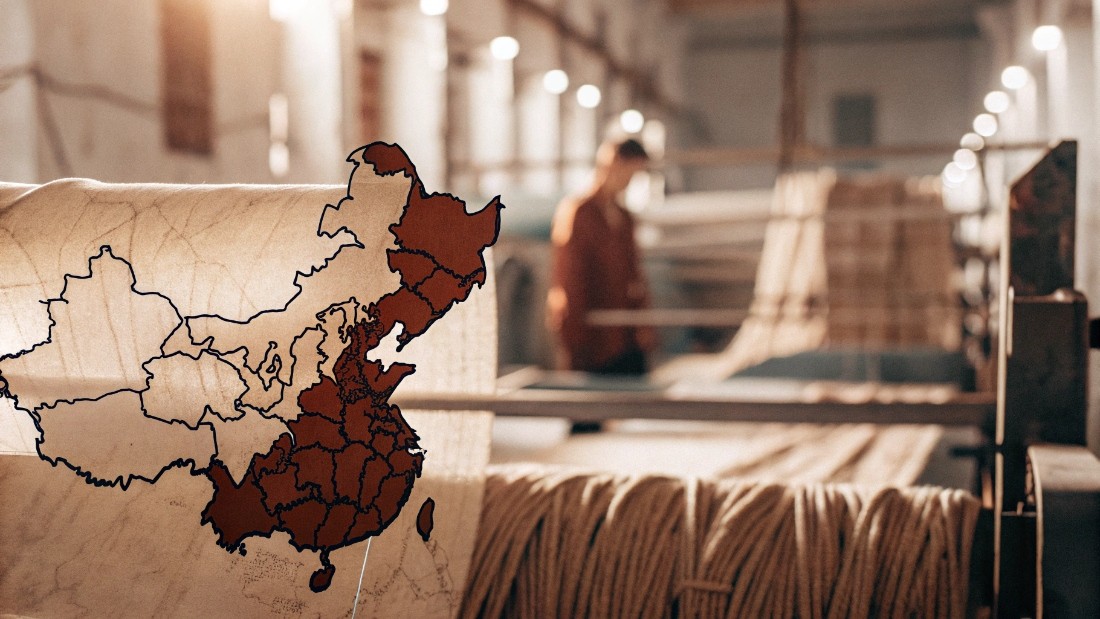
Geography matters in China’s textile industry. Understanding each region’s strengths helps match your needs—whether you need a mill making selvedge, a factory that integrates washing and laser finishing, or a converter producing raw denim bolts.
Jiangsu & Zhejiang: These two provinces form the backbone of China’s denim textile production. Jiangsu is rich with mid-large mills, dye houses and washing factories capable of bulk production and denim finishing. Zhejiang, historically known for knit and woven, now houses innovative weaving mills and many garment factories that focus on full-package production and advanced wash techniques. If your main concern is access to both fabric and finishing under one supply chain, these provinces are strong choices.
Guangdong (including Shenzhen, Guangzhou): Guangdong’s strength is in export-savvy OEM/ODM factories, agile production, and fast turnaround on small runs. The region’s logistics ecosystem (ports, freight forwarders) makes export smoother, especially for US and European shipments. Guangdong factories tend to be more flexible on design changes and rapid sampling.
Shandong and Hebei: These provinces have substantial spinning and dyeing capacity. If yarn sourcing and custom dye lots matter for your line (e.g., rope-dye indigo blends), consider suppliers here. They can sometimes deliver attractive price points but may require tighter quality oversight.
Shanghai & trade hubs: Shanghai is less about mass-making and more about sourcing, design partnerships, and trade shows (Intertextile, trade delegations). You’ll meet sourcing agents, foreign trade reps, and mills’ sales teams here.
Choosing mill vs. OEM/ODM:
Work with a mill when you need specific hand-feel, unique yarn/dye processes, or to buy bolts of raw denim for in-house cutting and finishing.
Work with OEM/ODM garment factories for one-stop production (fabric + cut + sew + wash + finish). OEM factories are ideal if you want volume and speed with less coordination between separate suppliers.
Logistics and proximity:
Closer proximity between yarn, mill and finishing reduces lead times and potential miscommunication. Clusters that host both dye houses and washing facilities make iterative wash development faster because samples can be cycled quickly, reducing sample lead time from weeks to days.
How Do I Find Reliable Denim Fabric Suppliers and Factories Online?
Use a mix of B2B platforms (Alibaba, Global Sources, Made-in-China), industry directories, LinkedIn, and targeted Google search queries. Attend trade shows, hire a local sourcing agent, or work with inspection companies. Use search terms like “denim fabric mill China,” “selvedge denim supplier Jiangsu,” and “small MOQ denim fabric supplier.” Validate leads by requesting fabric spec sheets, photos, mill certificates, and samples.
Finding a supplier online is half art and half science. Here’s a practical playbook and the exact terms and channels that yield the best results:
Primary channels
B2B marketplaces: Alibaba, Global Sources, and Made-in-China remain the most-used starting points. Use precise filters: “Country: China,” “Supplier Type: Manufacturer,” and sort by “Transaction Level” and “Verified Supplier.” Look for factory photos, production lines, and certifications on the supplier page.
Specialized directories: Some textile-focused directories curate mills by fabric type (raw selvedge, rope-dyed denim, slub textures). These are useful for narrowing to mills that produce specific denim constructions.
LinkedIn & company websites: Many respected mills and fabric houses publish technical datasheets and fabric cards on their websites. Use LinkedIn to find sales managers and product developers; a direct message often yields faster technical responses than marketplace inquiry forms.
Trade shows and sourcing events: Intertextile Shanghai, China International Textile & Apparel Trade Fair, and regional denim-specific expos are great for hands-on fabric touch and real-time negotiation. Trade shows are also where you can observe washing demo booths and audit sample presentations.
Search strategy & exact queries
Use layered queries and Boolean searches:
“denim fabric mill China selvedge”
“rope dye denim mill Jiangsu”
“small MOQ denim fabric supplier 30 pcs China”
“denim wash factory China laser whisker”
Include “OEM,” “ODM,” “full package,” “sample lead time,” and “minimum order quantity” to filter.
Vetting remotely before samples
Ask for fabric construction details: yarn count, warp/weft composition, GSM/oz per square yard, twill type, warp dyeing method (rope vs. sheet), and warp/weft drafting.
Request production photos, QC records, and recent client references.
Order lab tests if colorfastness and shrinkage are critical. Insist on 100% cotton vs. cotton-poly blends disclosure.
Use Google Maps and company registration databases to confirm factory existence and address.
Sourcing agents vs. direct sourcing
Sourcing agents add cost but save time and reduce risk—especially for smaller buyers without Chinese language skills. Agents can arrange factory visits, negotiate payment terms, and manage logistics.
Direct sourcing is cheaper but requires more time, language skills, and due diligence. If you can manage emails and tech packs, direct sourcing might be best for long-term partnerships.
How Can I Vet and Qualify a Chinese Denim Supplier?
Vet suppliers with a mix of documentation (business license, certifications), physical verification (factory visits or third-party audits), and technical validation (lab tests and pre-production samples). Ask for production capacity, sample policies, MOQ flexibility (30–100), and real references. Compare quotes based on transparent cost breakdowns.
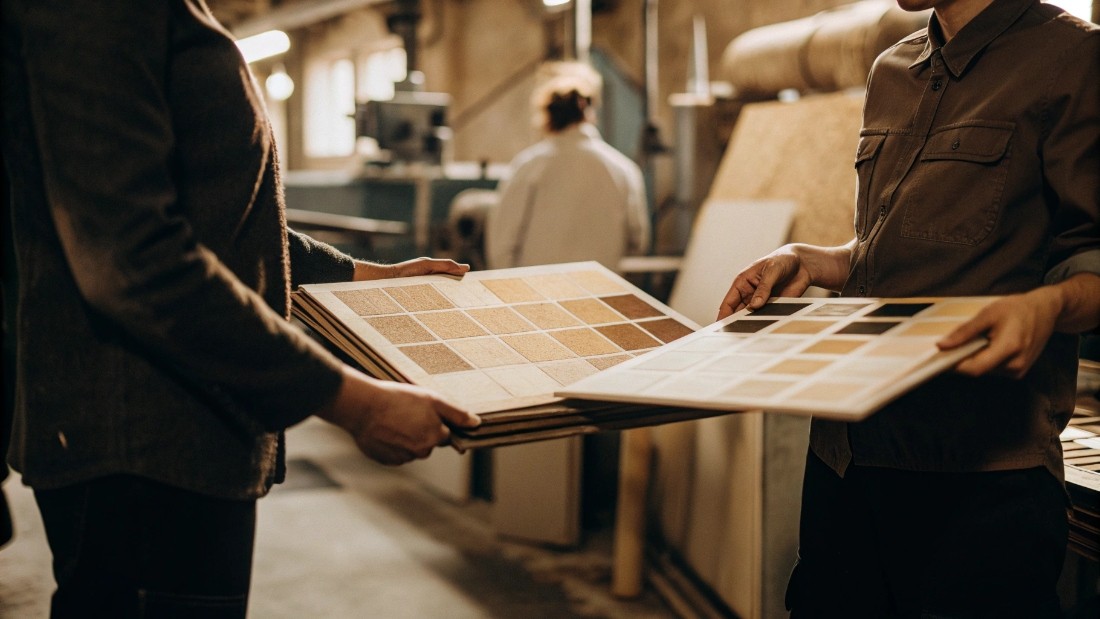
A supplier that looks great online can still underdeliver. The vetting process should be structured and data-driven.
Step 1: Initial qualification
Documentation: Request business license, tax ID, and export license. For mills, ask for weaving photos and dye lab certifications.
Certifications: OEKO-TEX, GOTS (if organic), Bluesign (for chemical control), and ISO help confirm legitimate environmental and quality processes.
Step 2: Technical assessment
Fabric spec sheet: Require yarn type, yarn count (Ne/tex), warp/weft composition, weave/twill, fabric weight (oz/yd² or GSM), shrinkage rate, and recommended wash/finish instructions.
Swatch and lab tests: Order swatches and full-width lab-tested samples. Tests to request: colorfastness to washing and rubbing, tensile strength, pilling, dimensional stability/shrinkage, and fastness to perspiration.
Pre-production sample (PPS) & PP sample: PPS verifies fabric and wash; PP (production prototype) checks the sewn garment and construction details.
Step 3: Capacity and reliability
Capacity: Ask for real daily/weekly production capacity and current load. Can they scale from 30-piece samplings to 10,000 pieces within your deadline? Get timelines for sample, trial run, and mass production.
MOQ flexibility: Many factories advertise low MOQs but add costs for small runs. Confirm price breaks and added costs for lower quantities.
Step 4: Quality control and audits
Factory audits: Request an in-person audit or hire third-party inspectors (SGS, Bureau Veritas, AsiaInspection). Audits should check QA processes, worker skill levels, and washing/finishing facilities.
Inline inspection: Establish checkpoints (cutting, midline, final zipper/button checks) and require inline photos or QC reports.
Final Inspection (AQL): Agree to AQL standards and what constitutes acceptable minor/major defects. Define rework policy and return/replacement terms.
Step 5: Pricing transparency—How much does it cost to make jeans in China?
Break down costs in your RFQ: fabric per meter, cut-and-sew labor, trims (zippers, rivets, buttons), label/branding, washing/finishing per wash recipe, packaging, shipping, duties, and inspection fees.
Typical ranges (indicative, vary widely): Basic mid-weight jeans (mass-produced) might have FOB costs from $8–$20 per pair depending on fabric weight and wash complexity; premium selvedge with shuttle looms and specialist washes can push FOB cost well beyond $50–$80 per pair. Sample and small-batch costs are higher per unit due to setup and wash calibration fees.
What Are Best Practices for Working With Chinese Denim Suppliers to Ensure Quality and Timely Delivery?
Use precise tech packs, confirm fabric and wash recipes with pre-production samples, schedule inline checks, and set clear payment and delivery terms. Protect IP with contracts, use third-party inspections, and plan for shipping and customs lead times—especially around Chinese holidays.
From daily communication to closing the deal and shipping, following proven workflows reduces risk and builds predictable outcomes.
1. Clear technical communication
Tech pack essentials: Flat sketches, grading rules, tolerance charts, fabric spec sheets, stitch types & counts, trim details, placement of labels, wash recipe details, photos of desired distressing, and sample size(s).
Visual references: Provide high-resolution photos, videos of preferred hand-feel, and even worn-in references. For washes, a reel showing the final whisker, honeycomb, fade points, and tones is invaluable.
2. Sampling & approval workflow
Lab swatch → Fabric roll sample → Pre-production Sample (PPS) with approved trim → Production Prototype (PP) to test grading → Small trial run (100–500 pcs) before full production.
Lock wash recipes: Once PPS is approved, require the factory to record the exact wash formula (chemical brands, cycle times, temperatures) and sign off to reproduce it consistently.
3. QC checkpoints & inspection
Inline checks: Inspect at cutting, mid-production (50% completion), and final inspection. Use an agreed QC checklist covering stitching, seam allowances, pocket placement, and hardware function.
AQL and rework: Define acceptable quality levels early and specify rework processes, cost responsibilities and timelines for replacements.
4. Logistics and lead times
Shipping methods: Compare FOB, CIF, EXW terms and pick what suits your risk tolerance. For boutiques testing new styles, air freight of samples or small runs may be costly but faster.
Customs and duties: Account for tariff codes (Harmonized System) and any anti-dumping measures on denim in your target market. Work with freight forwarders experienced in apparel customs clearance.
Holiday planning: Chinese New Year and National Day cause factory closures and backlog. Build buffer weeks into your production plan.
5. Protect your brand and IP
Contracts and NDAs: Use clear contracts specifying ownership of patterns and wash formulas and include non-compete clauses if applicable.
Labeling: Register trademarks in major target markets to prevent misuse and unauthorized copies.
Small-batch exclusivity: If you rely on distinctive washes or patterns, negotiate exclusivity periods or territory limits for specific treatments.
Cost Data & Comparison Table (sample)
Below is a simplified example to illustrate cost components for a mid-weight denim jean produced in China (per unit, FOB) vs. rough comparisons with Turkey and India. These are illustrative averages; ask suppliers for current quotes.
Fabric (6–12 oz denim): $3.50–$8.00 (China) | $4.00–$9.00 (Turkey) | $2.50–$6.00 (India)
Cut & Sew labor: $2.50–$6.00 (China) | $3.00–$7.00 (Turkey) | $2.00–$5.00 (India)
Washing/finishing per wash: $1.00–$6.00 (China) | $1.50–$6.50 (Turkey) | $0.80–$5.00 (India)
Trims / hardware: $0.80–$2.50 across all regions
Overhead, packaging, admin: $0.50–$2.00
Indicative FOB total: $8–$23 (China) | $10–$29 (Turkey) | $7–$18 (India)
How much does it cost to make jeans in China?
I already touched on ranges above, but to be methodical, ask suppliers to break down:
Fabric cost per meter and consumption per pair (usually 1.2–1.8 meters depending on cut).
Labor cost per pair.
Wash/finish cost per pair and per wash recipe.
Trims and packaging cost.
Any tooling or setup fees for small runs.
Real-world example:
A 12 oz stretch jean (1.4 m consumption) with mid-level wash and hardware: Fabric $5.60, labor $3.20, wash $3.00, trims $1.50, packaging $0.60 = FOB $14.90
Where does China sit among top exporters of denim?
China is one of the world’s top denim exporters by volume and value, competing closely with Turkey, India, Pakistan, and Italy. Each country has strengths—China in scale and integrated supply chains; Italy for premium niche fabrics; Turkey for fast-to-Europe shipments; India/Pakistan for yarn and cost-competitive mills.
Global trade data shows China consistently ranks near the top for textile and apparel exports overall; when filtered to denim and denim garments, Turkey and China often compete in different product niches. For example, Turkey supplies large volumes to Europe and is ideal for quick lead times; Italy supplies high-end artisanal denim; China supplies wide-range volumes including high-tech and full-package capacities for many Western brands. As a buyer, “top exporter” matters less than which country aligns with your priorities: price, lead time, technical denim craft, or brand positioning.
Appendix: How to Contact a Supplier — Sample Email Template
Subject: RFQ — 12oz Stretch Denim + Sample Request — Brand [Your Brand]
Hello [Supplier Name],
My name is [Your name], creative director at [Brand]. We are sourcing 12oz stretch denim for a new jean style (men’s slim straight). Please provide:
Fabric spec: composition, warp/weft yarn count, weave, GSM/oz, shrinkage
MOQ for full-width rolls and for cut/pack (30 pcs minimum option?)
Price per meter and estimated consumption per pair
Sample policy & lead time for fabric swatches and PPS
Washing capabilities (laser, whisker, enzyme, bleach) and average wash cost
Current production capacity and lead times (sampling → bulk)
Please attach fabric photos, lab reports, and company profile. We plan initial order around 200–500 pairs (scalable to 10,000). Looking forward to your reply.
Best,
[Name] | [Email] | [Phone] | [Brand website]
Closing & Call to Action (DiZNEW)
If you’re ready to source denim fabric or produce a new jean style, DiZNEW can help. With 20+ years of jeans R&D and manufacturing, DiZNEW handles plus sizes, baggy, stacked, selvedge, skinny, jogger jeans, denim jackets, shorts, and shirts—starting MOQ of 30 pieces and scaling to 10,000 pcs. We offer full-package ODM/OEM, custom wash development, tech pack translation, and in-house QC. Contact DiZNEW today with your tech pack and sample references—we’ll provide a detailed quote, sample plan, and timeline within 48 hours.
Why DiZNEW?
Proven experience with complex denim styles and custom washes.
Flexible MOQ for designers and boutique owners.
Full transparency on costs and production timeline.
Third-party testing and audit support.
Ready to get started? Send your tech pack and sample references to sales@diznew.com (or use the sample email above) and specify your target FOB price, desired lead time, and target market. DiZNEW will get back with a production plan and cost breakdown tailored to your needs.
Final notes
Sourcing denim from China can unlock a powerful combination of technical capability, design flexibility, and scalable manufacturing. The keys to successful sourcing are methodical vetting, clear technical documentation, staged sampling, and strong communication. Follow the steps in this guide to reduce risk, control costs, and get your denim product from concept to shelf with confidence.
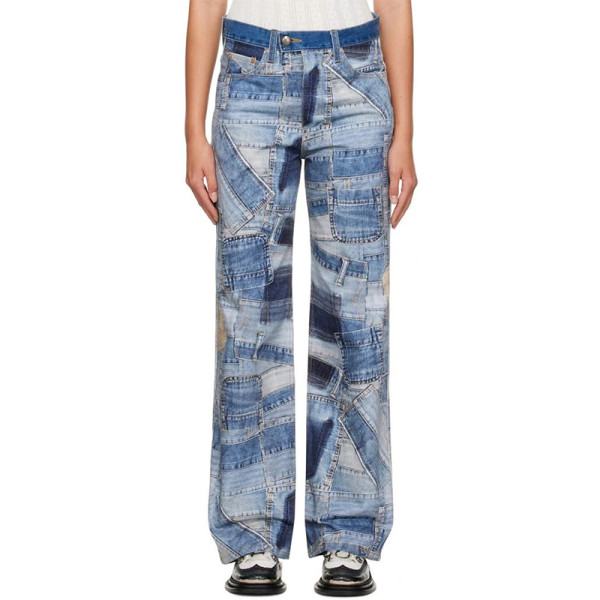
Elevate your collection with our OEM/ODM Custom Digital Printing Blue Patchwork Jeans, perfect for brands seeking unique styles in bulk.
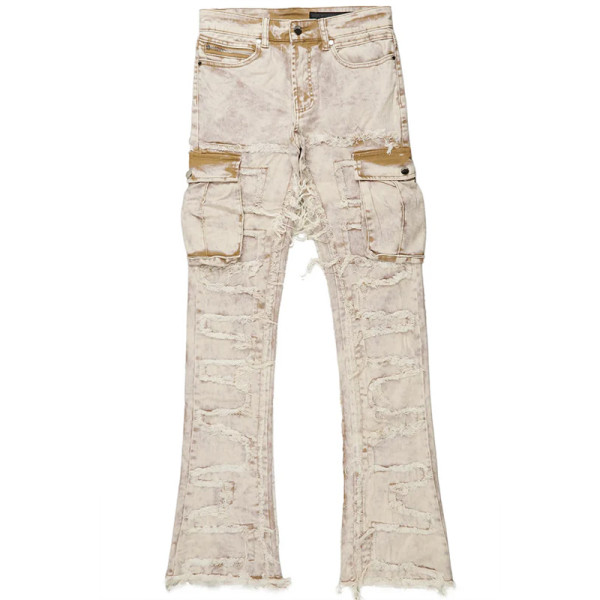
Beige flared cargo jeans with oversized pockets and distressed panels. Built for bold designer and boutique streetwear.
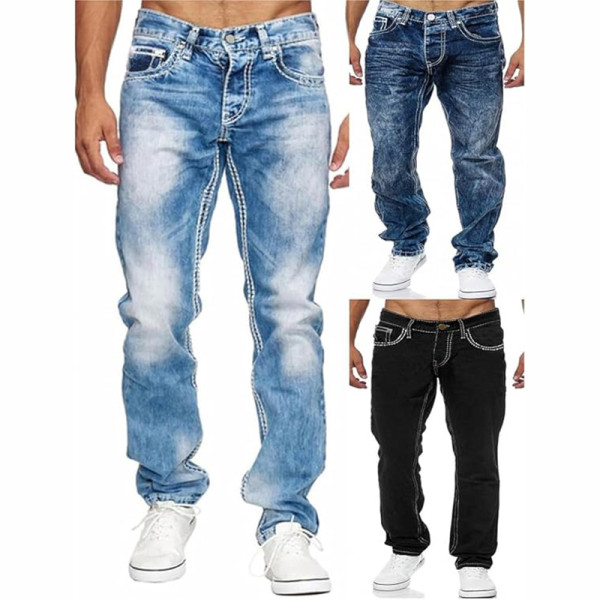
Classic straight jeans with bold contrast stitching in light blue, dark blue, and black — made for standout collections.
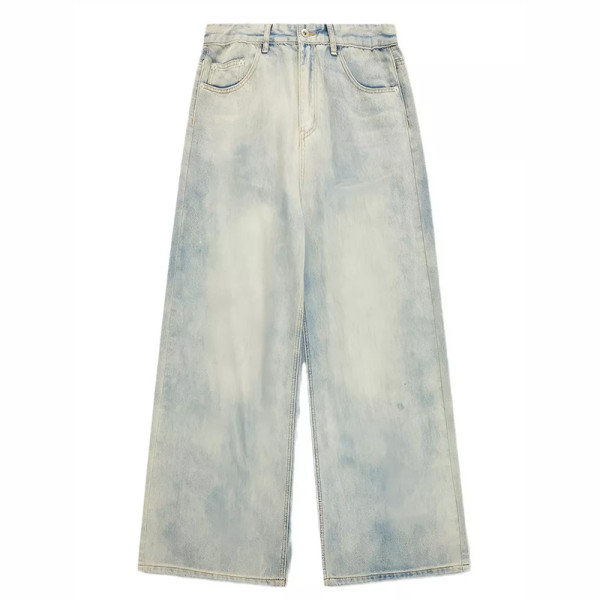
Washed high-rise wide-leg jeans with clean lines and vintage tint — ideal for refined luxury denim collections.