Do you prefer black jeans or blue jeans?
- Share
- Issue Time
- Dec 31,2025
Summary
Black jeans or blue jeans? Dive into our comprehensive guide to discover the pros and cons of each style and elevate your wardrobe choices today!
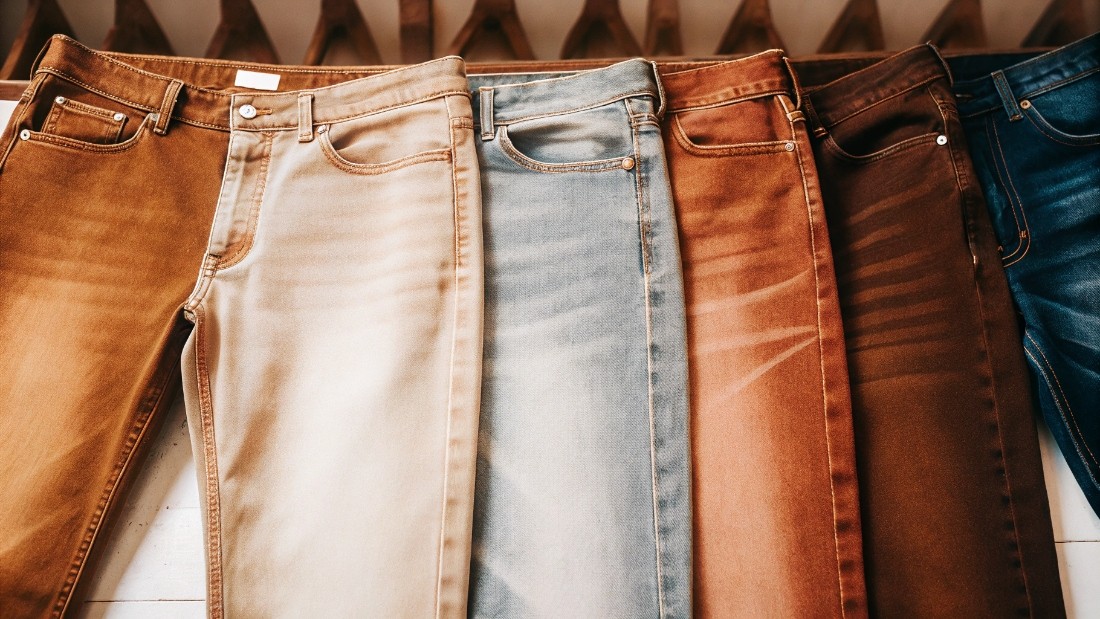
You're building a collection and face a fundamental choice: black or blue denim. This decision seems simple, but it has a huge impact on your brand's story, production, and sales.
From my two decades of experience, I always lean towards blue jeans. Blue is the authentic, classic color of denim, and from a production standpoint, it avoids the quality risks often associated with black dyes.
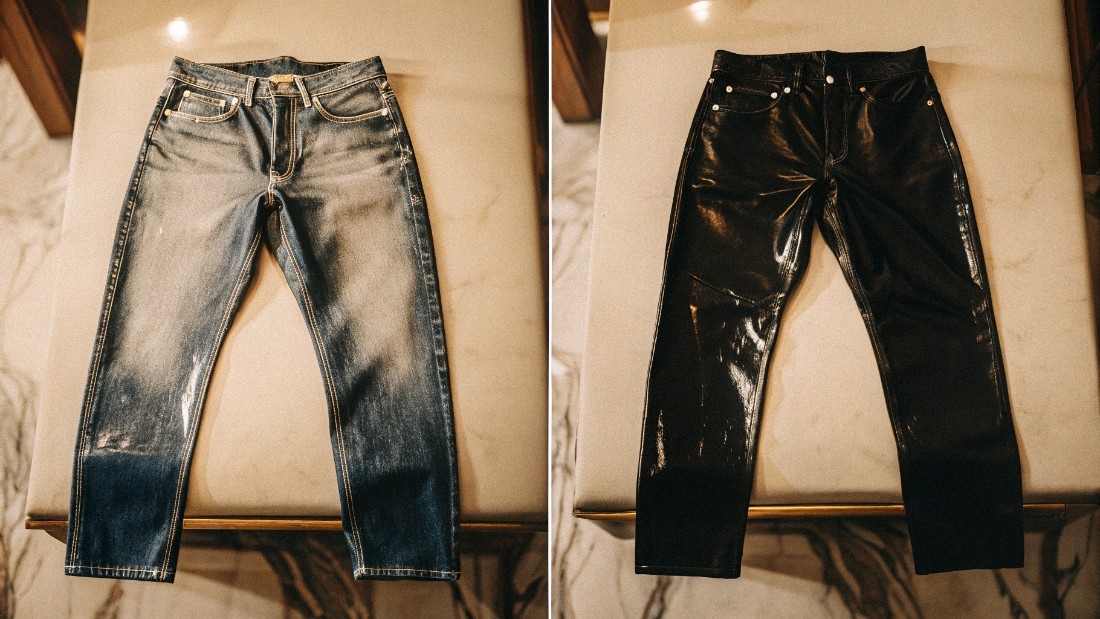
Dean, your insight about the smell of poorly made black jeans is something I've dealt with my entire career. It’s a real problem. For me, the choice goes beyond personal preference. It's rooted in the very soul of what denim is. Blue jeans are dyed with indigo, a unique dye that lives on the surface of the yarn and fades with wear, creating a personal story for the owner.
Black jeans are typically made with sulfur dyes, which penetrate the yarn differently and carry risks like that unpleasant smell if not handled by an expert manufacturer. Blue is the heart of denim heritage; black is a modern variation. Understanding this technical difference is the first step to making a smart choice for your brand.
Which Jeans Are a Better Bet for Your Brand: Black or Blue?
You have a limited budget for materials and development. You need to invest in the colorway that offers the most versatility, storytelling potential, and market appeal for your core collection.
Blue jeans are the better bet for the foundation of any brand. Their ability to be washed into an infinite spectrum of shades and their authentic fading potential offer unmatched versatility and storytelling.
From a factory owner's perspective, blue is simply a more dynamic and valuable platform. The magic of indigo dye is that it chips away over time. This allows us, as manufacturers, to replicate years of wear through washing, creating everything from a dark one-wash to a heavily distressed vintage look. Each blue wash tells a different story. Black, on the other hand, is less versatile in the wash house.
It's dyed with sulfur dyes, which fade to grey, but they don't produce the same high-contrast "whiskers" and "honeycombs" that denim aficionados love. Furthermore, as you noted, low-quality sulfur dyes can leave a distinct, pungent odor if the factory cuts corners on chemicals and finishing. It's a risk that can ruin a customer's perception of your quality. Blue is safer, more authentic, and more versatile.
Technical Comparison: Blue vs. Black Denim
| Attribute | Blue Jeans (Indigo Dye) | Black Jeans (Sulfur Dye) |
| Dye Type | Indigo | Sulfur |
Fading Potential | High-contrast, unique patina | Fades to grey, more uniform wear |
| Wash Versatility | Infinite (raw to light wash) | Limited (dark to grey) |
Production Risks | Generally low | Potential for unpleasant odor with cheap dyes |
| Brand Story | Heritage, Authenticity, Classic | Modern, Sleek, Edgy |
When Are Black Jeans the Best Choice?
You can't ignore the fact that black jeans are a modern wardrobe staple. Dismissing them entirely would mean leaving a significant market segment on the table for your competitors.
Black jeans are the best choice when your goal is to create a sleek, modern, or edgy aesthetic. They are easier to dress up and provide a uniform look for a sharp, minimalist style.
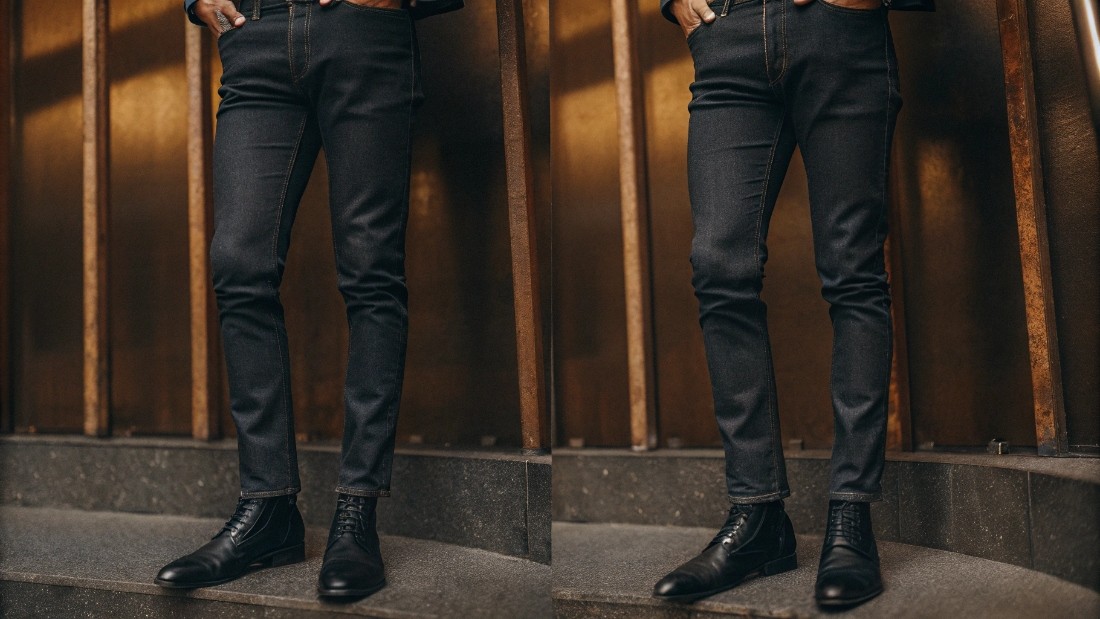
While blue is my preference for classic denim, I'd be a fool to deny the power of black. Black jeans serve a completely different purpose. They aren't about heritage; they're about attitude. Think of the rock-and-roll uniform or the minimalist architect. That's the power of black denim. It can be dressed up in a way that many blue jeans cannot, easily taking the place of chinos or even dress pants for a smart-casual look.
The key, however, is quality. This is where a partnership with the right factory is non-negotiable. I had a client come to me once after a disastrous run with another supplier. Their black jeans smelled so bad they were unsellable. We solved their problem by using a premium, low-odor sulfur dye and a multi-stage finishing process to ensure the final product was clean, sharp, and completely odor-free. When done right, black jeans are an essential, profitable part of any modern collection.
What Style of Jeans Is Most Popular Right Now?
Knowing the right color is only half the battle. To maximize sales, you need to apply that color to the silhouette that customers are actively looking for today.
The most popular style of jeans right now is overwhelmingly the straight-leg, in a spectrum from slim-straight to more classic, relaxed fits. The era of the ultra-tight skinny jean as the default choice is over.
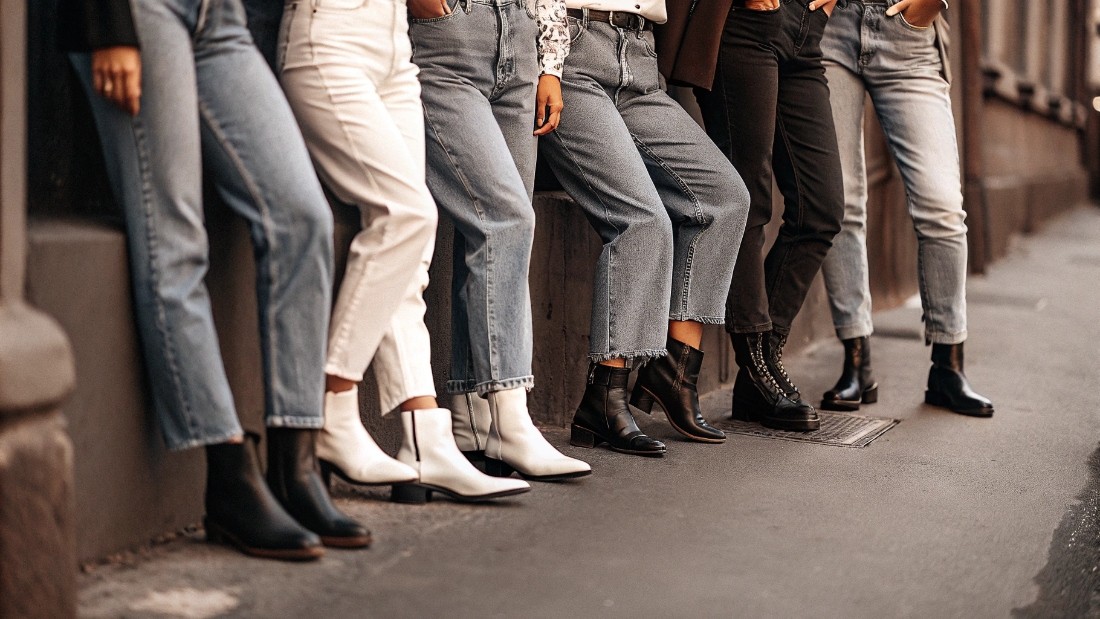
The data I see in my production orders is undeniable: the straight-leg is king. For years, every order was for skinny and slim-taper fits. Now, the majority of my capacity is dedicated to straight-leg variations. This shift reflects a broader market desire for comfort and a return to more timeless, classic silhouettes.
This trend is a huge opportunity. A classic straight-leg in a vintage-inspired blue wash is the ultimate heritage statement. It's pure, authentic denim. The same straight-leg fit in a clean, overdyed black becomes a modern, minimalist staple.
The silhouette is versatile enough to carry both the classic and the contemporary story, allowing you to cater to different customers with the same proven, popular block. For any designer building a collection today, a perfectly executed straight-leg should be the number one priority.
Which Jeans Style Is Most Flattering?
Popularity can be driven by trends, but long-term customer loyalty is built on making people look and feel great. What is the safest, most universally flattering bet for your brand?
A mid-rise, slim-straight jean is the most universally flattering style. It sits comfortably on the natural waist, is slimming through the thigh without being tight, and creates a long, clean line to the ankle.
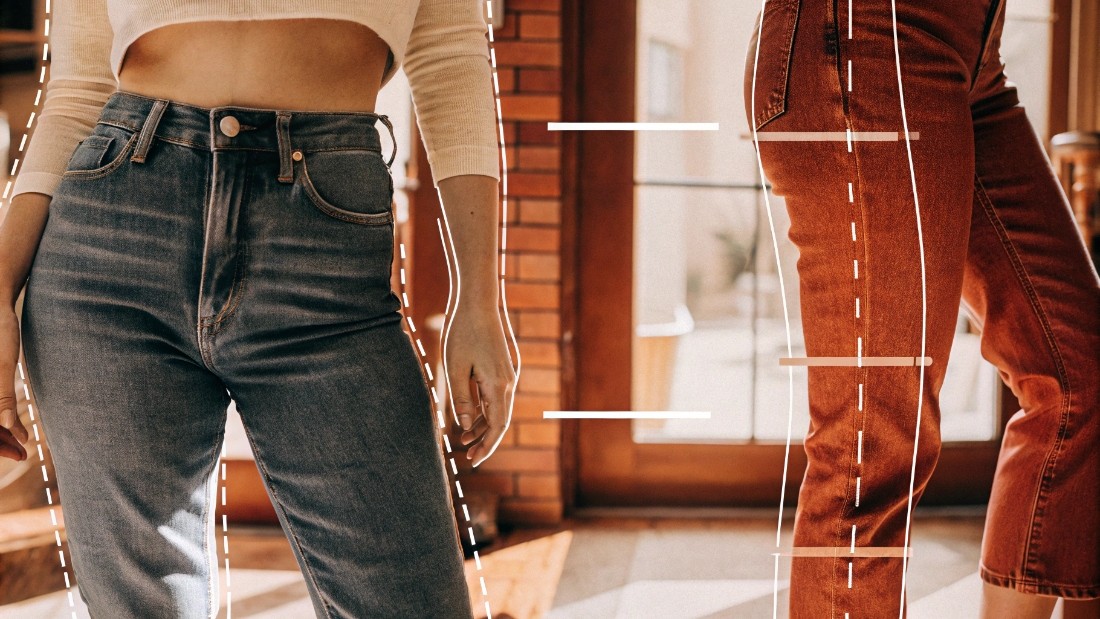
After fitting thousands of pairs of jeans on thousands of different people, the slim-straight cut consistently comes out on top. It’s the ultimate problem-solver. A good mid-rise avoids the issues of being too low or too high, hitting that perfect spot on the hips.
The "slim" part of the name refers to the thigh, where the pattern is tailored to be neat and close to the body, which has a slimming effect. But crucially, from the knee down, it falls "straight." This avoids the restrictive feel of a skinny jean and allows the jeans to fall cleanly over any kind of footwear, from sneakers to boots.
This combination creates a visual balance that elongates the leg and flatters a huge range of body types. While other fits can be more trendy, the slim-straight is the one that makes the most people happy, and a happy customer is a repeat customer.
Conclusion
I prefer blue jeans for their classic authenticity and superior aging potential. However, a successful brand must master both blue and black denim, applying them to flattering, modern fits like the slim-straight.
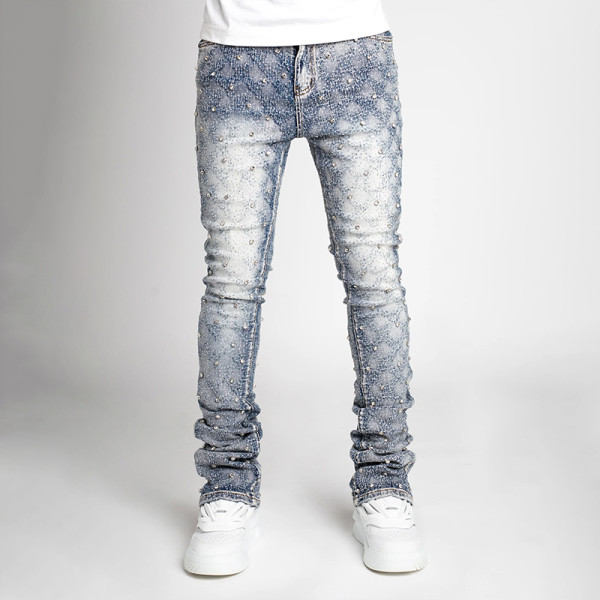
Stacked skinny jeans with all-over rhinestone detail and vintage wash. Built for high-end and boutique fashion labels.
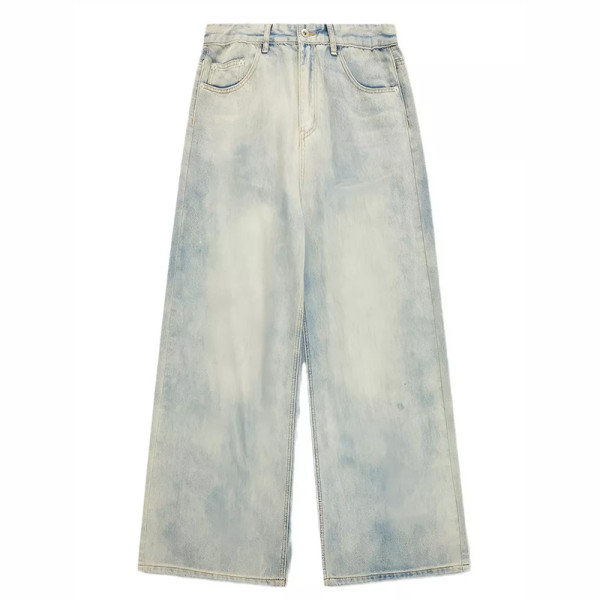
Washed high-rise wide-leg jeans with clean lines and vintage tint — ideal for refined luxury denim collections.
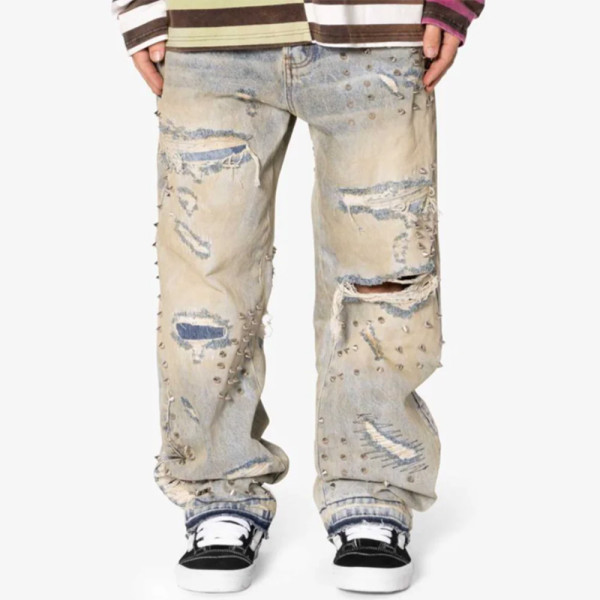
Extreme distressed baggy jeans with stud details—perfect for bold boutique lines & edgy designer labels.
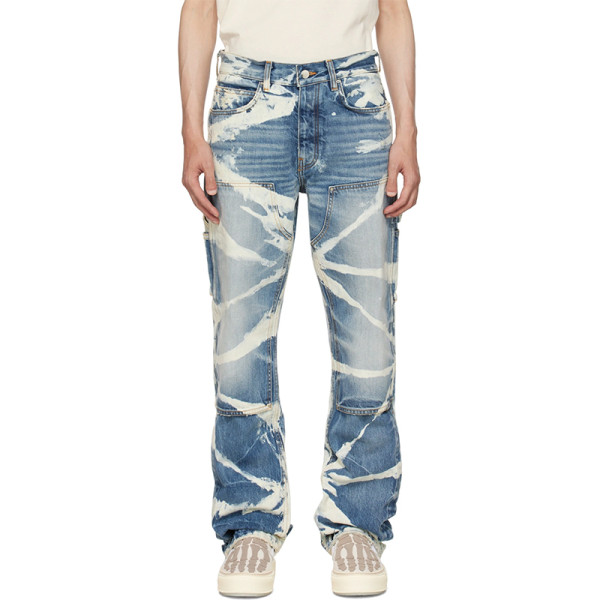
Striking bleached tie-dye jeans made for custom orders, ideal for upscale streetwear and boutique designers.