Do you know what patches on jeans are called?
- Share
- Issue Time
- Apr 13,2026
Summary
Learn the names of common jeans patches—jacron, leather, TPU, woven and embroidered patches—plus how factories apply custom branding in bulk.
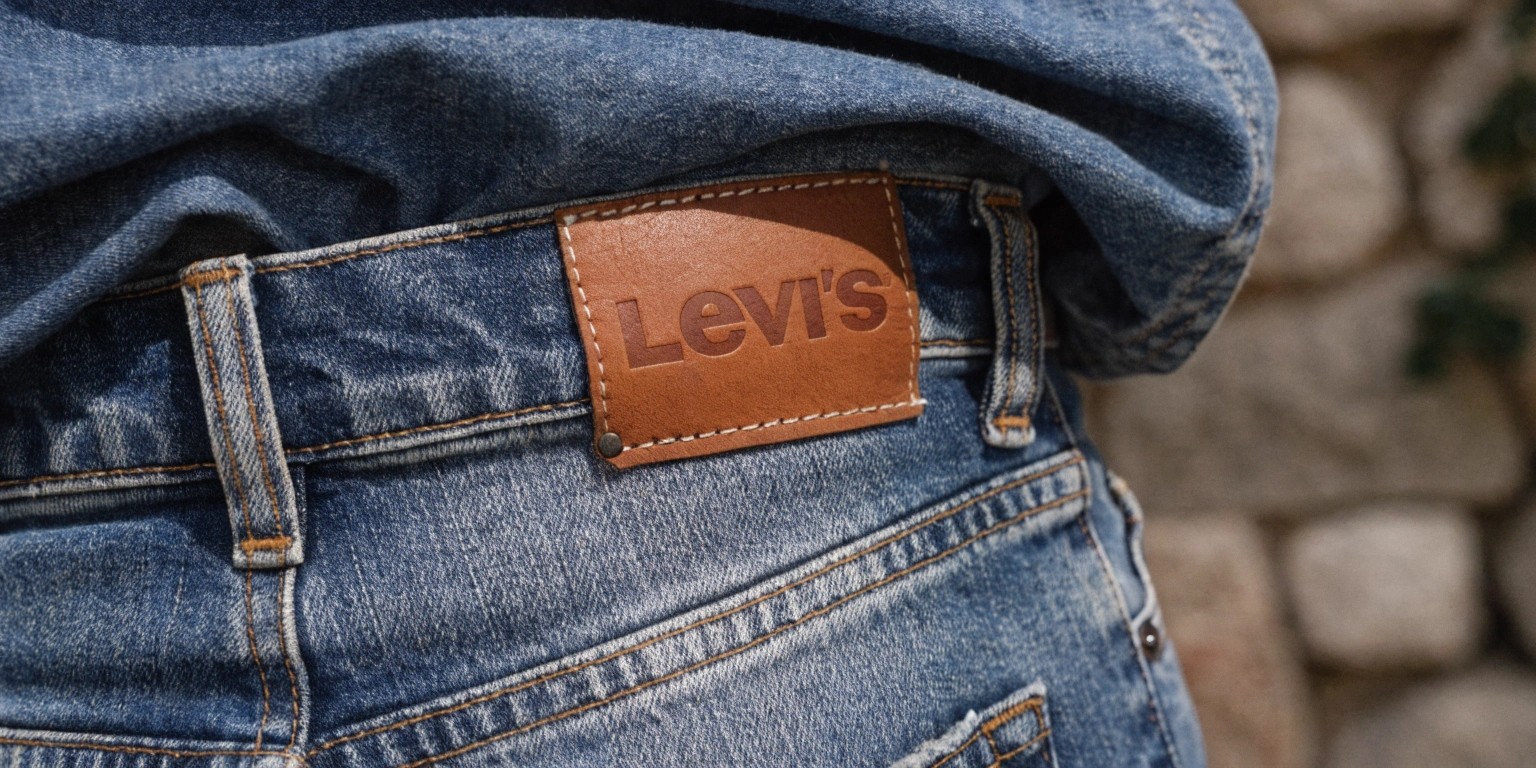
You see decorative logos and repair pieces on jeans. You wonder what they are called and how they work. You want to understand this key detail of denim.
The most common patches are the brand patch on the back waistband, usually made of leather or jacron, and repair patches, which can be iron-on or sew-on. The brand patch is for identity, while repair patches cover holes or add style.
I’ve handled millions of jeans in my career at DiZNEW. The patches are a small but very important detail. They tell a story about the brand and the wearer. Let’s break down the different types you’ll see so you can understand what they are and what they do.
What are the patches on jeans called?
You see different patches on jeans but use the same word for all of them. This can be confusing when you are trying to describe a specific type.
The large patch on the back waistband is the “back patch” or “Jacron patch.” Patches used for repair are called “iron-on patches” or “sew-on patches,” depending on how they are attached to the denim fabric.
This is a great question because people use “patch” to mean several different things. In my factory, we are very specific about our terms because precision matters. It’s best to think of them in two main categories. First, there is the branding patch that comes with new jeans. Second, there are the functional patches that you add later.
The Branding Patch
This is almost always on the back waistband, usually above the right back pocket. It is the brand’s signature. Historically, it was made of leather to show the jeans were strong, like the famous Levi’s two-horse patch. Today, we still use leather, but we also use a durable, paper-like material called Jacron. Jacron is washable, strong, and vegan-friendly. It’s a fantastic modern material that many designers prefer for its sustainable qualities.
The Functional or Decorative Patch
These are the patches people add themselves. They are used for repair, for reinforcement, or simply for style. These are the types you find in a fabric store or online. They can be simple squares of denim fabric or intricate embroidered designs. They are the perfect way to personalize your jeans and give them a second life.
How do you tell what type of patch you have?
You found a cool patch for your jeans. But you do not know how to attach it. One wrong move could ruin both the patch and your pants.
Look at the back of the patch. An iron-on patch will have a milky, plastic-like film on it; this is the heat-activated adhesive. A sew-on patch will have a plain fabric back, sometimes with a finished border for easier sewing.
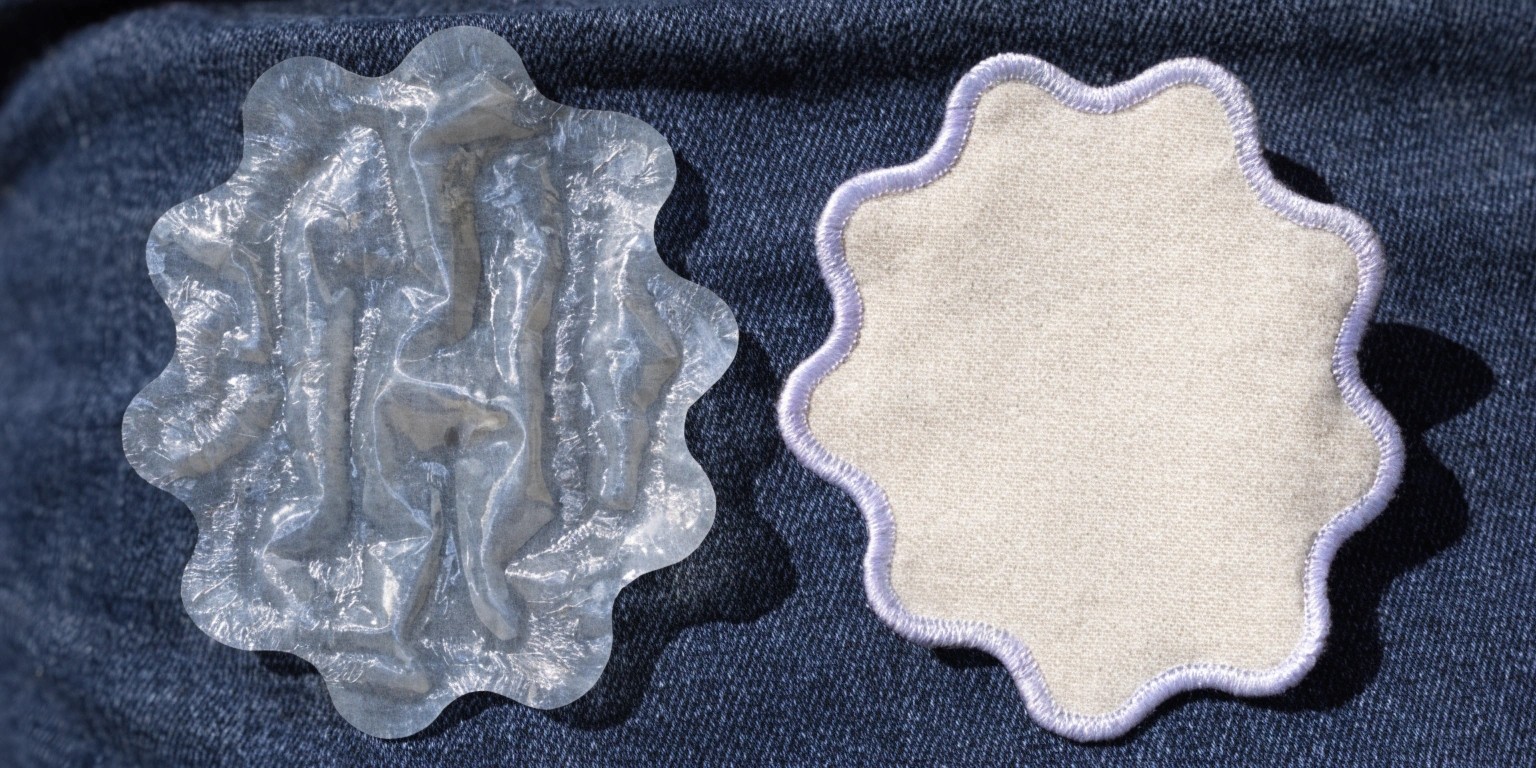
Distinguishing between patch types is simple once you know what to look for. It is all about the backing material. Let me walk you through it as if you were holding one in your hand. This is a basic step in garment customization.
Identifying an Iron-On Patch
Flip the patch over. Do you see a shiny, slightly rough film on the back? It might look and feel like a very thin layer of plastic or dried glue. That is a sheet of heat-activated adhesive. When you press it with a hot iron, this film melts and bonds directly to the denim fabric.
This is the fastest way to apply a patch. However, the glue can weaken over many washes, especially in hot water. This method is best for quick fixes or for decorative patches on areas that do not bend much.
Identifying a Sew-On Patch
Now, imagine a different patch. If the back is just plain fabric, similar to the front, then it is a sew-on patch. Sometimes, high-quality embroidered patches will have a stiff backing material to keep their shape, but you will not see that shiny adhesive film.
These are made for a more permanent application. Sewing the patch on creates a much stronger bond that will last as long as the jeans themselves. This is the method I always recommend for patches on knees, elbows, or other high-stress areas.
What are the three types of patching?
Your favorite jeans have a hole. You know you need to patch it, but you don’t know the best method. You want a repair that is strong and looks good.
The three main types of patching are iron-on patching for a quick surface fix, sew-on patching for a durable external repair, and darning, which patches from the inside and reinforces the area with stitching.
This question is less about the physical patch and more about the method of repair. As someone who builds jeans to last, I love seeing people extend their garment’s life with a good repair. Let’s look at the three main ways you can do it.
| Patching Method | Best For | Durability |
| Iron-On | Small holes, non-stress areas | Low to Medium |
| Sew-On | Any tear, high-stress areas (knees) | High |
| Darning | Reinforcing thinning fabric, artistic repairs | Very High |
First is the simple iron-on patch. It is fast and easy. You place it over the hole and apply heat with an iron. It is a great quick fix for a small tear that is not on a joint like the knee or crotch.
Second is the classic sew-on patch.
This involves placing a piece of fabric over the hole and sewing it down around the edges. This is much more durable and is the standard for reinforcing knees. You can do it by hand or with a sewing machine.
Third is a more advanced technique called darning. This is where you place a patch on the inside of the jeans and then stitch back and forth over the weakened area from the outside. The Japanese art of sashiko is a beautiful form of this. It uses decorative stitches to create a strong and visually appealing repair. This is the most durable method because it reinforces the original fabric all around the hole.
What are the metal circles on jeans called?
You notice the small metal discs on your jean pockets. You know they are not buttons. You are curious about their real name and their purpose.
Those metal circles are called “rivets.” They are placed at high-stress points on the jeans, like the corners of the pockets, to provide reinforcement and prevent the seams from tearing. They are a classic feature of denim construction.
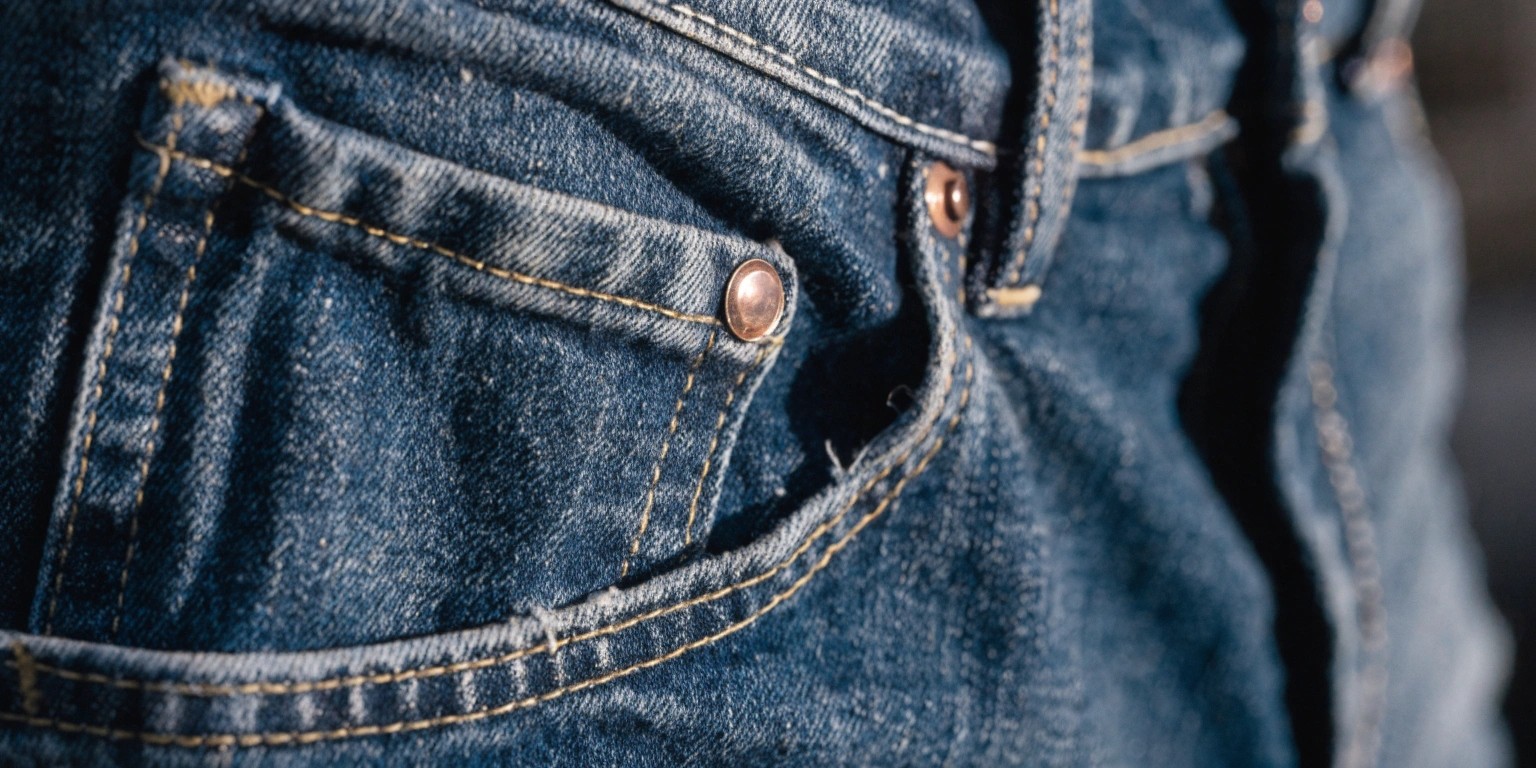
Ah, the rivets! They are one of the most iconic parts of a pair of jeans. In my factory, the rivet press machine is one of the loudest on the floor. It is a powerful machine that permanently fastens these little pieces of metal. Rivets are not just decoration; they are a core part of the jean’s function and history.
The History and Purpose of Rivets
Back in the 1870s, a tailor named Jacob Davis had a problem. His customers, who were miners and laborers, kept tearing their pockets off their work pants. He had the brilliant idea to use the small copper rivets from horse blankets to reinforce the pocket corners. It worked perfectly. He partnered with Levi Strauss, who supplied the denim fabric, and they patented the idea together. This simple invention is what turned denim trousers into the rugged “jeans” we know today.
How They Work
A rivet is a two-part fastener. There is the “burr,” which is the decorative top part you see, and the “nail,” which is the post that goes through the fabric from the inside. The rivet press machine applies immense pressure, flattening the nail and locking the two pieces together permanently. It’s a simple, brilliant piece of engineering that we still use over 150 years later to make jeans strong.
Conclusion
Now you know that patches and rivets are not just details. They represent the history, branding, and personalization that make every pair of jeans completely unique.
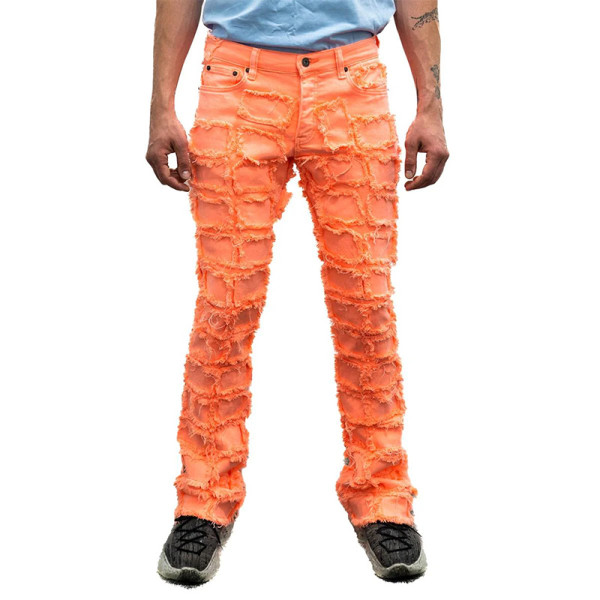
Bold neon jeans with full-body patch distressing—designed for statement-making fashion and stagewear brands.
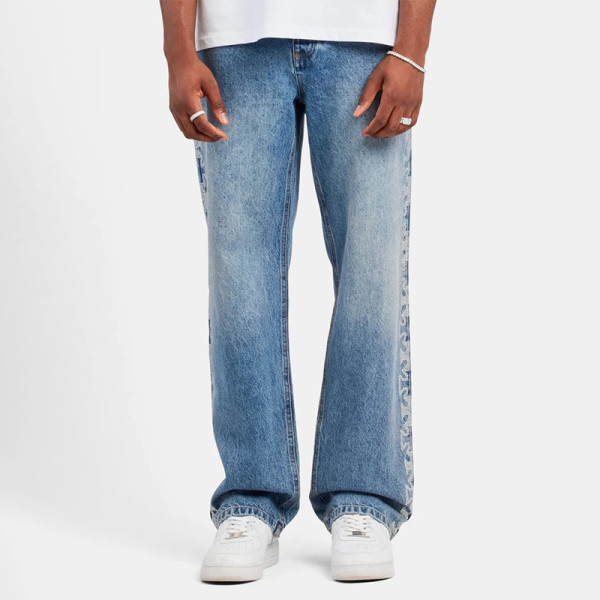
Vintage wash wide-leg jeans with signature graphic side panels—made for bold boutique collections.
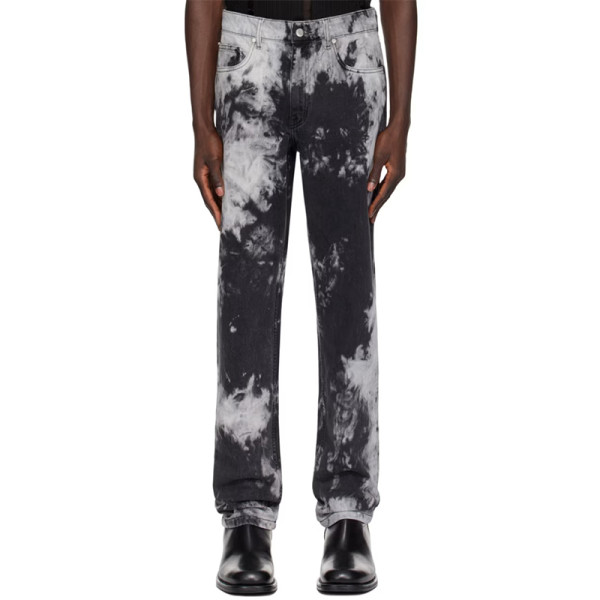
Statement jeans with a bold cloud-wash in black and white—artistic, edgy, and full of attitude.
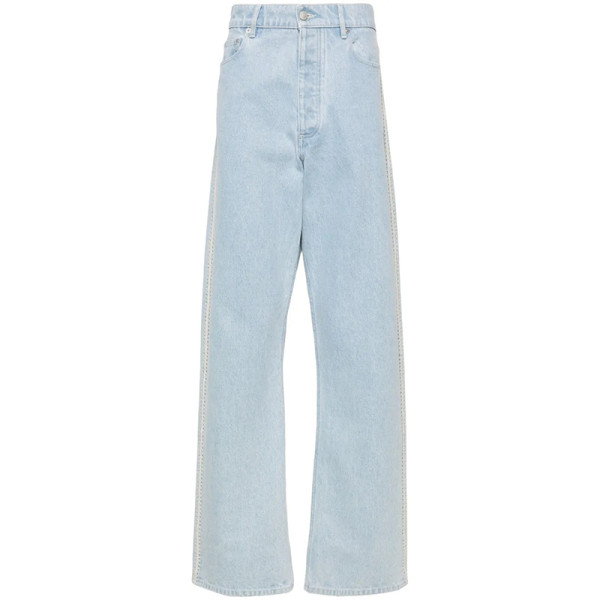
Light blue wide-leg jeans with clean lines and subtle side stitching—versatile, modern, and effortlessly stylish.