Do jeans shrink when you wash them for the first time?
- Share
- publisher
- Jimy
- Issue Time
- Nov 28,2026
Summary
Do jeans shrink when first washed? Learn how our custom denim factory manages shrinkage rates, sanforized fabrics & CAD patterns for wholesale brands.
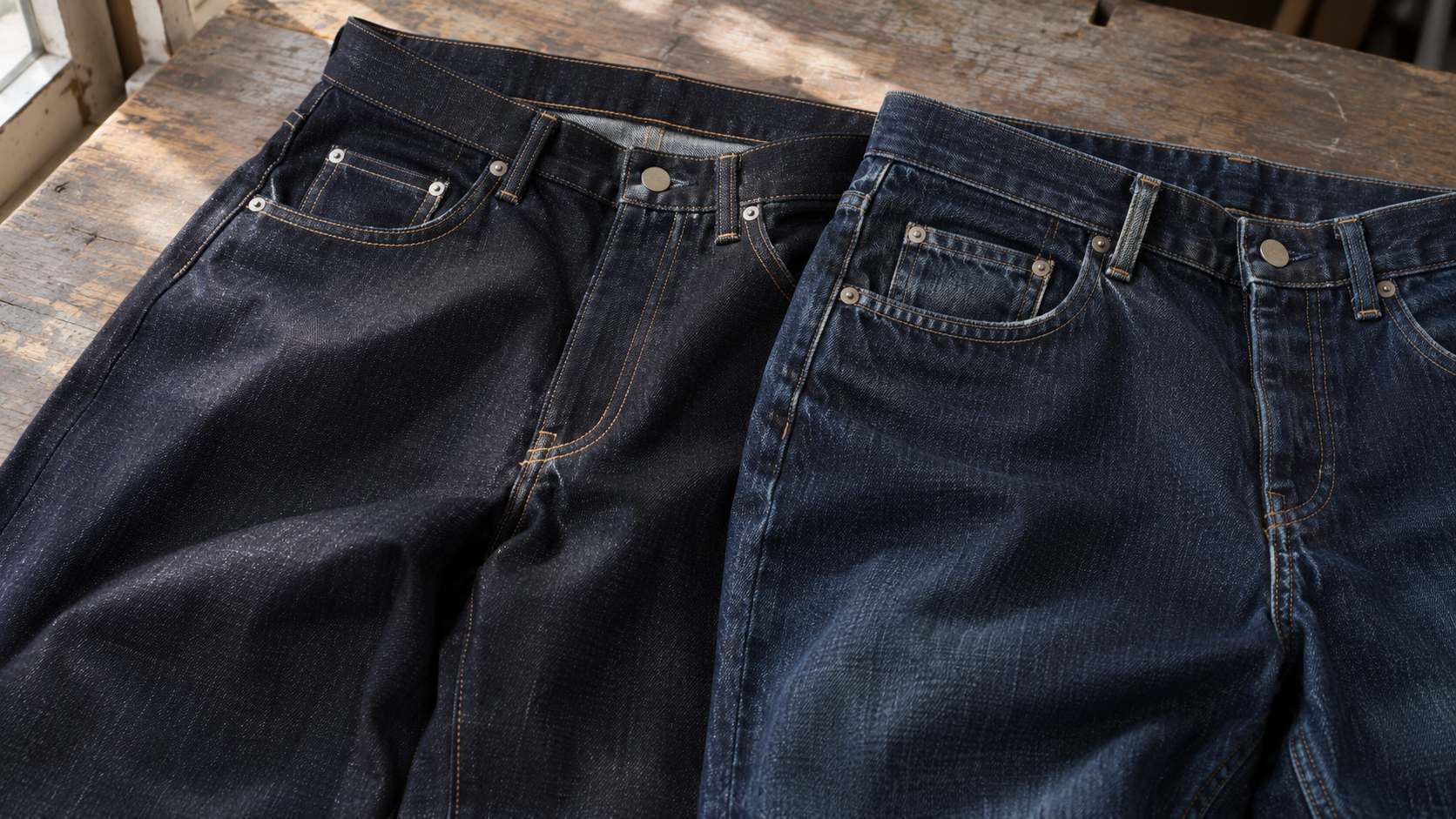
The first wash can change the fit of a pair of jeans you thought you knew. You try them on in the store, check the waist, and decide the length is right. Then you wash them and the waistband feels snug, the legs sit higher on your shoes, or both. Before you blame the washer or buy the next size up, find out what was done to the denim before it reached you. Two pairs marked 100% cotton can respond very differently to the same laundry cycle. Levi’s® Customer Service
Yes, jeans can shrink the first time you wash them. Most prewashed or preshrunk jeans change relatively little when you follow the care label, while unsanforized raw denim can shrink noticeably. The waist and inseam can change by different amounts. To limit shrinkage, use cold water and air-dry if the label allows. For shrink-to-fit jeans, check the brand’s first-wash and sizing instructions before choosing a size.
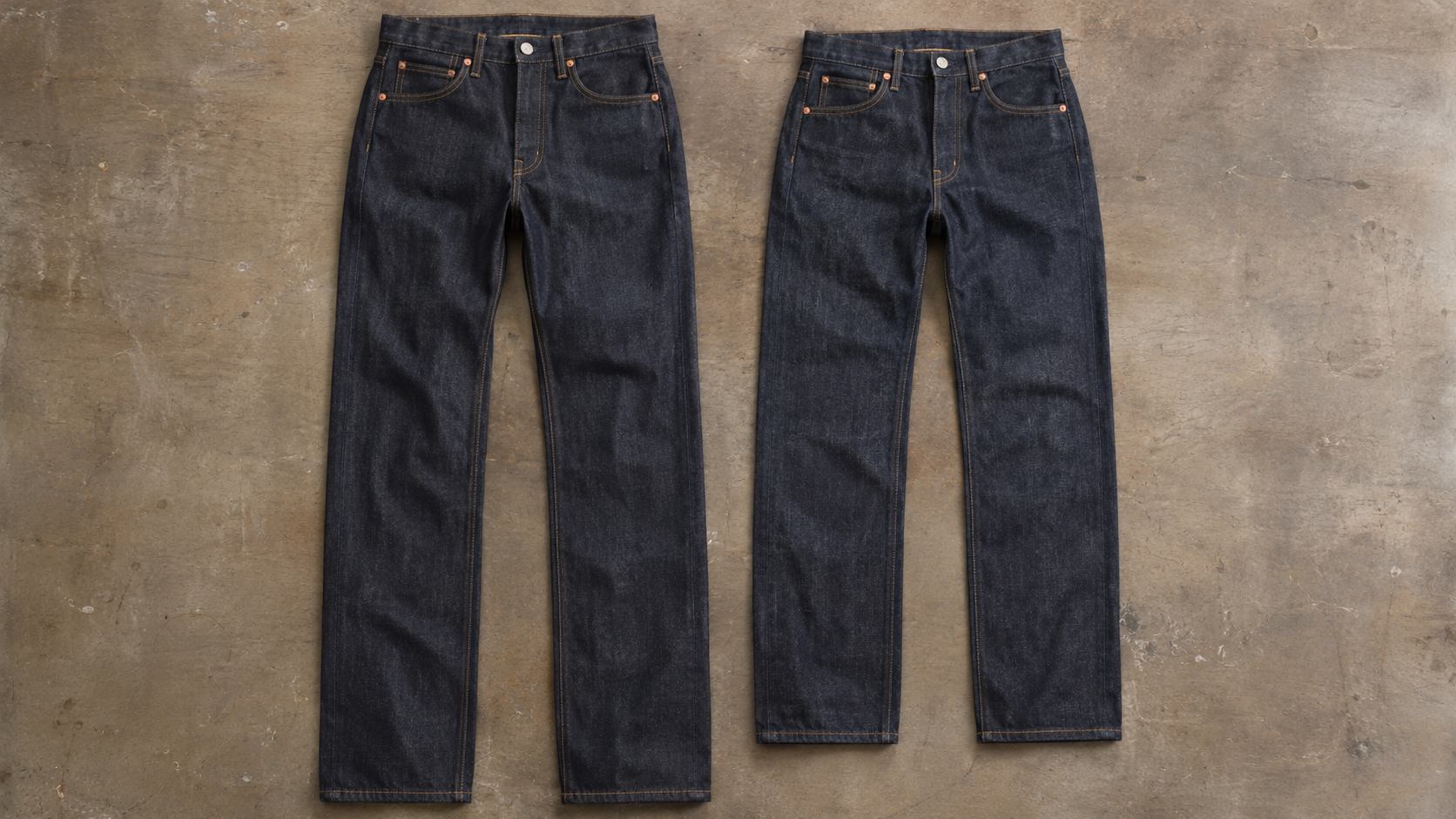
Imagine two pairs with the same 32-inch inseam. One is a prewashed straight-leg style you bought to wear with sneakers. The other is a rigid, unsanforized pair you plan to cuff over boots. If you hem both before washing, the same decision can leave you with very different results. And if you’re approving a sample for your own brand, it can determine whether the finished jeans still deliver the silhouette you designed. Start with a tape measure and two questions. Where did the fit change, and how much of that change is still there after the jeans are dry?
How Much Do Jeans Shrink After the First Wash?
First-wash shrinkage varies by denim finish, wash and dry conditions, and the part of the jeans you measure. Preshrunk jeans generally change less than unsanforized raw jeans. Check the waist and inseam separately. For example, if a 32-inch inseam measures 31 inches after washing and drying, that’s about 3.1% shrinkage at the inseam on that pair.
Do jeans get tighter or looser after washing?
Jeans can feel tighter straight after washing, especially if you wore them several times before putting them in the laundry. The waistband and knees may have relaxed during wear, so a freshly washed pair can feel firm even if it’s close to its original size. Rigid denim can also feel stiffer when you put it back on. If the waist feels more comfortable after an hour but the hem still sits higher on your shoe, you may be noticing two different things. The waist is relaxing with wear, while the inseam may have shortened.
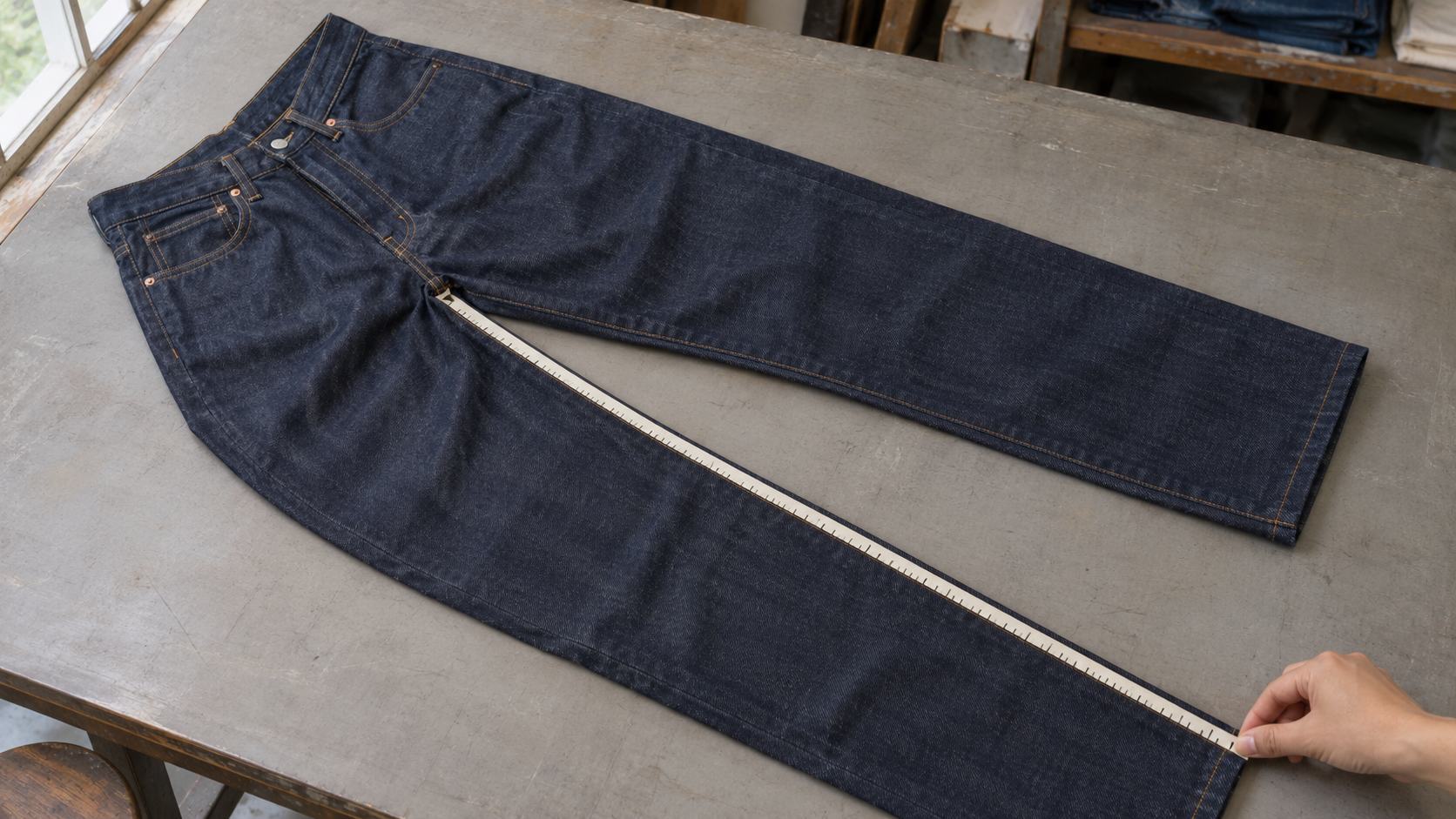
For a useful comparison, measure the jeans before their first wash, ideally before you’ve worn them for a full day. Button them, lay them flat on a table, and smooth the fabric without pulling it. Measure straight across the waistband using the same placement each time. For the inseam, run the tape from the crotch seam to the bottom of the hem along the inside leg. Record the numbers and take a quick photo of your tape placement. Repeat once the jeans are completely dry, before wearing them again. Be consistent about whether your waist number is a flat width or a full circumference.
Do jeans shrink more in the waist or in length?
Length changes are often easier to spot because you can see where the hem hits your shoes. The waistband is harder to judge by feel because its shape, construction, and position on your body also affect comfort. And the amount of change across the leg doesn’t tell you how much it will change along the leg. If you’re buying stacked jeans, even a modest inseam change can reduce the folds you wanted around the ankle. With fitted jeans, a small waist or thigh change may be the first thing you notice.
| Example measurement | Before washing | After washing and drying | Measured reduction |
| Inseam | 32 in | 31 in | 3.1% |
| Waist laid flat | 16 in | 15.75 in | 1.6% |
These are illustrative measurements for one hypothetical pair. To calculate the reduction, subtract the after-wash measurement from the original, divide by the original, and multiply by 100. In this example, the quarter-inch reduction across the flat waistband is easy to miss on a tape. If the brand reports waist as twice the flat width, it represents a half-inch reduction in the reported waist measurement. The percentage stays the same. For a brand reviewing a size chart, clear measurement instructions keep a flat width from being mistaken for a circumference.
What you do with the result depends on the fit you bought. If the length is already borderline, check the maker’s first-wash instructions before you hem the jeans. If the waist feels tighter but the tape shows little change, give the jeans a short wear test and see whether they relax. If you’re ordering custom denim, share the before and after measurements along with photos. “The inseam lost an inch after a cold wash and line dry” gives a pattern or wash team a specific issue to investigate.
Do Raw Jeans Shrink More Than Prewashed Jeans?
Unsanforized raw jeans generally shrink more on the first wash than prewashed jeans. Sanforized raw denim sits between those descriptions in an important way. The fabric has been treated to reduce shrinkage, while the finished jeans can still be sold unwashed. Ask whether the fabric was sanforized and whether the finished garment was washed before sale.
Do sanforized and unsanforized raw jeans shrink differently?
Yes. Sanforization is a fabric-finishing process used to reduce how much denim shrinks during later laundering. A pair can look dark, feel stiff, and still be made with sanforized fabric. Unsanforized raw denim has skipped that treatment and generally has more room to contract when first washed or soaked. If you’re shopping online, look for the actual finish in the product description. A photo can show the shade and texture, but it can’t tell you whether a 32-inch inseam is likely to stay close to 32 inches after soaking. Lee
The label selvedge answers a different question. It describes a woven fabric edge. A selvedge jean can be made with sanforized or unsanforized denim, and it can be offered raw or washed. Fiber content is another separate piece of information. Two rigid 100% cotton jeans can have different shrinkage profiles because they were woven, finished, and washed differently. If a listing says “raw selvedge, 100% cotton,” the useful follow-up is to ask whether it’s sanforized and whether the brand publishes measurements after its recommended first soak or wash.
Can prewashed jeans still shrink at home?
Yes. A factory garment wash can remove some of the dimensional change before the customer buys the jeans, while producing the intended shade and hand feel. An at-home cycle can still differ in water temperature, agitation, or drying. A pair that stays close to its original measurements when washed cold and hung to dry may respond differently after a hot tumble cycle. If the jeans fit well already, start with the care instructions that came with that specific pair. They’re more useful than a general rule for all cotton denim.
| Denim description | What it tells you | What to ask before buying or approving a sample |
| Unsanforized raw | The unwashed denim has skipped sanforization | What are the expected waist and inseam measurements after the recommended first soak or wash? |
| Sanforized raw | The fabric has been treated to reduce shrinkage, and the jeans retain a raw finish | Is there first-wash measurement data for this fabric and style? |
| Garment-prewashed | The assembled jeans were washed before sale | Which home wash and dry conditions were used to check the finished measurements? |
For a designer, the choice comes back to what you want buyers to experience. An unsanforized drop can appeal to customers who want to break in their own denim and are willing to follow a specific soak routine. For a boutique selling a ready-to-wear baggy jean online, a garment-prewashed style can make it easier to describe how the customer should expect the jeans to fit out of the box. Either way, build the fit around the actual fabric and wash you plan to sell. If you approve a fit sample in one denim and switch fabrics to get a better shade or price, check the fit again after laundering.
Will Jeans Shrink in Cold Water or in the Dryer?
Jeans can shrink in cold water, especially if they’re made from unsanforized raw denim. Cold washing and air-drying generally help limit shrinkage, while hot tumble-drying can increase it. Follow the care label, and use the maker’s first-wash or soak directions for shrink-to-fit jeans.
How should you wash and dry new jeans to minimize shrinkage?
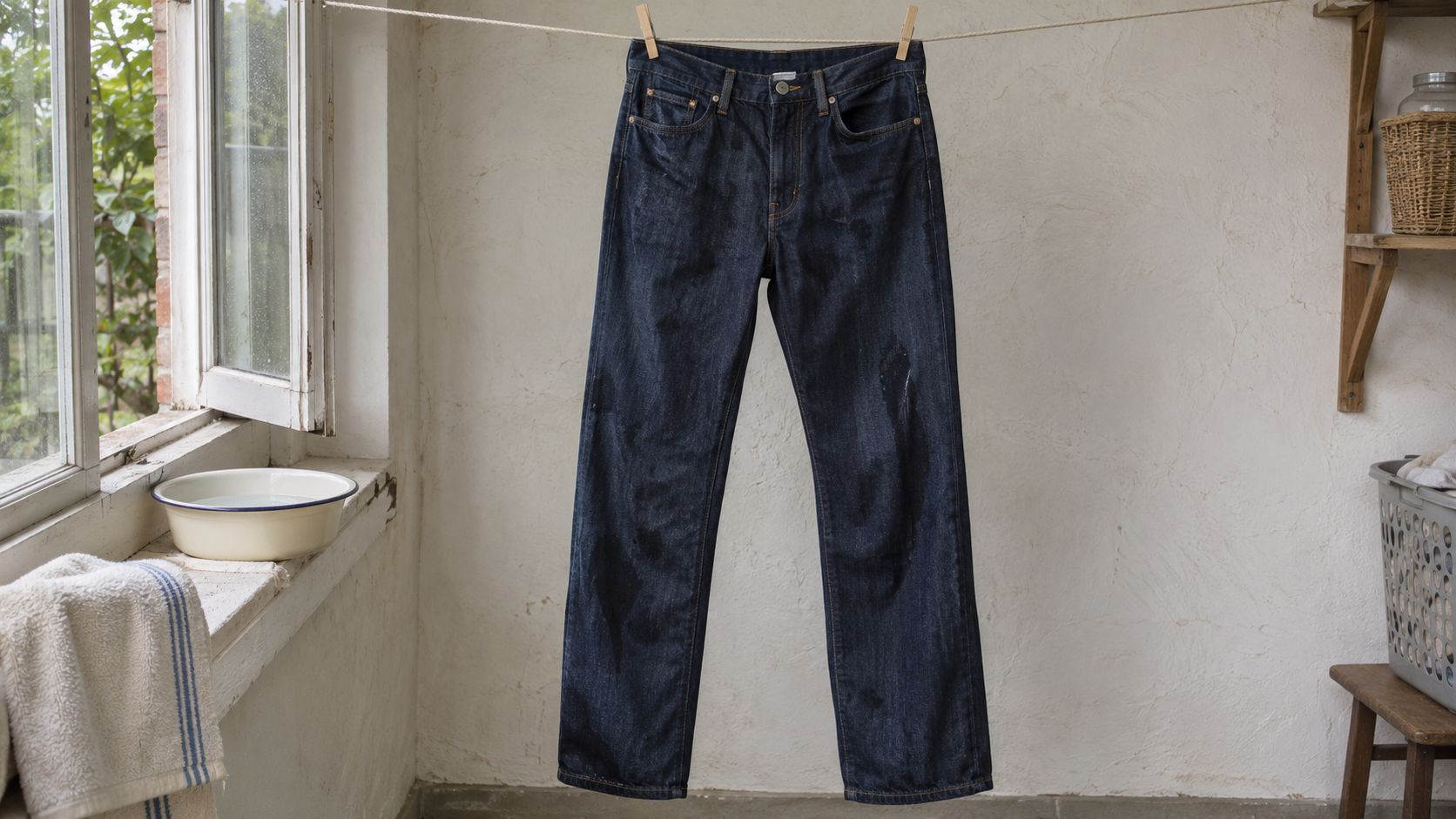
Read the care label before the first wash. For everyday machine-washable jeans whose label permits it, turn them inside out, close the zipper or buttons, and use a gentle cold-water cycle with mild detergent. Dark indigo can release dye during the first washes, so wash those jeans separately from light items. Once the cycle ends, smooth the legs by hand and hang or lay them flat to dry as directed. If you’re checking the fit, wait until the waistband and seams are fully dry before taking your measurements. Levi’s® Customer Service
A cold wash is a good starting point when you want to keep the fit, but it still gets the fabric wet. That matters with unsanforized raw denim. If the manufacturer calls for a particular soak method, follow that guidance before you choose a size or schedule alterations. If your everyday jeans allow tumble-drying and that’s how you normally do laundry, choose the lowest heat setting permitted by the label. Stretch styles deserve particular care because repeated high heat can affect elastic fibers and the way the fabric recovers after wear.
Can I shrink jeans 1 size?
You may be able to make some jeans smaller by laundering them, particularly if they were designed to shrink. Getting exactly one size smaller is much harder. A tagged size represents a set of measurements for the waist, hip, thigh, rise, and sometimes the inseam. Heat and laundering can change those dimensions by different amounts. The wash might shorten the inseam enough to change the look while leaving the waist looser than you want. That’s especially frustrating if the jeans already sit exactly where you want them over your shoes. Levi’s® Customer Service
Think about the fit problem before reaching for a hotter setting. If a new pair is loose in the waist but right through the seat and thigh, compare the measurements of the next size while you can still exchange it. If the next size fits too tightly through the leg, ask a tailor whether a waistband alteration is practical for that construction. If your pair is shrink-to-fit, the brand’s directions give you a starting point for that specific denim. Keep a note of the cycle you used so you can compare the result with the maker’s expected measurements. Levi’s® Customer Service
For a label developing its own denim, think about how customers will actually care for the jeans. If the care label permits low-heat tumble drying, a sample tested only with line drying leaves a question about the fit for customers who use a dryer. Agree with your manufacturer on the primary laundering condition and consider an additional check for a second permitted drying option. For heavy distressing, embroidery, or mixed-material panels, inspect those areas after the same cycle. You want to see how the whole garment comes through the wash, including the sections that make the design worth buying.
Should You Size Up When Buying New Jeans?
Choose your size using the brand’s measurements, the denim finish, and your usual care routine. For most preshrunk jeans, start with the size that fits well at purchase. For unsanforized or shrink-to-fit styles, use the maker’s guidance for the wash and dry method you intend to use. Check the waist and inseam separately.
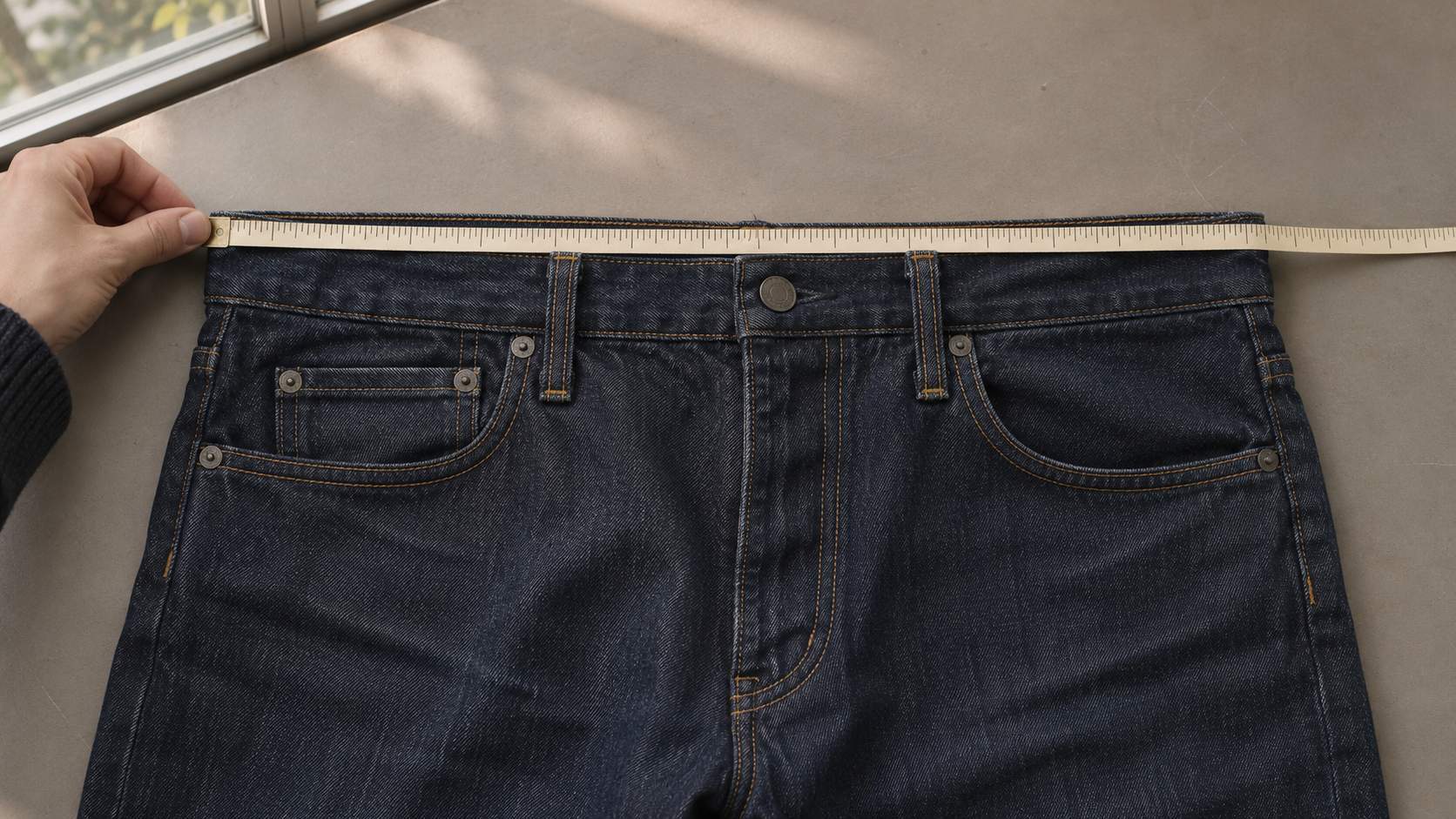
Do new jeans get looser or tighter?
New jeans can do both at different points. During wear, pressure and movement can make the waist, seat, and knees feel more relaxed. After washing, those areas can feel firmer again. Rigid denim often needs some time to soften, while stretch denim may feel flexible on the first try-on. Stretch jeans also vary in how well they return toward their original shape. If you’re trying on a close-fitting pair, sit down and bend your knees before deciding. You’ll learn more about day-to-day comfort that way than by judging how the waistband feels while standing still. Levi’s® Customer Service
Pay attention to which areas you expect to relax. A waistband that feels a little firm can become more comfortable with wear. A pair that already pulls sharply across the hips or makes it hard to sit is a bigger gamble. Length deserves its own decision. If you want a deliberate stack at the ankle, or need the hem to reach a particular point on your boot, start with enough inseam for the intended look after washing. Judging both dimensions on a single try-on is how buyers end up with jeans that button comfortably but finish too high.
Is it better to size up or down in jeans?
Start with a pair you already like. Lay it flat and check the waist, front rise, thigh, and inseam. Compare those numbers with the new brand’s garment measurements, using the brand’s measurement guide if it provides one. Some size charts list body measurements, while others list the finished garment. If all you have is a body chart and you’re between two sizes, ask for the actual measurements of the two sizes that interest you. The thigh and rise are particularly helpful when choosing between a slim cut and a straight or relaxed one. Levi’s® Customer Service
Shrink-to-fit styles are a good example of why a generic sizing rule falls short. Levi’s gives different sizing advice for its own Shrink-to-Fit jeans depending on whether the buyer plans to machine wash and dry them or wear them raw. Its machine wash and dry guidance allows for different changes at the waist and inseam. If another brand publishes measurements after soaking or laundering, compare those with your favorite pair. That gives you a concrete way to choose your size using the care routine you’ll actually follow. Levi’s® Customer Service
For an online boutique, publish the measurements shoppers can use to make that decision. A baggy fit may need clear thigh and leg-opening measurements so buyers can see where the volume sits. A stacked style benefits from an inseam measurement and an explanation of how the stacking is intended to look. For an extended size range, review how the rise, hip, and thigh fit across key sizes. If you have post-wash measurements, state the wash and dry conditions behind them. That gives shoppers and customer service staff the same reference when a customer calls about fit.
How Do Denim Manufacturers Test First-Wash Shrinkage Before Bulk Production?
Test both the denim fabric and the finished jeans. Record fabric changes separately in the warp and weft directions, then check garment measurements such as the waist, rise, thigh, and inseam after a defined wash and dry cycle. Before bulk production, approve the post-wash measurements and tolerances on a representative pre-production sample.
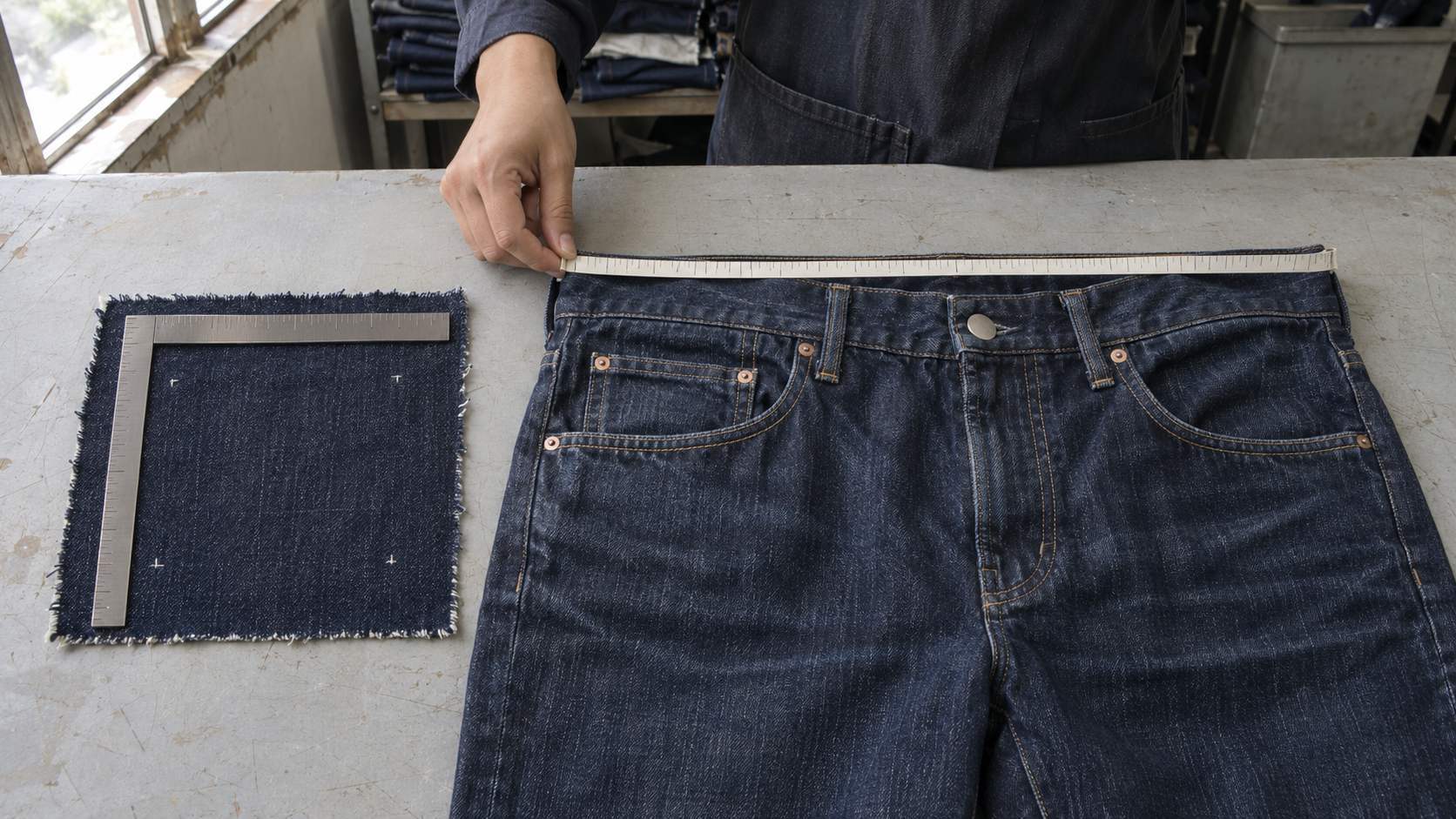
How do factories measure shrinkage in the warp and weft directions?
At the fabric stage, mark and measure a specimen in two directions. The warp runs along the fabric length and the weft runs across its width. Wash and dry it under agreed conditions, then remeasure the same points using the conditioning and measurement requirements of the chosen method. Record the two results separately. As an example, if marked distances start at 250 mm and finish at 240 mm in the warp and 245 mm in the weft, the measured reductions are 4% and 2%, respectively. Those figures describe that specimen under the test conditions. AATCC
At the garment stage, start with a finished pair in the condition the customer will receive it. For a prewashed style, that means measuring after the factory wash and before the simulated home wash. Otherwise, the result can mix up shrinkage from factory finishing with the change a shopper experiences at home. Measure the agreed points, launder the garment, and repeat the measurements after drying and conditioning. The assembled waistband, seams, pockets, and panels can behave differently from a flat fabric specimen. On a paneled style, inspect for puckering and leg twist as separate appearance checks, even when the waist and inseam pass.
What post-wash measurements should brands approve before bulk production?
Record the measurements that define the look and fit after laundering. For example, a brand could specify a post-wash inseam target of 31.5 inches with an agreed tolerance of ±0.25 inches under the designated test conditions. In that example, 31.25 to 31.75 inches would pass at that measurement point. The right tolerance depends on the style, customer expectations, and what the approved material and process can consistently achieve. Also agree on how much change is acceptable from the as-sold measurement. A sample can land inside its post-wash range and still have shifted enough for a customer to notice.
| Approval item | What to record |
| Production materials | Fabric reference and lot, trims, and any sections made with a different fabric |
| Factory finish | Approved physical wash standard and the wash recipe used for the pre-production sample |
| Home laundering | Test method, wash setting, drying method, and number of cycles |
Critical measurements | Before and after values, post-wash targets, and allowable variation at each agreed point |
Appearance | Leg twist, seam puckering, distressing, embellishments, and contrast panels after laundering |
Request a Quote for Custom Denim from DiZNEW
If you’re developing a denim line, send DiZNEW your sketch, tech pack, or reference sample and tell us how you want the finished jeans to fit after washing. A measurement from a pair you already like or a photo showing where the hem should sit gives our team something specific to work from. Include your target wash, size range, branding details, expected quantity, and launch date if you have them. We can help you choose what to check on the sample before you commit to production.
DiZNEW develops custom denim for independent designers, online boutiques, and established brands. We work on styles including baggy, stacked, straight-leg, selvedge, skinny, and extended-size jeans, as well as denim jackets, shorts, and shirts. Orders can start at 30 pieces, depending on the materials and custom components. We also handle larger production runs, including orders of 10,000 pieces. diznew.com
Request a custom denim quote from DiZNEW and share the fit, wash, or detail you want your customers to be able to count on after the first wash.
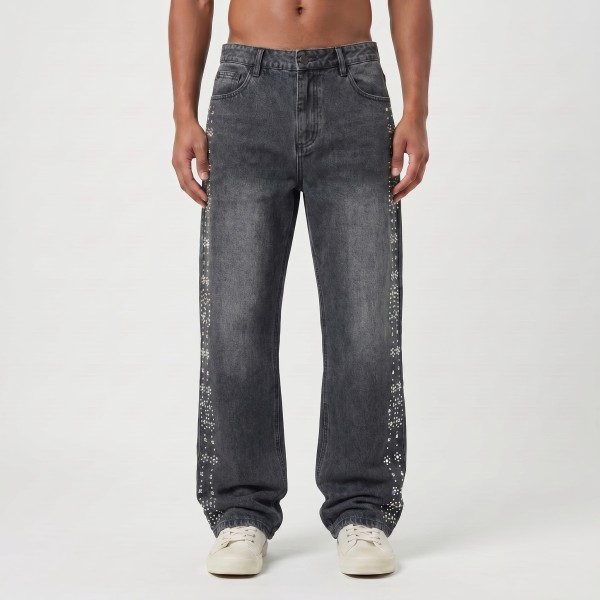
Discover premium DiZNEW denim jeans with decorative studs for a sparkling, stylish look. Order today!
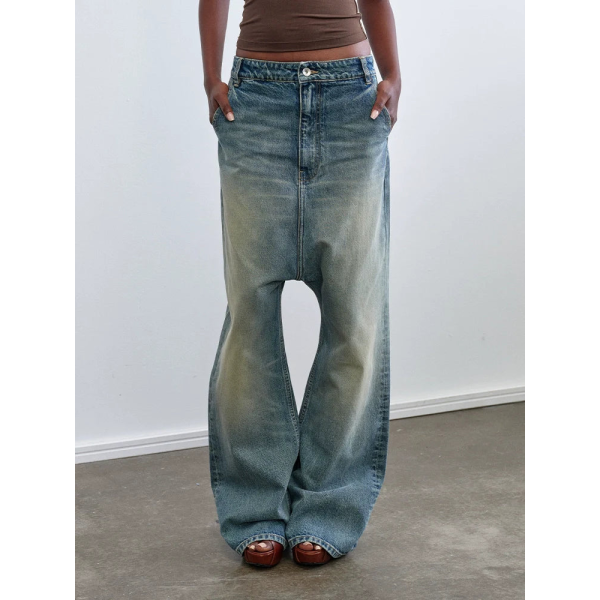
OEM & ODM Drop Crotch Jeans for Women - Tailored denim solutions designed for brands seeking unique styles and quality.
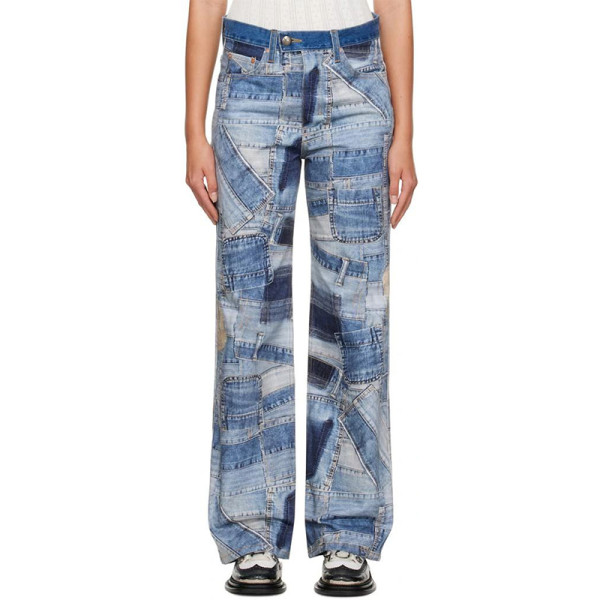
Elevate your collection with our OEM/ODM Custom Digital Printing Blue Patchwork Jeans, perfect for brands seeking unique styles in bulk.
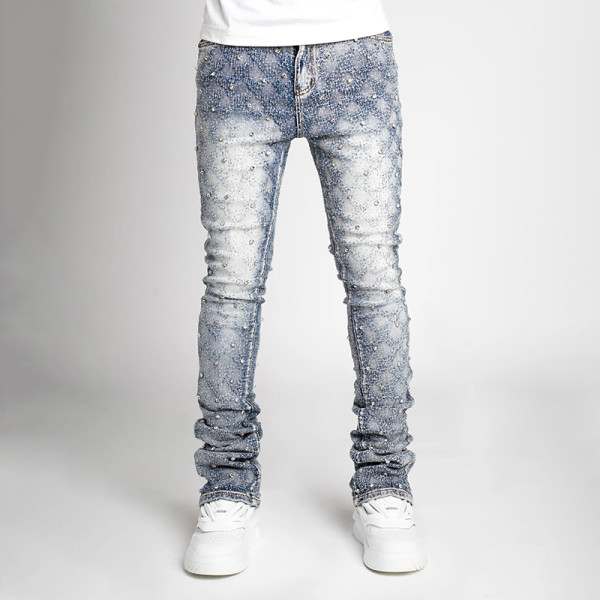
Stacked skinny jeans with all-over rhinestone detail and vintage wash. Built for high-end and boutique fashion labels.