Are Bell-Bottom Jeans Out of Style Right Now? An Expert Guide
- Share
- Issue Time
- Jan 24,2026
Summary
Trend analysis for bell-bottoms and how our integrated denim factory supports brands with patternmaking, washes, QC and door-to-door wholesale production.
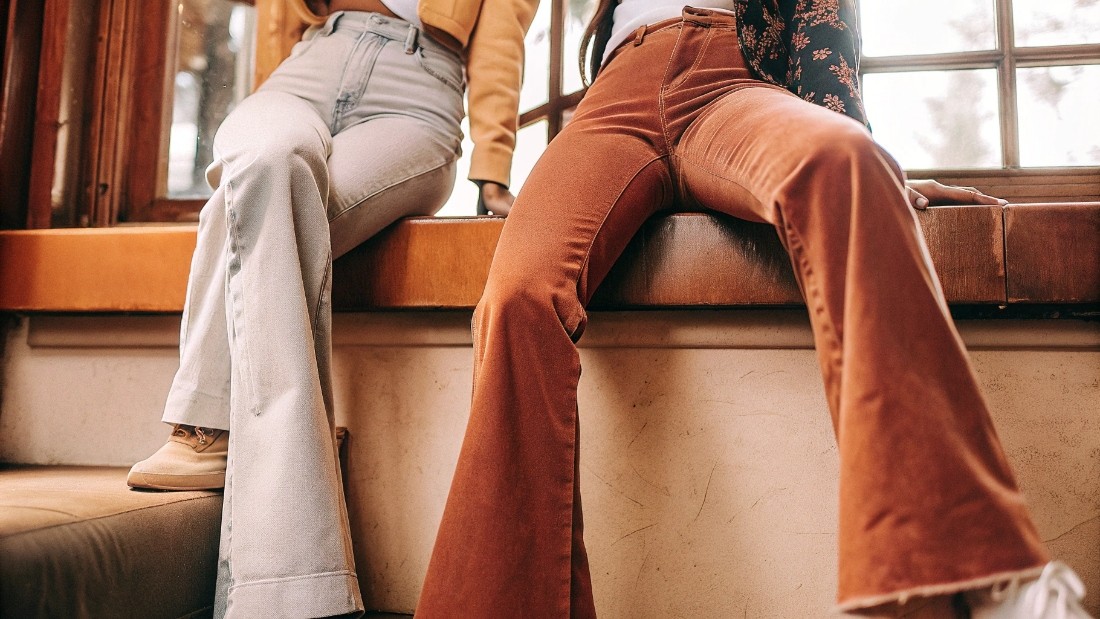
Bell-bottom jeans polarize people faster than most denim silhouettes: some see them as a tired relic of the 1970s, others treat them as a joyful, wearable rebellion against endless skinny jeans. Whether you love the dramatic sweep of a wide flare or worry it reads too retro, the real question for designers, boutiques, and buyers is practical: do bell-bottoms sell today, and how should you position them in a modern line or wardrobe?
This guide answers that question with a buyer- and maker-focused lens — combining fashion signals, fit science, and production realities so you can decide whether to stock, design, or wear bell-bottoms.
Bell-bottom jeans are not universally “out of style” in 2025 — they’ve moved from mass-market trend to curated niche. Demand is strongest in curated vintage, Y2K/’70s-inspired capsule drops, and specialty plus-size or custom segments. For retailers and brands, bell-bottoms sell when reinterpreted with modern rises, thoughtful proportions, and quality construction; for makers, customization and fit options are the key to turning interest into repeat orders.
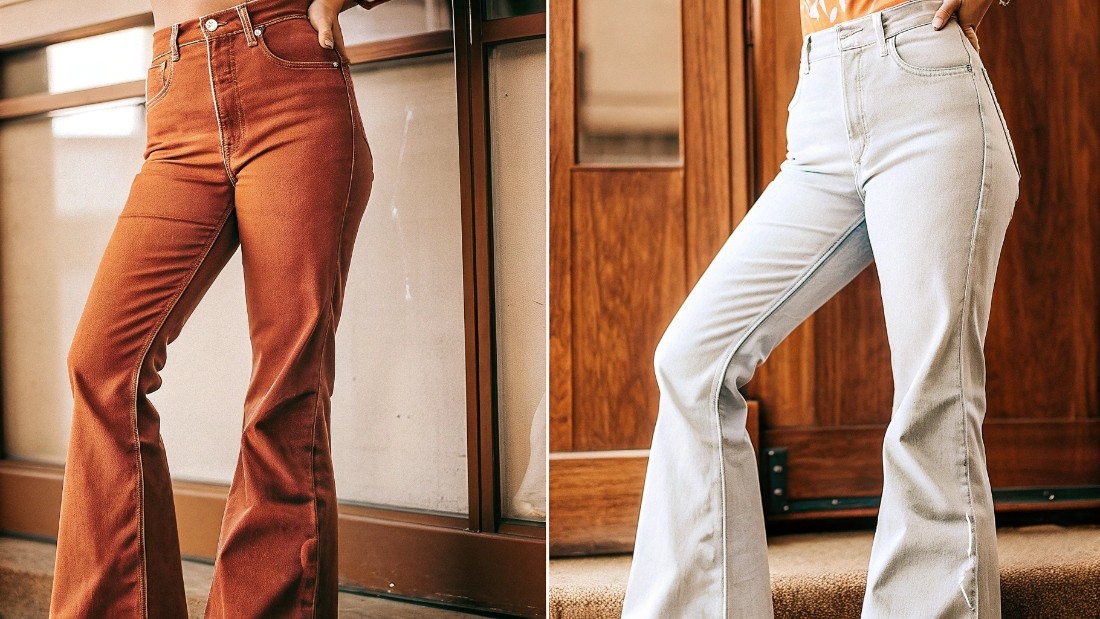
Want a quick example? Imagine a small Los Angeles boutique launching a 20-piece capsule: high-rise, medium-weight selvedge with a 16–18 cm hem flare, marketed with heel-friendly styling. That single drop can out-sell a broader “retro” rack because it solves fit and styling questions for real shoppers.
Keep reading — I’ll walk you through which bell-bottoms work, what jeans to avoid in 2025, how to style for ages and body types, and how to evaluate factories and suppliers (including what DiZNEW can do for your custom line).
Are bell-bottom jeans currently out of style?
No — bell-bottoms aren’t completely out of style in 2025, but their mainstream moment has cooled. They now occupy a niche led by curated drops, vintage resale, and designer reinterpretations. Mass-market dominance is gone, but demand is stable among shoppers seeking statement silhouettes, retro influences, and tailored fit options, especially in plus and custom markets.
Trend Context
Fashion runs in cycles and bell-bottoms are a classic example: intense popularity, a long dormancy, then recurrence as nostalgia meets reinterpretation. Post-2010s, skinny denim dominated everywhere. In the early 2020s the pendulum swung toward wider hems (flares, wide-leg, relaxed cuts), peaking in some segments and plateauing in others. By 2025, bell-bottoms have settled into a more selective market—thriving where styling, quality, and fit are emphasized rather than mass-produced novelty.
Where bell-bottoms are thriving
Curated designer drops: Designers reinterpret the bell with modern rises, cleaner lines, and premium denim weight. High-fashion and independent brands often use bell-bottoms as identity pieces for seasonal storytelling.
Vintage and thrift markets: The vintage sector loves authentic ‘70s and ‘90s pieces; sellers can command premium prices for well-preserved originals or remade vintage styles.
Niche customer segments: Plus-size shoppers, retro enthusiasts, and online boutiques targeting unique silhouettes are consistent buyers. Custom and made-to-measure bell-bottoms do well because fit is critical to making the silhouette flattering.
Influencer-led revivals: When an influencer or celebrity wears a bell-bottom with contemporary styling (platform sneakers, cropped blazer, fitted tee), search and sales spikes often follow.
What jeans are not in style in 2025?
While “not in style” is context-dependent, several silhouettes face declining popularity:
Ultra-low-rise jeans: After a cyclical revival, extremely low rise looks are losing traction among mainstream shoppers seeking comfort and practicality.
Overly baggy, shapeless denim without structure: Consumers prefer relaxed fits with clear proportion control—excessively oversized jeans that swamp the frame are less desirable.
Poorly tailored skinny jeans: Not every skinny is out, but cheaply made, extremely tight styles that sacrifice comfort are falling off trend.
Novelty gimmick denim (excessive embellishment or faddish cutouts): These can spike briefly but rarely convert into steady demand.
Style saturation and retail reality
The retail landscape influences perception: when fast fashion pushes a look hard, it either normalizes it or leads to fatigue. For bell-bottoms, the majority of large retailers no longer use them as a core SKU; instead, they turn to them as seasonal curiosities. That means independent brands, direct-to-consumer labels, and specialized manufacturers (like DiZNEW) hold the advantage, because they can offer deeper size ranges, custom rises, and quality construction—elements that make bell-bottoms wearable and desirable again.
Quick decision framework for buyers
Do you want volume sell-through fast? Stick with relaxed straights and modern wide-legs rather than full bell-bottoms.
Do you want to build brand identity and higher margin? Consider a carefully curated bell-bottom capsule with high-quality denim and inclusive sizing.
Do you target older demographics or plus-size shoppers? Invest in fit development and customization—this audience values proportion and comfort more than trend-chasing.
2025 denim landscape (qualitative)
| Style | Market position in 2025 |
Bell-bottoms (modern reinterpretation) | Niche but profitable for curated brands |
Wide-leg & relaxed straight | Mainstream and high-velocity |
| Ultra-low-rise jeans | Declining |
| Skinny (cheap/tight) | Losing mass appeal (still strong in some segments) |
| Selvedge & premium construction | Growing among enthusiasts |
Why are bell-bottoms making a comeback (or not)?
Bell-bottoms return when cultural nostalgia, influencer moments, and sustainability trends intersect. They work when designers modernize rises and proportions or when vintage resale highlights unique fabric and construction. They fail to sustain mass appeal if fit, comfort, or wearability aren’t resolved—buyers prefer a silhouette that reads both intentional and practical.
Cultural drivers
Nostalgia cycles: Fashion’s memory bank is strong. The ‘70s and early 2000s (Y2K) aesthetics periodically re-enter cultural imagination via music, film, and fashion collaborations. Bell-bottoms often surface aligned with these nostalgia waves.
Media and celebrity influence: When high-profile figures wear bell-bottoms, mainstream curiosity spikes. However, sustained sales require many wearers to see themselves in the look—not just celebrities.
Functional drivers
Comfort and movement: Compared to skinny jeans, bell-bottoms can be more comfortable—especially in heavier denim that drapes. When tailored correctly, the flare allows movement and helps balance proportions.
Footwear cycles: The resurgence of chunky platforms, retro boots, and flatform sneakers complements bell-bottoms. If the dominant shoe is low-profile sneakers or sleek loafers, bells can feel discordant; matching footwear trends matters.
Sustainability and vintage trends
Circular fashion growth: More shoppers source vintage or upcycled denim. Bell-bottoms often come from older cuts, making them attractive for sustainable fashion buyers.
Quality vs. fast fashion: As consumers become choosier, premium fabric and construction matter. A well-made bell-bottom built to last resonates with eco-conscious customers.
Design evolution
Rise and proportion adjustments: Modern bell-bottoms typically favor higher rises and narrower thigh fits, so the flare begins lower on the leg—this maintains a contemporary line while preserving the statement hem.
Minimalism and details: Clean hems, subtle distressing, and refined pocket placement make bells look updated. Overly decorative bells feel costume-like and have short shelf life.
Economic and retail considerations
Inventory risk: Bells are niche; carrying inventory without testing can be risky. Many brands mitigate this by launching small capsule runs or pre-order models to gauge demand.
Production complexity: A true bell requires careful grading across sizes—flare width, rise, and inseam length interact differently as sizes change. Factories that can manage complex grading (like DiZNEW) give brands an edge because they can deliver consistent fit across size ranges.
Why some bell-bottom drops fail
Poor fit execution: The biggest reason is fit—if the flare overwhelms the wearer or the rise is poorly placed, customers won’t repurchase.
Wrong fabric weight: Too stiff and the flare sticks out awkwardly; too drapey and it loses shape. Middleweights (10–14 oz) are often the sweet spot.
Misaligned marketing: Bells sold as “novelty” without styling guidance rarely achieve repeat business. Successful drops come with clear visuals, shoe pairings, and tailored copy that explain how to wear them.
Opportunities for brands and makers
Make size-inclusive runs: Plus sizes and tall/petite options increase market reach.
Offer sample and fitting programs: Digital sellers that provide accurate measurements, fit videos, and small-run custom options lower return rates.
Position bells as statement core pieces: Market them not as a one-off trend but as a considered addition to a seasonal wardrobe—this framing encourages customers to see value beyond fleeting fashion.
How should you style bell-bottom jeans today to look modern?
Style modern bell-bottoms by balancing proportions: pair a high- or mid-rise bell with a fitted or cropped top to emphasize the waist, choose shoes with height (platforms, heeled boots) to prevent dragging, and prefer streamlined outerwear. Neutral washes and selvedge details make them contemporary; lighter, heavily distressed options lean retro.
Proportion principles
Bell-bottoms are all about lines. The key is maintaining a defined waist and a clean leg line through the thigh so the flare reads intentional rather than overwhelming. That means:
Tops: Fitted tees, bodysuits, cropped knitwear, or a tucked-in blouse create a tidy upper silhouette. Loose boxy tops can work but pair them with a belt or tailored jacket to keep balance.
Layers: Structured blazers, cropped denim jackets, or fitted leather pieces create proportion contrast. Long, slouchy coats can also work if the coat opens to reveal a defined waistline.
Length and hem: The hem should ideally skim or slightly cover the shoe. Too long invites puddling; too short breaks the line.
Shoes that pair well
Platform boots: Provide the height needed for the bell to fall correctly, and read authentic with vintage-inspired styling.
Block heels and wedges: A modern, wearable option that keeps the silhouette long.
Chunky sneakers: For a younger, streetwear-forward look—choose a platform or thick-soled pair.
Pointed toe shoes: For a polished outfit, pointed-toe boots under a subtle flare elongate the leg.
Styling by occasion
Casual daytime: Mid-rise bell, white tee tucked, low-profile ankle boots or platform sneakers, simple jewelry. Add a mid-length trench for cooler weather.
Workplace (creative offices): High-rise, dark rinse selvedge bell, fitted button-up, blazer, and low block heel. Keep distressing minimal.
Evening: High-rise, dark clean rinse or black denim, heeled boots, silk camisole, and statement earrings.
Festival/retro: Light wash bells, cropped knit, layered necklaces, and platform sandals.
Styling by age and body type (practical tips)
Petite: Opt for a narrower flare that starts lower on the calf and a higher rise to visually lengthen the legs. Heels help—consider ankle boots with a heel.
Tall: Wider flares work well, but pay attention to inseam—longer hems should still skim shoes. Mid to high-rise is flattering.
Curvy/plus size: A high-rise with structured denim and a taper through the thigh before the flare gives a smooth line. Offer stretch or blended denim for comfort. Balance with fitted tops or semi-fitted jackets.
Athletic build: Bells can add curves—choose a mid-rise and flares that start slightly below the knee.
Color, wash, and detailing
Modern bells: Dark indigo, black, and medium clean rinses are most versatile and retail-friendly.
Retro bells: Light, bleached, or stonewashed with whiskering lean into a vintage aesthetic.
Details to favor: Selvedge edges, minimal topstitching, clean pocket placement, and a discreet branded patch. Over-the-top embroidery or excessive distressing can date the pair quickly.
Fit-and-try strategy for retailers and designers
Offer multiple rise options (mid and high) and graded flare widths across the size range—don’t assume a single flare works for all bodies.
Provide fit videos and model diversity: show petite, tall, and plus models wearing the same SKU.
Sample runs: Produce 10–30 piece test drops in local boutiques or DTC pre-orders before committing to larger production.
Styling examples (mini-looks)
Weekend market: High-rise bell, tucked graphic tee, denim jacket, platform sneakers.
Date night: Dark bell, silk blouse, cropped blazer, heeled ankle boots.
Office casual: Tailored bell, thin turtleneck, longline blazer, block heels.
Are bell-bottom jeans flattering for different body types and sizes, and how do you choose the right fit?
Bell-bottoms can flatter most body types if you choose rise, flare width, and fabric wisely. High-rise or mid-rise options elongate the legs; a narrower thigh with a graduated flare suits curvy figures; stretch blends improve comfort. Avoid extremes in rise or flare and prioritize tailored grading across sizes.
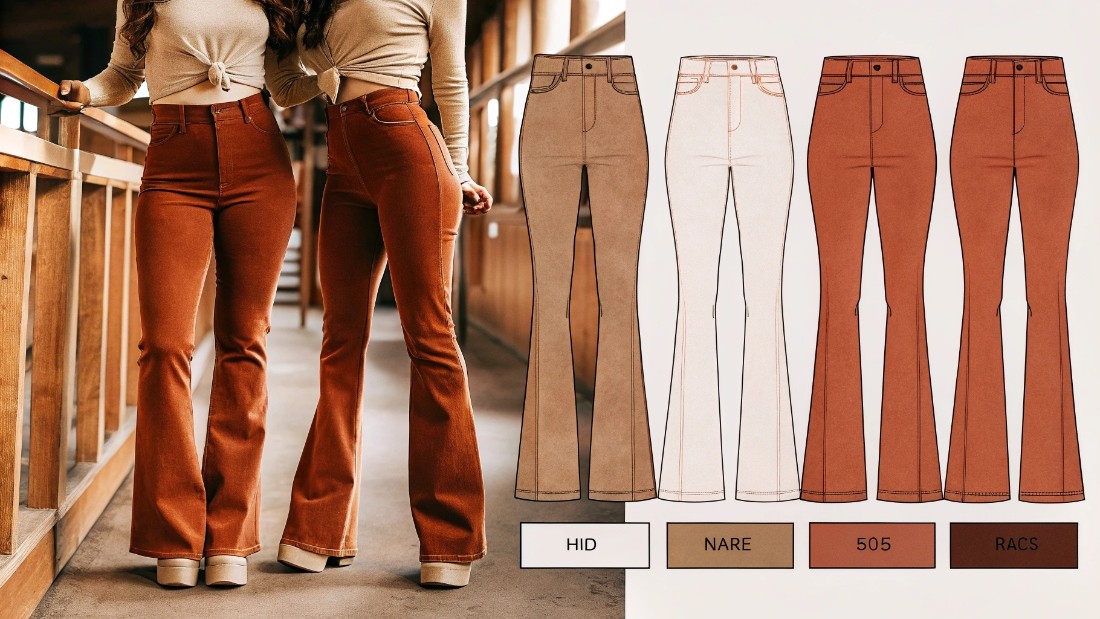
Why fit matters more for bells than many other styles
Bell-bottoms change the perceived proportion of the body more dramatically than straights or skinnies. The flare creates a horizontal visual cue at the hem; without a well-defined waist and thigh fit, the silhouette can look unbalanced. That’s why grading, rise selection, and fabric choice are critical, especially for inclusive sizing.
Rise and proportion guidance
High-rise: Often the most universally flattering, especially for curvy and plus-size figures. It smooths the midsection, creates a high waistline, and elongates the legs. For women over 40 or 50 seeking a polished look, high-rise bells in a clean dark wash are very flattering.
Mid-rise: Works well for those who prefer a less dramatic waist height; excellent for petite wearers when paired with a slightly narrower flare to avoid overwhelming the frame.
Low-rise: Less recommended for those seeking classic or age-neutral looks—low-rise can shorten the torso and needs very careful styling.
Flare width and where it starts
Gentle flare (8–12 cm at hem): Subtle, wearable for most bodies; reads modern rather than costume-like.
Medium flare (13–18 cm): Statement-making but manageable if thigh fit is slim.
Full bell (18+ cm): Very retro; best adopted by dedicated fans who understand styling and shoe pairing.
Fabric and stretch
Structured midweight denim (10–14 oz) gives shape—helpful for maintaining clean lines on curvier bodies.
Stretch blends (2–3% elastane) increase comfort and mobility, important for everyday wear. For plus-size bells, consider a stronger waistband construction and a fabric with good recovery to avoid sagging.
Selvedge and Japanese denim options read premium and hold structure better over time.
What jeans not to wear after 40?
While age is not a strict rule, many women over 40 favor denim that offers structure, elongation, and versatility:
Avoid ultra-low-rise, extremely distressed, or excessively baggy jeans that lack shape.
Steer clear of novelty denim (extreme cutouts, exaggerated logos) unless worn with a refined styling approach.
Do choose mid- to high-rise, straight or tailored flare options in darker washes or clean finishes.
What kind of jeans should a woman over 50 wear?
High-rise or mid-rise straight or gentle-flare jeans provide a classic, flattering line.
Dark indigo or black rinses look polished and are versatile for day-to-night transitions.
Look for good waistband construction, slightly contoured back pockets (placed to flatter), and midweight denim for a smoother silhouette.
Offer options with modest stretch for comfort—customers over 50 often value ease of movement and minimal breaking in time.
Tailoring and alteration tips
Hemming: Get the hem to skim the shoe. Use a hem allowance to adjust length per footwear.
Waist tweaks: For a perfect fit, slight tapering at the waist or adding a back elastic insert in selected builds can help without altering the visual design.
Thigh fit adjustments: Reducing thigh volume or adding darts can improve proportion for curvier legs.
Inclusive grading and production
True size inclusivity requires careful grading: the flare ratio to waist and thigh changes by size. A factory experienced with complex grading is essential to avoid a bell that works on size 28 but balloons on 38.
DiZNEW’s capabilities: factories that accept small MOs (30 pcs) and scale to large runs (10,000 pcs), and specialize in complex jeans shapes, help brands test fit across ranges before scaling.
Customer examples (practical)
A plus-size buyer loved a high-rise bell with 2% stretch, medium-weight denim, and a 16 cm flare—paired with heels and a fitted top, it became a staple.
A brand launched a petite-focused bell with a shorter rise and narrower flare, sold as a capsule to local boutiques—quick sell-through due to precise fit.
Where can you buy high-quality bell-bottom jeans and how do you evaluate them?
Buy bell-bottoms from vintage sellers, specialty brands, or custom/OEM manufacturers. Evaluate by fabric weight, construction (topstitching, pocket placement, waistband), fit grading across sizes, and hem finish. For private label or custom runs, choose factories that handle small minimums, plus-size grading, and complex styles.
Buying channels overview
Vintage & resale: Best if you want authentic period pieces or unique washes. Watch for wear at stress points and altered rises.
Ready-to-wear (small brands/designer): Offers curated modern takes—good middle ground for quality and trend-right styling.
OEM/ODM and custom manufacturing: Ideal if you plan to build your own brand or offer exclusive fits. Custom production lets you control rises, grading, and construction—critical for bell-bottoms.
Evaluating quality — a checklist
When inspecting a bell-bottom (sample or production run), examine:
1. Fabric weight and recovery: Middleweight (10–14 oz) denim with some recovery often gives the best drape for bells.
2. Stitching quality: Even topstitching (no skipped stitches), reinforced bar tacks at pockets, and clean chain-stitched hems are signs of thoughtful construction.
3. Pocket placement and size: Back pockets should be positioned to flatter—too low or wide can distort the silhouette.
4. Waistband stability: Interfacing and secure topstitching keep the waist from stretching out.
5. Hem finish: Clean serged or chain-stitched hemming maintains the flare shape and resists fraying.
6. Grading consistency: Compare samples across sizes to ensure proportions translate properly.
7. Hardware quality: Durable rivets, branded buttons, and reliable zippers improve longevity and perception.
Simple product comparison table (for buyer evaluation)
| Attribute | Minimum acceptable | Premium |
Fabric weight | 10 oz | 12–14 oz selvedge |
Topstitching | Even, 6–8 SPI | Triple-needle/fine topstitch, 8–10 SPI |
| Hems | Overlocked or blind | Chain-stitched selvedge finish |
| Waistband | Single interfaced | Double interfaced with bartacks |
| Grading | Basic grading | Size-specific flare/waist proportional grading
|
Why work with a specialized factory (like DiZNEW)
Complexity handling: Bell-bottoms need precise grading and sample-making. Factories specializing in denim understand where to place the flare and how to keep waistband and pocket geometry consistent across sizes.
Inclusive offerings: If your brand wants plus-size bells or special fits (stacked, baggy-to-bell hybrids), choose a partner with experience in these constructions.
Minimums and scalability: DiZNEW accepts small test MOQs (30 pieces) so brands can trial runs, and can scale to large orders (10,000 pieces) for successful products—this reduces risk and allows iterative development.
End-to-end support: From tech pack review, fabric sourcing (including selvedge), pattern grading, to final QC—reliable partners can accelerate time-to-market.
Production and sampling tips
Start with a fit sample in several sizes (small, medium, large, plus) rather than just one size—this reveals grading issues early.
Test multiple fabric weights: have at least two fabric options per style (midweight and lighter weight) to see how the flare behaves.
Request internal photos and fit videos of samples on live models covering different body types.
What to include in a DiZNEW inquiry (to get a fast, accurate quote)
Style: tech pack or detailed sketch (include where the flare starts, flange width at hem, rise).
Fabric: composition, weight (oz), wash ideas (indigo, black, stonewash).
Size range and grading needs (include plus/tall/petite if needed).
Quantity: start MOQ (30 pcs) or projected order (up to 10,000 pcs).
Branding/labels: custom leather patch, wash care, hangtags, packaging.
Target price per unit (if known) and desired lead times.
Sample production timeline (typical workflow)
1. Inquiry & tech pack review
2. Fabric swatch selection & costing
3. First pattern and proto-sample (fit sample)
4. Fit corrections & second sample
5. Pre-production sample & approval
6. Production run & QC
7. Shipping
Final CTA: Ready to test bell-bottoms for your brand?
If you’re a designer, boutique owner, or online curator thinking about adding bell-bottom jeans to your collection, DiZNEW can help you move from sketch to shelf with small test runs and the capacity to scale. Provide your tech pack or basic specs (rise, flare width, fabric preference, size range) and request a sample quote.
Provide your tech pack or basic specs (rise, flare width, fabric preference, size range) and request a sample quote. Whether you need plus-size grading, selvedge construction, or creative wash development, DiZNEW’s 20+ years in denim, low MOQs (30 pcs), and high-volume capacity (up to 10,000 pcs) make product development low-risk and highly controllable.
Contact guidance (what to prepare when reaching out)
Attach sketches or photos of inspiration
Specify fabric weight and composition if known
State quantity and size distribution
Mention any branding and packaging requirements
Ask for a sample timeline and detailed costing
Closing story to encourage outreach
A small New York boutique once approached a denim manufacturer with a vague brief: “a modern bell we can sell next season.” Instead of a single SKU, the factory proposed three rises and two fabric weights and produced 30 samples. The boutique sold out their small drop online within two weeks, used feedback to refine the fit, and placed a larger repeat order.
That launch turned a niche silhouette into a reliable seasonal seller. With the right partner and fit-first approach, bell-bottoms can be both a design statement and a dependable product line. Ready to make yours? Contact DiZNEW to start the conversation.
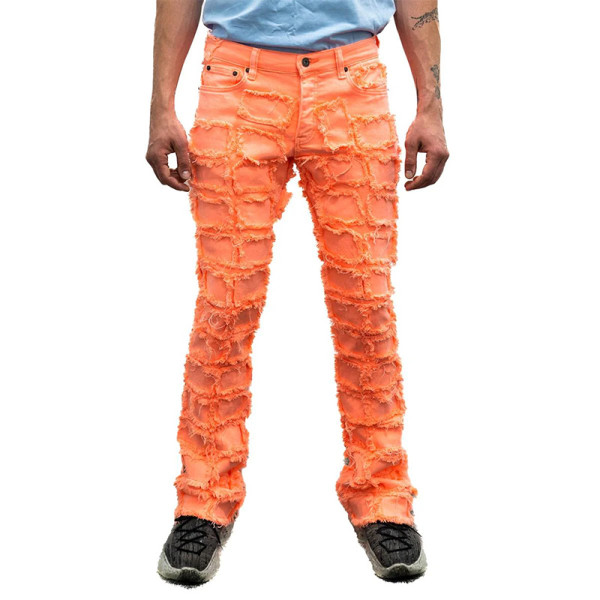
Bold neon jeans with full-body patch distressing—designed for statement-making fashion and stagewear brands.
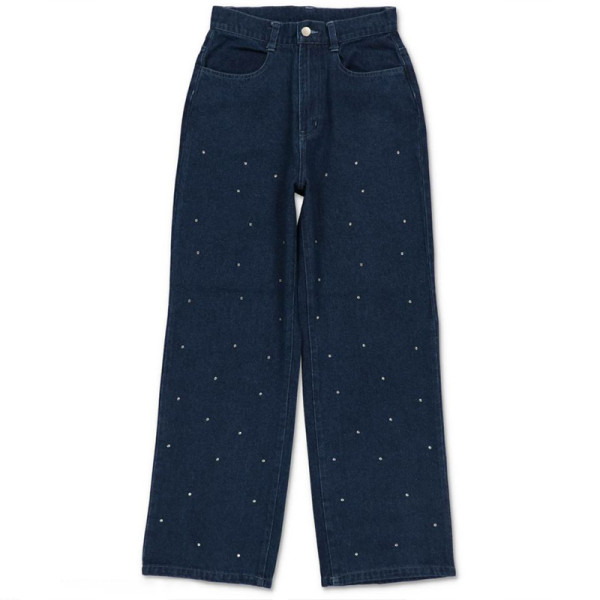
Elegant dark denim jeans with pearl accents, perfect for boutiques and high-end custom fashion lines.
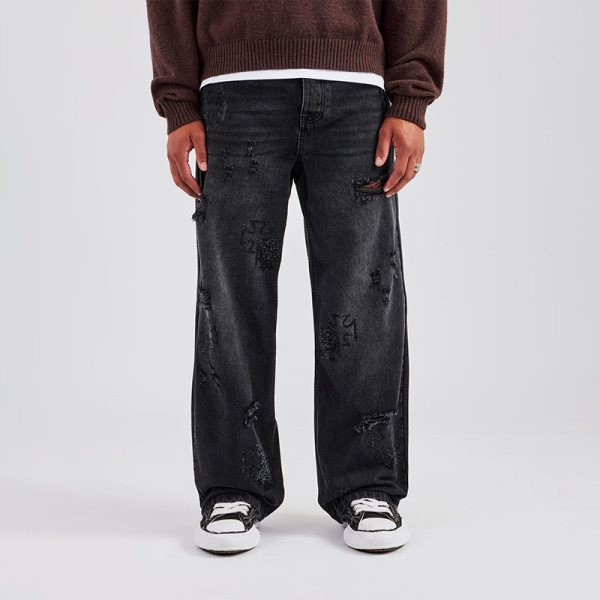
Black wide-leg jeans with sequin cross patches and distressed details – made for standout streetwear looks.
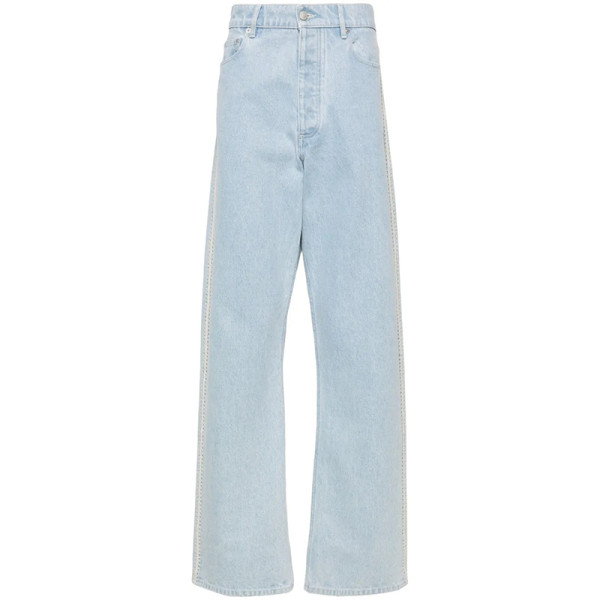
Light blue wide-leg jeans with clean lines and subtle side stitching—versatile, modern, and effortlessly stylish.